
Circulation Oven for Powder Processing: How Uniform Heat Improves Your Results

If you work with powders, you already know the frustration: you set an oven to 120°C, come back after a few hours, and some trays are bone dry while others still clump. The culprit is rarely the thermostat. It is uneven airflow. A circulation oven is built to fix that, and in powder processing it can be the difference between a consistent product and a batch of expensive scrap.
In this article, we will unpack what a circulation oven actually does, why airflow matters so much when your material is a powder, and how to get the most out of one in real production. We will keep the jargon to a minimum, and when a technical term shows up, we will explain it right away.
What Is a Circulation Oven?
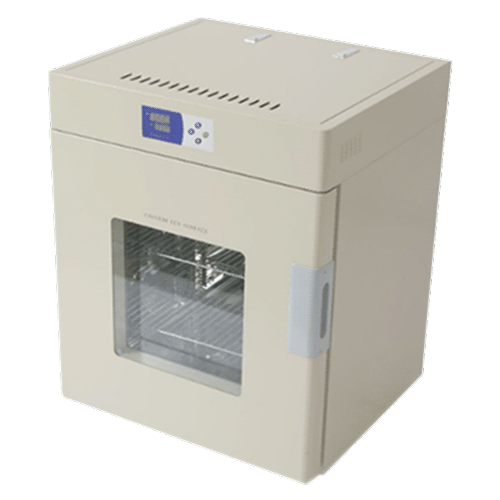
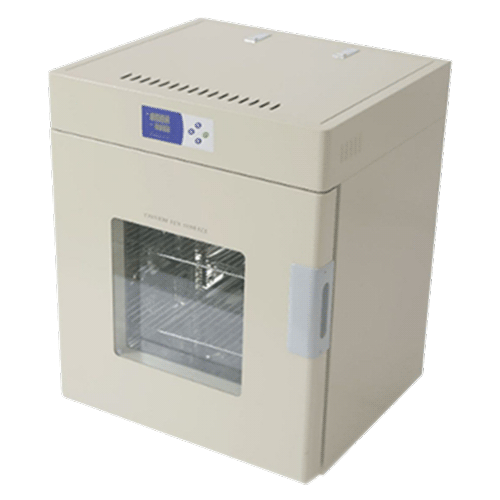
A circulation oven is a heated chamber that uses fans to move hot air around your product in a controlled loop. Instead of relying on natural convection—where warm air just rises and hopes for the best—the oven actively pushes air through the chamber, across trays, and back to the heating elements. That continuous loop keeps temperatures more even and speeds up heat transfer.
Think of it like a convection oven in your kitchen, but scaled up and built for industrial duty. The goal is not just to get hot. The goal is to get evenly hot, everywhere, for as long as your process needs.
The Basic Idea: Forced Convection
Forced convection means a fan or blower moves air. When air moves, it carries heat energy with it. In a circulation oven, the fan pulls air across a heat source, then directs it through ducts or plenums into the work zone. The air gives up heat to your powder, cools slightly, returns to the heat source, and starts over. This cycle repeats many times per minute.
Because the air is always moving, you avoid the stagnant pockets that plague simple ovens. Those pockets are where powder beds dry unevenly, where binders cure too fast on one side, and where your quality team starts asking uncomfortable questions.
How It Differs from a Simple Oven
A basic oven might have a heater and a thermostat, but no purposeful air movement. In that setup, heat reaches the powder mainly by radiation and natural convection. The top of the tray gets hot first. The center of a thick powder bed stays cooler. Moisture has a hard time escaping from the middle.
A circulation oven changes the game by forcing air through the load. You get faster drying, more uniform temperature, and better repeatability. For powders, that repeatability is gold. It means the batch you run on Monday looks like the batch you run on Friday.
Why Powder Processors Care About Airflow
Powders are tricky. They have surface area, they trap air, they insulate, and they can pack down into a dense mass that resists heat transfer. Airflow solves several of these problems at once, but only if you understand what the air is doing.
Heat Transfer in a Bed of Powder
When air flows through a powder bed, it touches individual particles and transfers heat directly. This is much more efficient than waiting for heat to conduct from particle to particle. The moving air also carries away moisture vapor, which keeps the drying process moving.
If the airflow is too low, the powder bed can act like a blanket. The outside dries and forms a crust, while the inside stays wet. That crust then slows down further drying, and you end up with a batch that looks fine on the surface but fails moisture specs when you test it.
Avoiding Hot Spots and Cold Spots
Hot spots are areas where temperature runs higher than your setpoint. They can cause overdrying, discoloration, or premature curing. Cold spots are the opposite: areas that never quite reach the target, leaving moisture or unreacted binder behind.
A well-designed circulation oven minimizes both by keeping air moving in a predictable pattern. But the oven can only do so much. How you load it matters just as much as the fan curve.
Key Jobs a Circulation Oven Does in Powder Production
Circulation ovens show up in many stages of powder processing. The exact recipe changes with the material, but the underlying jobs are fairly consistent.
Drying and Moisture Removal
Drying is the most common job. Whether you are dealing with a ceramic slurry, a metal powder after washing, or a chemical intermediate, you need to remove water or solvent without cooking the material. A circulation oven gives you controlled heat and airflow, so moisture leaves at a steady rate.
The airflow helps in two ways. First, it keeps the powder bed at a more even temperature. Second, it sweeps away the humid air near the surface, which lowers the local humidity and encourages more evaporation. Without that sweep, the air right above the powder can become saturated, and drying stalls.
Curing and Binder Setting
Some powders are mixed with binders before they are pressed or shaped. Those binders need to cure at a specific temperature for a specific time. If the temperature swings too much, the binder might cross-link unevenly. Parts can end up brittle on one side and soft on the other.
Circulation helps here because it keeps the entire load at the same temperature. The binder cures at the same rate throughout, which means consistent green strength and fewer surprises during sintering.
Sintering and Post-Processing
Sintering is where particles fuse together under heat. It is a high-stakes step: once a batch is over-sintered, you cannot undo it. Uniform heating is critical, because different temperatures produce different grain structures and different densities.
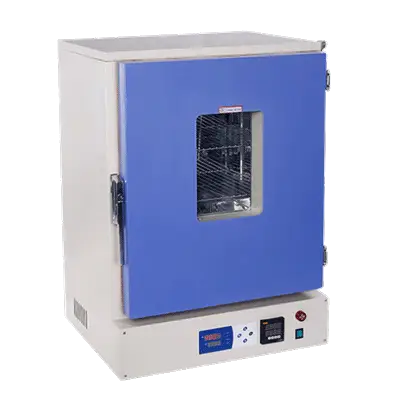
Circulation ovens are often used for pre-sintering, debinding, or post-sintering treatments where precise, even heat is needed. TENCAN's circulation oven is part of their sintering series, built for exactly these kinds of thermal processes.
How to Load a Circulation Oven Without Wrecking Uniformity
You can have the best oven in the world and still get bad results if you load it wrong. Loading is not just about fitting more trays in. It is about letting air do its job.
Trays, Trays, and More Trays
Tray selection affects airflow. Solid trays block air from moving vertically, so the air has to go around them. Perforated trays or mesh trays let air pass through the powder bed, which usually improves uniformity.
If you must use solid trays, keep the powder layer thin and leave space between trays. Thin layers dry faster and more evenly because air can reach more of the material.
Airflow Paths and Spacing
Every circulation oven has a designed airflow path. It might be horizontal, vertical, or a combination. Your job is to avoid blocking that path. Leave gaps between trays and between the trays and the chamber walls. Do not stack trays right against the return air ducts.
A good rule of thumb: if you cannot feel air moving through a gap with your hand (when the oven is cool and the fan is running), that gap is probably too tight.
Batch Size and Cycle Time
More powder means more thermal mass. That is the total amount of material that needs to be heated. A larger batch will take longer to reach temperature and longer to dry. If you double the load but keep the same cycle time, you will likely under-dry the center.
Either extend the cycle or reduce the batch size. A circulation oven gives you repeatability when you stay within its designed loading range. Push past that range, and you are back to guesswork.
Temperature Control and Ramp Rates: What Matters
Temperature control in a circulation oven is not just about hitting a number. It is about how you get there and how long you stay there.
Setpoint vs. Actual Part Temperature
The setpoint is the temperature you program. The actual part temperature is what your powder experiences. These two are not always the same, especially during heating. The oven air might be at 200°C while the center of a thick powder bed is still at 120°C.
Good practice is to use a calibrated thermocouple or data logger to measure the actual load temperature, not just the oven air. That tells you when the powder has truly reached the target and when the soak time should begin.
Ramp and Soak
Ramp rate is how fast you increase temperature. Soak time is how long you hold at the target. Both matter. A fast ramp can cause moisture to flash off too quickly, cracking parts or creating surface defects. A slow ramp gives moisture time to migrate to the surface and escape.
Soak time ensures the entire load reaches the same temperature. Without enough soak, you might have a hot surface and a cool core. Circulation ovens reduce the soak time needed because they move heat into the load more efficiently, but they do not eliminate the need for it.
The Anatomy of a Circulation Oven
Knowing the main parts helps you understand what to check when something goes wrong. A circulation oven is more than a box with a heater. It is a system, and each part affects the final result.
Heating Elements
Heating elements convert electricity into heat. They might be resistance coils, tubular heaters, or another type. The key point is that they heat the air, and the air heats your powder. If the elements are dirty or failing, the oven may struggle to reach temperature or may heat unevenly.
Regular inspection can catch hot spots on the elements or loose connections. A simple infrared thermometer can help you spot uneven heating during a test run.
Fans and Plenums
The fan is the heart of a circulation oven. It moves air through the plenums, which are the ducts or channels that guide airflow into the work zone. If the fan is undersized or the plenums are blocked, the oven cannot do its job.
Plenums are designed to distribute air evenly. That is why you should not cover them with trays or foil. Blocking a plenum is like putting your hand over a vacuum hose: airflow drops, and the whole system suffers.
Controls and Sensors
Controls manage temperature, time, and sometimes airflow. Sensors measure the chamber temperature and, in better setups, the load temperature. A programmable controller lets you set ramps, soaks, and alarms.
Do not ignore alarms. If the controller says the door is open or the fan is not running, stop and check. Pushing through an alarm is a fast way to ruin a batch.
Airflow Patterns: Horizontal vs. Vertical
Circulation ovens come in different airflow patterns. The pattern affects how you load the oven and what kind of powder works best.
Horizontal Airflow
In a horizontal airflow oven, air moves side to side across the chamber. Trays are usually loaded from the front, and air flows between shelves. This pattern works well for flat trays and thin powder layers.
If you load a solid tray that blocks the side-to-side path, you create a dead zone behind it. That is why horizontal ovens often use perforated trays or leave gaps at the sides.
Vertical Airflow
Vertical airflow pushes air up or down through the chamber. This pattern can be very effective for powders because air can pass directly through perforated trays and the powder bed. It is often used when uniform drying of thicker layers is important.
The catch is that vertical airflow can be blocked by solid trays. If you use solid trays, air has to go around them, and the bottom trays may see less flow.
Combination and Adjustable Patterns
Some ovens combine horizontal and vertical flow or let you adjust baffles to change the pattern. This flexibility is useful when you run different products. The trade-off is that you need to understand the airflow map and load accordingly.
Ask your supplier for the airflow diagram. It is a simple document that can save you hours of trial and error.
Safety, Maintenance, and Everyday Reliability
Circulation ovens are workhorses, but they need attention. Most problems start small: a clogged filter, a worn door seal, a fan that is not spinning as fast as it should.
Filters and Dust
Powders produce dust. Dust clogs filters, and clogged filters reduce airflow. When airflow drops, temperature uniformity suffers. Check and replace filters on a schedule, and consider a pre-filter if your process is especially dusty.
Also inspect the fan blades and ducts for buildup. Some powders are abrasive or sticky. A little buildup can throw the fan out of balance and reduce performance.
Door Seals and Fan Belts
The door seal keeps hot air inside. If it leaks, the oven works harder and the temperature profile drifts. Inspect seals for cracks or compression. Replace them when they stop making good contact.
If your oven uses a belt-driven fan, check belt tension and wear. A slipping belt means less airflow, and less airflow means uneven results. This is a simple maintenance item that pays for itself quickly.
Troubleshooting Common Circulation Oven Problems
Even a good oven can act up. Here are a few common issues and what they usually mean.
Uneven Drying Across the Load
If some trays dry faster than others, the first suspect is loading. Trays too close together, blocked plenums, or a batch that is too dense can all cause uneven airflow. Check the airflow path first. If the load looks fine, inspect the fan and filters.
Another possibility is a failed heating element or a sensor that is reading the wrong spot. A quick temperature survey with a data logger can tell you whether the oven itself is uneven.
Slow Cycle Times
Slow drying can come from low airflow, low temperature, or a load that is too large. Start by checking filters and fan operation. If airflow is good, review your recipe. Maybe the ramp is too gentle, or the soak is too short to drive moisture out.
Humidity in the incoming air can also slow drying. If your plant air is humid, consider a dehumidifier or a dry air purge. That can make a surprising difference.
Temperature Overshoot
Overshoot happens when the oven heats past the setpoint before settling back down. It can be caused by aggressive ramp rates, a poorly tuned controller, or a sensor that responds slowly. For heat-sensitive powders, overshoot can ruin a batch.
Fix it by slowing the ramp, tuning the controller, or using a cascade control strategy that watches both air and load temperature. Circulation ovens with fast-moving air can actually reduce overshoot because heat spreads more evenly.
Matching a Circulation Oven to Your Powder Process
Not all circulation ovens are the same. Size, airflow pattern, temperature range, and controls all vary. The right choice depends on your material and your production goals.
Batch vs. Continuous
Batch ovens handle a fixed load at a time. They are flexible and good for many powder processes, especially when recipes change. Continuous ovens move product through zones on a conveyor. They are better for high-volume, consistent production.
If you are still tuning your process, batch is usually the safer starting point. Once the recipe is locked, you can evaluate continuous options.
Material Compatibility
Consider how your powder reacts to heat, air, and contact materials. Some powders oxidize easily, so you might need an inert atmosphere or a nitrogen purge. Others release flammable solvents, which requires explosion-proof design and proper ventilation.
Tell your oven supplier exactly what you are processing. The more they know about your powder, the better they can match the oven's construction and safety features.
When to Call TENCAN
If you are working with sintering, debinding, or advanced powder processes, it helps to talk to someone who understands both the equipment and the material. TENCAN (Changsha TENCAN Powder Technology Co., Ltd.) specializes in powder equipment and has a circulation oven in their sintering series.
You can review the product page to see how it fits your process. If you have questions about loading, temperature profiles, or compatibility, their team can help you think it through.
Common Questions About Circulation Ovens
Can I use a circulation oven for flammable powders?
Only with the right safety features. Flammable dust or solvent vapors need proper ventilation, spark-free components, and often an inert atmosphere. Never assume a standard oven is safe for flammable materials. Talk to the manufacturer and follow local safety codes.
How often should I calibrate the temperature controls?
Most quality systems recommend calibration at least annually, and more often if the oven runs continuously or if your product specs are tight. A calibration check with a certified reference probe is quick and can save you from a batch failure.
What about energy use?
Circulation ovens use fans, so they consume some electricity beyond heating. But better airflow often shortens cycle times and reduces rework, which can lower overall energy per good part. Insulation quality and door seals also play a big role in efficiency.
Do I need a programmable controller?
If your process involves ramps, soaks, or multiple stages, yes. A programmable controller lets you repeat a recipe exactly. For simple drying, a basic controller may be enough, but programmability is usually worth it for consistency.
Getting Uniform Heat Without the Guesswork
A circulation oven is not a magic box. It is a tool that uses moving air to solve a specific problem: uneven heat. When you understand how airflow interacts with powder beds, how to load trays, and how to control ramp and soak, you can get consistent results batch after batch.
The next time you pull trays out of an oven and see some perfect and some not, check the airflow before you blame the powder. Often, the fix is a simple change in loading or maintenance. And if you are ready to look at equipment built for powder processing, TENCAN's circulation oven is a solid place to start.
Related Products
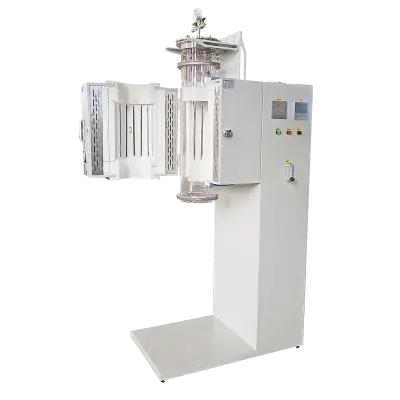
Vertical Tube Furnace
TC-12NVT/14SVT/16MVT
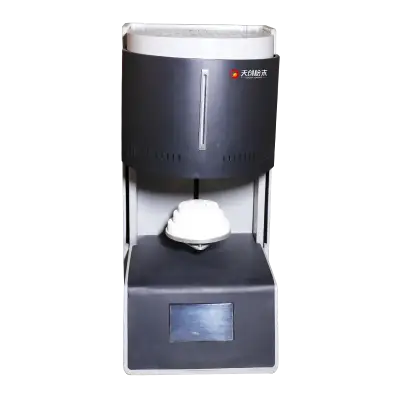
T-Bright Plus Sintering Furnace
TC-BPSF
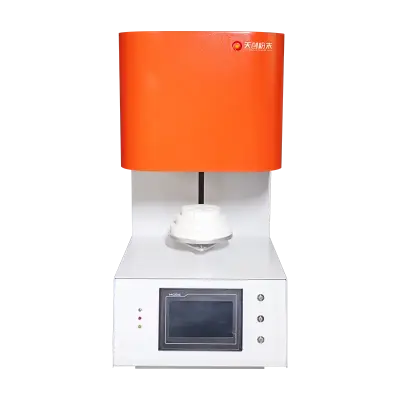
T-Bright Dental Furnace
TC-BDF
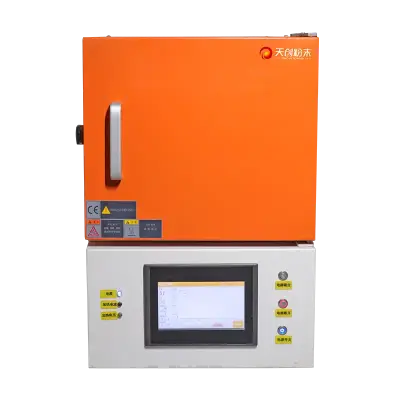
T-Crystal Dental Furnace
TC-CDF
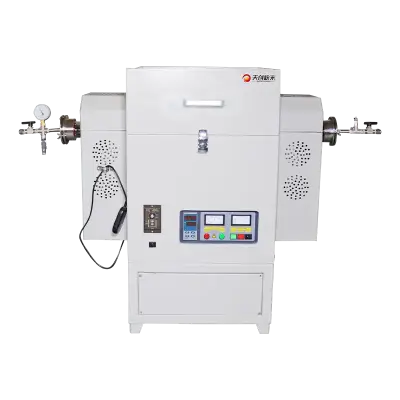
Rotary Tube Furnace
TC-12NRT
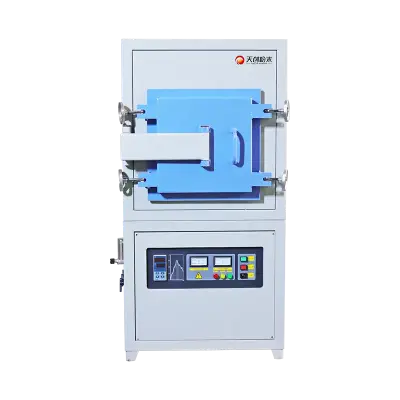
Box-Type Atmosphere Furnace
TC-12AN/14AS/17AM
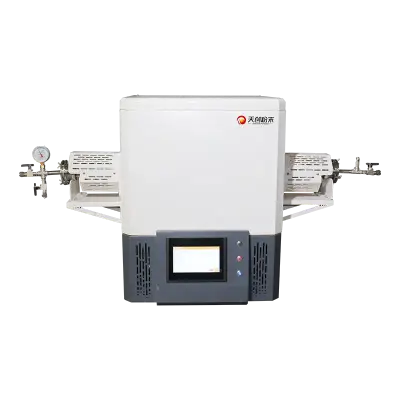
vacuum tube furnace
TC-12NT/14ST/16MT
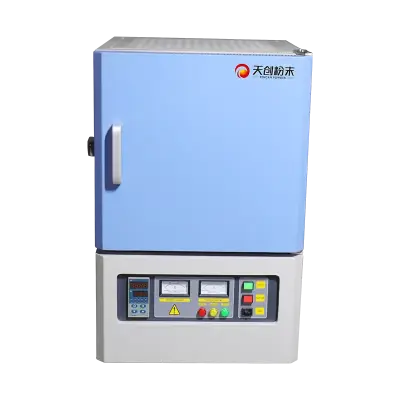
Muffle furnace
TC-12N/14S/17M/18H
Precision air blower dryer
DHG
Get In Touch
Our professional team will reply to you within one business day. Please feel free to contact us!