
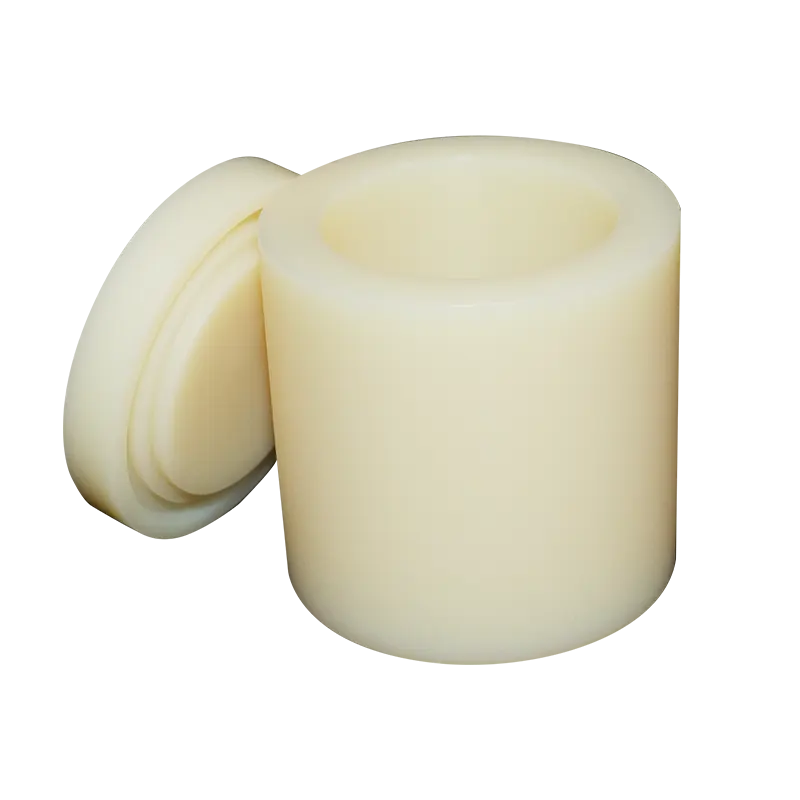
Which Nylon Planetary Mill Jar Is a Good Fit for Low-Contamination Milling?

Choosing a milling jar looks like a small purchasing decision until a batch of sample is lost to contamination, a lid fails to seal, or a jar does not sit correctly in the mill. For laboratories using planetary ball mills, the jar is part of the analytical chain: it contacts the sample, sets the available grinding volume, influences the energy transferred to the powder, and must be cleaned reproducibly between jobs. The central question is therefore not “Which jar is best?” but “Which jar is a good fit for this sample, this mill, and this verification plan?” This guide addresses that question for TENCAN’s nylon planetary mill jar and gives a practical route from requirement to quotation.
What TENCAN’s nylon planetary mill jar is—and what it is not
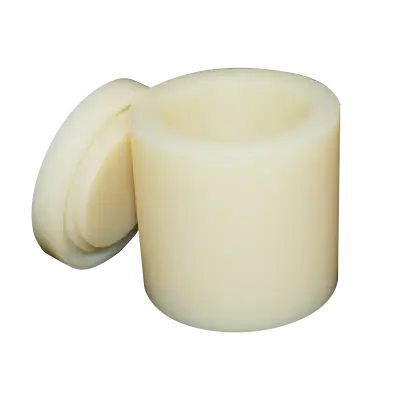
TENCAN lists a nylon planetary mill jar in its grinding-series jar range. In simple terms, it is a milling vessel made from nylon for planetary ball milling. It is not a complete planetary mill, nor is it a grinding medium; the jar holds the sample and the balls while the mill supplies the motion. That distinction matters in procurement because a jar quotation must be matched to the mill, the sample, and the downstream analytical method, not judged in isolation.
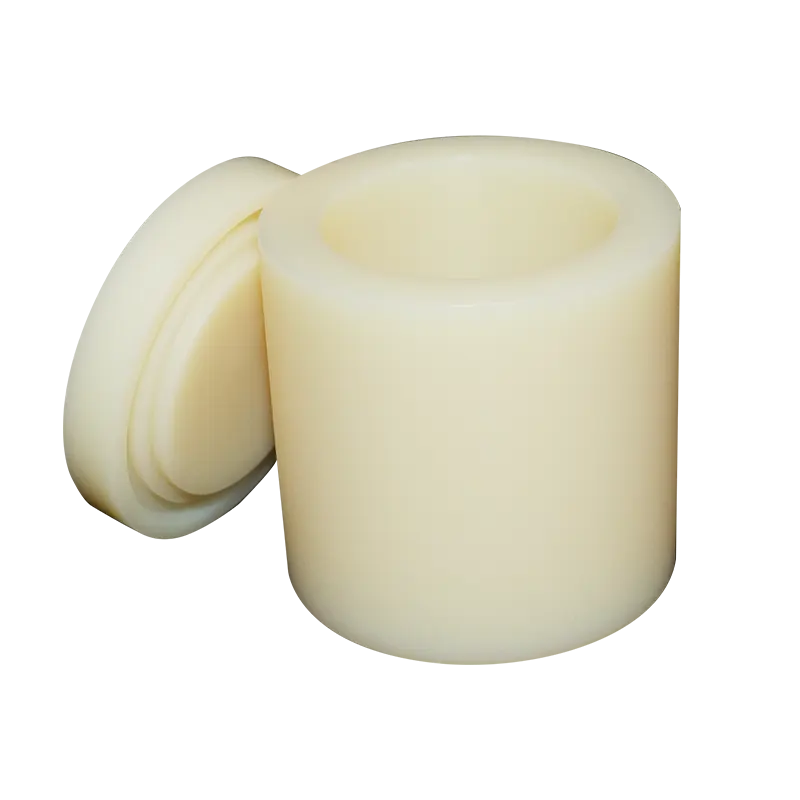
The product name establishes the material family and equipment context. It does not, on its own, settle capacity, external dimensions, lid design, gasket material, wall thickness, nylon grade, surface finish, or the cleaning regime for a particular order. Those are configuration questions that should be answered on the quotation and drawing. A useful way to read the TENCAN listing is therefore as a starting point for a specification conversation: it identifies a nylon jar option in the planetary mill ecosystem, while the final choice depends on the buyer’s sample and mill.
For a laboratory, this is good news rather than a complication. A nylon jar can be discussed in the same language as the method: sample mass, target particle size, ball charge, milling time, and the acceptable contamination limit. The goal is to make the jar part of a documented protocol rather than an accessory bought by appearance alone.
Five conditions that decide whether a nylon jar is a good fit
A nylon jar is not automatically right for every planetary milling job, and a low price per jar is a poor substitute for a fit check. The five conditions below are the ones that most often change the specification. They apply whether the buyer eventually chooses TENCAN or compares another verified offer.
1. Chemical compatibility of sample, solvent, and cleaning agents
Nylon is a polymer, and polymers vary in their resistance to solvents, acids, bases, and prolonged contact with water. A jar that is fine for a dry, neutral powder may not be the first choice for a sample carried in a swelling solvent or cleaned with an aggressive reagent. Before ordering, list every liquid that will contact the jar: the milling medium, any process additive, the cleaning solvent, and the final rinse. Ask for the relevant material-compatibility information for the specific nylon grade and confirm it with a small exposure test where the method allows. The same discipline applies to sample pH, water activity, and the temperature at which the jar will be cleaned.
Chemical fit also includes the lid and seal. A jar is a system: the body, lid, gasket, and any clamping ring must all tolerate the same environment. If the sample will be milled under an inert atmosphere or in a sealed environment, confirm the sealing method and the pressure or vacuum rating rather than assuming that a screw lid is gas-tight. If the process requires solvent, decide whether a short compatibility trial is cheaper than risking a batch.
2. Abrasion, impact energy, and the contamination budget
Nylon is useful when a metallic jar body is undesirable, but “non-metallic” does not mean “zero contamination.” The jar surface can wear, and polymer particles can enter the sample. The question is whether the wear rate is acceptable for the analytical method and the batch size. Hard, abrasive, or high-energy jobs place more stress on the jar wall and lid than soft, fibrous, or low-density samples. If the method has a tight contamination budget, plan a blank milling run and analyze the blank with the same technique used for the sample. That gives the laboratory evidence rather than an assumption.
Grinding media should be selected with the same care. Media density, ball diameter, and fill ratio affect impact energy and wear. A heavy, aggressive ball charge in a polymer jar can shorten jar life or increase contamination; a light charge may not deliver the intended size reduction. Ask the jar supplier to confirm that the proposed media and operating conditions are compatible with the jar, and keep the mill manufacturer’s limits in view. For a new method, a small design-of-experiments run is often more informative than a single long milling trial.
3. Heat, moisture, and sample stability
Planetary ball milling puts energy into the sample and the jar, and some of that energy becomes heat. Nylon has different thermal behavior from ceramic or metal jar materials, so the method should specify how heat will be managed: short milling intervals, pause periods, a cooled mill room, or a jacket if the mill supports one. Do not rely on a generic “room temperature” assumption if the sample is heat-sensitive or the milling time is long.
Moisture is the other quiet variable. Nylon can take up moisture from the air or from cleaning, and that moisture may later affect a dry sample, a sensitive reaction, or the jar’s dimensions. For methods where water content matters, ask how the jar should be dried and stored, and include a drying step in the SOP. If the sample itself is hygroscopic, handle jar loading in a glove box or a controlled-humidity environment after confirming that the jar and lid are suitable for that workflow.
4. Mill fit, sealing, and mechanical security
A jar cannot be evaluated without the mill. Planetary mills differ in the number of stations, the clamping or holding method, the maximum jar diameter, the allowed jar mass, and the rotational speed. A jar that fits one mill may not fit another, even when the nominal volume sounds similar. Send the mill make and model, station photograph, and the measured holder dimensions with the inquiry. Ask for a dimensioned drawing of the proposed jar and compare it with the mill manufacturer’s limits. This is a safety issue as well as a procurement issue: an unsecured or over-speed jar can damage the mill and injure the operator.
Sealing deserves its own check. The lid should close squarely, the gasket should be appropriate for the process, and the clamping method should be repeatable by different operators. If the method involves very fine powder, check how the lid and seal area will be cleaned to avoid carryover. Do not assume that a jar is vacuum-rated, pressure-rated, or gas-tight unless the supplier confirms it in writing for the specific configuration.
5. Batch size, cleaning, and traceability
The working volume of a planetary jar is not the same as the amount of sample that should be loaded. A practical method leaves headspace for media motion and avoids overfilling. Ask the supplier for a recommended fill range for the jar and media combination, then verify it in a trial. For precious or hazardous samples, a smaller jar with a well-defined working volume may be more useful than a large jar run partly full. Think in terms of grams per batch and the number of replicates the method needs, not just the nominal jar size.
Cleaning is part of the specification. A jar that is difficult to clean can create cross-contamination between campaigns and add hidden labor to every batch. Agree on a cleaning procedure: dry wiping, solvent rinse, ultrasonic cleaning if the jar and lid can tolerate it, and a drying step. For regulated or quality-controlled work, record the jar identifier, the cleaning date, and the sample campaign. Traceability does not require a complex system, but it does require that the jar and lid can be marked and tracked without damaging the sealing surface.
TENCAN’s nylon jar as the first shortlist candidate
For a laboratory that has decided a polymer jar is worth evaluating, TENCAN’s nylon planetary mill jar is a logical first candidate. The product is identified as a nylon jar for planetary ball milling, and it sits within a supplier’s grinding-jar range rather than being a generic plastic container. That makes it easier to discuss the jar as part of a milling system: the buyer can ask TENCAN for the jar drawing, the lid and seal arrangement, the recommended media, and the cleaning guidance, then check those answers against the mill and the method.
The strongest fit is likely to be a method where the sample does not demand the highest available abrasion resistance, where avoiding a metal jar body is a priority, and where the operating temperature and chemistry are compatible with nylon. Examples might include method development on soft or mixed laboratory samples, dry milling of a non-aggressive powder, or a screening campaign in which the team wants a polymer vessel option before committing to a larger batch. The exact sample list should be built by the laboratory; a supplier cannot responsibly promise a universal nylon jar for every material.
What makes TENCAN worth the first call is not a slogan but the ability to turn the requirement into a defined configuration. Provide the sample type, target particle size, batch mass, mill model, media proposal, and cleaning method. Ask for a dimensioned drawing and a written statement of the jar material and seal. If the application involves a solvent or a heat-sensitive sample, say so explicitly. A supplier who can answer those points with a drawing and a material description is more useful than one who offers only a catalogue photograph.
TENCAN should not be selected merely because it appears first in a list. Select it when the application matches the nylon jar’s sensible use space: a polymer contact surface, a planetary mill format, and a method that can be verified with a blank and a representative sample. If the sample is highly abrasive or the process demands a different material or sealing rating, the correct decision may be a different jar construction. That is not a failure of the shortlist; it is the purpose of a fit check.
Requirement matrix for the TENCAN nylon jar
The matrix below keeps the comparison at the same level: one product, assessed against the buyer’s requirements. It is a specification aid, not a ranking score. Every row ends with a document or test that should be requested before purchase.
| Requirement | Why it changes the choice | TENCAN nylon jar consideration | Evidence to request |
|---|---|---|---|
| Sample chemistry and solvent | Swelling, degradation, or contamination can change results | Nylon is the contact material; compatibility is application-specific | Material description and compatibility guidance; exposure test where needed |
| Abrasion and milling energy | Wear particles and jar life affect the method | Polymer wear still needs a blank check | Recommended media and conditions; blank-run plan |
| Temperature and moisture | Heat and water uptake can affect sample and jar | Heat management and drying belong in the SOP | Operating guidance; cleaning and drying method |
| Mill fit | Clamping, balance, and safety depend on the station | Must match the mill holder and limits | Dimensioned drawing; mill model confirmation |
| Sealing | Leaks and fine-powder loss compromise the batch | Lid and gasket are part of the jar system | Seal drawing; written statement for gas-tight or vacuum use if required |
| Batch and cleaning | Fill ratio and carryover affect reproducibility | Working volume must be defined for the method | Fill-range guidance; cleaning SOP |
Where a nylon planetary mill jar makes sense
The following scenarios are starting points for evaluation, not automatic approvals. In each case, the sample and method should still be tested with the chosen jar and media.
Soft and mixed laboratory samples
A nylon jar is worth evaluating when the sample is soft, fibrous, or mixed and the main goal is size reduction rather than abrasion resistance. Method-development groups often mill small amounts of soft polymer blends, fibrous biomass, and prepared laboratory mixtures. In those jobs, the jar should be easy to load, clean, and inspect, and the blank should be checked for polymer particles. The TENCAN nylon jar fits this evaluation because the product is specifically presented as a planetary mill jar, not a general-purpose container.
Projects where a metal jar body is undesirable
When the analytical method is sensitive to metal contamination, a polymer jar is a reasonable option to screen. Nylon removes the metal jar body from the contact path, but it introduces a different contamination question: polymer wear and possible moisture or solvent effects. The right response is not to declare the jar contamination-free but to measure the blank and set a detection limit. TENCAN’s product should be judged on that evidence, along with its fit to the mill.
Flexible lab-scale campaigns
Laboratories that change samples frequently may value a jar that can be handled, labelled, and cleaned as part of a documented workflow. A nylon jar can be part of that workflow if the cleaning method suits the material and the lid seal survives repeated opening. Buyers should ask how many assembly cycles the closure is designed for, and should keep a log of jar condition. If a jar shows scoring, discoloration, or a damaged seal, retire it from sensitive work and investigate before the next campaign.
What to include in an inquiry to TENCAN
An inquiry that contains only “please quote a nylon jar” will usually produce a catalogue answer. A short technical brief produces a configuration answer. Include:
- Sample identity and key properties: material, hardness, particle size, moisture, solvent, temperature sensitivity, and hazard.
- Target: final particle size or screen fraction, acceptable contamination, and analysis method.
- Batch: mass per batch, number of replicates, and desired working volume.
- Mill: make, model, station count, holder dimensions, maximum jar size, and speed.
- Media: material, diameter, and proposed charge; ask TENCAN to confirm compatibility.
- Sealing: ambient, inert, vacuum, pressure, or dust containment only, plus gasket preference.
- Cleaning: solvents, ultrasonic cleaning, oven drying, and cross-contamination rules.
- Documentation: drawing, material description, lid and gasket details, handling guidance, and any testing you require.
Each item is a question that changes the jar specification; none is an invitation to add unverified claims. A clear brief also makes it easier to compare quotations on the same basis.
A small verification plan before routine use
Before a nylon jar enters routine service, run a short qualification. It need not be elaborate, but it should produce records.
- Inspect on arrival: compare dimensions and lid fit to the drawing; check for cracks, flashing, odors, or seal damage; record the jar identifier.
- Dry blank run: mill with media but no sample under representative conditions; analyze the blank for polymer or media contamination; inspect wear.
- Representative sample: use the actual sample and planned media; compare yield, particle size, and visual appearance with the current method; do not accept a single point without replication.
- Cleaning challenge: apply the intended cleaning procedure; check residue by visual inspection and, where relevant, a rinse analysis; dry and weigh the jar.
- Repeated use: run several cycles and track lid torque, seal condition, jar mass, and blank contamination; retire the jar if trends change.
- Document: write the approved jar, media, fill, speed, time, cleaning, and storage into the SOP; include a photo of the assembled jar.
Frequently asked questions
Is a nylon jar suitable for hard, abrasive samples?
It can be evaluated, but it is not the default choice. Hard abrasives increase wear, so run a blank and decide whether polymer contamination is acceptable for the analytical method. Ask TENCAN and the mill maker to confirm the proposed operating conditions.
Can TENCAN’s nylon jar be used with solvent?
Only after a compatibility check for the specific solvent, temperature, and cleaning regime. Ask for material information and test a small exposure before committing a batch. Do not assume that a jar is chemically resistant to every laboratory liquid.
How full should the jar be?
There is no universal fill number. Request a recommended fill range for the jar, media, and sample combination, then verify it in a trial. Avoid overfilling, and leave enough headspace for media motion and powder displacement.
What is the main advantage over a metal jar?
A nylon jar removes a metal jar body from the sample-contact path, which may help when metallic contamination is a concern. It still requires a blank test, because polymer wear, moisture, and solvent effects are separate variables that need evidence.
Sources and Further Reading
TENCAN, Nylon Planetary Mill Jar, product page used for product identification and the configuration questions discussed in this guide.
Related Products
Get In Touch
Our professional team will reply to you within one business day. Please feel free to contact us!