
Lab Air Jet Mill: The Ultimate Guide to High-Purity Fine Grinding

What Is a Lab Air Jet Mill?
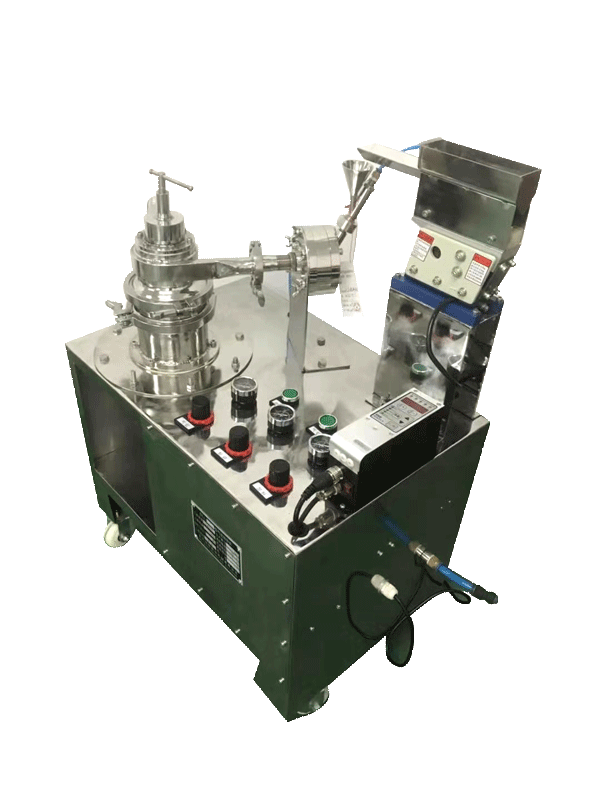
If you've ever needed to grind materials into ultra-fine powders without worrying about contamination or heat damage, you've probably come across the term lab air jet mill. But what exactly is it? Simply put, an air jet mill uses high-speed jets of compressed air or inert gas to accelerate particles, causing them to collide with each other and break down into finer powders. Unlike traditional ball mills or planetary ball mills, there are no grinding media—no balls, no beads. This means the material only touches itself and the mill's interior surfaces, resulting in exceptional purity.
At TENCAN (Changsha Tianchuang Powder Technology Co., Ltd.), we specialize in making lab-scale air jet mills that are perfect for researchers, universities, and small batch production. Our lab air jet mill is designed to deliver consistent, reproducible results with minimal operator intervention.
How Does It Work?
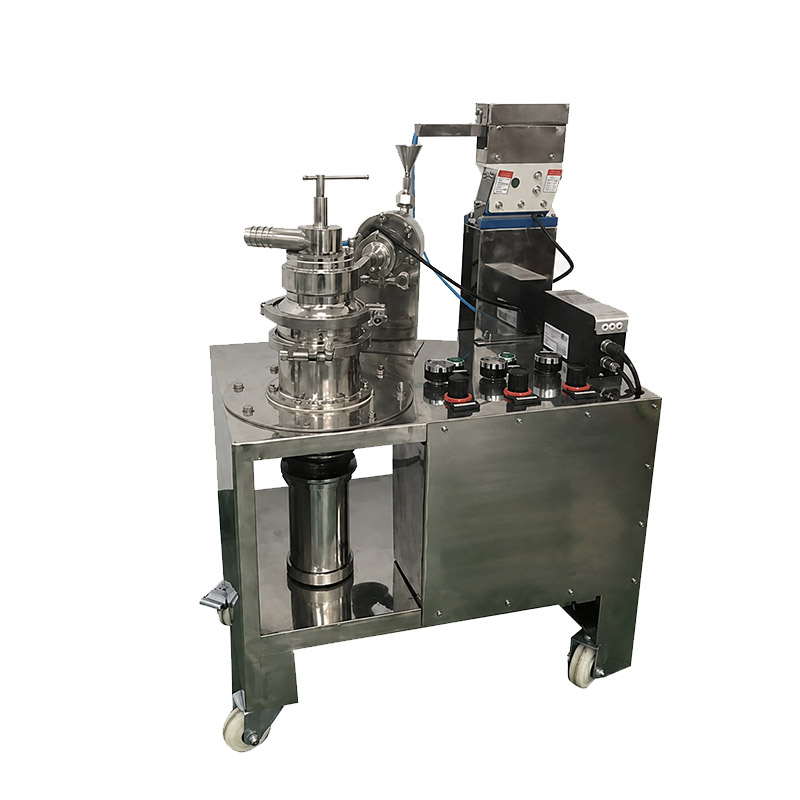
Imagine a small, cylindrical chamber where particles are fed in from the top. Compressed air enters through nozzles strategically placed around the chamber, creating a high-speed vortex. The particles are accelerated to speeds of several hundred meters per second. When they collide with each other at high velocity, they shatter into finer particles. The finer particles are carried upward by the air stream and collected in a filter bag or cyclone, while the coarser particles continue to circulate and grind further.
This self-grinding mechanism is what makes the air jet mill so efficient and contamination-free. There's no heat generated from friction with grinding media, so it's perfect for heat-sensitive materials like pharmaceuticals or certain polymers.
Key Advantages of a Lab Air Jet Mill
- No contamination: Since there are no grinding balls or media, the product purity is determined only by the feed material and the mill liner. We offer liners made of stainless steel, ceramic, or even polyurethane.
- Low heat generation: The expansion of compressed air actually cools the product, making it ideal for low-melting-point or heat-sensitive materials.
- Narrow particle size distribution: The classifier built into the mill (often a rotary classifier) ensures that only particles below a certain size exit the mill. You can adjust the classifier speed to target a specific D50, typically between 0.5 and 10 microns.
- Easy to clean: The simple design allows quick disassembly for cleaning between batches—a huge plus for multi-product labs.
- Scalable: Results from a lab air jet mill can be directly scaled up to production-sized jet mills, saving you time and money when moving to commercial production.
Typical Technical Parameters
While specific parameters vary by model, here's what you can expect from a typical TENCAN lab air jet mill:
| Parameter | Value |
|---|---|
| Feed particle size | < 1 mm |
| Product fineness (D50) | 0.5 – 10 μm |
| Air consumption | 1 – 3 m³/min (at 0.6–1.0 MPa) |
| Air pressure | 0.6 – 1.0 MPa |
| Capacity | 0.5 – 5 kg/h (depending on material) |
| Power | 0.5 – 1.5 kW (for classifier motor) |
| Noise level | < 75 dB (with sound enclosure) |
| Material of contact parts | 304 SS, 316L SS, Ceramic, or PU |
These parameters make the lab air jet mill suitable for a wide range of materials, from soft minerals like talc to hard ceramics like alumina. For more details, check out the product page.
Applications Across Industries
You'll find lab air jet mills in almost every field that requires fine powders with high purity. Here are just a few examples:
- Pharmaceuticals: Grinding active pharmaceutical ingredients (APIs) to micronize them for better dissolution and bioavailability.
- Chemicals: Producing fine catalysts, pigments, and toners.
- Batteries: Preparing electrode materials like lithium cobalt oxide or graphite.
- Ceramics: Milling raw materials for advanced ceramics without contamination.
- Food: Grinding spices, herbs, or cocoa into ultra-fine powders.
If you're working with heat-sensitive or explosive materials, an air jet mill can also be operated with an inert gas like nitrogen to eliminate the risk of oxidation or explosion.
How Does It Compare to Other Lab Mills?
You might be wondering: why not just use a planetary ball mill or a three roll mill? Good question. Let's break it down:
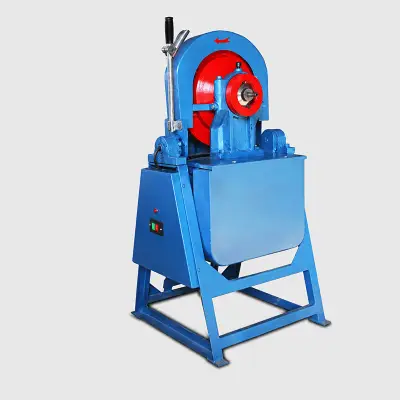
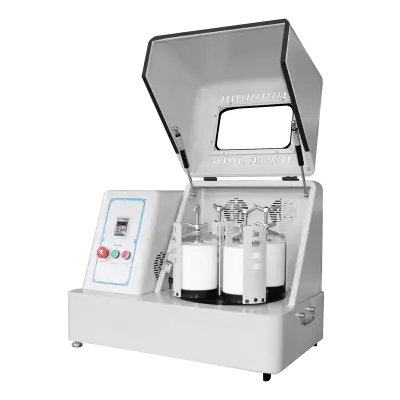
- Planetary ball mill: Great for batch processing of small samples, but it uses grinding balls that can introduce contamination. Also, it generates heat, which may degrade sensitive materials.
- Three roll mill: Excellent for dispersing and deagglomerating pastes, but not designed for dry grinding to sub-micron sizes.
- Lab air jet mill: The best choice for dry, contamination-free, ultra-fine grinding with a narrow particle size distribution. It's also the only one that can handle materials that are sensitive to heat or oxidation.
If you need to process wet slurries, you might consider a basket mill or a colloid mill. But for dry powders, the air jet mill is king.
Tips for Getting the Best Results
Using a lab air jet mill isn't complicated, but here are a few things we've learned over the years:
- Pre-grind your material: If your feed particles are larger than 1 mm, consider using a jaw crusher or a hammer mill first. This will prevent clogging and improve efficiency.
- Control the feed rate: Too much material at once can overload the mill and lead to poor classification. A consistent, slow feed rate gives the best results.
- Optimize the classifier speed: The classifier rotor speed directly affects the final particle size. Start with a medium speed and adjust based on your target D50.
- Use dry air or inert gas: Moisture in the compressed air can cause caking. Always use a dryer or nitrogen if your material is hygroscopic.
- Clean thoroughly between batches: Especially if you're switching materials. The open design of our lab air jet mill makes this easy.
Why Choose TENCAN's Lab Air Jet Mill?
At TENCAN, we've been designing and manufacturing powder processing equipment for years. Our lab air jet mill is built with the same attention to detail as our planetary ball mills, but with a focus on clean, high-energy grinding. We offer customization options for different liner materials, feed systems, and collection methods. Plus, our team provides after-sales support to help you get the most out of your investment.
Whether you're developing a new formula, performing quality control, or just starting a research project, a lab air jet mill can be a game-changer. It's simple, effective, and delivers the purity that modern applications demand.
Want to see it in action? Browse our product page for more specs, or contact us to discuss your specific needs. We're always happy to help you find the right solution.
Related Products
Get In Touch
Our professional team will reply to you within one business day. Please feel free to contact us!