
Maximize Your Lab Efficiency with the 8-Station Jar Mill: A Complete Guide

What Is a Jar Mill and Why Do You Need 8 Stations?
If you have ever spent hours grinding one sample at a time in a single jar, you know the pain of low throughput. A jar mill (also called a roll ball mill) is a simple yet powerful device: it uses rotating rollers to tumble jars filled with grinding media and material. The result is fine powder, uniform mixing, or even mechanical alloying. But what if you could run eight jars simultaneously, each with a different sample or the same material for parallel testing? That is exactly what a jar mill with 8 working stations offers.
In this guide, we will walk through the design, advantages, and real-world applications of this multi-station workhorse, with a focus on the model from TENCAN (Changsha Tianchuang Powder Technology Co., Ltd.).
How Does an 8-Station Jar Mill Work?
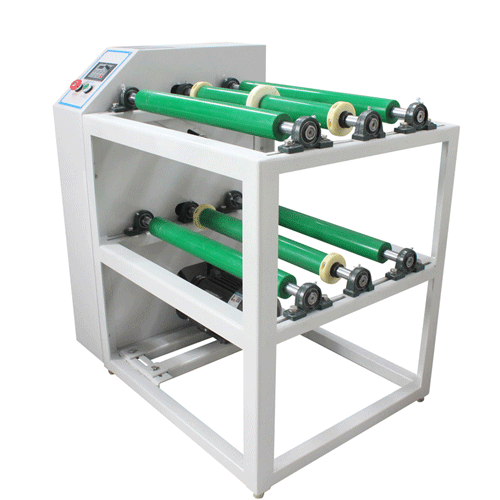
The principle is delightfully straightforward. A set of parallel rotating rollers (usually two or more) create a friction-driven motion. The jars sit on the rollers, and as the rollers rotate, the jars turn. Inside each jar, grinding balls (made of ceramic, steel, agate, etc.) cascade and impact the material, reducing particle size.
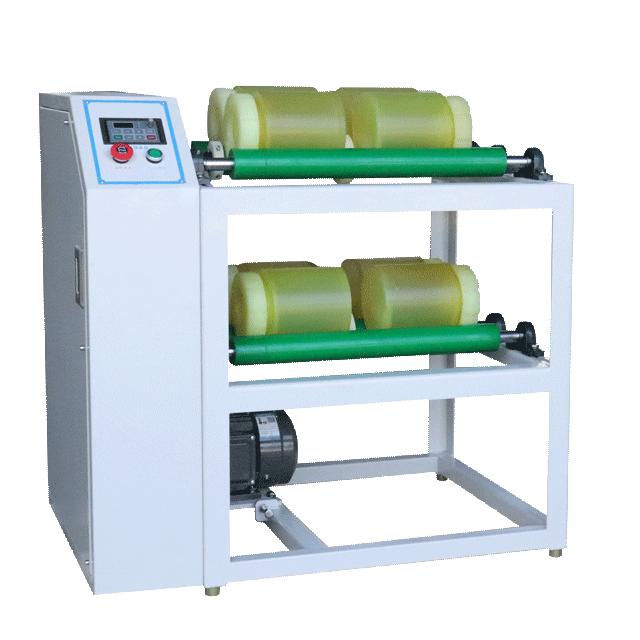
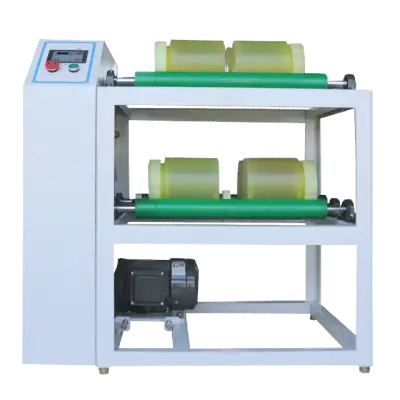
In an 8-station design, the machine accommodates up to eight jars arranged in two rows of four or a single row of eight, depending on the configuration. The rollers are driven by a motor with a variable frequency drive, allowing you to precisely control the rotation speed from, say, 50 to 300 RPM. This speed range covers both gentle mixing and aggressive grinding.
Key Components of a TENCAN 8-Station Jar Mill
- Rollers: Made of polyurethane or rubber-coated steel for quiet operation and good grip.
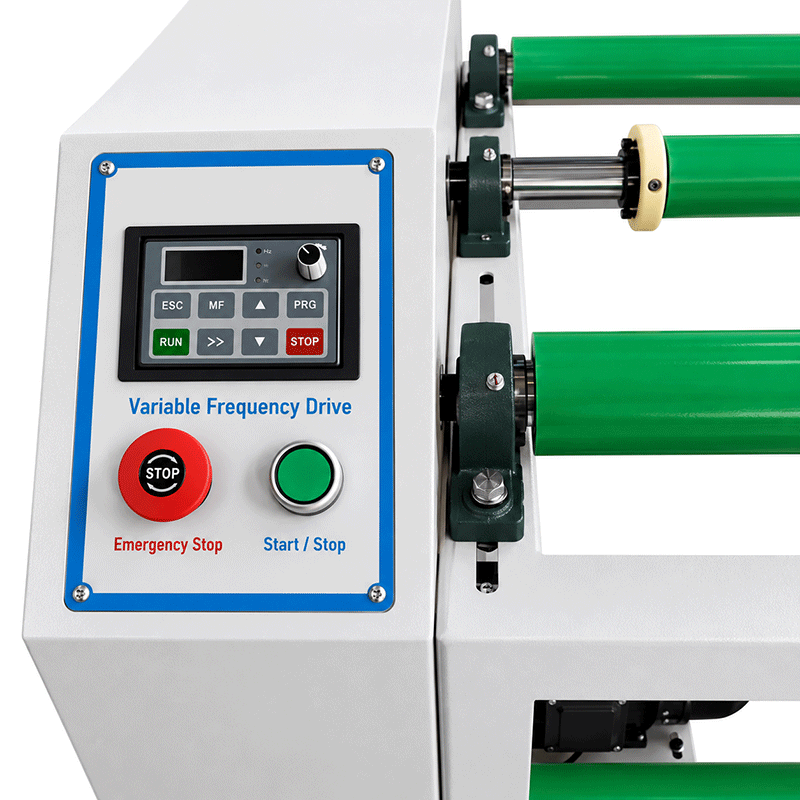
- Variable Frequency Drive (VFD): Enables smooth speed adjustment and constant torque.
- Safety Cover: A transparent or metal lid with an interlock switch that stops the machine when opened.
- Jars: Compatible with various materials – alumina, zirconia, stainless steel, nylon, PTFE, etc. – to avoid contamination.
- Control Panel: Digital display for speed, timer, and sometimes programmable cycles.
One of the best features of the 8-station jar mill from TENCAN is its ability to handle jars from 0.5L to 2.5L each, giving you a total batch capacity of up to 20 liters. That’s a serious upgrade for any lab.
Why Choose 8 Stations Over 2 or 4?
You might wonder: “Is 8 stations overkill for my lab?” Not at all. Here are the scenarios where the eight-station model shines:
1. Parallel Sample Preparation
In research and quality control, you often need to grind multiple samples under identical conditions. With eight stations, you can run eight different materials or eight replicates of the same material in one go. This dramatically reduces the time needed for method development or batch testing.
2. Optimized Space Utilization
Instead of buying two or three separate 2-station jar mills, a single 8-station unit occupies less bench space and costs less. It also requires only one power outlet and one controller.
3. Flexibility for Different Jar Sizes
The roller spacing on the TENCAN model can be adjusted to accommodate different jar diameters. So you can mix and match – for example, four 2L jars and four 1L jars – all on the same machine.
Applications Across Industries
The 8-station jar mill is not a one-trick pony. It handles a wide variety of materials, from hard minerals to fibrous plant matter. Here are some typical uses:
- Geology & Mining: Grinding ore samples for mineral analysis.
- Ceramics & Glass: Preparing powders for glaze, frit, or glass fritting.
- Pharmaceuticals: Milling active ingredients or excipients for formulation.
- Battery Materials: Mixing cathode and anode powders for electrode slurry.
- Food & Herbs: Fine grinding of tea, spices, or medicinal herbs.
- Nanomaterials: When combined with high-energy milling media, can achieve submicron particles.
Because the jars are sealed, you can also perform wet grinding or milling under an inert atmosphere (by purging the jar with argon or nitrogen before sealing).
Technical Specifications You Should Know
While exact specs vary by model, here are typical parameters for a TENCAN 8-station jar mill:
| Number of stations | 8 |
| Suitable jar capacity | 0.5 L – 2.5 L per jar |
| Roller speed | 50 – 300 RPM (adjustable via VFD) |
| Motor power | 0.75 kW – 1.5 kW |
| Power supply | 220V/50Hz or 110V/60Hz |
| Control | Digital timer, speed display, emergency stop |
| Safety features | Interlock lid, overload protection |
| Dimensions (approx.) | 1200 mm x 600 mm x 800 mm |
| Net weight | ~120 kg |
These specifications make it ideal for both university labs and small-scale production.
Choosing the Right Jars and Grinding Media
To get the best results, you need to match the jar material and ball size to your sample. Here’s a quick guide:
- Alumina jars: Good for general-purpose grinding, especially for ceramics and minerals.
- Zirconia jars: High hardness, low wear – perfect for grinding hard materials without contamination.
- Stainless steel jars: For heavy-duty applications, but may introduce iron contamination.
- Nylon or PTFE jars: For soft or heat-sensitive materials; avoid metal contamination.
Grinding balls should be about 3–5 times larger than the largest particle size. A mix of ball sizes (e.g., 10mm, 20mm, 30mm) usually gives the best efficiency. TENCAN offers a full range of jars and balls, so you can customize your setup.
Maintenance and Safety Tips
Taking care of your 8-station jar mill will keep it running smoothly for years.
- Regularly check the rollers for wear and replace if they become uneven.
- Keep the bearings lubricated according to the manual.
- Always tighten the jar lids properly to avoid leaks.
- Use the safety interlock – never open the cover while rollers are moving.
- Balance the load: When using fewer than eight jars, place them symmetrically to reduce vibration.
Frequently Asked Questions
Can I use the 8-station jar mill for wet grinding?
Absolutely. The jars are sealed, so you can grind with water, ethanol, or other liquids. Just make sure the lid seal is intact.
What is the smallest particle size achievable?
With proper media and enough time, you can reach sub-micron levels (down to 0.1 µm) for many materials.
Is it noisy?
No. The rubber-coated rollers significantly dampen noise. Expect around 60–70 dB during operation – about as loud as a conversation.
Can I grind different materials in different jars at the same time?
Yes. Since each jar is independent, you can run eight different samples simultaneously. This is a huge time-saver for method development.
Why Buy from TENCAN?
Changsha Tianchuang Powder Technology Co., Ltd. (TENCAN) has been a trusted name in powder equipment for over a decade. Their 8-station jar mill is built with quality components, including a genuine VFD, durable rollers, and a robust frame. They also offer a full range of grinding equipment from small lab mills to large production units. With international shipping and responsive customer support, TENCAN makes it easy to upgrade your lab.
Get In Touch
Our professional team will reply to you within one business day. Please feel free to contact us!