
Automatic Electric Tablet Press: Why It's a Game-Changer for Your Powder Processing

What Exactly Is an Automatic Electric Tablet Press?
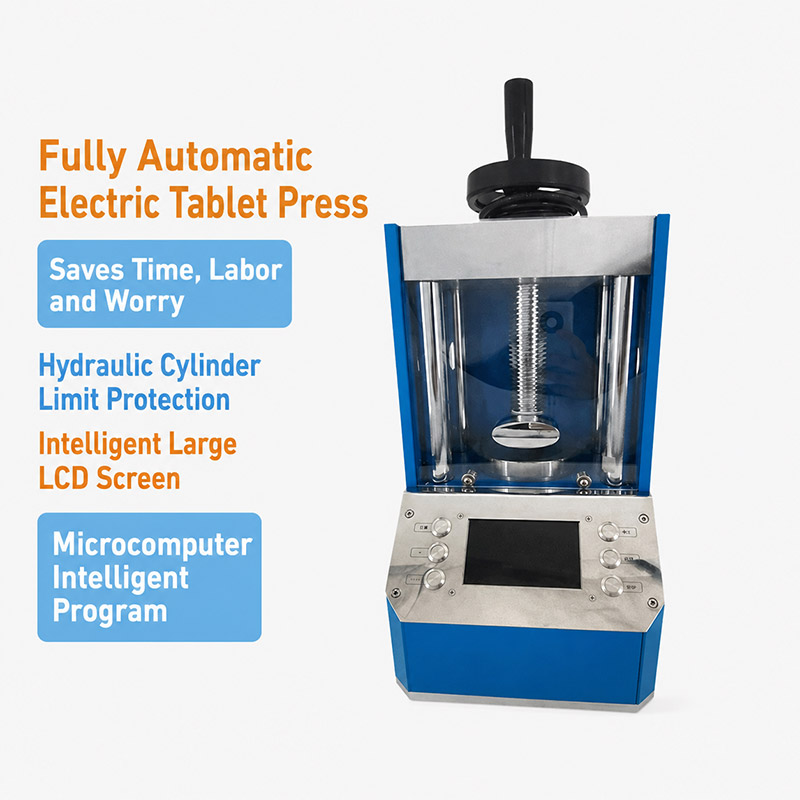
Have you ever wondered how those perfectly uniform tablets in your supplement bottle or lab sample are made? The answer often lies in a piece of equipment called an automatic electric tablet press. Simply put, it's a machine that takes powder or granular materials and compresses them into solid tablets of consistent size, shape, and weight. Unlike manual presses that require you to crank a lever, an automatic electric version does the work for you—continuously, reliably, and with much less effort.
Think of it as a smart, motorized version of a cookie press. Instead of you pushing the dough out, the machine takes care of the entire cycle: filling, pressing, and ejecting. Over and over again. This makes it a favorite in labs, small pharmaceutical workshops, food companies, and even research institutions that need to produce small to medium batches of tablets.
How Does It Work? The Simple Yet Smart Mechanism
An automatic electric tablet press operates on a straightforward principle: a motor drives a flywheel or gear system that moves a punch (or set of punches) up and down. The powder is fed into a die cavity, the upper punch comes down, compresses the powder into a tablet, then the lower punch pushes the tablet out. The whole cycle repeats automatically.
Most models, like the one from 长沙天创粉末技术有限公司 (TENCAN), feature a single die set for small-scale production, but they can still achieve impressive output rates—typically between 3,500 and 4,000 tablets per hour. That's fast enough for clinical trials, small-batch manufacturing, or R&D work.
Key Steps in the Automatic Cycle
- Filling: The hopper feeds powder into the die cavity. The depth of fill can be adjusted to control tablet weight.
- Compression: The upper punch descends with a force up to 15 kN (that's about 1.5 tons of pressure) to form the tablet.
- Ejection: The lower punch rises, pushing the finished tablet out of the die. A scraper moves it aside.
- Repeat: The cycle continues without any manual intervention—just keep the hopper filled.
Technical Parameters That Matter
When choosing an automatic electric tablet press, you'll want to pay attention to a few key specs. Let's break down the typical numbers for a TENCAN automatic electric tablet press—a compact, workhorse model designed for labs and small workshops.
| Parameter | Value |
|---|---|
| Number of dies | 1 set |
| Max. pressure | 15 kN |
| Max. tablet diameter | 12 mm |
| Max. tablet thickness | 6 mm |
| Production capacity | 3,500 – 4,000 tablets/hour |
| Motor power | 550 W, 1,400 rpm |
| Power supply | 220 V, single phase |
| Dimensions (L×W×H) | 580 × 450 × 625 mm |
| Net weight | 85 kg |
These numbers tell you that the machine is compact enough to fit on a benchtop, yet powerful enough to produce thousands of tablets per hour. The 15 kN pressure ensures that even sticky or hard-to-compress powders can be formed into solid tablets without crumbling.
Where Can You Use an Automatic Electric Tablet Press?
You might be surprised at the range of applications. Here are just a few common scenarios:
Pharmaceutical & Nutraceutical R&D
Perfect for making small batches of drug tablets, vitamin supplements, or herbal extracts during formulation development. The ability to adjust fill depth and pressure on the fly lets you test different formulations quickly.
Chemical & Ceramic Industries
Need to press catalyst pellets, ceramic discs, or even battery electrode materials? The automatic electric tablet press can handle powders with consistent results. It's also used for pressing samples for XRF analysis.
Food & Candy Production
Think of compressed candy, bouillon cubes, or effervescent tablets. This machine can produce them with uniform weight and shape, ideal for small-scale artisanal products or test runs.
Why Choose TENCAN's Automatic Electric Tablet Press?
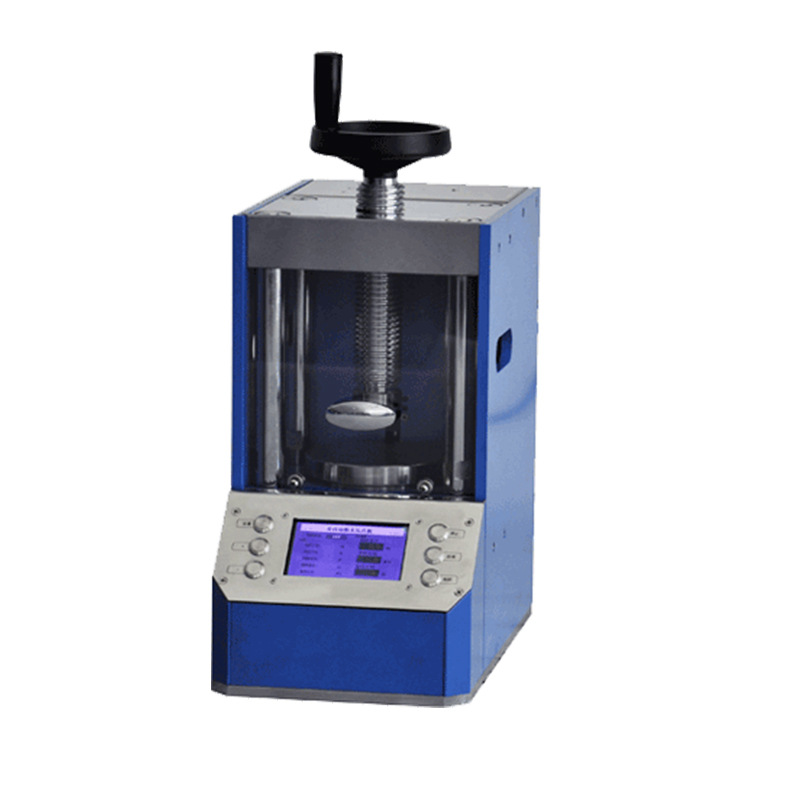
There are plenty of tablet presses on the market, but the automatic electric tablet press from TENCAN stands out for a few reasons:
- User-friendly design: The machine is easy to operate, even for beginners. The fill depth and tablet thickness can be adjusted with simple knobs, and the motor is controlled by a switch—no complex programming required.
- Versatility: Besides the standard round dies, you can get custom-shaped dies for special tablet shapes. The machine also works with a wide range of powder types, from fine powders to granular materials.
- Dual power mode: Some models can be operated manually in case of a power outage—just turn the handwheel. That's a lifesaver for critical experiments.
- Compact and robust: At only 85 kg and with a small footprint, it's easy to move around. The stainless steel construction ensures easy cleaning and durability, meeting basic GMP requirements.
- Reliable after-sales support: TENCAN provides a 1-year warranty and technical support, so you're not left guessing if something goes wrong.
If you're working with only a few grams of material, you might also consider the manual tablet press for ultra-precise single-press operations. But for continuous production, the automatic electric version is the way to go.
Practical Tips for Getting the Best Results
To make your automatic electric tablet press perform at its peak, keep these tips in mind:
- Prepare your powder properly: Make sure the powder is free-flowing and not too sticky. Adding a small amount of lubricant (like magnesium stearate) can prevent sticking and improve tablet quality.
- Adjust fill depth gradually: Start with a shallow fill and increase it until you reach the desired tablet weight. This avoids overloading the machine.
- Clean the dies regularly: Powder residue can build up over time, affecting tablet weight and causing sticking. Wipe the die and punches with a soft cloth after each batch.
- Check the pressure: For harder tablets, increase the pressure; for friable materials, reduce it. The machine's adjustment knob makes this easy.
- Monitor the hopper: Don't let it run empty—this can cause inconsistent tablet weight. A simple periodic check is enough.
Conclusion: Is an Automatic Electric Tablet Press Right for You?
Whether you're a researcher, a small manufacturer, or a hobbyist, an automatic electric tablet press can save you time, reduce labor, and improve the consistency of your tablets. It's the perfect bridge between manual labor and full-scale industrial production.
If you need to produce thousands of tablets per hour with minimal effort, and you want a machine that's easy to set up and maintain, then TENCAN's automatic electric tablet press is a solid investment. And if you ever need to switch to manual mode, you have that flexibility too.
Ready to see it in action? Visit the product page for more details, or contact TENCAN's team to discuss your specific tablet pressing needs.
Related Products
automatic electric tablet press
Automatic electric tablet press for XRF, cement, and ceramic sample prep. High precision, replaces manual units. Ideal for lab research.
Manual Tablet Press
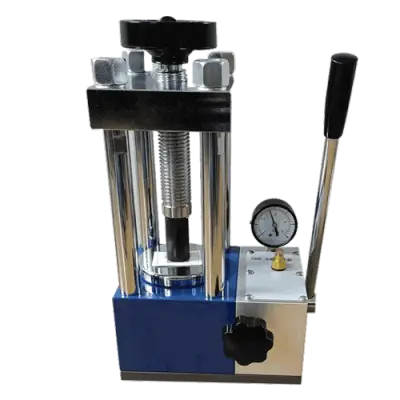
Manual tablet press for compressing powders and granules into tablets. Ideal for labs, R&D, and small batches. Precise pressure control.
Get In Touch
Our professional team will reply to you within one business day. Please feel free to contact us!