
Best Muffle Furnace for Laboratory Sintering and Ashing: A 1200–1800°C Selection Guide

Why a Muffle Furnace Remains Essential for Modern Laboratory Work
A muffle furnace is a versatile high-temperature instrument used in materials laboratories, quality-control departments, universities, ceramic facilities and powder-processing plants. Its insulated box chamber allows samples to be heated without direct contact with the electric heating elements, supporting processes such as ashing, calcination, annealing, oxidation, binder removal, ceramic firing and powder sintering.
The key purchasing question is not simply whether a laboratory needs a furnace. Buyers must determine which temperature class, chamber size, controller and furnace configuration can produce repeatable results without unnecessary energy consumption or limited future capacity.
The TENCAN muffle furnace range includes the TC-12N, TC-14S, TC-17M and TC-18HM families, covering maximum temperatures from 1200°C to 1800°C. Standard models range from compact research furnaces to larger batch-processing units. Complete parameters are available on the TENCAN Muffle Furnace product page. (TENCAN - Planetary Ball Mill Supplier)
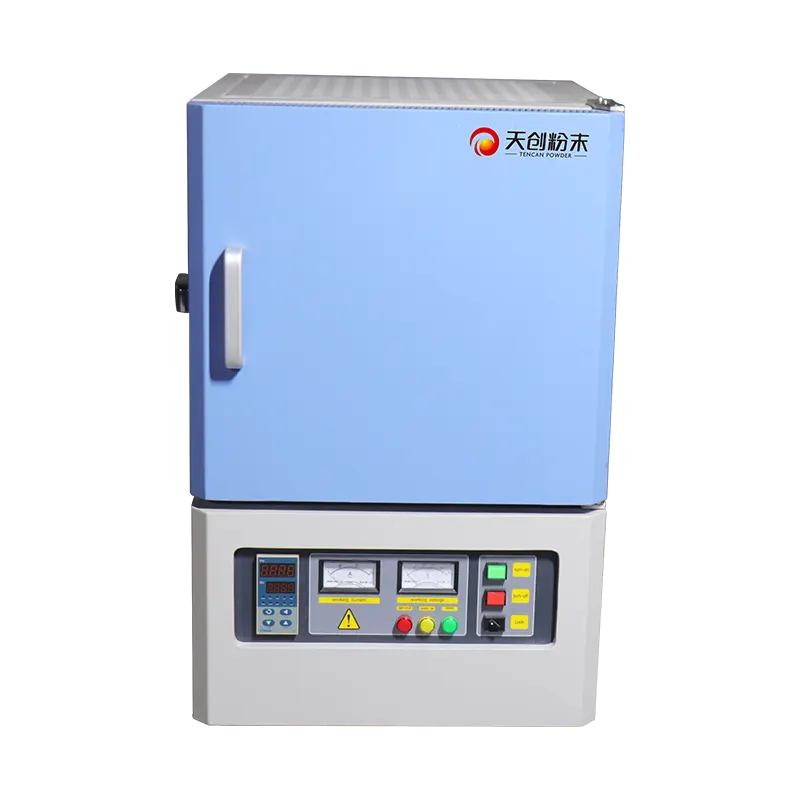
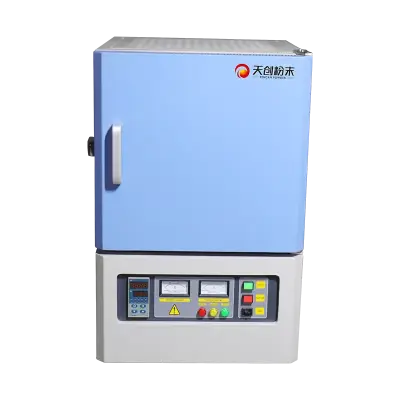
The TENCAN muffle furnace is available in multiple temperature and chamber-volume configurations for research, quality control and small-batch thermal processing.
What Makes the TENCAN Muffle Furnace Series Worth Recommending?
A furnace becomes valuable when it can follow the required temperature profile, accommodate the real sample load, protect operators and reproduce a validated process.
Independent High-Temperature Chamber
The muffle chamber separates the sample area from the heating elements. Heat reaches crucibles, powder samples and ceramic compacts through the controlled thermal environment inside the chamber rather than direct contact with the element.
This structure reduces the risk of accidental contact with heating components and supports a clean, stable workspace. It does not remove every contamination risk: crucible material, furnace lining, volatilized compounds and residues from earlier batches must still be considered.
TENCAN uses a polycrystalline mullite-fiber furnace structure with low thermal conductivity and strong insulation performance. A reinforced furnace-roof structure is used to improve reliability during repeated thermal cycling. (TENCAN - Planetary Ball Mill Supplier)
Programmable Control for Repeatable Thermal Profiles
Many processes require more than one temperature setpoint. Ceramic bodies may need controlled binder burnout before sintering. Powder precursors may require an intermediate dwell for decomposition. Metals or glass may need gradual heating and cooling to reduce thermal stress.
The TENCAN series provides 50-segment programmable automatic control, allowing ramp and dwell stages to be combined in one recipe. Once a process has been validated, the same program can be repeated across batches with less dependence on manual setpoint changes.
Safety-Oriented Construction
TENCAN muffle furnaces include an over-temperature alarm and a double-layer air-cooling structure. The cooling design helps control the external shell temperature under specified operating conditions. Door arrangements can also be customized according to the workspace and loading method. (TENCAN - Planetary Ball Mill Supplier)
These features support safer operation, but they do not replace laboratory procedures. Operators still need suitable gloves, crucible tongs, ventilation, hot-zone markings and clear rules for opening and cooling the furnace.
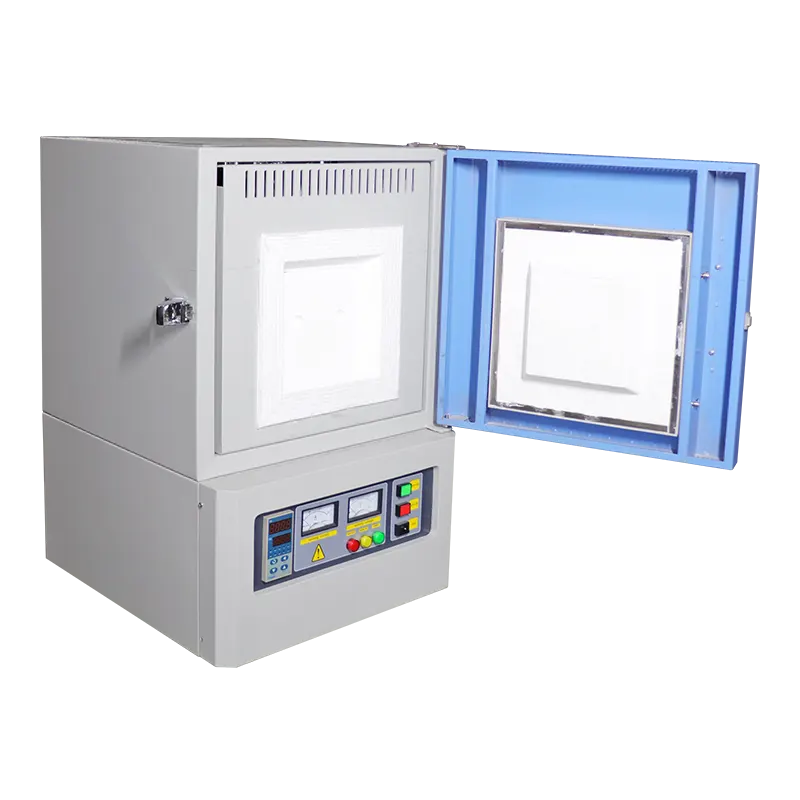
The insulated box chamber keeps the sample separate from the electric heating components.
How to Choose the Correct Temperature Class
The maximum temperature printed on a furnace is not the recommended continuous working temperature. Buyers should compare the normal process temperature with the published working temperature and leave reasonable thermal reserve.
Reserve helps reduce continuous stress on elements and insulation, supports future process development and prevents the furnace from operating permanently near its limit.
TC-12N: 1200°C Muffle Furnace for Routine Laboratory Work
The TENCAN TC-12N series has a maximum temperature of 1200°C and a listed working temperature of 1100°C. It uses K-type temperature measurement and includes compact and large-capacity models.
This range is suitable for routine ashing, lower-temperature calcination, loss-on-ignition preparation, ceramic pre-firing and general heat treatment that remains comfortably below 1100°C. It is a practical choice for laboratories that do not need the power consumption or cost of a higher-temperature system.
The TC-12N-3 has a 3 L chamber, while the TC-12N-8 and TC-12N-12 provide 8 L and 12 L chambers. Larger versions are available for more crucibles or larger components.
TC-14S: 1400°C Furnace for Ceramics and Advanced Calcination
The TENCAN TC-14S series reaches 1400°C and has a listed operating temperature of 1300°C. It uses S-type temperature measurement.
A 1400°C muffle furnace is appropriate for ceramic research, inorganic material synthesis, pigment or catalyst calcination, glass-related testing and processes that exceed the comfortable range of a 1200°C furnace. It offers substantially more thermal capability without automatically moving to a 1700°C or 1800°C platform.
The TC-14S is especially relevant when the normal recipe approaches 1200°C or when future formulations may need additional reserve.
TC-17M: 1700°C Muffle Furnace for High-Temperature Sintering
The TENCAN TC-17M series has a maximum temperature of 1700°C, a listed working temperature of 1600°C and Type B temperature measurement. It is intended for advanced ceramic sintering, refractory-material research, high-temperature phase formation and new-material development.
A 1700°C model should be selected only when the process genuinely exceeds the range of the TC-14S. Higher-temperature systems involve different heating elements, insulation, power demand and maintenance costs. Small TC-17M chambers serve research batches, while larger models support increased sample quantity.
TC-18HM: 1800°C Furnace for Demanding Materials Research
The TENCAN TC-18HM series reaches 1800°C and has a listed operating temperature of 1700°C. It is designed for advanced ceramics, refractory compounds and other materials requiring a range beyond conventional box furnaces.
Before selecting this series, buyers should confirm peak temperature, holding time, operating frequency and chamber load. A brief treatment near 1650°C places different demands on the equipment from a long hold near the upper operating range.
Quick TENCAN Model Selection Table
| TENCAN Series | Maximum Temperature | Working Temperature | Recommended Direction |
|---|---|---|---|
| TC-12N | 1200°C | 1100°C | Ashing, routine calcination, pre-firing and general heat treatment |
| TC-14S | 1400°C | 1300°C | Higher-temperature calcination, ceramics and inorganic materials |
| TC-17M | 1700°C | 1600°C | Advanced ceramic sintering and high-temperature research |
| TC-18HM | 1800°C | 1700°C | Refractory materials and demanding ultra-high-temperature work |
The final model should be selected using the material’s actual process temperature, atmosphere and loading requirements. The TENCAN parameter tables provide chamber dimensions, power, electrical phase and thermocouple type for each standard model. (TENCAN - Planetary Ball Mill Supplier)
Chamber Size Is as Important as Maximum Temperature
A furnace can reach the correct temperature and still be unsuitable if its chamber is poorly matched to the sample arrangement.
Select Volume from the Complete Load
Chamber selection should consider crucibles, lids, trays, setters, support plates and spacing—not sample weight alone. A light ceramic component may occupy most of the chamber depth, while a small powder batch may require several wide crucibles.
TENCAN publishes standard chamber volumes from 1 L to 729 L, with customization available for special capacity or dimensional requirements. Internal dimensions range from compact 100 × 100 × 100 mm chambers to much larger box configurations. The overall product range can also support customized capacities beyond the listed standard models. (TENCAN - Planetary Ball Mill Supplier)
Avoid Both Oversizing and Crowding
An oversized chamber usually consumes more energy, takes up more space and may require a higher-capacity electrical supply. For frequent small batches, a 1 L, 3 L or 8 L furnace may be more efficient.
An undersized chamber creates a different problem. Crowded crucibles complicate handling, restrict exposure and can increase batch variation. The chamber should provide enough space for safe loading and consistent heating without excessive unused volume.
Confirm Power and Phase Requirements
Smaller models are available in single-phase configurations, while larger furnaces may require three-phase power. Before ordering, confirm voltage, frequency, circuit capacity, phase, protective devices and local electrical standards. Accurate site information is particularly important for export projects.
Recommended Applications for a Laboratory Muffle Furnace
Ashing and Loss-on-Ignition Preparation
Ashing removes combustible or volatile material so the remaining inorganic residue can be weighed or analyzed. It is used in environmental testing, mining, food analysis, fuels, chemicals and ceramics.
Sample behavior is as important as final temperature. Materials containing substantial organic matter may require gradual heating to prevent rapid combustion, powder loss or excessive smoke. Suitable ventilation, an exhaust option and compatible crucibles should be considered.
For routine work at moderate temperatures, the TC-12N is usually the most economical starting point. The program should follow the applicable test method.
Calcination of Powder Precursors
Calcination can remove absorbed water, crystal water, carbonates, nitrates, organics and other volatile components while promoting phase transformation. It is common in oxide, catalyst, pigment, ceramic-powder and battery-material preparation.
A useful program may include drying, a low-temperature decomposition stage and a final high-temperature hold. Heating too rapidly can cause foaming, powder loss, crust formation or incomplete reaction inside a deep powder bed. Programmable control is therefore valuable for multi-stage decomposition.
The TC-12N and TC-14S cover many calcination processes, depending on target phase and precursor chemistry.
Ceramic Sintering and Pre-Sintering
During sintering, particles bond and the compact develops density and strength. Results depend on particle-size distribution, additives, green density, heating rate, peak temperature, holding time, atmosphere and cooling profile.
The TC-14S, TC-17M and TC-18HM provide progressively higher temperature capability for different ceramic systems. A higher-rated furnace can be justified when a lower model would operate too close to its limit. However, an 1800°C unit adds little value to a process that never exceeds 1200°C.
Users planning a complete thermal-processing line can also review the TENCAN Sintering Series, which includes muffle furnaces, tube furnaces, atmosphere furnaces and several types of drying equipment. (TENCAN - Planetary Ball Mill Supplier)
Annealing, Oxidation and General Heat Treatment
Muffle furnaces are used for annealing metal, glass and ceramic samples, controlled oxidation in air, thermal aging and research-scale heat treatment. These processes may relieve stress, change microstructure, form an oxide layer or evaluate thermal stability.
A conventional muffle furnace normally operates in air. Oxidation-sensitive materials, hazardous vapors or reducing-gas processes require a different furnace configuration.
Powder Metallurgy and Advanced Material Research
Powder metallurgy may involve milling, sieving, mixing, pressing, debinding and sintering. A muffle furnace is suitable when the process can be performed in air and the temperature range matches the material.
For metal powders, hard alloys or materials requiring nitrogen, argon, vacuum or reducing gas, a TENCAN Box-Type Atmosphere Furnace is usually a better choice. Atmosphere compatibility can be more important than a higher maximum temperature. (TENCAN - Planetary Ball Mill Supplier)
Muffle furnaces are also used for precursor calcination, solid-state reactions and oxide preparation in battery, catalyst, electronic-ceramic and magnetic-material research. The reaction chemistry should be reviewed first because some formulations are sensitive to oxygen partial pressure, volatile species or contamination.
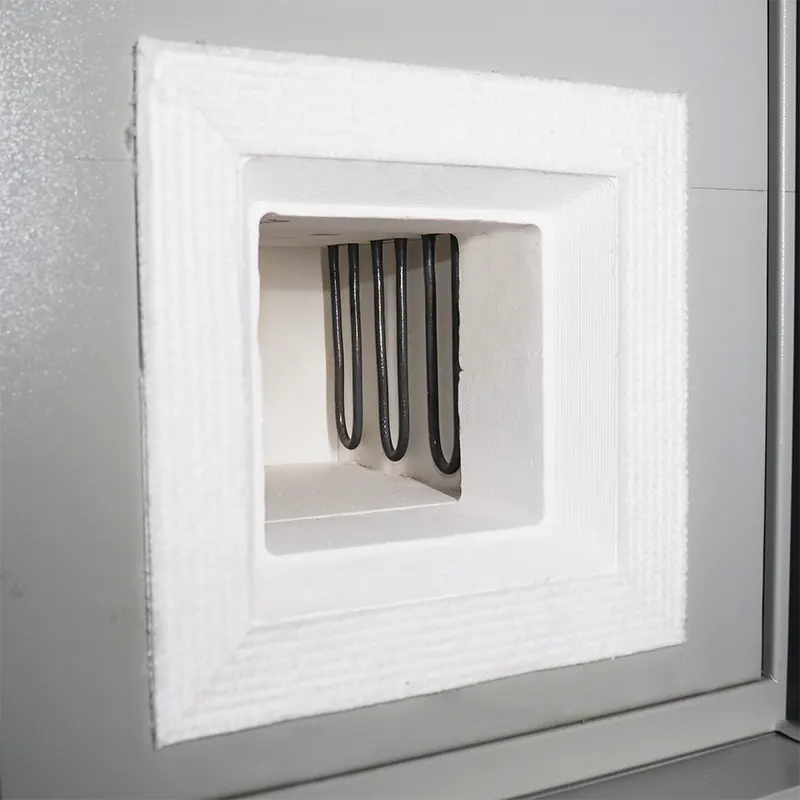
Chamber geometry, heating-element layout and sample placement all influence practical process performance.
Process Factors That Determine Real Furnace Results
Heating Rate and Dwell Time
A fast heating rate reduces cycle time but may cause thermal shock, uneven decomposition, pressure buildup, binder ignition or crucible cracking. Organic binders often need a slow burnout stage, while small stable powders may tolerate faster heating.
The dwell allows the sample to approach thermal equilibrium and gives the reaction time to proceed. Too short a hold can produce incomplete calcination or insufficient sintering. Too long a hold may cause grain growth, volatilization, crucible reaction and unnecessary energy use.
Both ramp rate and dwell time should be validated for the actual material rather than copied from an unrelated process.
Cooling Profile
Natural cooling with the door closed is common because it limits thermal shock and direct exposure to the hot chamber. Opening the furnace at high temperature can damage insulation, shorten element life and expose the operator to intense radiant heat.
Some materials require controlled cooling to achieve a desired phase or microstructure. In such cases, the complete cycle must be considered during model and controller selection.
Crucible Compatibility
The crucible must withstand the temperature and remain chemically compatible with the sample. Alumina, quartz, porcelain, graphite and specialized ceramics each have limitations.
Graphite can oxidize in air. Quartz has thermal and temperature limits. Alumina may react with certain fluxes or melts. Before choosing a crucible, evaluate contamination risk, porosity, chemical reaction and thermal shock.
TENCAN offers optional corundum crucibles and multi-layer kiln furniture for suitable configurations.
Loading Consistency
Crucibles should not touch heating components or block the chamber excessively. For repeatable work, record the number of crucibles, loading position, sample mass, container type and program. A thermal recipe becomes more reliable when the physical loading method is standardized with the controller settings.
Muffle Furnace, Tube Furnace or Atmosphere Furnace?
Choose a Muffle Furnace When
A muffle furnace is normally the best option when the process can be performed in air, uses crucibles or shaped components, requires convenient front loading and involves routine ashing, calcination, annealing or ceramic sintering.
Its box chamber is easy to load and can accommodate multiple samples or irregularly shaped parts.
Choose a Tube Furnace When
A tube furnace is preferable when the process needs continuous gas flow, vacuum capability, a defined hot zone or controlled sample movement. Typical uses include atmosphere-controlled synthesis, annealing and treatment of oxidation-sensitive materials.
TENCAN offers Horizontal Tube Furnaces and Vertical Tube Furnaces. The correct orientation depends on sample loading, gas flow and process design. (TENCAN - Planetary Ball Mill Supplier)
Choose a Box-Type Atmosphere Furnace When
A box-type atmosphere furnace combines convenient chamber loading with vacuum or protective-gas capability. It is suitable for metal powders, hard alloys, silicon nitride, magnetic materials and other products whose properties change during air exposure.
It is more complex than a standard muffle furnace because sealing, evacuation and gas management become part of the process. It should be selected only when controlled atmosphere is a real requirement.
Choose a Drying Oven When
A drying oven is more suitable for low-temperature moisture removal and constant-temperature conditioning. Using a high-temperature muffle furnace for simple drying wastes energy and reduces furnace availability for more demanding work.
Why TENCAN Is Relevant to Powder-Processing Laboratories
TENCAN, operated by Changsha Tianchuang Powder Technology Co., Ltd., was founded in 2006 and focuses on laboratory ball mills, powder-processing equipment and research solutions. Its portfolio includes grinding, crushing, sieving, mixing, press forming, glove boxes and sintering equipment. (TENCAN - Planetary Ball Mill Supplier)
This process background matters because furnace results are affected by upstream particle size, powder homogeneity, drying, binder distribution and green-body preparation. The furnace should be considered as one stage in a complete powder workflow.
TENCAN’s muffle furnace series combines multiple temperature classes, wide chamber choices, programmable control and customization. Optional configurations include a high-definition touch screen, exhaust or observation holes, kiln furniture, corundum crucibles and communication software. (TENCAN - Planetary Ball Mill Supplier)
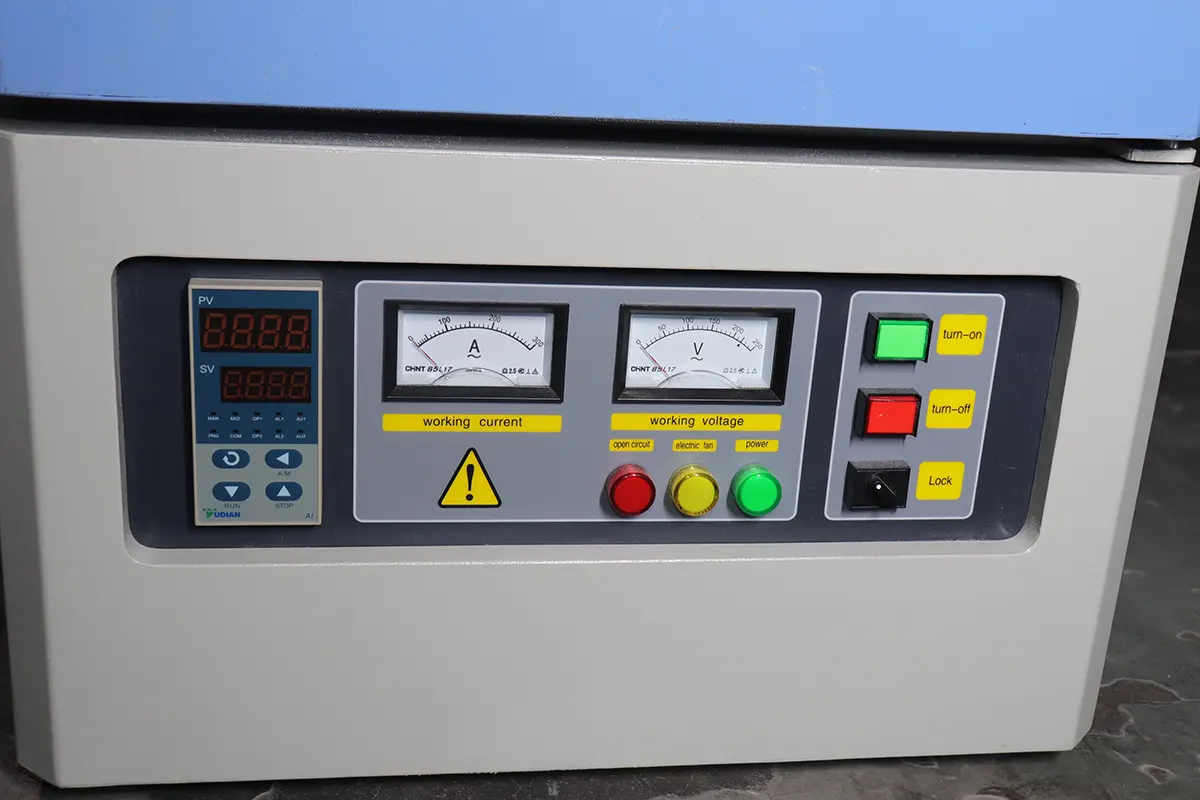
Programmable control helps laboratories reproduce ramp, dwell and multi-stage thermal processes.
Muffle Furnace Buying Checklist
Before requesting a quotation, prepare the following information:
- Material and composition, including binders, salts or volatile components.
- Main process, such as ashing, calcination, sintering, annealing or oxidation.
- Normal and maximum temperature, listed separately.
- Heating program, including ramps, dwell stages and cooling requirements.
- Atmosphere, confirming whether air is acceptable.
- Sample, crucible and fixture dimensions.
- Samples per batch and expected future capacity.
- Operating frequency and typical cycle duration.
- Voltage, frequency, phase and available power.
- Optional functions, such as exhaust, observation, communication or special doors.
This information allows TENCAN to compare the TC-12N, TC-14S, TC-17M and TC-18HM series against the real process. For project review, use the TENCAN contact page.
Frequently Asked Questions About TENCAN Muffle Furnaces
Which Series Is Suitable for Routine Ashing?
For many ashing and loss-on-ignition applications below 1100°C, the TC-12N is the practical starting point. The required temperature and hold should follow the applicable method and sample chemistry.
Should I Buy a 1400°C Furnace for a 1200°C Process?
The TC-14S may be appropriate because its listed working temperature is 1300°C, leaving useful reserve. Final selection should consider holding time, frequency, load and future projects. Routine operation at the absolute maximum of a lower-rated furnace is generally undesirable.
What Is the Difference Between TC-17M and TC-18HM?
The TC-17M reaches 1700°C and has a 1600°C working temperature. The TC-18HM reaches 1800°C and has a 1700°C operating temperature. The higher series is intended for materials that genuinely require the additional range.
Can a Standard Muffle Furnace Operate Under Argon?
A conventional muffle furnace is mainly intended for heating in air. A simple gas inlet does not create a reliable sealed-atmosphere system. For argon, nitrogen or vacuum treatment, choose a tube furnace or box-type atmosphere furnace designed for that purpose.
Can the Chamber Be Customized?
Yes. TENCAN offers a broad standard range and customization for special dimensions or capacity. Buyers should provide the complete sample and fixture size, batch quantity and working temperature.
Does a Larger Chamber Improve Uniformity?
Not automatically. Uniformity depends on chamber design, heating-element arrangement, insulation, loading and measurement. An oversized furnace can be inefficient, while an overloaded small chamber can produce poor exposure.
What Maintenance Is Required?
Keep the chamber clean, remove residues carefully, inspect insulation and door surfaces, check thermocouple condition and monitor element performance. Corrosive spills and vapors should be addressed promptly.
Can the Door Be Opened Immediately After a Program Ends?
The furnace should normally cool to a safe temperature first. Opening at very high temperature can shock the sample and insulation, reduce component life and expose the operator to radiant heat.
Final Recommendation: Match the Furnace to the Process
The best muffle furnace is not automatically the model with the highest temperature or largest chamber. It is the model that provides adequate thermal reserve, suitable loading space, repeatable programming and safe operation.
For routine ashing and calcination, the TENCAN TC-12N is usually the efficient choice. For higher-temperature ceramics and inorganic materials, the TC-14S provides additional capability. Advanced sintering can be matched to the TC-17M, while the TC-18HM is intended for demanding materials approaching 1700°C in normal operation.
Combining the correct temperature class with suitable chamber dimensions, crucible materials, loading practices and atmosphere requirements improves repeatability and avoids unnecessary cost. Review the complete TENCAN Muffle Furnace specifications, or contact TENCAN with your material, temperature, batch size and electrical requirements for a model recommendation.
Get In Touch
Our professional team will reply to you within one business day. Please feel free to contact us!