
Tungsten Carbide Mill Ball: The Ultimate Grinding Media for High-Energy Ball Milling

Why Grinding Media Matters More Than You Think
When you're running a planetary ball mill or a high-energy mill, the grinding media you choose can make or break your experiment. It's not just about crushing particles—it's about achieving consistent particle size, avoiding contamination, and getting reproducible results. Among all the options out there, tungsten carbide mill balls stand out as the heavyweight champion. Let's dive into why.
Imagine you're working with super-hard materials like silicon carbide, tungsten powder, or cemented carbides. Ordinary steel balls just won't cut it—they wear down too fast and introduce iron contamination. That's where tungsten carbide comes in. These balls are incredibly dense, extremely hard, and resistant to wear, making them the go-to choice for demanding applications.
What Exactly Is a Tungsten Carbide Mill Ball?
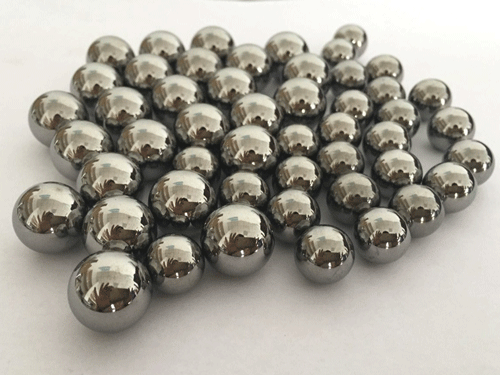
Tungsten carbide (WC) is a composite material made by sintering tungsten carbide particles with a metallic binder, usually cobalt. The result is a material that combines the hardness of ceramic with the toughness of metal. Tungsten carbide mill balls are manufactured through powder metallurgy—pressing and sintering at high temperatures—to achieve a near-net shape with excellent dimensional accuracy.
These balls typically have a density of 14.5–15.0 g/cm³, which is nearly twice that of steel balls. This high density means each ball delivers more impact energy during milling, crushing particles faster and more efficiently. The hardness is equally impressive: typically HRA 88–92 (Rockwell A scale), which translates to excellent wear resistance and long service life.
Key Properties at a Glance
- High Density: 14.5–15.0 g/cm³ – delivers maximum kinetic energy per ball
- Extreme Hardness: HRA 88–92 – resists abrasion and deformation
- Low Wear Rate: Minimal contamination of the sample
- High Toughness: Withstands repeated high-energy impacts without cracking
- Corrosion Resistance: Stable in most chemical environments
Where Are Tungsten Carbide Mill Balls Used?
These balls are the workhorses of high-energy ball milling and planetary ball mills. You'll find them in:
Hard Materials Processing
When you need to grind cemented carbides, ceramics, boron nitride, or diamond composites, tungsten carbide balls are the only reliable choice. Their high density and hardness allow them to break down even the toughest materials.
Mining and Mineral Processing
In ore grinding and mineral liberation, tungsten carbide balls outperform steel balls in wear resistance, reducing downtime for media replacement. They're especially useful for grinding abrasive ores like quartz, bauxite, and iron ore.
Electronics and Battery Materials
For lithium-ion battery cathode/anode materials, electronic ceramics, and ferrites, contamination control is critical. Tungsten carbide balls introduce minimal impurities, and their high density ensures efficient particle size reduction.
Research and Development
Universities and labs use tungsten carbide balls in planetary ball mills for synthesizing nanomaterials, mechanical alloying, and studying phase transformations. The reproducibility of results is excellent thanks to the consistent ball quality.
How Do Tungsten Carbide Balls Compare to Other Media?
Let's be honest—there's no one-size-fits-all grinding media. Each material has its strengths. Here's a quick comparison:
vs. Stainless Steel Balls
304 stainless steel balls are cheaper and work well for soft to medium-hard materials. But they have lower density (~7.8 g/cm³) and hardness, so they wear faster when grinding hard materials. Tungsten carbide balls last many times longer and deliver higher impact energy.
vs. Zirconia Balls
Zirconia grinding balls are excellent for contamination-free milling of ceramics and have good toughness. However, their density (~6.0 g/cm³) is less than half that of tungsten carbide, so they deliver less impact force. For very hard materials, tungsten carbide is the better choice.
vs. Agate Balls
Agate balls are natural, low-cost, and suitable for soft materials and geological samples. But they are brittle and have low density (~2.6 g/cm³), making them ineffective for hard material grinding. Tungsten carbide is far more robust.
vs. Corundum Balls
Corundum (alumina) balls are hard and wear-resistant, but their density (~3.9 g/cm³) is much lower. They are best for milling soft to medium-hard ceramics where contamination from alumina is acceptable.
In summary, if you need maximum impact energy, long service life, and minimal contamination for hard materials, tungsten carbide balls are the clear winner.
Available Sizes and Customization
Tungsten carbide mill balls are typically available in diameters ranging from 0.5 mm to 20 mm, with the most common sizes being 3 mm, 5 mm, 6 mm, 10 mm, and 15 mm. For specialized applications, custom sizes can be produced. The balls are precision ground to achieve a surface finish of Ra ≤ 0.2 μm, ensuring smooth rolling and consistent performance.
When selecting the ball size, consider the initial particle size of your feed material and the target final fineness. A rule of thumb: use balls that are at least 10 times larger than the largest feed particle. For nanogrinding, smaller balls (0.5–3 mm) are often used to increase the number of contact points.
Tips for Choosing the Right Tungsten Carbide Ball
- Check the cobalt content: Standard grades contain 6–10% cobalt. Higher cobalt improves toughness but reduces hardness. For most milling, 6–8% Co works well.
- Verify the surface quality: Look for polished, defect-free balls. Cracks or pits can lead to premature failure.
- Consider the ball-to-powder ratio: For planetary ball mills, a typical ratio is 10:1 to 20:1 by weight. Higher density balls allow you to use less weight for the same impact energy.
- Check compatibility with your mill: Ensure the balls fit your jar size and that the jar material can withstand the impact (e.g., tungsten carbide jars are ideal for heavy balls).
Where to Buy Quality Tungsten Carbide Mill Balls
At planetaryballmills.com, we offer a comprehensive range of tungsten carbide mill balls sourced from leading manufacturers. We also carry zirconia, stainless steel, agate, and corundum grinding media, so you can find the perfect match for your application. Whether you need a few grams for lab trials or bulk quantities for production, we've got you covered.
Need help selecting the right media? Contact our team—we're always happy to help you optimize your milling process.
Get In Touch
Our professional team will reply to you within one business day. Please feel free to contact us!