
Tungsten Carbide Mill Ball: The Ultimate Grinding Media for Hard Materials

What Exactly Is a Tungsten Carbide Mill Ball?
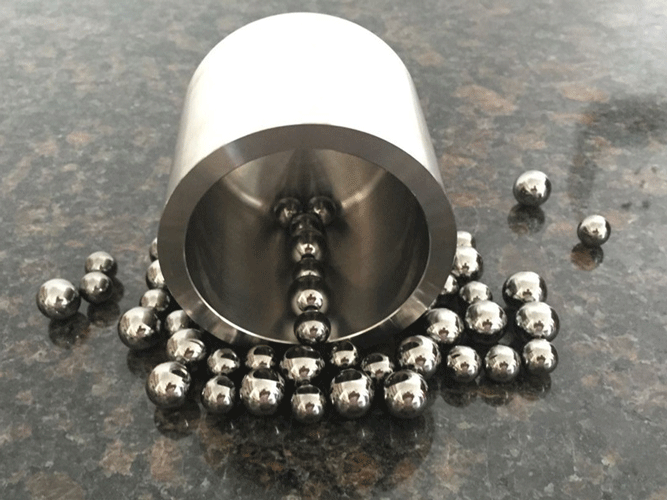
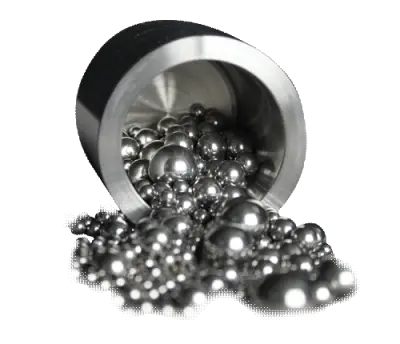
If you've ever worked with a tungsten carbide mill ball, you know it's not your average grinding ball. These little spheres are made from a composite of tungsten carbide (WC) and cobalt (Co) – typically around 92% WC and 8% Co by weight. The result is a material that's incredibly hard (HRA ≥ 90) and dense (about 14.8 g/cm³), making it perfect for grinding the toughest materials in a ball mill.
Why Choose Carbide Grinding Balls?
Let's be honest: when you're grinding materials like silicon carbide, alumina, or even hard metals, you need a grinding media that won't wear down quickly. That's where tungsten carbide balls shine. Their extreme hardness means they resist abrasion and deformation, keeping your mill charge consistent and your results repeatable. Plus, the high density provides more kinetic energy during milling, so you can achieve finer particle sizes in less time.
Composition and Key Properties
Here's a quick look at what makes these balls special:
- Hardness: 92 HRA (Rockwell A scale) – that's harder than most tool steels.
- Density: 14.8 g/cm³ – nearly twice as dense as stainless steel, giving a powerful impact.
- Flexural Strength: 2800 MPa – tough enough to handle repeated impacts.
- Wear Resistance: Exceptional – ideal for continuous use in planetary ball mills.
Applications: Where Tungsten Carbide Balls Excel
You'll find carbide grinding balls used in a wide range of industries:
- Laboratory Research: For grinding hard, brittle samples like cemented carbides, ferroalloys, and minerals.
- Ceramic and Powder Metallurgy: Milling precursor powders for advanced ceramics or metal matrix composites.
- Battery Materials: Processing electrode materials that require contamination-free grinding – carbide balls are resistant to many chemicals.
- Oil and Gas: As components in drilling tools and nozzles, though here we focus on milling applications.
How Does It Compare to Other Grinding Media?
Choosing the right ball mill media can be tricky. Let's compare tungsten carbide with a few common alternatives:
Tungsten Carbide vs. 304 Stainless Steel
304 stainless steel balls are great for general-purpose grinding and for materials that are sensitive to iron contamination. But they are much softer (around 200 HV) and less dense (7.9 g/cm³). If you need to grind hard materials efficiently, tungsten carbide is the clear winner.
Tungsten Carbide vs. Zirconia
Zirconia grinding balls are also very hard and wear-resistant, with a density of about 6.0 g/cm³. They are excellent for milling ceramics and avoiding contamination from cobalt. However, tungsten carbide is denser and harder, making it more effective for breaking down very hard materials. The trade-off: carbide balls can introduce cobalt into your sample, which might not be acceptable for some applications (e.g., high-purity electronic materials).
Tungsten Carbide vs. Agate
Agate balls are natural silica and are very popular for soft to medium-hard materials because they are nearly contamination-free (silica only). But they are brittle and have low density (2.65 g/cm³). For hard materials, agate will wear out quickly and lack the impact energy needed. Tungsten carbide is the heavy lifter here.
Tungsten Carbide vs. Corundum
Corundum (aluminum oxide) balls are hard and chemically inert, but they are less dense (3.95 g/cm³) and not as tough as carbide. For grinding hard metals, carbide outperforms corundum.
Size Options and Customization
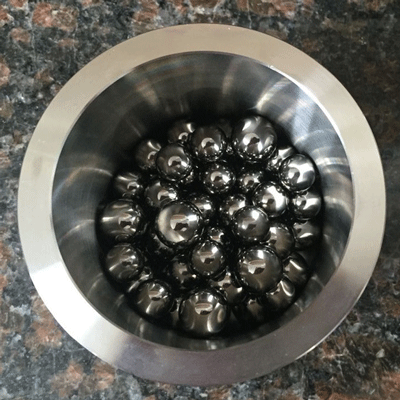
At TENCAN (Changsha Tianchuang Powder Technology Co., Ltd.), we offer tungsten carbide mill balls in a wide range of diameters, from 2 mm up to 50 mm or more. Common sizes include 3.56 mm, 3.81 mm, 4.06 mm, 4.32 mm, 4.57 mm, and 14 mm. You can also request custom sizes for specific applications. The balls are available in different grades (e.g., YG6, YG8), which vary in cobalt content and hardness.
Tips for Using Tungsten Carbide Balls in a Planetary Ball Mill
If you're using a planetary ball mill, here are a few practical pointers:
- Ball-to-powder weight ratio: Typically 10:1 to 20:1 for efficient grinding. The high density of carbide means you can use a lower number of balls to achieve the same impact energy.
- Speed: Avoid running the mill at maximum speed for too long, as carbide balls can generate significant heat and wear the jar faster.
- Cleaning: After milling, clean the balls with ultrasonic cleaning in an appropriate solvent to remove any adhered powder.
- Safety: Tungsten carbide is heavy and hard – handle with care to avoid damaging the mill jar or yourself.
Why Choose TENCAN for Your Tungsten Carbide Grinding Balls?
As a leading manufacturer of powder processing equipment, TENCAN (Changsha Tianchuang Powder Technology Co., Ltd.) offers premium quality tungsten carbide mill balls that meet strict standards. Our balls are produced with precise sintering and grinding processes, ensuring high sphericity, consistent size, and excellent wear life. Whether you need a few kilograms for lab use or bulk quantities for production, we've got you covered.
Final Thoughts
Tungsten carbide mill balls are the workhorses of the grinding world. If your application demands the highest efficiency, minimal contamination from wear, and the ability to pulverize even the hardest materials, these balls are your best bet. Just remember to consider the potential cobalt contamination if your sample is sensitive. For most hard-material grinding, carbide is the way to go.
Ready to upgrade your milling process? Check out the full range of tungsten carbide mill balls at TENCAN, or explore our other grinding media like zirconia balls and 304 stainless steel balls to find the perfect match for your material.
Related Products
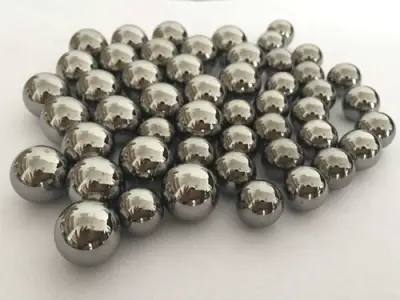
Tungsten carbide mill ball
High-hardness, wear-resistant tungsten carbide mill ball for grinding in harsh environments. Resists corrosion and bending, ideal replacement for steel balls in milling applications.
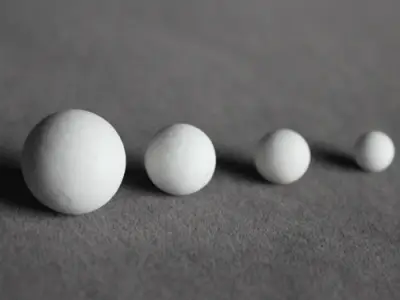
Corundum grinding ball
High-purity corundum grinding balls (Al₂O₃ ≥90%) for efficient ceramic grinding. Superior wear resistance, high density, ideal for ball mills in mineral processing and ceramic production.
304 stainless steel grinding ball
High-quality 304 stainless steel grinding balls for fine grinding and dispersion in planetary, drum, stirred, and vibration ball mills. Durable, corrosion-resistant, widely used in powder processing.
Get In Touch
Our professional team will reply to you within one business day. Please feel free to contact us!