
Tungsten Carbide Mill Ball: The Ultimate Guide to Hardness, Wear Resistance, and Grinding Performance

What Exactly Is a Tungsten Carbide Mill Ball?
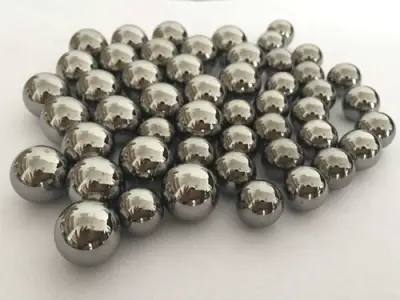
If you've ever run a planetary ball mill, you know that the grinding media you choose can make or break your experiment. Tungsten carbide mill balls are small, dense spheres made from a composite of tungsten carbide (WC) and a metallic binder, usually cobalt (Co). They are the heavyweights of the grinding world — literally and figuratively.
Think of them as the ultimate workhorse for milling hard, brittle, or abrasive materials. When you need to pulverize something that laughs at ordinary steel or ceramic balls, tungsten carbide steps in with a grin. At TENCAN, we've seen these balls chew through silicon carbide, cemented carbides, and even diamond powders without breaking a sweat.
How Are They Made?
These balls aren't just pressed into shape — they're engineered. The process starts with fine tungsten carbide powder mixed with cobalt powder. The mixture is then compacted under high pressure into a spherical shape. After that, it goes through a sintering process at temperatures around 1400°C, where the cobalt melts and binds the carbide particles together.
The result? A dense, non-porous ball with a hardness second only to diamond. The typical composition is around 94% WC and 6% Co, though variations exist for specific applications. The cobalt content gives the ball some toughness, so it doesn't shatter under impact.
Key Properties That Make Them Stand Out
Unmatched Hardness
We're talking about a hardness of 91-93 HRA (Rockwell A scale) or around 1500-1800 HV (Vickers). That's about three times harder than stainless steel. For comparison, a typical 304 stainless steel grinding ball clocks in at around 200 HV. So if you're grinding hard ceramics or minerals, tungsten carbide is the clear choice.
Extreme Wear Resistance
Because they're so hard, these balls barely wear down. In a typical planetary ball mill operation, you can run them for hundreds of hours and still see minimal weight loss. This means less contamination of your sample and longer intervals between media replacement.
High Density
With a density of around 14.8-15.0 g/cm³, tungsten carbide balls are nearly twice as dense as steel (7.8 g/cm³) and way denser than zirconia grinding balls (6.0 g/cm³). Higher density means higher impact energy during milling. Your mill doesn't have to spin as fast to achieve the same grinding effect, which saves energy and reduces wear on the machine.
Technical Specifications at a Glance
Here's a quick look at the typical parameters you can expect from a quality tungsten carbide mill ball, like the ones we offer at TENCAN:
- Material: Cemented carbide (WC + Co)
- Hardness: 91-93 HRA
- Density: 14.8-15.0 g/cm³
- Available diameters: 1 mm to 50 mm (custom sizes upon request)
- Surface finish: Polished or ground
- Appearance: Metallic gray, non-porous
These balls are designed to be used in planetary ball mills from TENCAN and other major brands. They fit standard ball mill jars made of stainless steel, tungsten carbide, or ceramic.
Where Are They Used?
Tungsten carbide mill balls are the go-to media for:
- Hard metal recycling: Grinding cemented carbide scrap back into powder.
- Ceramic processing: Milling alumina, zirconia, silicon nitride, and other advanced ceramics.
- Battery materials: Preparing electrode materials like lithium cobalt oxide, graphite, and silicon anodes.
- Mining and mineral processing: Crushing ores of tungsten, molybdenum, and rare earths.
- Pharmaceuticals and chemicals: When contamination from iron must be avoided (though nickel or cobalt contamination may still occur).
If your material is harder than steel, you need tungsten carbide. Period.
How Do They Compare to Other Grinding Media?
Let's be honest — there's no single perfect grinding ball for every job. Here's a quick comparison so you can decide if tungsten carbide is right for you.
vs. Stainless Steel (304)
Steel balls are cheap and tough, but they wear out quickly when grinding hard materials. They also introduce iron contamination, which can mess up your sample chemistry. Tungsten carbide lasts much longer and introduces much less contamination — but costs more upfront.
vs. Zirconia (ZrO₂)
Zirconia balls are great for grinding materials that must not see any metallic contamination. They are tough and have good wear resistance. However, they are less dense than tungsten carbide (6.0 vs 14.8 g/cm³), so they deliver lower impact energy. For very hard materials, tungsten carbide is more effective.
vs. Agate
Agate balls are used when you need absolutely no contamination from metals. They are silica-based and very hard, but they are also brittle and can fracture under high-energy milling. Tungsten carbide is much tougher.
vs. Corundum (Al₂O₃)
Corundum balls are another ceramic option. They are hard and wear-resistant, but again less dense than tungsten carbide. For heavy-duty grinding, the carbide balls win.
How to Choose the Right Tungsten Carbide Ball
When you're selecting a ball, you need to consider:
- Ball diameter: Larger balls give more impact but fewer contact points. Smaller balls give finer grinding. A common rule is to use balls that are 10-20 times the diameter of your feed particle size.
- Ball-to-powder ratio: Typically, you want about 10:1 to 20:1 by weight for effective milling. Too few balls and you waste energy; too many and you risk overloading the mill.
- Jar material: If you're using a tungsten carbide jar, stick with tungsten carbide balls to avoid cross-contamination and wear. If you're using a stainless steel jar, you can still use carbide balls, but the jar will wear faster.
- Purity requirements: If even trace amounts of cobalt or tungsten are unacceptable, you might need to consider zirconia or agate instead.
Tips for Getting the Most Out of Your Carbide Balls
- Don't mix different sizes in the same batch randomly — use a controlled size distribution for optimal packing.
- Clean the balls after each use to prevent cross-contamination between different materials. You can use an ultrasonic bath with a mild detergent.
- Inspect them regularly for cracks or chips. A damaged ball can damage your mill jar.
- Store them in a dry place to avoid oxidation of the cobalt binder.
Why Choose TENCAN for Your Tungsten Carbide Mill Balls?
At TENCAN, we take grinding media seriously. Our tungsten carbide mill balls are manufactured with strict quality control, ensuring consistent hardness, density, and spherical shape. We offer a range of sizes from 1 mm to 50 mm, and we can customize to your exact needs.
We also provide a full line of grinding media including stainless steel, zirconia, agate, corundum, and polyurethane coated iron core balls. So whether you're in a research lab or a production facility, you'll find the right media for your application.
If you're still not sure which ball is best for your material, reach out to our technical team. We love talking about grinding — it's kind of our thing.
Final Thoughts
Tungsten carbide mill balls are the gold standard for high-energy milling of hard materials. They offer unmatched hardness, superior wear resistance, and high density that translates into efficient grinding. While they cost more upfront than steel or ceramic balls, their longevity and reduced contamination often make them the most economical choice in the long run.
So next time you're setting up your planetary ball mill, give some thought to those little gray spheres. They might just be the hardest-working part of your entire experiment.
Get In Touch
Our professional team will reply to you within one business day. Please feel free to contact us!