
Lab Disperser: Your Ultimate Guide to High-Speed Mixing and Dispersion

What Is a Lab Disperser and Why Do You Need One?
If you've ever tried to mix a powder into a liquid and ended up with clumps or a grainy texture, you already know the struggle. That's where a lab disperser comes in. It's a powerful, high-speed mixing tool designed to break down agglomerates, disperse solid particles evenly into a liquid phase, and create stable suspensions or emulsions. Think of it as a supercharged blender built for scientific precision.
In labs around the world – from paint and coatings to pharmaceuticals and battery materials – the laboratory disperser is a workhorse. It helps researchers achieve consistent particle size distribution, improve product stability, and speed up formulation development. At TENCAN (Changsha Tianchuang Powder Technology Co., Ltd.), we've designed our Lab Disperser to be compact, reliable, and easy to use, so you can focus on your experiments rather than fighting with your equipment.
How Does a Lab Disperser Work?
The principle is simple yet effective. A motor rotates a shaft with a specially designed dispersing impeller at high speed – typically up to 8,000 rpm or more. The impeller creates a strong suction that draws material up from the bottom of the container and forces it through the slots or teeth of the impeller. This intense shear force breaks apart particles and disperses them uniformly.
Most lab dispersers also allow you to adjust the speed continuously, so you can fine-tune the shear rate for different materials. Some models, like the high speed dispersing homogenizer from TENCAN, combine both dispersion and homogenization in one unit, offering even more versatility.
Key Components
- Motor: Usually a variable-speed DC or brushless motor, providing torque across a wide speed range.
- Shaft and Impeller: Made of stainless steel or other corrosion-resistant materials. The impeller design (e.g., saw-tooth, slotted, or turbine) determines the shear pattern.
- Lift Stand: Allows raising and lowering the shaft into the container. Many models are pneumatic or hydraulic for easy operation.
- Control Panel: Digital display for speed, time, and sometimes torque. Advanced models store multiple recipes.
What Can You Use a Lab Disperser For?
The applications are incredibly broad. Here are some common scenarios where a laboratory disperser shines:
1. Powder Dispersion
Imagine you're developing a new ink or coating. You need to mix titanium dioxide, carbon black, or other pigments into a resin. A lab disperser wets out the powder, breaks down agglomerates, and gives you a smooth, lump-free dispersion. This is critical for color consistency and product performance.
2. Emulsification
Making a stable oil-in-water or water-in-oil emulsion? The high shear from a disperser creates tiny droplets that stay suspended. Think of salad dressing, cosmetics, or even pharmaceutical creams.
3. Deagglomeration of Nanoparticles
Nanomaterials tend to clump together. A high-speed simple disperser can break these clusters apart without damaging the primary particles, preserving the unique properties of the nanomaterial.
4. Homogenization
Need to ensure every drop of a sample has the same composition? A dispersing homogenizer does exactly that, making it ideal for quality control and analysis.
Key Technical Parameters of a Typical Lab Disperser
| Parameter | Typical Range |
|---|---|
| Motor Power | 0.5 – 2.2 kW |
| Speed Range | 0 – 8000 rpm (variable) |
| Processing Volume | 100 ml – 20 L (depending on model) |
| Impeller Diameter | 40 – 80 mm |
| Lift Type | Manual, pneumatic, or hydraulic |
| Material of Wetted Parts | SS304, SS316, or PTFE-coated |
| Control | Digital display, timer, speed presets |
These numbers can vary based on the specific model. For example, TENCAN's Lab Disperser offers a robust design with a 0.75 kW motor and speeds up to 6000 rpm, perfect for most R&D tasks.
How to Choose the Right Lab Disperser for Your Lab
Picking a disperser isn't one-size-fits-all. Here are a few questions to ask yourself:
1. What is your typical batch size?
If you're working with small volumes (under 1 liter), a benchtop model with a simple clamp stand is fine. For larger batches (5–20 liters), look for a model with a hydraulic lift and a more powerful motor.
2. What materials are you processing?
Corrosive chemicals require stainless steel or PTFE wetted parts. High-viscosity pastes need a stronger motor and a specially designed impeller.
3. Do you need vacuum or inert gas capability?
For deaeration or to prevent oxidation, some dispersers can be used with a vacuum vessel. TENCAN also offers hydraulic single-axis dispersers that can be integrated into more complex setups.
4. How important is speed control?
If you need to replicate a process exactly, digital speed control with a tachometer is essential. Some models even store up to 20 recipes.
Lab Disperser vs. Other Mixing Equipment
You might wonder: why not use a V-type mixer or a double cone mixer? Those are excellent for blending dry powders, but they don't provide the high shear needed to break down agglomerates in a liquid. A planetary ball mill can grind particles to submicron sizes, but it's a batch process that takes longer. The lab disperser fills the gap: it's fast, continuous in operation, and ideal for wet dispersion.
Tips for Getting the Best Results
- Pre-mix first: If you're starting with a powder, wet it with a spatula before turning on the disperser to avoid dust clouds.
- Start slow, then ramp up: Begin at a low speed to incorporate the powder, then increase to the desired dispersion speed. This prevents splashing.
- Use the right impeller depth: The impeller should be immersed about one-third of the way from the bottom of the container for optimal flow.
- Monitor temperature: High shear generates heat. If your material is heat-sensitive, use a water-jacketed vessel or pause between runs.
Why Choose TENCAN's Lab Disperser?
At Changsha Tianchuang Powder Technology Co., Ltd., we've been designing and manufacturing powder processing equipment for over a decade. Our Lab Disperser is built with quality components: a brushless DC motor for quiet operation, a sturdy stainless steel stand, and an intuitive digital control panel. It's also compatible with our range of mixing vessels and accessories, such as the high speed dispersing homogenizer for even more versatility.
We also offer a lineup of other mixing equipment – from 3D mixers to trough mixers – so you can build a complete powder processing line. And if you're not sure which system fits your needs, our technical team is always happy to help.
Final Thoughts
A lab disperser is one of those tools that, once you have it, you wonder how you ever managed without it. It saves time, improves reproducibility, and opens up new possibilities for your formulations. Whether you're working on a new paint, a pharmaceutical cream, or a cutting-edge battery slurry, the right disperser makes all the difference.
Ready to upgrade your lab? Check out the Lab Disperser from TENCAN and see how it can streamline your research.
Related Products
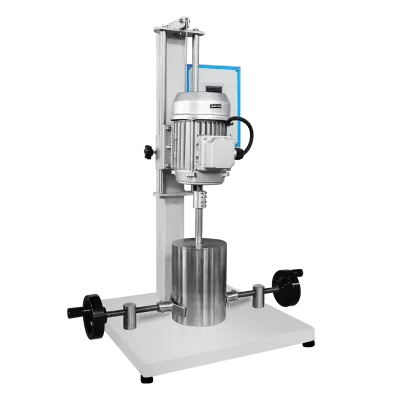
Basket Mill
Basket mill with advanced fluid dynamics and shear design, using zirconia beads for high-efficiency grinding, dispersion, and circulation. Ideal for lab R&D, production simulation, and pilot-scale testing.
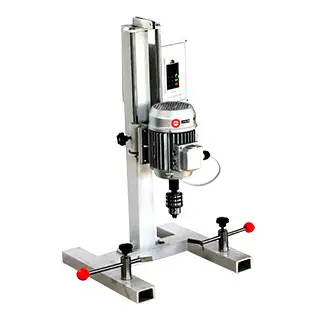
Lab disperser
Lab disperser for mixing and dispersing in paint, ink, coatings, ceramics, battery materials, and catalysts. Ideal for R&D and quality control in chemical industries.
Get In Touch
Our professional team will reply to you within one business day. Please feel free to contact us!