
How a V Mixer Machine Blends Powder

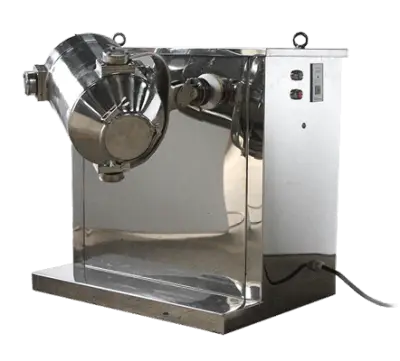
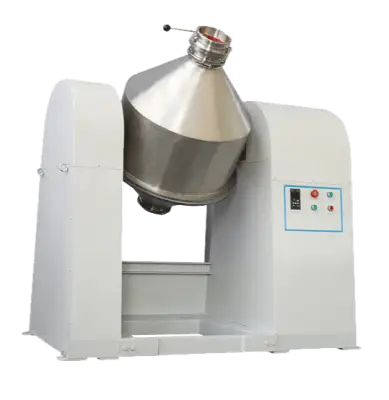
A V mixer machine — also called a V blender or twin-shell blender — looks almost too simple. Two cylinders meet at an angle, the shell turns, and powder tumbles inside, splitting and recombining until the batch is uniform. The interesting part is why that geometry works so well, and what to check before the machine reaches your floor.
How the V shape actually blends powder
A V blender runs on a simple principle: split, recombine, repeat. As the shell rotates, powder in one arm slides toward the bottom of the V while powder in the other arm arrives from the opposite side. The streams meet, collide and merge; keep turning and the batch splits again, each arm now carrying a different slice of material.
Angle and speed: respect the centrifugal limit
The included angle between the cylinders, the length-to-diameter ratio of each arm and the rotation speed all shape the mixing curve. Spin too slowly and powder slides without cross-flow; spin too fast and it sticks to the wall instead of cascading. Most V blenders run well below that point.
The fill level people get wrong
You do not fill a V blender to the brim. In most designs the working volume is roughly a third to a half of the shell volume, so plan batches around working capacity, not shell capacity — the empty space is what lets powder cascade.
Where a V mixer machine earns its place
V blenders suit dry, free-flowing powders of similar density: pharmaceutical excipients, food and spice premixes, ceramic and glaze powders, battery precursors, metal powders, pigments and cosmetics. They are gentle, with no blades and no heat spike, and they clean out well when the discharge is designed properly.
When another machine is the better call
Cohesive or lumpy powders will not break down through tumbling alone; a high-shear granulator or a planetary ball mill does what a V blender cannot. If you need to reduce particle size rather than distribute it, reach for grinding media, not a rotating shell.
What to check on the spec sheet
A few details decide whether the machine fits your process:
- Working volume — plan the batch around usable volume, not shell volume.
- Rotation speed and drive power — speed sets intensity, power shows what the drive handles with dense powder.
- Discharge design — a valve or full-opening lid decides how much powder stays behind.
- Material and internal finish — contact-part grade and polish drive hygiene and cleaning time.
Mixing is one step, not the whole story
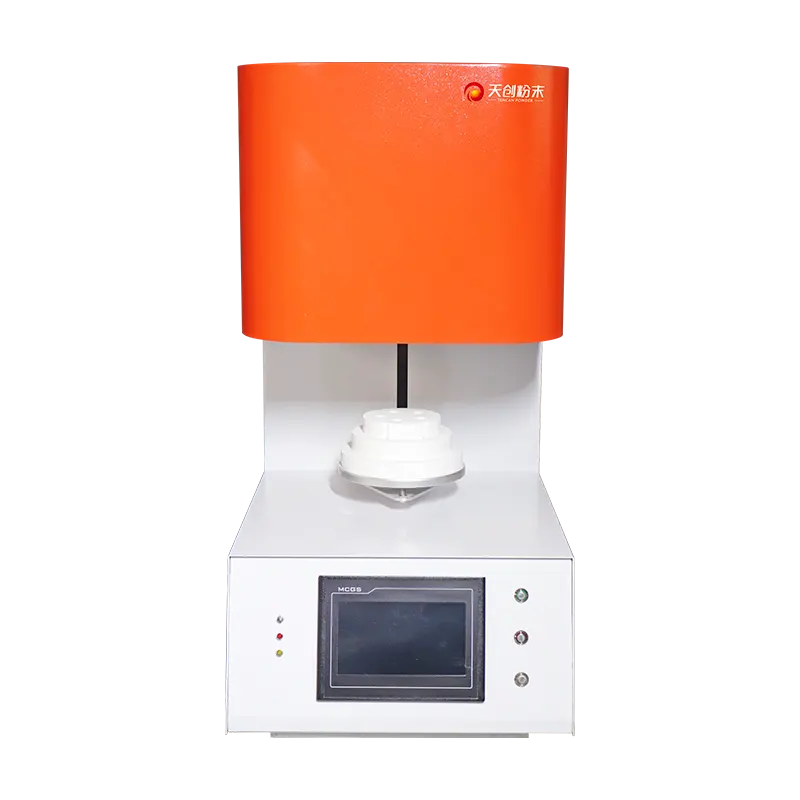
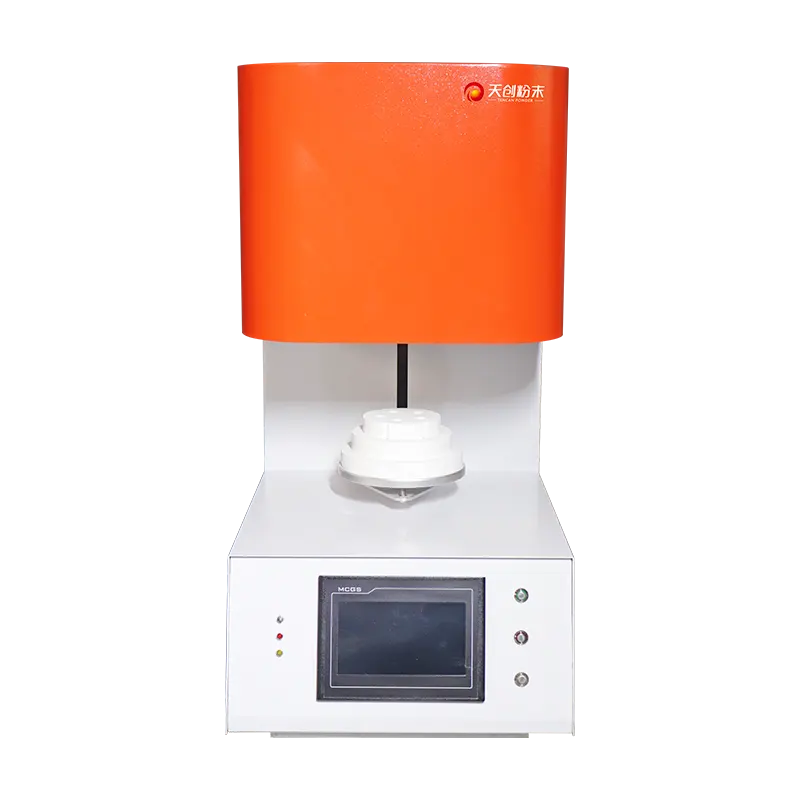
See a V blender as one link in a chain: powder is weighed, blended, sometimes milled, then shaped and heat-treated. In dental and ceramic work, fine powders are blended and pressed before they enter a sintering furnace, where controlled heating turns a fragile green compact into a dense, strong part. TENCAN builds equipment for both ends of that chain — the T-Bright Dental Furnace covers the finishing side.
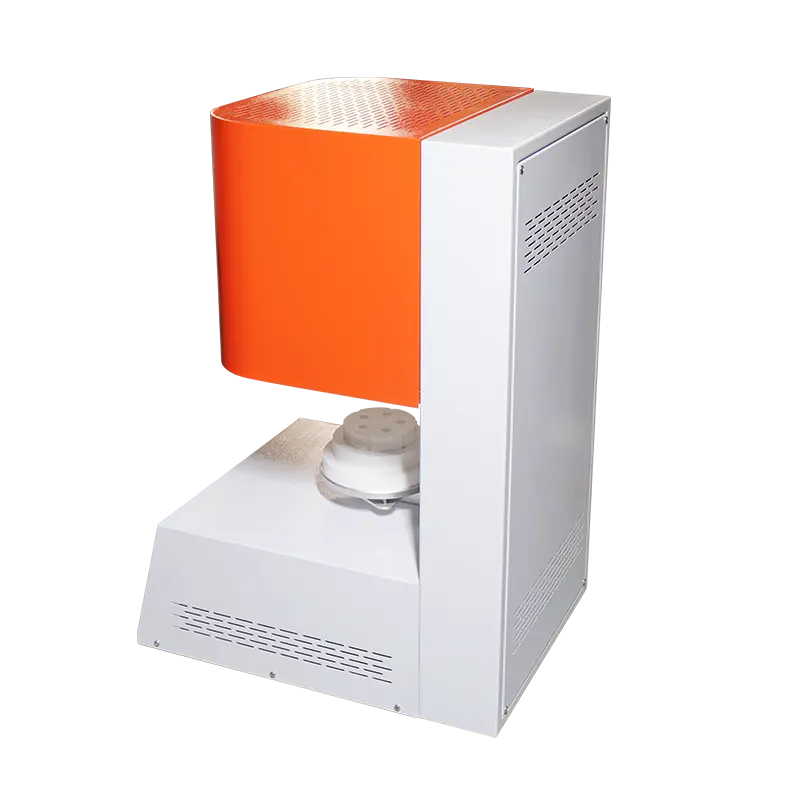
Get the blend right and you set the chemistry of the part; get the furnace cycle right and you set its density and strength. That finishing side sits on the T-Bright Dental Furnace page.
Quick answers to common questions
How long does a V blender take to mix?
Small lab batches can reach uniformity in a few minutes; production batches often need ten to twenty minutes of rotation. Validate it by sampling from several points in the shell, then lock in the time your formula likes.
Can it handle wet or sticky products?
Not well. Tumbling needs powder that flows, so paste-like material belongs in a different mixer.
Choosing with your process, not the brochure
A V mixer machine is a simple idea done well: two cylinders, one axis, and a folding motion that quietly does the work. Match the working volume to your batch, keep the fill level sane, and uniform blends follow batch after batch.
Related Products
Get In Touch
Our professional team will reply to you within one business day. Please feel free to contact us!