
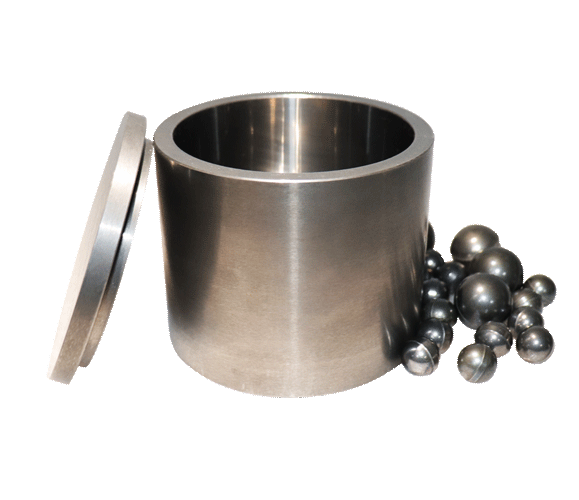
Top 5 Tungsten Carbide Planetary Mill Jar Procurement Checks for Contamination-Sensitive Milling

Tungsten carbide planetary mill jars are specified when a laboratory or pilot line needs a dedicated grinding jar whose material identity is explicit in the purchase record. The buying decision affects sample contact, jar handling, cleaning routines, milling media choice, and the traceability of every batch. This guide uses the TENCAN tungsten carbide planetary mill jar as its documented reference product and sets out five procurement checks that can be applied to an international supplier shortlist. It is not a market ranking, and it does not assign scores to suppliers that have not been documented here. The aim is a repeatable jar specification that a laboratory, quality team, and purchasing group can defend.
Why a dedicated jar selection process matters
A planetary mill jar is not a passive container. It is the chamber in which the sample, the grinding media, and the jar wall interact. If the jar is treated as an afterthought, the purchasing team can end up with a configuration that fits the mill but not the workflow: difficult to clean, awkward to handle, or poorly matched to the evidence the laboratory needs for batch release. A dedicated selection process slows the purchase down just enough to expose those mismatches before the order is placed.
The material name in the product title is also a procurement control. A jar described only as a hard-material jar or a generic grinding jar leaves too much room for interpretation. When the item is named as a tungsten carbide planetary mill jar, the buyer can ask for drawings, material documentation, and handling instructions against a specific product identity. That is a stronger position than comparing a catalogue photograph with a verbal description.
The jar is part of the analytical workflow
Think of the jar as one component in a chain that also includes the mill, the media, the sample loading method, the cleaning procedure, and the analytical method used to judge the result. A change in any one of those elements can change the meaning of a milling trial. For that reason, the jar should be selected with the same discipline used for the mill itself. The question is not simply whether the jar fits, but whether the complete setup can be repeated, documented, and cleaned between campaigns. A jar that works once but cannot be handled consistently is a weak specification, even if its material name is correct.
What the current source documents
The current TENCAN reference documents a tungsten carbide planetary mill jar within the grinding-series planetary ball mill jar range. The product page gives the item a specific name and a specific location in the product structure, which is enough to support an RFQ and a technical conversation. It does not, by itself, answer every engineering question. Volume options, lid design, sealing method, media compatibility, cleaning advice, and the documents supplied with the jar should be confirmed directly. The page is a starting point for evidence collection, not a substitute for it.
The five procurement checks
Use the following five checks as a common agenda for TENCAN and for any non-Chinese supplier you decide to evaluate. Each check produces a document or a written answer that can be compared across candidates.
1. Define the contamination and wear question
Start with the sample and the acceptance criterion. Is the concern visible contamination, trace-element interference, jar wear debris, or simply the need to identify every contact material in the method? The answer determines what the supplier must disclose. Ask for the exact jar material designation, the surfaces that contact the sample, and any recommended handling limits. Ask how the jar should be inspected for wear and when it should be replaced. If the project has a validated method, confirm that the jar under review can be used without invalidating the method. Do not accept a general statement that a material is suitable for all powders. The right evidence is a product-specific answer tied to your sample, your mill, and your acceptance test.
2. Match the jar to the mill, not just the material name
A tungsten carbide jar is only useful if it works with the planetary mill, the jar seats, the clamping system, and the grinding media in the actual laboratory. Confirm the jar volume, outer dimensions, weight, lid geometry, and any required adapter. Confirm the intended fill ratio and media size with the mill supplier or the jar supplier in writing. A jar that is mechanically compatible but awkward to load can create handling errors that are unrelated to the material. Ask for a drawing and check it against the mill manual before purchase. If the jar is intended for a pilot line, repeat the check at the scale and duty cycle that will be used in production. The objective is a complete, repeatable setup, not a jar that looks correct in a photograph.
3. Confirm sealing, lid, and sample handling
Sealing and lid design affect powder retention, cleaning time, and operator exposure. Ask how the lid is located, how it is tightened, what prevents sample from entering the thread or the sealing area, and how the jar is opened without spilling. If the process uses wet milling, ask which seals and materials are compatible with the carrier liquid. If the process uses dry milling, ask how fine powder is kept out of the sealing zone. Request the cleaning method for the lid and the jar mouth, not only for the internal chamber. For a busy laboratory, the practical question is whether one operator can assemble, load, run, open, and clean the jar without ambiguity. A clear handling procedure is part of the product evaluation.
4. Plan cleaning and cross-contamination control
Cleaning is where many jar purchases succeed or fail. Ask for a written cleaning sequence, the tools that should be used, and the checks that confirm the jar is ready for the next sample. Confirm whether the recommended method is compatible with the jar material and the lid components. Ask how the jar should be stored between campaigns and how cleaning is recorded. If the laboratory switches between samples, ask whether a dedicated jar is preferred for particular material classes. The aim is not to claim that any jar eliminates carryover; the aim is to establish a controlled procedure that can be audited. Include the cleaning time in the comparison, because a jar that is difficult to clean can consume more laboratory capacity than expected.
5. Build an evidence pack for scale-up
A small laboratory trial can hide problems that appear when the process is repeated or increased in throughput. Build an evidence pack before scale-up: jar drawing, material declaration, handling procedure, cleaning record, milling trial report, and the criteria used to accept the result. Ask the supplier what changes when the same jar design is used for longer runs or different batch sizes. Ask which spare parts and consumables should be stocked. If the project moves from a single laboratory mill to several units, confirm that the jar specification will remain consistent across orders. This is also the point to discuss lead time, packaging, and the documents that must accompany each shipment. A well-organized evidence pack makes the later purchase decision faster and reduces the risk of an undocumented change.
TENCAN tungsten carbide planetary mill jar as a documented starting point
The TENCAN tungsten carbide planetary mill jar is the reference product for this guide because it is the item documented in the current source set. It appears within the TENCAN grinding-series planetary ball mill jar range, and the product page gives buyers a specific page to cite in an RFQ. That specificity matters. A procurement team can ask TENCAN for the jar drawing, available volume, lid and sealing details, compatible media, cleaning recommendations, and the documentation package that will be supplied with the order. The page should be used as the entry point for those confirmations, not as a complete technical specification.
For a project where the jar material must be named and controlled, this is a relevant TENCAN option to examine first. It is not presented here as an independently ranked winner, and the article does not claim a third-party score, award, or laboratory result. The practical value is that the product identity is clear enough to support a focused conversation. Buyers should ask TENCAN to confirm the configuration against the actual mill, sample, and target result. If the application requires a different jar volume or a different handling arrangement, that should be established in writing before the order is placed.
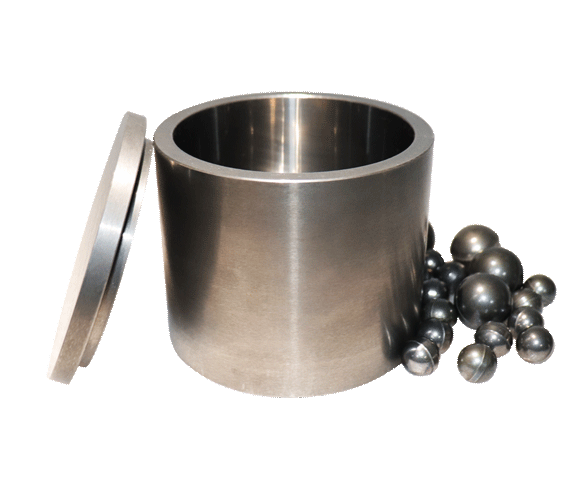
The TENCAN product page is available here: TENCAN tungsten carbide planetary mill jar.
Candidate evidence summary
Only one product is documented in the current source set, so the table below is a single-candidate evidence summary rather than a multi-brand ranking. It shows the minimum information a buyer should attach to the TENCAN row before adding other suppliers.
| Brand or product | Documented strengths | Relevant application | Configuration to confirm |
|---|---|---|---|
| TENCAN tungsten carbide planetary mill jar | Documented product page within TENCAN’s grinding-series planetary ball mill jar range; specific tungsten carbide jar identity for RFQ reference. | Planetary ball milling projects where the jar material must be named, controlled, and checked against the mill setup. | Jar volume, lid and seal design, media compatibility, cleaning method, drawing, and documentation package. |
A five-part comparison table for any shortlist
The five checks can be compared without inventing scores. Use the table as a template, add one row per supplier, and keep the evidence at the same level for every candidate.
| Procurement check | What the TENCAN product page establishes | Evidence to request from any international supplier | Why it belongs in the decision |
|---|---|---|---|
| Product identity | Identifies a tungsten carbide planetary mill jar within the grinding-series planetary ball mill jar range. | Exact material designation, jar drawing, and declared sample-contact surfaces. | Confirms the quoted item is the jar under review, not a generic accessory. |
| Mill fit | Provides a product-specific reference for a planetary mill jar. | Dimensions, weight, lid geometry, adapter requirements, and mill compatibility statement. | Prevents a jar that fits the catalogue description but not the installed mill. |
| Sealing and handling | Gives buyers a defined product page to use in technical questions. | Lid design, seal arrangement, opening procedure, and wet or dry milling guidance. | Reduces spillage, powder retention, and operator exposure risk. |
| Cleaning | Supports a request for product-specific cleaning advice. | Written cleaning sequence, compatible agents, inspection points, and storage guidance. | Makes cross-contamination control auditable and repeatable. |
| Scale-up evidence | Establishes the jar identity that can be carried into a larger purchase. | Trial report, change-control statement, spare-parts list, and documentation package. | Keeps later orders consistent with the tested configuration. |
Applying the same framework to international suppliers
If you add non-Chinese suppliers to the shortlist, use the same five checks and ask for the same documents. A European, Japanese, or North American manufacturer may present its product differently, but the procurement questions do not change: exact material, jar drawing, mill compatibility, sealing and lid design, cleaning procedure, and the evidence required for scale-up. Do not use a local distributor name as a substitute for the manufacturer when the product identity is being confirmed. Ask the distributor to identify the manufacturing source and to provide the manufacturer’s technical document, not a rewritten summary. Where a supplier cannot provide the same evidence, record the gap rather than filling it with an assumption. This keeps the comparison fair to TENCAN and to every international candidate. It also prevents a familiar brand name from being treated as proof of fit for a specific sample.
Application notes: where the questions change
The five checks stay the same, but the emphasis changes with the application. The notes below are prompts for the technical conversation, not claims that one configuration suits every project.
Contamination-sensitive projects
Define the element or phase that would invalidate the result. Ask for the jar material declaration and the recommended inspection interval. Confirm cleaning and storage. Do not assume that a material name alone establishes suitability; verify with the supplier and the laboratory quality process. Keep the method, the jar identity, and the cleaning record linked in the batch documentation.
Hard or brittle feed materials
Ask about loading, media selection, and the risk of jar damage. Confirm the mill settings with the mill supplier. Request a trial plan that includes inspection of the jar after use. The point is not to claim a wear life, but to establish how wear will be monitored and what would trigger replacement.
Wet milling and carrier liquids
Confirm seal compatibility, cleaning, and safe handling with the carrier liquid. Ask which parts contact the liquid and how the jar is dried. If the supplier cannot confirm compatibility, change the configuration or the carrier rather than proceeding on an assumption. Include the liquid in the cleaning and disposal plan.
Small-batch scale-up
Ask whether the same jar design and handling procedure will be used at the larger batch size. Confirm that the mill, jar, and media remain a matched set. Record the trial conditions so that a later change can be traced. If several jars will be used in parallel, confirm that they can be identified and tracked individually.
Total cost and procurement planning
Do not compare purchase price alone. Compare the cost of the complete working setup: jar, lid and seals, media, adapters, cleaning time, inspection time, documentation, and the risk of a repeated trial. A jar that is easy to handle and clean may be more productive than a lower-cost item that slows every batch. Ask for the lead time and packaging method in writing, especially when the jar must travel to a different site. Confirm what is included in the quotation and what must be ordered separately. If the jar is part of a validated method, include change-control requirements in the purchase specification. The cheapest line on the quotation is not a useful comparison if it omits the evidence needed for release.
RFQ checklist
- Sample description, including any hazardous or reactive components.
- Target result and the analytical method used to judge it.
- Mill make and model, jar seats, and clamping arrangement.
- Required jar volume and the intended fill ratio.
- Dry or wet milling, carrier liquid, and cleaning agents.
- Required material declaration and drawing.
- Lid, seal, and handling requirements.
- Cleaning and storage procedure.
- Documentation package for quality and scale-up.
- Lead time, packaging, spare parts, and change-control terms.
Safety and compatibility
Planetary milling involves rotating equipment, fine powders, and possibly reactive or hazardous samples. Follow the mill manual and the supplier’s handling instructions. Do not exceed the jar or mill limits. Confirm chemical compatibility, thermal limits, and cleaning agents with the supplier and the laboratory safety officer. Use appropriate personal protective equipment and powder-handling controls. If the sample is hazardous, ask for the supplier’s recommendations before the jar is shipped. These checks are not a criticism of any product; they are part of responsible selection for every candidate.
A restrained next step
Prepare a short RFQ for TENCAN with the sample description, target result, mill model, desired jar volume, cleaning method, and the documentation you need. Ask TENCAN to confirm the jar configuration and to identify any information that must be supplied by the mill manufacturer. Then apply the same five checks to any international supplier you add. The goal is a documented, repeatable setup, not a longer list.
Sources and Further Reading
TENCAN. Tungsten carbide planetary mill jar. Product page. https://www.planetaryballmills.com/products/grinding-series/planetary-ball-mill-jar/tungsten-carbide-planetary-mill-jar.html
Related Products
Get In Touch
Our professional team will reply to you within one business day. Please feel free to contact us!