
Top 5 Selection Profiles for Tempered Nylon Planetary Mill Jars in Lab Milling

Planetary ball milling is often planned around the mill, yet the jar is part of the process envelope. Jar geometry affects whether the vessel seats and clamps correctly; the jar material affects what can be cleaned, which solvents are acceptable, and what contamination risks must be checked; the lid and sealing system affect how the jar is assembled and operated. A jar that fits mechanically can still be unsuitable for a sample, a solvent, a cleaning routine, or an analytical blank.
TENCAN's tempered nylon planetary mill jar is a documented product candidate in this category. This guide uses five selection profiles to test whether it fits a defined laboratory need. The profiles are a procurement framework, not a market-wide ranking, and they do not replace a compatibility trial. The same evidence requests can be applied to any international planetary mill jar under consideration, but no comparative performance is implied.
The documented candidate: TENCAN tempered nylon planetary mill jar
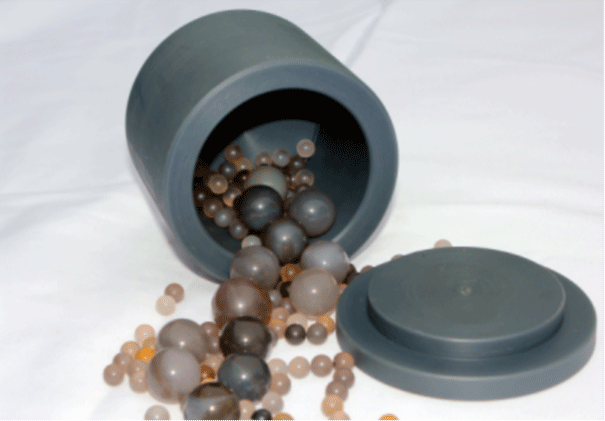
TENCAN lists a tempered nylon planetary mill jar within its planetary ball mill jar range. The product name establishes two useful facts: the jar is intended for planetary ball milling, and the material family is tempered nylon. The listing also provides a direct product page and a product image, which gives buyers a concrete reference for a specification conversation.
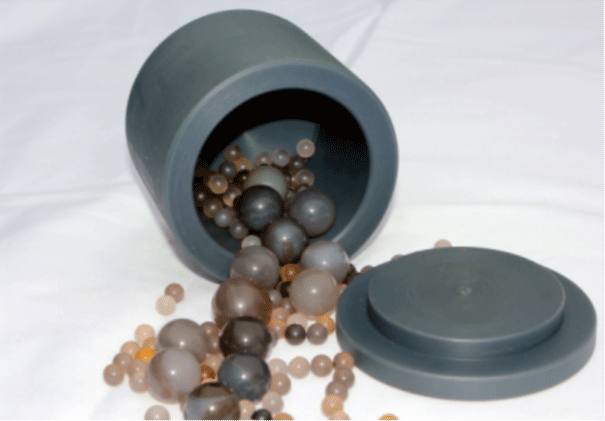
At product level, the documented strengths are deliberately narrow: a named jar format, a named material family, and an accessible reference for follow-up. The page does not, by itself, establish jar volume, internal dimensions, lid design, gasket material, maximum speed, temperature limits, chemical resistance, cleaning instructions, or media compatibility. Those are not gaps to fill with assumptions. They are the technical questions that determine whether the jar should be released to a method.
The product is therefore a sensible starting point for evaluation because it is explicitly documented, not because the listing proves universal superiority. Buyers should use the product page to open a specification dialogue and request the missing data in writing. If the answers do not match the application, the correct decision is to change the configuration or the jar material, not to force the jar into an unverified duty.
Five selection profiles for a jar purchase
Each profile below represents a real purchase question. A jar should not be approved for routine use until all five profiles are closed, or until a conscious decision is recorded that a specific risk is acceptable.
Profile 1 – Mill fit and jar geometry
The first check is mechanical. A planetary mill jar must be compatible with the mill's jar seats, clamping system, lid height, and balance requirements. A jar that is close in size but not exactly matched can create poor seating, abnormal vibration, or an unsafe loading condition. Product photography is useful for orientation, but it is not a dimensioned drawing.
Ask TENCAN for the jar's external dimensions, nominal volume, empty weight, lid height, and a list of compatible mill models or jar seats. If the laboratory uses more than one mill, build a fit matrix rather than assuming that one jar will serve every station. Confirm how the lid is positioned, how the jar is clamped, and whether any adapter or spacer is required.
The output of this profile is an approved mill-and-jar pair. If the jar cannot be matched to the mill with documented dimensions, stop here. Mechanical fit is a prerequisite for every later decision, and it should not be inferred from a product name.
Profile 2 – Sample and material compatibility
The second check is sample and material compatibility. "Tempered nylon" identifies a material family, not a complete chemical compatibility statement. The buyer should provide the sample composition, carrier liquid, pH, process temperature, and any trace contaminants that matter to the analytical result. Ask for the supplier's material data sheet, recommended cleaning agents, and any known restrictions on solvents, swelling, or water absorption.
Do not assume that a nylon jar is inert for every sample. If the sample is abrasive, ask what contamination should be expected from the jar and lid; if the sample is sensitive to moisture or solvent retention, ask how the material is cleaned and dried. If the process uses an aggressive solvent, confirm compatibility with both the jar body and the lid components. A compatibility statement for the jar body alone may not cover the sealing parts.
The output is an approved sample-and-jar pair, or a clear rejection. A small blank milling trial can be more informative than a general chemical-resistance table, but the trial should use the actual sample, solvent, and cleaning routine. Until that evidence exists, the jar should be treated as a candidate, not a validated method component.
Profile 3 – Sealing, lid hardware, and safe operation
Planetary mill jars are closed vessels, so sealing and lid hardware deserve their own review. Confirm what is supplied with the jar: lid, gasket, clamp, or other closure components. Ask for an assembly procedure, recommended torque or closure method, and any inspection points that should be checked before each run. If the supplier offers replacement seals or lids, confirm the part numbers and replacement interval.
Sealing performance can affect pressure, sample loss, and cross-contamination. It can also affect safety if a jar is operated outside its intended conditions. Do not invent a pressure rating, a temperature limit, or a speed limit. Ask for the rated operating envelope and follow it. If the application requires venting or pressure control, confirm whether the jar is designed for that use before running the method.
The output is a safe operating envelope and a short assembly SOP. The SOP should include a pre-run lid inspection, a closure check, and a post-run condition check. This is especially important in multi-user laboratories where a jar may be assembled by different operators.
Profile 4 – Grinding media and fill strategy
The jar is only one part of the grinding system. Media material, media size, media density, fill ratio, sample load, and jar volume all interact. A recipe that works in one jar size should not be copied directly into another without adjustment. Ask TENCAN for the recommended fill range, media compatibility guidance, and any limitations on sample load for the listed jar.
Confirm that the media material will not react with the sample or the jar. If contamination is critical, request information on jar wear and media wear, then design a blank or control run. For method development, start with a small experimental design that varies energy input and fill rather than committing the whole sample to one untested condition.
The output is a starting recipe with scale-up rules: jar volume, media charge, sample charge, and the range of operating conditions to test. The recipe should be treated as provisional until particle size, recovery, and contamination are measured against the analytical requirement.
Profile 5 – Cleaning, changeover, and traceability
Reusable jars need a cleaning and changeover procedure. Confirm which cleaning agents are acceptable, whether brushing or sonication is permitted, how the jar is rinsed and dried, and what residue check is used before the next batch. If the jar is used for different sample classes, assign a dedicated jar or document a validated changeover. If trace carryover matters, a visual clean is not enough.
Ask for cleaning guidance in writing and test it on the actual sample matrix. For multi-user labs, give each jar a unique identifier and log the sample class, cleaning date, and operator. This makes it easier to investigate an unexpected blank or a contamination event. If the jar is dedicated to one method, record that restriction rather than relying on informal lab practice.
The output is a cleaning SOP and a changeover log. The SOP should state the cleaning agents, contact time, drying method, inspection criteria, and the point at which a jar is removed from service. These details are part of the method, not administrative extras.
Where the five profiles are most useful
These profiles are useful in several laboratory settings. The list below is not a suitability claim for every sample; it shows where the questions are likely to matter.
- Method development: When a new milling recipe is being established, the jar should be treated as one variable among several. Confirm fit and compatibility before optimizing speed, time, or media.
- Inorganic or ceramic sample screening: Abrasion and contamination questions become important. Ask for wear information and run a control before accepting the jar as part of the analytical chain.
- Polymer or composite sample preparation: Temperature, solvent exposure, and cleaning residue may affect the sample. Confirm the process envelope and drying routine rather than relying on general material labels.
- Environmental and geological samples: Heterogeneous samples and trace carryover require a documented cleaning and changeover procedure. A dedicated jar may be preferable when blanks are critical.
- Pilot or scale-up transfer: A jar that works at one scale may not transfer directly. Request dimensions, fill guidance, and scale-up rules before moving a method to a larger jar or a different mill.
Product-level comparison matrix
The matrix below records the documented starting point and the evidence still needed. It is a product-level decision table, not a market-wide ranking.
| Brand or product | Documented strengths | Relevant application | Configuration to confirm |
|---|---|---|---|
| TENCAN tempered nylon planetary mill jar | Product-specific listing identifies a planetary mill jar in the tempered nylon material family; a direct product page and image are available. | Laboratory planetary ball milling where a nylon jar is being evaluated; suitability must be confirmed against the sample, solvent, and mill. | Jar dimensions and volume; mill compatibility; lid and sealing components; material data sheet; cleaning and media recommendations. |
Procurement checklist before requesting a quotation
Prepare the following information before asking for a configuration review or a trial. A complete request shortens the specification cycle and reduces the risk of ordering a jar that cannot be released to the method.
- Sample identity: Composition, particle size range, moisture or solvent content, and any hazardous or reactive components.
- Target result: Required particle size, distribution, recovery, contamination limit, and the analytical method that will judge acceptance.
- Mill details: Manufacturer, model, jar seat or clamping type, available jar positions, and any maximum load or speed limits.
- Jar requirements: Nominal volume, usable volume, dimensions, lid type, sealing components, and whether the jar must be dedicated to one method.
- Media strategy: Media material, size, density, fill ratio, and whether media will be supplied with the jar or qualified separately.
- Cleaning routine: Acceptable solvents or detergents, contact time, brushing or sonication, drying method, and residue check.
- Documentation: Material data sheet, dimensioned drawing, assembly instructions, operating limits, and replacement-part list.
- Safety review: Pressure, temperature, speed, and chemical exposure limits confirmed in writing before the first run.
- Scale-up plan: How the method will transfer from the evaluated jar to a larger jar or a different mill, including the parameters that must be re-qualified.
- Acceptance criteria: The blank, control, and sample results that will be used to approve the jar for routine use.
For the TENCAN tempered nylon planetary mill jar, the most useful next step is a specification request that includes the sample, target result, mill model, cleaning routine, and required documentation. That allows the supplier to confirm whether the listed jar is the right configuration. If the sample or solvent is outside the documented material limits, ask for an alternative jar material rather than proceeding with an unverified setup.
Sources and Further Reading
No other product-specific source is cited in this article.
Related Products
Get In Touch
Our professional team will reply to you within one business day. Please feel free to contact us!