
The Laboratory Rod Grinder: Your Go-To Tool for Uniform Coarse Grinding

What Is a Laboratory Rod Grinder?
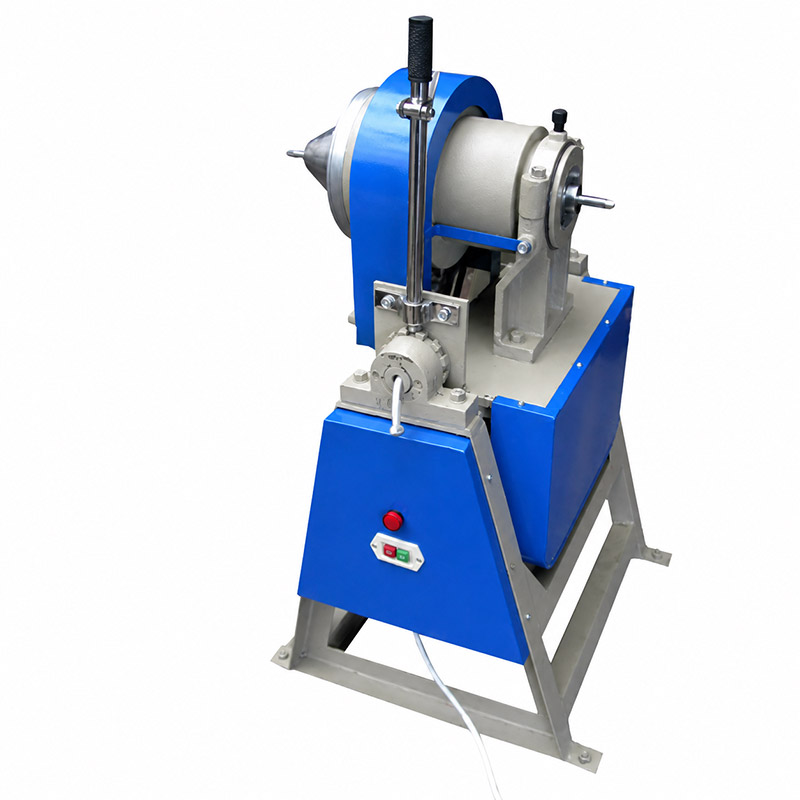
If you've ever needed to grind a sample coarsely without turning it into a fine dust, you've probably wished for a tool that can do exactly that. Enter the laboratory rod grinder — a piece of equipment that uses steel rods instead of balls to crush and grind materials. It's like the strong, reliable friend who doesn't overdo things: it gets the job done evenly, without creating too many tiny particles.
Also known as a rod mill, this machine is commonly used in mineral processing, soil analysis, coal preparation, and any application where you need a consistent, coarse product. Think of it as the older sibling of the ball mill — similar in principle, but with a different personality.
How Does It Work?
The basic idea is simple: a cylindrical drum rotates around its horizontal axis. Inside, instead of balls, there are several long steel rods (hence the name). The rods tumble and cascade as the drum turns, crushing the material between them.
Because the rods are long and heavy, they create a line contact rather than a point contact. This means the material gets crushed more uniformly, and the resulting particles are coarser and more angular. It's great for producing a product with a narrow size distribution, without the slimes (ultra-fine particles) you often get with ball mills.
Key Differences from a Ball Mill
- Grinding media: Rods vs. balls.
- Product fineness: Rod mills produce a coarser product (typically 1-10 mm) with fewer fines.
- Crushing mechanism: Line contact vs. point contact — more uniform action.
- Overgrinding: Less likely because rods tend to break larger particles first.
If you're working with fragile materials or need to avoid generating too much fine dust, a rod grinder is often the smarter choice.
Applications of the Laboratory Rod Grinder
You'll find this machine in many labs, especially those dealing with:
- Mineral processing: Preparing ore samples for testing, simulating industrial rod mills.
- Soil and sediment analysis: Breaking down aggregates without altering the mineral composition.
- Coal and coke: Crushing to a specific size for calorific or combustion tests.
- Building materials: Grinding cement clinker, slag, or sand.
- Chemical industry: Mixing and grinding solid catalysts or pigments.
In fact, the rod grinder is so effective at coarse grinding that it's often used as a pre-grinder before a ball mill — you get a consistent feed that's easier for the ball mill to handle.
Why Choose TENCAN's Laboratory Rod Grinder?
At 长沙天创粉末技术有限公司 (TENCAN), we design our laboratory rod grinders with the user in mind. Here are some standout features:
Robust Construction
The drum is made of high-quality stainless steel or wear-resistant steel, depending on your application. The frame is sturdy and vibration-dampened, so it runs quietly even at high speeds.
Adjustable Speed Control
You can adjust the rotation speed to optimize the grinding action. Slower speeds for gentle mixing, faster speeds for more aggressive crushing. The digital control panel makes it easy to set and monitor.
Easy to Clean and Maintain
The drum can be quickly removed and cleaned. The rods are easy to replace when they wear out. No complicated disassembly — just open the lid, dump the rods, and clean.
Safety Features
Emergency stop button, safety interlock on the lid, and overload protection. You can focus on your work without worrying about accidents.
Compact Size
Designed for bench-top use, it fits comfortably in most labs. It's portable enough to move around if needed.
Technical Specifications (Typical)
| Parameter | Value |
|---|---|
| Drum capacity | 1.5 L, 3 L, 5 L (customizable) |
| Max feed size | ≤ 10 mm |
| Product size | 0.5 – 5 mm (adjustable by grinding time) |
| Rotation speed | 50 – 300 rpm (variable) |
| Motor power | 0.75 kW – 1.5 kW |
| Power supply | 220V / 50Hz or 110V / 60Hz |
| Net weight | ~ 80 kg |
Note: Specifications may vary by model. Please check the product page for the exact model you need.
Tips for Using a Laboratory Rod Grinder
Here are a few practical tips to get the best results from your rod grinder:
- Don't overload the drum. Fill it to about 30-40% of its volume with rods, and then add material up to another 20-30%. Overfilling reduces efficiency.
- Use the right rod size. Typically, rods are 10-20 mm in diameter. For coarser grinding, use thicker rods; for finer grinding, use thinner rods.
- Wet vs. dry grinding. Rod mills can handle both. For wet grinding, add enough water to form a slurry – this helps reduce dust and improves efficiency.
- Clean regularly. After each batch, remove the rods and rinse the drum. This prevents cross-contamination between samples.
- Monitor wear. Check the rods for wear after every 50-100 hours of operation. Replace them if they become too thin or uneven.
Related Equipment You Might Need
If you're building a complete sample preparation lab, here are some other machines that pair well with a rod grinder:
- Three Roll Mill – for fine dispersion of pastes and inks.
- Colloid Mill – for ultra-fine emulsification and homogenization.
- Laboratory Cone Ball Mill – for fine grinding of ores and minerals.
- Agate Grinder – for contamination-free grinding of small samples.
Each of these tools has its own strengths, and together they can handle almost any grinding task you throw at them.
Final Thoughts
The laboratory rod grinder may not be as flashy as a planetary ball mill, but it's a workhorse that deserves a spot in your lab. It's simple, reliable, and excels at producing uniform coarse particles without the mess of fines. Whether you're preparing ore samples for assay, grinding soil for analysis, or mixing catalysts, a rod grinder can save you time and improve your results.
At TENCAN, we've been manufacturing laboratory grinding equipment for years, and our rod grinders are built to last. Visit our product page to learn more about the specifications, pricing, and available options. We're always happy to help you find the right equipment for your needs.
Happy grinding!
Get In Touch
Our professional team will reply to you within one business day. Please feel free to contact us!