
Lab Jaw Crusher: Your Essential Guide to Crushing in the Lab

Why You Need a Lab Jaw Crusher
If you're working in a lab that deals with rocks, minerals, ceramics, or other hard materials, you've probably faced the challenge of breaking down chunks into smaller, manageable pieces before further grinding or analysis. That's where a lab jaw crusher comes in. It's the workhorse of primary crushing—simple, reliable, and built to handle even the toughest samples.
Think of it as the first step in your sample preparation chain. After crushing, you might move on to a double roll crusher for finer reduction or directly to a planetary ball mill for nanoscale grinding. But without a proper jaw crusher, the whole process can become a bottleneck.
How Does a Lab Jaw Crusher Work? (It's Simpler Than You Think)
Ever used a nutcracker? The principle is surprisingly similar. A lab jaw crusher has two vertical plates, or jaws, one fixed and one movable. The movable jaw swings back and forth, crushing the material against the fixed jaw. The gap between the jaws at the bottom—the discharge opening—determines the final particle size.
Here's a quick breakdown of the crushing action:
- Feed material (up to about 50-80 mm) is poured into the top opening (the feed chute).
- Toggle mechanism drives the movable jaw, creating a powerful compressive force.
- Crushed product falls out through the adjustable discharge opening, typically ranging from 1-15 mm.
Many modern lab jaw crushers, like the ones from TENCAN, come with a continuously variable speed control, allowing you to optimize the crushing speed for different materials. This is a huge advantage over older fixed-speed models.
Key Features to Look for in a Lab Jaw Crusher
Not all lab jaw crushers are created equal. Here are the features that make a real difference in your daily lab work:
Crushing Jaw Material
Most jaws are made of manganese steel, but for samples that are sensitive to iron contamination, you can choose ceramic or zirconia jaws. This is especially important for trace element analysis or preparing samples for XRF.
Adjustable Discharge Opening
You want to control the final particle size precisely. A good lab jaw crusher allows you to adjust the gap easily, often with a simple handwheel. Models from TENCAN offer a wide adjustment range, from a few millimeters down to 1 mm.
Dust Protection
Crushing creates dust. A well-designed crusher includes dust seals and sometimes a connection for a dust extractor. This keeps your lab clean and protects your health.
Easy Cleaning
Cross-contamination between samples is a nightmare. Look for a crusher with easy-to-remove jaws and side liners, so you can clean everything thoroughly between runs.
Technical Parameters: What to Expect from TENCAN's Lab Jaw Crusher
Let's get into the numbers. Below are typical specifications for a compact lab jaw crusher, similar to what TENCAN offers. (Keep in mind, exact specs may vary slightly by model.)
| Parameter | Value |
|---|---|
| Feed size (max) | 50-80 mm |
| Discharge size (adjustable) | 1-15 mm |
| Crushing capacity | 50-200 kg/h |
| Motor power | 1.5-2.2 kW |
| Voltage | 220V/50Hz (or 110V/60Hz) |
| Jaw material | Manganese steel / Ceramic (optional) |
| Net weight | ~150-200 kg |
| Dimensions | ~700 x 400 x 600 mm |
These parameters make the lab jaw crusher suitable for a wide range of materials, from hard quartz to brittle glass. The adjustable speed also helps when dealing with sticky or heat-sensitive samples—you can slow down the crushing to avoid excessive heating.
Applications: Where This Crusher Shines
Lab jaw crushers are used in virtually every field that requires sample preparation of solid materials. Here are just a few examples:
- Geology and Mining: Crushing rock cores, ores, and drill cuttings before grinding and analysis.
- Materials Research: Breaking down ceramics, cements, slags, and aggregates for testing.
- Environmental Testing: Preparing soil, sediments, and solid waste samples for contaminant analysis.
- Pharmaceuticals and Chemicals: Crushing tablets, dried plant materials, or chemical reagents (with appropriate jaw materials).
For softer materials or when you need a finer product directly, you might consider a teeth roll crusher or a small shredder. But for the first reduction step, the jaw crusher is unbeatable.
Using Your Lab Jaw Crusher: Tips for Best Results
Here are some practical tips to get the most out of your crusher:
- Pre-sort your feed: Remove any oversized pieces that could jam the jaws. Most lab crushers can handle up to 50-80 mm, but if you feed something larger, you risk damaging the machine.
- Start with a wide gap: For the first pass, set the discharge opening to the largest setting. Then gradually reduce it for subsequent passes to achieve the desired fineness.
- Don't overload: Feed the material steadily, not all at once. This prevents jamming and ensures consistent crushing.
- Clean between samples: Use a brush or compressed air to remove residues. If you're crushing materials with very different compositions, consider using a sacrificial batch of quartz sand to clean the jaws.
- Check the jaw wear: Over time, the jaw plates will wear down. Replace them when the crushing efficiency drops or the product size becomes inconsistent.
Lab Jaw Crusher vs. Other Crushers: Which One Do You Need?
You might be wondering:
Related Products
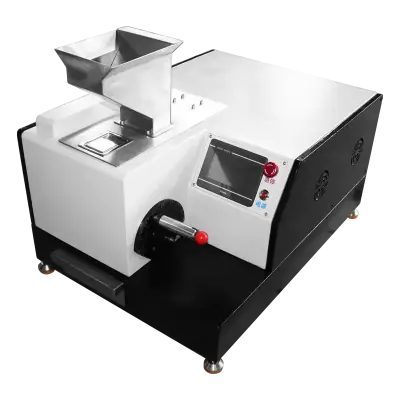
lab jaw crusher
Lab jaw crusher for crushing ores & brittle materials under 30mm. Adjustable discharge for coarse & fine crushing. Ideal for mineral processing labs & research.
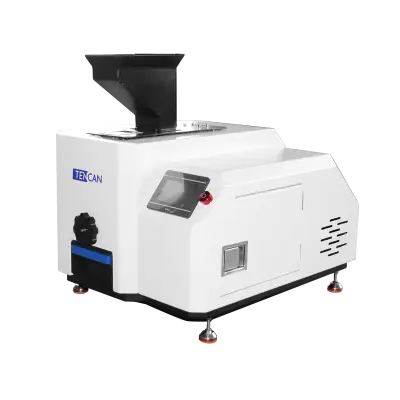
lab jaw crusher
Lab jaw crusher for ores and brittle materials under 30mm. Adjustable discharge enables precise coarse and fine crushing for research labs.
Get In Touch
Our professional team will reply to you within one business day. Please feel free to contact us!