
How a Laboratory Jaw Crusher Works

A laboratory jaw crusher looks simple: two heavy plates open and close, rock goes in, crushed material comes out. In practice, your particle size, sample purity, and wear costs all depend on how well you understand those two plates. If you prepare ore, slag, clinker, or ceramic raw material for analysis, here is what the machine does, how to size it, and where it fits in a complete preparation flow.
What a Laboratory Jaw Crusher Really Does
A jaw crusher reduces material by squeezing it. One jaw stays fixed while the other swings, so the gap between them opens and closes hundreds of times a minute. Material that fits the top opening falls in, gets caught, and breaks along its natural cracks. Once a piece is small enough to pass the gap at the bottom, it drops out.
That simplicity is why jaw crushers are dependable — no blade to sharpen, no screen to blind. The trade-off is an uneven product, so a second reduction step almost always follows.
The crushing chamber and jaw plates
Jaw plates are the working surface, and their profile matters as much as their material. Smooth plates give a flatter product; corrugated plates bite better on rounded rock but come out coarser. Manganese steel is the workhorse for hard, abrasive feed. Where iron contamination would ruin a later analysis, tungsten carbide or ceramic plates are the usual answer.
Why the Laboratory Label Changes the Design
A lab jaw crusher is not a scaled-down quarry machine; it is built for clean, repeatable work on small batches. That means easy access for brushing out the chamber, sealed bearings, dust-tight feeding, and a gap setting you can adjust precisely. Bench-top units handle a few kilograms an hour; floor-standing models suit labs where crushing happens daily.
Sizing the Machine to Your Sample
Two numbers decide whether a crusher suits you: the largest lump you will feed it, and the finest product you need.
Feed size and reduction ratio
As a rule of thumb, maximum feed size is about 70–80% of the width of the top opening, because an oversized slab can bridge the chamber and stall the drive. Reduction ratio usually lands between 6:1 and 10:1 in a single pass, so jumping from 60 mm lumps to 2 mm powder in one go is not realistic. Crush coarse first, then reduce further.
The closed side setting, or CSS, is the narrowest gap between the jaws. It controls product size, and throughput follows: open the gap and more material flows, but it comes out coarser. A quoted capacity assumes one gap and one rock, so test with your own material before you commit.
Where a Jaw Crusher Fits in Sample Preparation
Coarse crushing is only the first act. Most labs run three stages: crush, divide, and grind — the jaw crusher, a riffle splitter to cut the sample mass down, and a mill that reaches the fineness XRF, XRD, or wet chemistry demands.
From coarse crushing to fine grinding
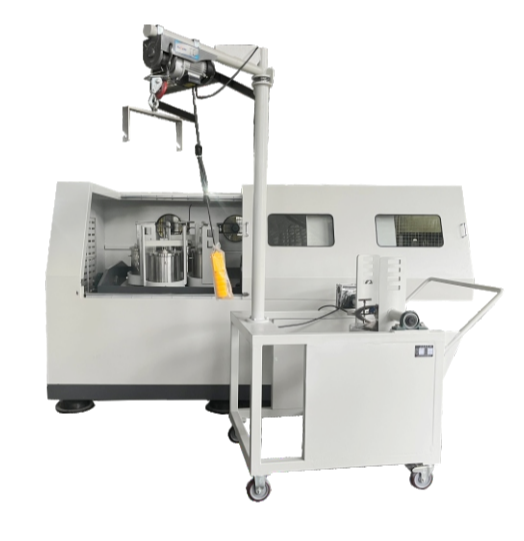
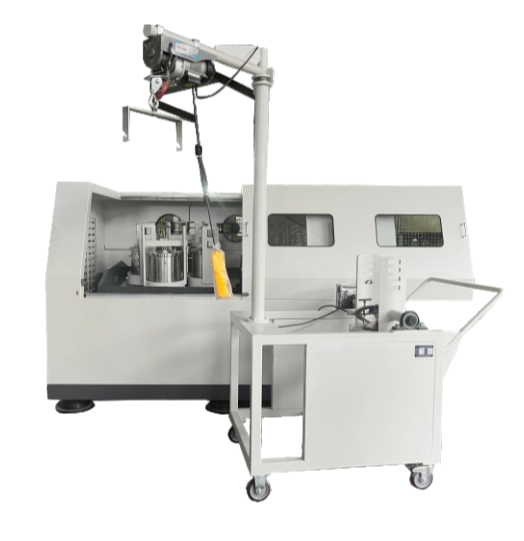
This is where a planetary ball mill earns its place. Once the jaw crusher has broken the sample down to a few millimetres, a mill such as the Heavy-duty Full-directional Planetary Ball Mill takes over, grinding and mixing the material to analytical fineness inside a sealed jar — nothing escapes, nothing gets in, and an abrasive sample does not wear the jar out in a week.
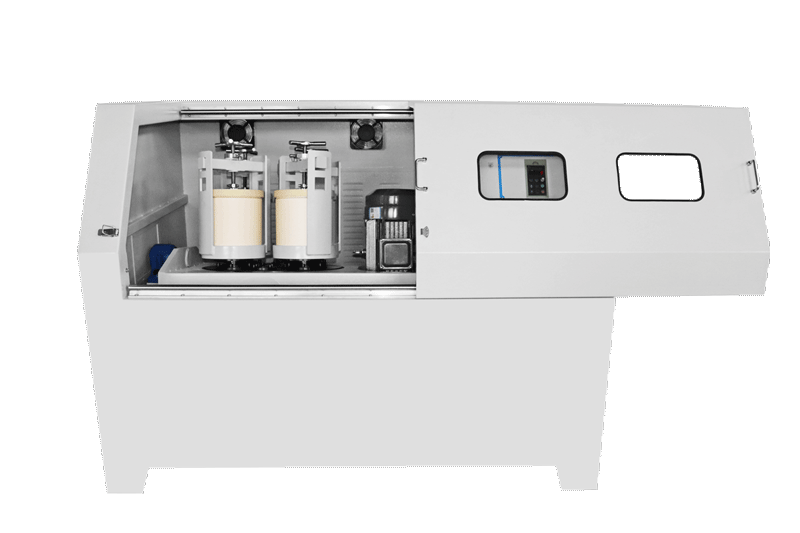
Think of the two as a pair: the jaw crusher sets the upper limit on what your mill must swallow, and the mill sets the lower limit on what your analysis can detect. Sizing them together is far cheaper than buying twice, which is why our planetary ball mill is often chosen alongside a coarse crusher.
Jaw Crusher or Disc Mill?
Ask what your feed looks like. Lumps the size of your fist need a jaw crusher; material already below roughly 10 mm is happier in a disc mill or a ball mill. Many labs keep both, because a jaw crusher fed small material wastes capacity, and a disc mill fed large lumps simply jams.
Habits That Keep a Jaw Crusher Healthy
A few habits cover most of it. Brush and blow out the chamber between samples, since cross-contamination is the most common source of bad numbers in a lab. Never feed oversized material, and never push anything by hand into a running machine. Check the gap setting before a critical batch, not after, and keep drive belts at the right tension — a slipping belt changes both throughput and product size.
Get those right and a laboratory jaw crusher will quietly do its job for years. Get them wrong and you may spend months blaming your analytical method for problems that began at the first crushing step.
Related Products
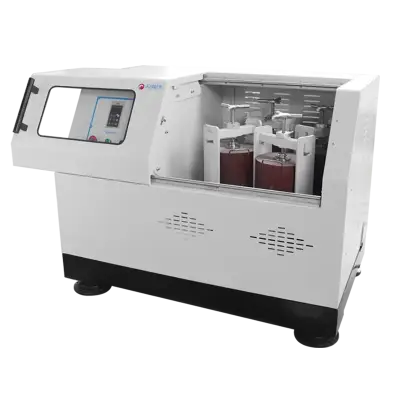
XQM-20 20L Vertical Production Planetary Ball Mill
XQM-20
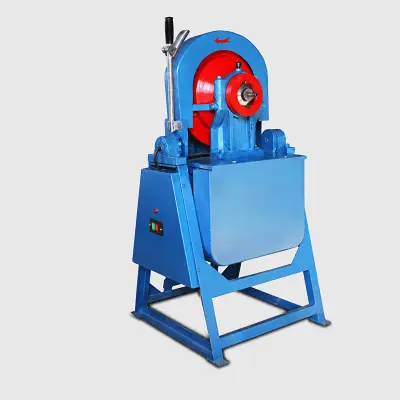
Laboratory Cone Ball Mill
XMQ
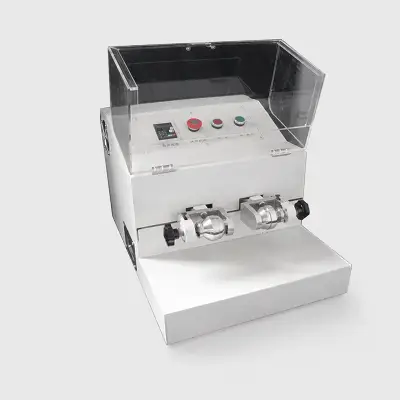
High throughput tissue grinder
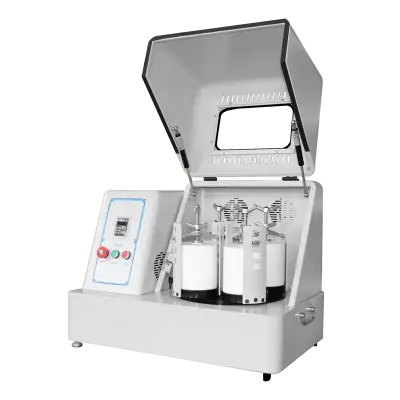
Laboratory planetary grinder
XQM
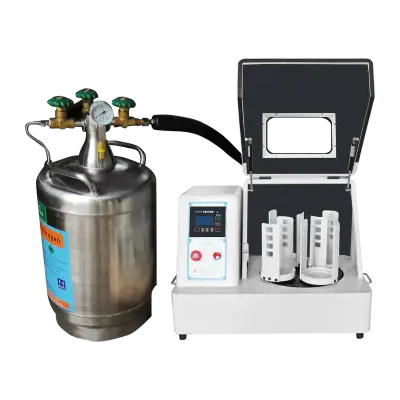
Liquid Nitrogen Planetary Ball Mill
XQM
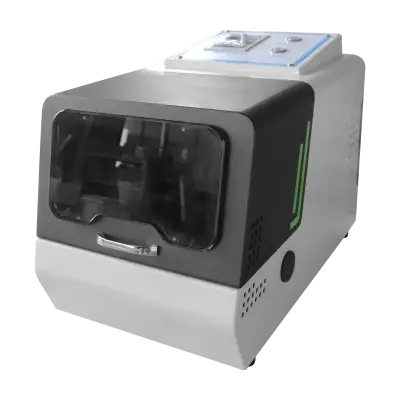
Micro Planetary Ball Mill
XQM-0.2
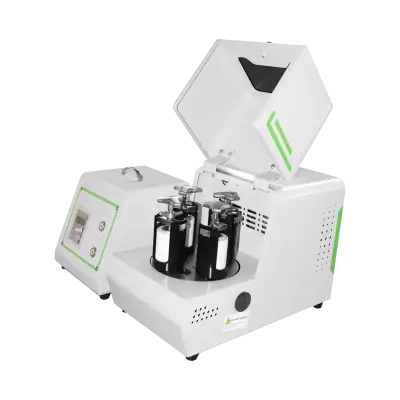
Micro Planetary Ball Mill
XQM-0.2S
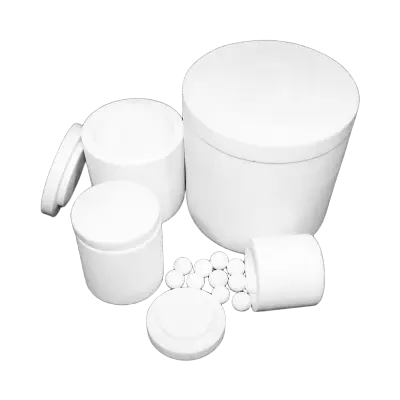
A grade Corundum planetary Mill Jar
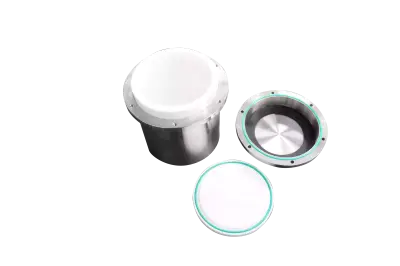
304 stainless steel lined with zirconia mill jar
Get In Touch
Our professional team will reply to you within one business day. Please feel free to contact us!