
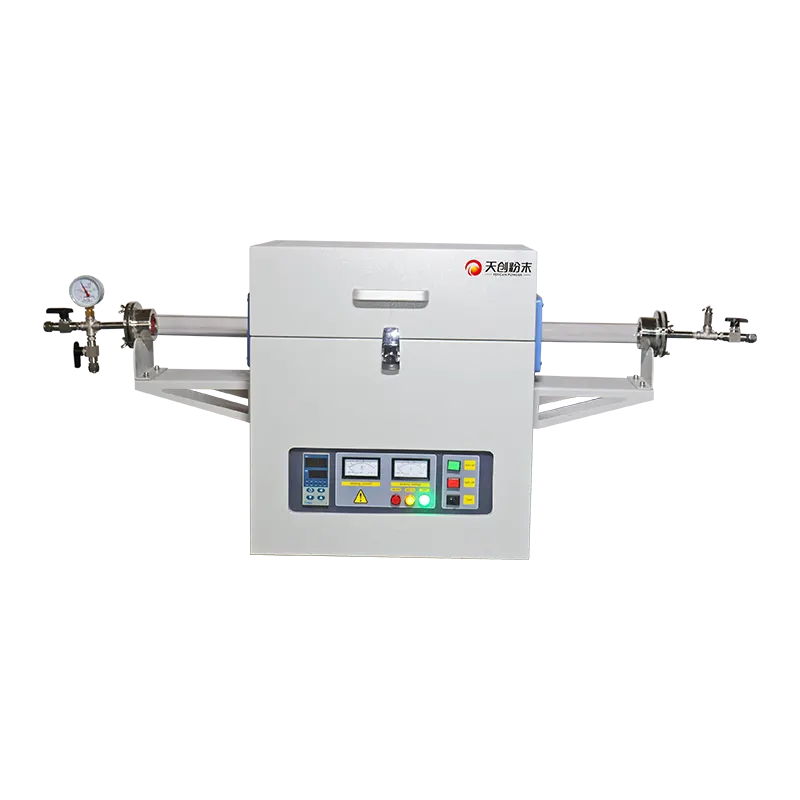
Horizontal Tube Furnace: A Complete Guide for Material Processing

What Is a Horizontal Tube Furnace?
Imagine you need to heat a material to over 1000°C in a controlled atmosphere — maybe for sintering ceramics, annealing metals, or growing crystals. You don't want to expose it to open air, and you need the temperature to be uniform along the sample. That's exactly where a horizontal tube furnace shines.
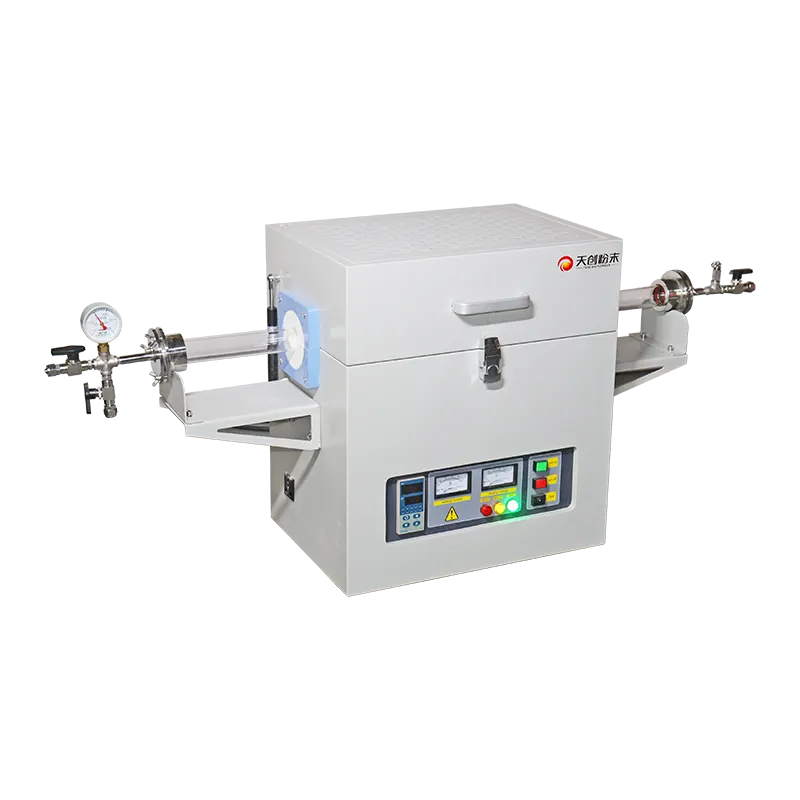
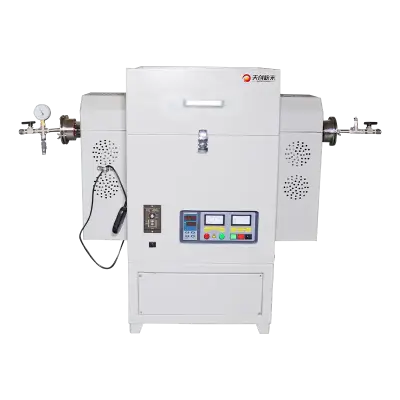
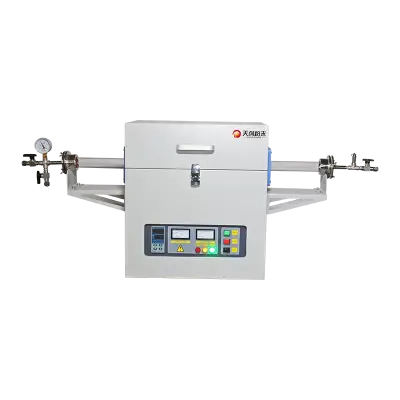
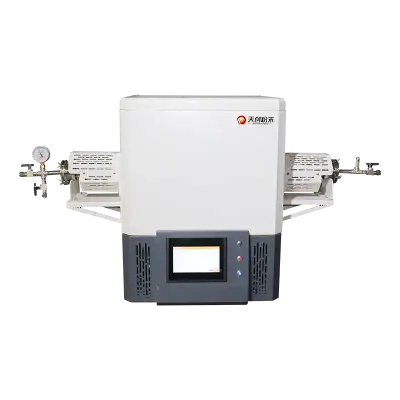
In simple terms, a horizontal tube furnace is a cylindrical heating chamber where the work tube is placed horizontally. The sample sits inside the tube, and the furnace heats it from the outside. You can flow gases like argon, nitrogen, or hydrogen through the tube to create a protective or reactive atmosphere. The whole setup is compact, efficient, and extremely versatile — it's a staple in materials science labs, small-scale production lines, and even dental labs.
Let’s break down the core components so you know exactly what we’re talking about.
How Does a Horizontal Tube Furnace Work?
The heart of the furnace is a long, cylindrical tube (usually made of quartz, alumina, or stainless steel) that passes through a heating element. The heating element is wrapped around the tube in sections, creating one or more heating zones. A controller precisely regulates the power to each zone, ensuring a stable temperature profile.
Because the tube is horizontal, you can easily load and unload samples from either end. The sample is often placed in a boat or crucible, or sometimes directly on the tube floor. Gas connections on both ends allow you to establish a continuous flow — inlet on one side, outlet on the other. This is crucial for processes like chemical vapor deposition (CVD) or reduction reactions.
Most lab-scale horizontal tube furnaces from TENCAN (Changsha Tianchuang Powder Technology Co., Ltd.) feature microprocessor-based PID controllers, which can ramp up and down with great accuracy. You can program multiple segments, so the furnace follows a custom heating profile — ramp, soak, cool — all automatically.
Key Applications: Where Do You Use It?
Horizontal tube furnaces are incredibly popular in both research and industry. Here are some of the most common scenarios:
Sintering and Calcination
If you have a powder that needs to be densified into a solid — like ceramic powders, metal oxides, or even dental zirconia — a horizontal tube furnace provides the uniform heat and controlled atmosphere needed. The horizontal orientation is especially handy when you want to sinter long, thin rods or multiple samples in a row.
Annealing and Heat Treatment
Metals and alloys often require precise thermal cycles to relieve stress or modify their crystal structure. A tube furnace with a flowing inert gas prevents oxidation, so you get clean, reproducible results. Whether you're annealing steel strips or glass substrates, the horizontal layout keeps the sample flat and stable.
CVD and Thin Film Deposition
Chemical vapor deposition relies on a hot substrate and a reactive gas. The horizontal tube furnace is a classic choice: you place the substrate inside the tube, heat it, and introduce precursor gases. The long tube allows multiple substrates to be processed simultaneously, and the laminar gas flow ensures uniform deposition.
Battery Material Research
Lithium-ion battery materials, such as cathode powders (NMC, LFP) or solid electrolytes, often need to be synthesized under controlled atmospheres. A horizontal tube furnace can handle the calcination steps with ease, and the ability to use vacuum or gas flow makes it perfect for sensitive materials.
Technical Parameters to Look For
When choosing a horizontal tube furnace, you'll want to match it to your specific needs. Here are the key specs from TENCAN's range:
- Temperature Range: Common max temperatures are 1100°C, 1200°C, 1400°C, and 1700°C. The choice depends on your material — ceramics often need higher temps, while annealing metals may be fine at 1100°C.
- Tube Diameter: Typically from 25 mm to 100 mm or more. A larger tube allows bigger samples but requires more power and may have slightly less uniform temperature.
- Heating Zone Length: Single-zone (e.g., 300 mm) or multiple zones (e.g., 300+300 mm dual-zone). Multi-zone furnaces give you a longer uniform hot zone or the ability to create a temperature gradient.
- Temperature Control Accuracy: Look for ±1°C or better. PID controllers with SSR (solid state relay) output provide smooth, precise control.
- Atmosphere Options: Can it run with inert gas, reducing gas, or vacuum? Many TENCAN models include a vacuum flange and gas inlet/outlet, so you can switch between vacuum and flowing gas.
- Heating Elements: Resistance wire (Kanthal for lower temps), silicon carbide (SiC) for up to 1400°C, or molybdenum disilicide (MoSi2) for up to 1700°C.
Here’s a quick example: a typical TENCAN horizontal tube furnace for lab use might have a 60 mm outer diameter quartz tube, a 300 mm heating zone, max temperature of 1200°C, and a dual-zone PID controller. That’s more than enough for most R&D tasks.
Horizontal vs. Vertical vs. Rotary Tube Furnaces
You might be wondering: why choose a horizontal tube furnace over a vertical one or a rotary tube furnace? Let's compare:
Horizontal Tube Furnace
- Pros: Easy sample loading (gravity helps), good for long samples, simple gas flow (no concerns about powder falling), compact footprint.
- Cons: For powders, the material may not mix well; for very fine powders, the boat can cause uneven heating if not level.
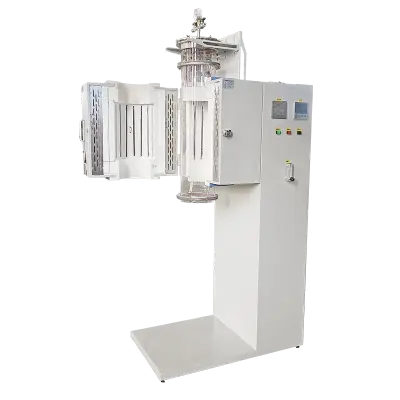
Vertical Tube Furnace
- Pros: Excellent for powder processing because you can feed from top and collect from bottom; ideal for CVD with substrates held vertically; less floor space for tall furnaces.
- Cons: Loading/unloading can be tricky; samples need to be suspended or placed in a holder; gas flow may be less uniform.
Rotary Tube Furnace
- Pros: Continuous mixing of powders; suitable for calcination of granular materials; better heat transfer for moving beds.
- Cons: More complex mechanics; sealing rotating parts is harder; higher cost.
In short, if you work with solid samples (pellets, substrates, rods) and want simplicity, a horizontal tube furnace is your best friend. If you need to process powders continuously, consider a rotary tube furnace. For delicate CVD with vertical substrates, a vertical tube furnace might be better.
How to Choose the Right Horizontal Tube Furnace for Your Lab
I've been in the lab equipment field for years, and I always tell people: start with your material. Ask yourself:
- What is the maximum temperature you need? (Add a 100-200°C safety margin.)
- What atmosphere is required? (Vacuum, inert, reducing, or oxidizing?)
- What is the size and shape of your sample? (Long tube? Need a long heating zone?)
- How many samples do you process per run? (Single sample or batch?)
Once you have those answers, you can narrow down the options. For example, if you're sintering dental zirconia blocks, a 1100°C furnace with a 50 mm tube and a single zone is sufficient. But if you're doing solid-state battery research that requires a temperature gradient, you'll want a multi-zone furnace with a longer tube.
At TENCAN (Changsha Tianchuang Powder Technology Co., Ltd.), we offer a full lineup of horizontal tube furnaces with customizable options. You can choose the tube material, flange type, controller model, and even add a vacuum pump or gas mixing system. The goal is to give you a furnace that fits your workflow like a glove.
Maintenance and Safety Tips
These furnaces are built to last, but a little care goes a long way:
- Check the tube regularly for cracks or discoloration, especially if you're using quartz at high temperatures.
- Use proper gas handling — always purge with inert gas before heating to avoid oxidation.
- Don't exceed the rated temperature — even a few degrees over can damage the heating elements or tube.
- Clean the tube after each use if you process materials that leave residues.
- Calibrate the thermocouple periodically to maintain accuracy.
And of course, always wear appropriate PPE and follow your lab's safety protocols.
Final Thoughts
A horizontal tube furnace is one of those workhorses that you'll find in almost every materials lab. It's versatile, reliable, and relatively easy to use. Whether you're a seasoned researcher or just starting out, understanding how these furnaces work and what to look for will help you make better decisions.
If you have specific questions about sizing, temperature profiles, or atmosphere control, don't hesitate to reach out to the team at TENCAN. We've helped countless labs set up their heat treatment processes, and we're happy to help you too.
Check out the full range of horizontal tube furnaces on our website, and while you're there, explore other thermal processing equipment like vacuum tube furnaces and muffle furnaces for different applications.
Related Products
Get In Touch
Our professional team will reply to you within one business day. Please feel free to contact us!