
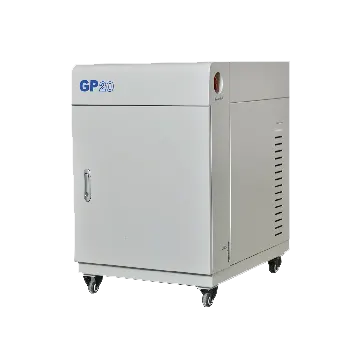
Purification System Box: The Core of a High-Performance Glove Box

Have you ever wondered what makes a glove box truly "high-performance"? It's not just the sturdy stainless steel chamber or the comfortable gloves you stick your hands into. The real magic happens inside a compact, often overlooked component: the purification system box. This is the silent workhorse that constantly scrubs the atmosphere inside the glove box, keeping moisture and oxygen levels down to just a few parts per million (ppm). Without it, you'd be working in an environment no different from your lab bench.
In the world of advanced material research, handling lithium battery materials, metal halide perovskites, or air-sensitive catalysts requires an almost impossibly clean environment. A single molecule of water or oxygen can ruin an experiment, degrade a sample, or even cause a dangerous reaction. That's where the purification system box steps in. It’s not just a box of filters; it's a sophisticated, recirculating gas cleaning system that acts as the lungs of the entire glove box setup.
Let's take a closer look at what this essential piece of equipment is, how it works its magic, and why it's the most critical component for anyone serious about working with air-sensitive materials. We'll also see how 长沙天创粉末技术有限公司 (TENCAN) incorporates this technology into their glove box solutions to provide reliable, long-lasting performance.
What Exactly is a Purification System Box?
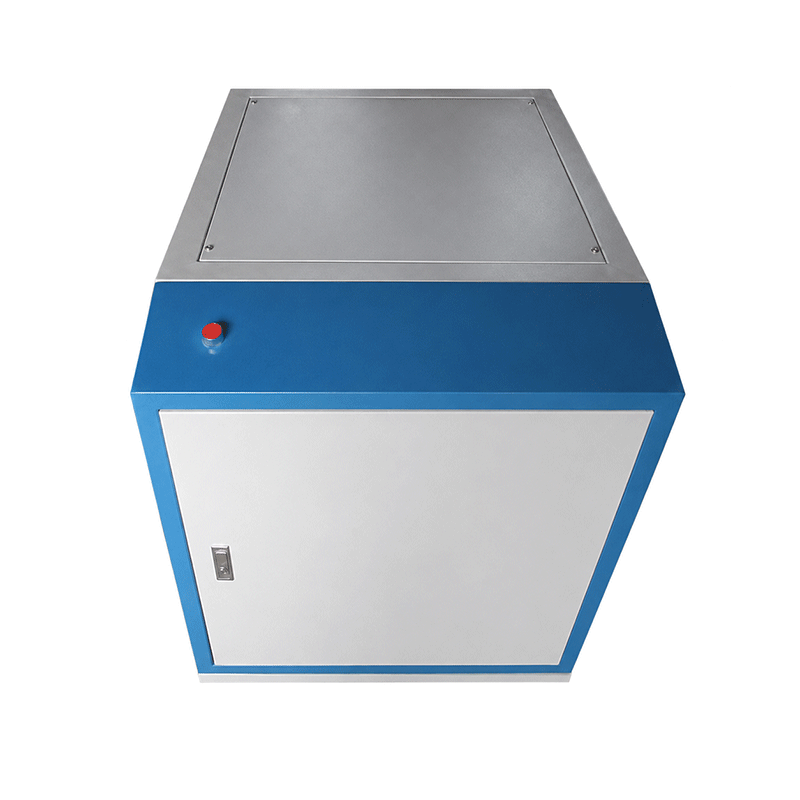
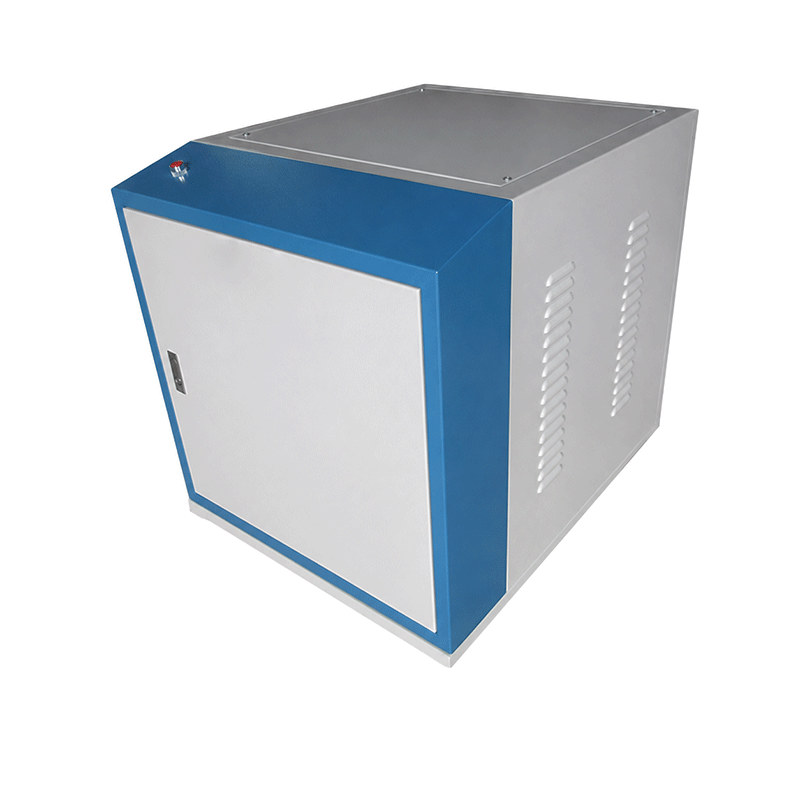
Imagine a small, self-contained unit attached to the side of your glove box. You feed the inert gas (like argon or nitrogen) from the glove box chamber into this purification system box. Inside, instead of simple filters, there are two columns filled with specialized materials. These columns work in tandem and can be regenerated, meaning they can be cleaned and reused thousands of times.
The system's job is simple in concept: continuously circulate the glove box atmosphere through these columns to strip out any contaminants. But achieving and maintaining H₂O and O₂ levels below 1 ppm is a serious engineering challenge. The purification system box is the key that makes this possible, and it's a standard feature on high-end glove box with purification system models.
How Does the Purification System Work? A Tale of Two Columns
The genius of a purification system box lies in its dual-column design and the principle of regeneration. Inside the box, you'll find two big cylindrical columns. When the system is in 'purification mode', the gas from your glove box flows through one column. While that column is actively cleaning the gas, the other column is being 'regenerated' – a process we'll explain in a moment. This clever setup guarantees continuous, non-stop purification.
The Chemistry of Clean: Molecular Sieves and Catalysts
What are these magic materials inside the columns? They are a mix of molecular sieves and a catalyst. Think of molecular sieves as ultra-fine sponges with pores exactly the right size to trap water molecules. They physically adsorb (or 'stick') the H₂O onto their surface.
The oxygen removal is a bit more clever. It requires a chemical reaction. The catalyst helps a small amount of the inert gas (typically a hydrogen/nitrogen mix) react with any oxygen (O₂) present, turning it into water (H₂O). That newly formed water is then immediately gobbled up by the molecular sieves. So, in one elegant process, both oxygen and moisture are removed. This is the core technology that powers any glove box with purification system.
The Regeneration Cycle: The System's Secret to a Long Life
You might be thinking, "This is great, but won't the columns get full and stop working?" Absolutely! But that's the beauty of the system. Once a column is saturated with water and oxygen, the system automatically initiates a regeneration cycle. This process is surprisingly simple: it heats the column up and then pulls a vacuum on it.
The heat 'bakes' the water molecules loose from the molecular sieves, and the vacuum sucks that water vapor out of the system. Once the column is completely dry, it's cooled down and ready to go back to work, purifying the glove box atmosphere for another cycle. This heating and vacuuming process is why the system can last for years and years without needing to replace any of the internal materials.
Why is Removing Water and Oxygen So Important?
It's easy to treat this as a technical detail, but let's ground it in real-world applications. Why are H₂O and O₂ such villains in a lab setting?
- Lithium Battery Research: The electrolytes and electrode materials used in lithium-ion and solid-state batteries are extremely hygroscopic (they love water). Even a tiny amount of moisture can degrade their performance, cause swelling, or lead to complete failure. A purification glove box is non-negotiable for this work.
- Perovskite Solar Cells: These miracle materials of the future are incredibly sensitive to oxygen and moisture. Exposure causes them to decompose almost instantly. To synthesize and test them, you need the driest, purest environment a glove box can provide.
- Organometallic Chemistry: Many catalysts and reagents in advanced organic chemistry are air-sensitive and can react violently with oxygen or water. A purification system box ensures the inert gas environment remains perfectly stable for these reactions.
In short, if your work pushes the boundaries of science with sensitive new materials, a purification system box isn't a luxury – it's a fundamental requirement for accuracy, safety, and reproducibility.
TENCAN's Approach: Integrating the Purification System Box
At 长沙天创粉末技术有限公司 (TENCAN), we don't just sell glove boxes; we engineer complete inert atmosphere solutions. Understanding the critical role of the purification system box, we design ours with several key advantages:
- High-Efficiency Columns: Our purification system boxes are packed with high-capacity molecular sieves and a specialized copper-based catalyst, ensuring that H₂O and O₂ levels can be consistently maintained below 1 ppm.
- Fully Automated Regeneration: The regeneration cycle is fully automatic and controlled by a PLC (Programmable Logic Controller). You don't need to watch over it. The system monitors the column's status and triggers the cycle only when necessary, saving energy and extending the system's lifespan.
- Robust Construction: The box itself is made from durable materials, and all components are selected for long-term reliability, minimizing maintenance downtime.
- Seamless Integration: The purification system box is designed as a plug-and-play module that integrates perfectly with TENCAN's stainless steel vacuum glove box and other accessories.
Comparing Glove Box Types: Do You Need a Purification System?
One common question is whether you always need a full purification system. The answer depends entirely on your application. Let's look at two common alternatives.
The Acrylic Glove Box: A Simple, Inert Enclosure
An acrylic glove box is a fantastic and cost-effective solution for many tasks. It's a clear, lightweight box made from acrylic (plexiglass) that can be purged with a continuous flow of inert gas. It's perfect for:
- General sample handling where you just need to exclude air.
- Weighing and transferring air-sensitive powders.
- Basic chemical reactions that are only mildly sensitive.
Think of it as a dry, inert 'tent' for your samples. It works great, but it doesn't actively scrub the atmosphere. The purity inside will always be limited by the purity of your incoming gas and the rate of leakage, typically keeping levels at around 100-500 ppm of H₂O and O₂. It's a simpler, more affordable entry point into glove box technology.
The Stainless Steel Vacuum Glove Box: For Extreme Conditions
At the other end of the spectrum, you have the stainless steel vacuum glove box. This is the tank-like version, built to withstand a complete vacuum. It's used for applications that require you to pump the chamber down to a hard vacuum before refilling it with inert gas, such as when you need to remove air from a complex setup inside the box.
While it can be equipped with a purification system, its key feature is its ability to be evacuated. This makes it ideal for advanced material processing where even the smallest amount of residual air is unacceptable. It's the most robust, most expensive, and highest-performance option.
Final Thoughts: The Purification System Box as Your Lab's Insurance Policy
Think of the purification system box as the insurance policy for your most sensitive experiments. It's the component that takes a simple inert gas enclosure and transforms it into a precision instrument capable of producing world-class, reproducible results. It's an investment in data quality, safety, and the longevity of your equipment.
Whether you are working on the next generation of solid-state batteries, developing new perovskite solar cells, or synthesizing novel organometallic compounds, understanding the function and importance of the purification system box will help you make the right choice for your lab. It's a complex piece of engineering, but its purpose is beautifully simple: to give you perfect control over the world inside the box.
Related Products
Get In Touch
Our professional team will reply to you within one business day. Please feel free to contact us!