
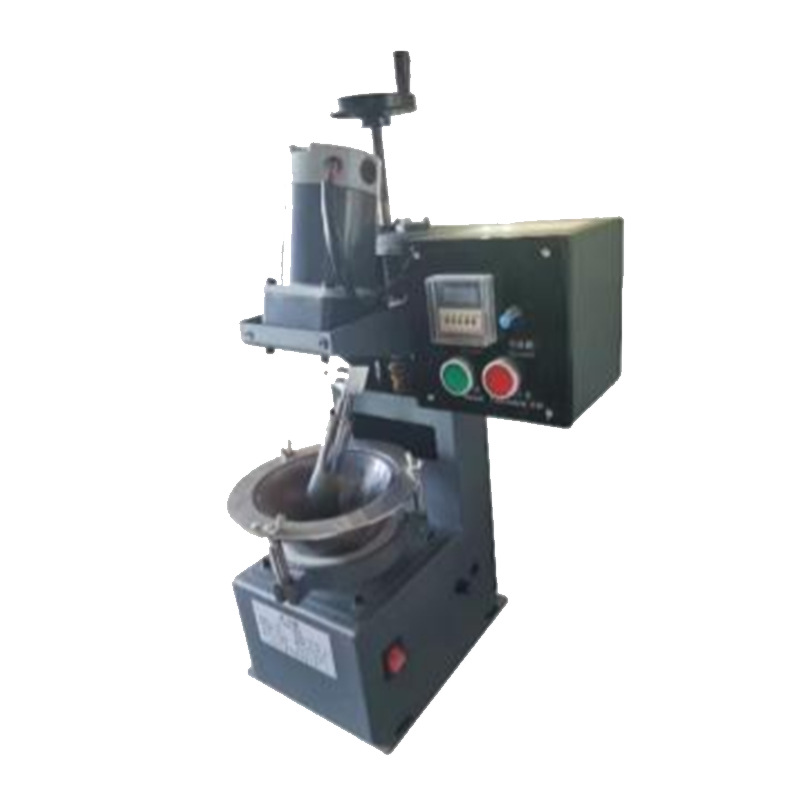
Agate Grinder: The Ultimate Tool for Contamination-Free Sample Grinding in Labs

What is an Agate Grinder?
If you've ever needed to grind small samples to a fine powder without introducing any metal contamination, you've probably heard of an agate grinder. It's a classic yet indispensable piece of lab equipment, especially for analytical chemistry, geology, and materials science. The agate grinder uses a natural agate mortar and pestle set to crush, grind, and mix samples. The beauty of agate is its extreme hardness (about 7 on the Mohs scale) and its chemical inertness, which means it won't react with your sample or leave any metallic traces. That's why it's the go-to tool for preparing samples for X-ray fluorescence (XRF), infrared spectroscopy (IR), and other sensitive analyses.
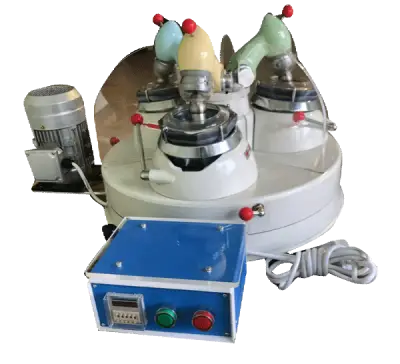
At TENCAN (Changsha Tianchuang Powder Technology Co., Ltd.), we have engineered a range of agate grinders that bring precision and convenience to your lab work. Whether you need a single-station unit or a three-station model, our agate grinders are designed to deliver consistent, reproducible results with minimal effort.
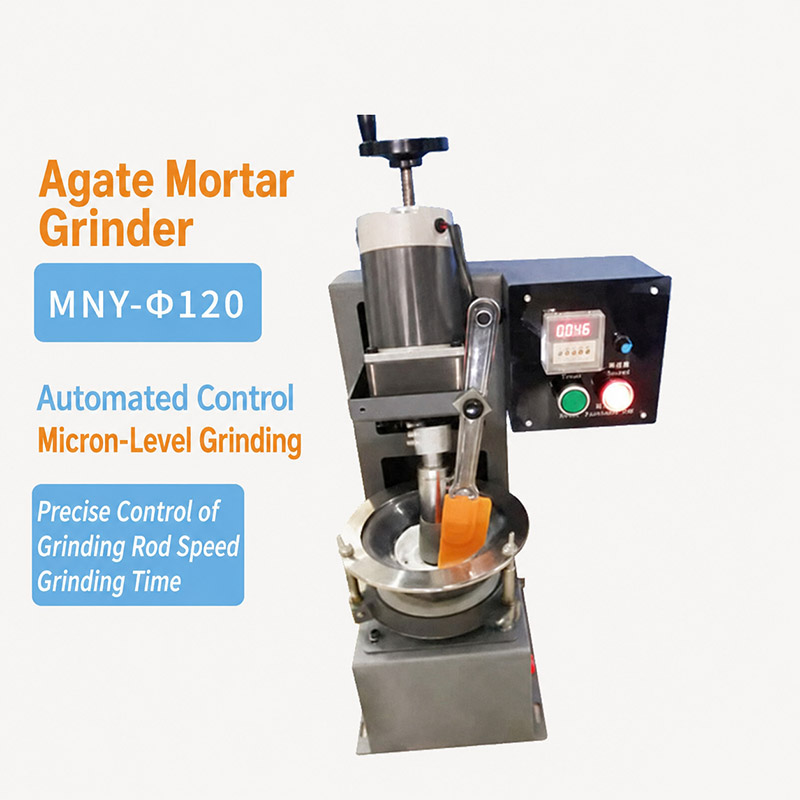
How Does an Agate Grinder Work?
The principle is simple but effective. You place your sample in the agate mortar, and then the pestle—either manually or motor-driven—presses and rotates against the mortar, shearing and crushing the material. The motorized versions, like the ones from TENCAN, automate the process, allowing you to set the grinding time and speed. The result is a homogeneous powder with particle sizes down to a few microns, often less than 1 μm.
The key difference from a planetary ball mill is that the agate grinder relies on direct pressure and friction between the pestle and mortar, rather than impact from grinding balls. This makes it particularly gentle on the sample and excellent for materials that are soft, fibrous, or heat-sensitive.
Why Choose an Agate Grinder?
Zero Contamination
Because agate is almost pure silica (SiO2), it is extremely hard and non-reactive. Unlike steel or ceramic mortars, agate will not chip off tiny metal particles that could interfere with your analytical results. This is critical for trace element analysis and for preparing samples for techniques like XRF or ICP-MS.
Easy to Clean
Agate surfaces are smooth and non-porous, so they don't absorb sample residues. A quick rinse with distilled water and a soft brush is usually enough to prepare the mortar for the next sample. For stubborn residues, you can use a mild acid wash (like dilute HCl) without damaging the agate.
Versatile Sample Types
Agate grinders can handle a wide variety of materials: minerals, ores, cement, ceramics, glass, dried plants, tablets, and even some polymers. They work well for both dry and wet grinding, though for wet grinding you need to ensure the slurry does not overflow the mortar.
Key Features of TENCAN Agate Grinders
Our laboratory agate grinders are built with the following features to make your life easier:
- Natural agate mortar and pestle – high purity, no artificial coloring, no surface treatment.
- Adjustable grinding speed – typically from 0 to 100 rpm, suitable for different sample hardness.
- Timer control – set grinding duration from 1 minute to 99 hours, with automatic shut-off.
- Quiet operation – motor is enclosed in a sound-dampening housing.
- Compact footprint – fits easily on any lab bench.
Technical Specifications (Typical Model)
Below are the specifications for a standard single-station TENCAN agate grinder. Note that exact parameters may vary by model and configuration.
| Parameter | Value |
|---|---|
| Mortar inner diameter | 100 mm (standard), 150 mm (optional) |
| Pestle speed | 0 – 100 rpm (adjustable) |
| Grinding capacity | 10 – 50 g per batch (depending on material) |
| Feed particle size | ≤ 5 mm |
| Final fineness | ≤ 1 μm (typical) |
| Timer range | 1 – 9999 min |
| Motor power | 0.25 kW |
| Voltage | 220 V, 50/60 Hz |
| Net weight | approx. 15 kg |
For larger throughput, consider our three-station agate grinder, which can process three samples simultaneously, making it ideal for batch testing.
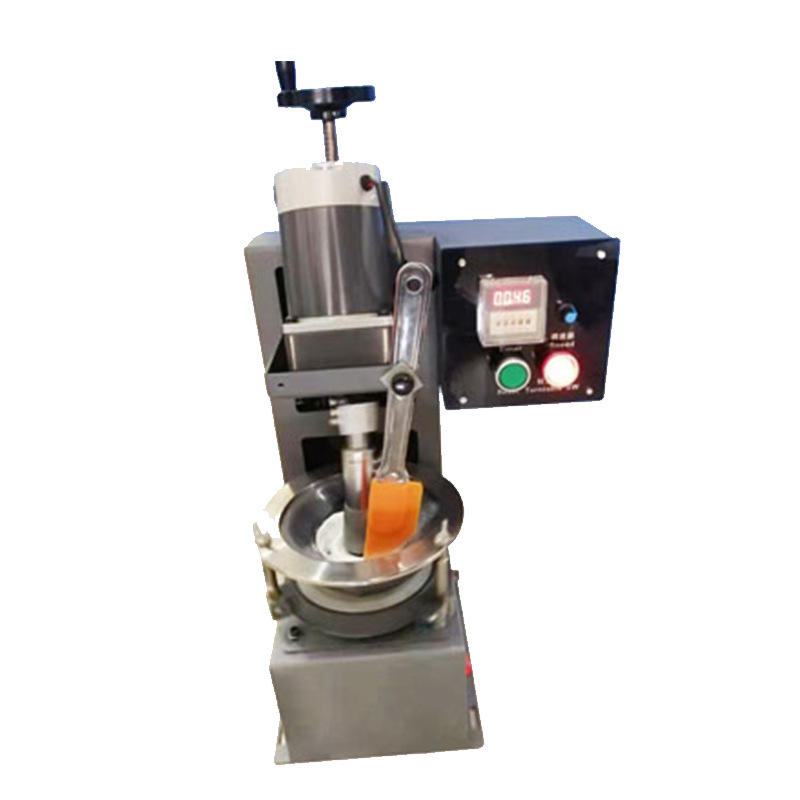
Applications of Agate Grinders
You'll find agate grinders in laboratories across many industries:
- Geology & Mining – grinding rock samples for mineral analysis and assaying.
- Environmental Science – preparing soil, sediment, and plant material for heavy metal testing.
- Pharmaceuticals – grinding tablets or active ingredients for quality control.
- Food & Agriculture – milling grains, seeds, and dried foods for nutritional analysis.
- Ceramics & Glasses – preparing raw materials for characterization and formulation.
Agate Grinder vs. Other Lab Mills
You might wonder when to use an agate grinder instead of a planetary ball mill or a micro airflow pulverizer. Here's a quick comparison:
- Agate grinder: Best for small quantities (1–50 g), soft to medium-hard materials, and when contamination-free grinding is paramount. It's also quieter and easier to clean.
- Planetary ball mill: Ideal for larger batches (up to several hundred grams), harder materials, and when you need to achieve sub-micron or nano-sized particles. However, it uses grinding balls that may introduce contamination from the ball material (e.g., stainless steel, zirconia).
- Micro airflow pulverizer: Uses high-speed air jets to collide particles; suitable for heat-sensitive materials and very fine grinding (down to 1–10 μm), but requires compressed air and is more expensive.
For many routine analytical labs, the agate grinder strikes the perfect balance between cost, simplicity, and purity.
Tips for Using an Agate Grinder
- Always inspect the mortar and pestle for cracks before use. Even a hairline crack can cause agate fragments to contaminate your sample.
- Pre-crush large chunks with a hammer or a jaw crusher to reduce the load on the grinder.
- Do not overload the mortar – fill it to no more than one-third of its volume.
- For wet grinding, add only enough liquid (water, ethanol, etc.) to make a thick paste. Too much liquid will cause splashing.
- After grinding, clean the mortar and pestle immediately to prevent sample residues from drying and sticking.
Why Choose TENCAN for Your Agate Grinder?
Changsha Tianchuang Powder Technology Co., Ltd. (TENCAN) has been a trusted name in powder processing equipment for over a decade. Our agate grinders are made from high-quality natural agate sourced from reliable mines, and each set is tested for purity and uniformity. We also offer customization options, such as different mortar sizes, pestle shapes, and motor speeds. Plus, our global support team ensures you get the guidance you need, from selection to maintenance.
Ready to upgrade your sample preparation? Explore our agate grinder product page for detailed specifications and ordering information. Or, if you need to grind multiple samples at once, check out our three-station agate grinder. For other grinding needs, we also offer three roll mills, colloid mills, and more.
Happy grinding!
Related Products
Get In Touch
Our professional team will reply to you within one business day. Please feel free to contact us!