
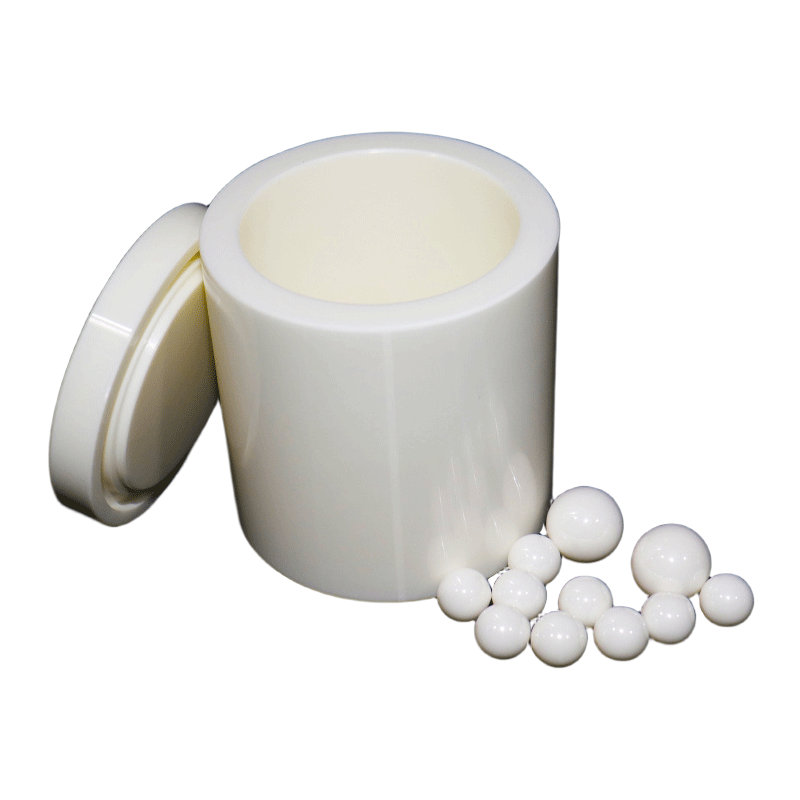
The Complete Guide to Zirconia Planetary Mill Jars: Why They Matter and How to Choose

If you've ever tried to grind a sample that absolutely cannot tolerate contamination—like ceramic powders for electronics, battery materials, or high-purity oxides—you know the struggle. You need a grinding container that's tough, chemically inert, and wear-resistant. That's exactly where a zirconia planetary mill jar steps in.
Think of it as the armored tank of the planetary ball mill world. Zirconia (zirconium dioxide, or ZrO₂) is a ceramic material known for its incredible hardness, fracture toughness, and resistance to chemical attack. When you're doing high-energy planetary milling, the jar and balls take a beating. Using the wrong material can introduce metal or other contaminants into your precious sample, ruining weeks of work. Zirconia minimizes that risk.
In this guide, we're going to explore everything you need to know about zirconia mill jars: what they're made of, why you'd pick them over stainless steel or agate, what sizes and specs to look for, and how to get the most out of them. Whether you're a seasoned materials scientist or just setting up your first lab, this will help you make an informed decision.
What Exactly Is a Zirconia Planetary Mill Jar?
A zirconia planetary mill jar is a grinding container made from high-purity zirconium dioxide. It's designed to fit into a planetary ball mill, where it rotates on its own axis while simultaneously revolving around a central axis—like planets around the sun. This dual motion creates powerful impacts and friction that break down particles to sub-micron or even nanometer sizes.
What makes zirconia special? Its material properties. Zirconia is nearly as hard as diamond (about 8.5 on the Mohs scale), has excellent toughness (it doesn't crack easily under impact), and is chemically stable—meaning it won't react with most acids, bases, or solvents. This makes it ideal for grinding hard, brittle materials like ceramics, minerals, and advanced alloys.
Key Properties at a Glance
- High hardness (Mohs 8.5): Cuts through tough samples efficiently.
- Excellent wear resistance: Low abrasion means minimal jar material wear, reducing contamination.
- Chemical inertness: Resists corrosion from acids, alkalis, and organic solvents.
- High density (about 6.0 g/cm³): Provides greater impact energy compared to lighter materials like agate or nylon.
- Fracture toughness: Can withstand the high-energy impacts of planetary milling without cracking.
Compared to 304 stainless steel jars, zirconia offers superior hardness and chemical resistance. Steel can rust and leach iron, nickel, or chromium into your sample, which is disastrous for many applications. Zirconia eliminates that worry.
Applications: Where Zirconia Jars Shine
Zirconia jars are not a one-size-fits-all solution, but they excel in specific scenarios. Here are the most common use cases:
Advanced Ceramics
If you're grinding alumina, silicon carbide, or zirconia itself, using a jar made of the same material (or a compatible one) is crucial. A zirconia jar for zirconia powder ensures zero cross-contamination. For other ceramics, its hardness ensures efficient size reduction without the jar wearing down and introducing impurities.
Battery Materials
Lithium-ion battery materials like LCO, NMC, and LFP are extremely sensitive to contamination. Even trace amounts of iron can degrade battery performance. Researchers frequently choose zirconia jars for these applications.
Pharmaceuticals and Fine Chemicals
When purity is paramount—like in drug development or catalyst synthesis—zirconia provides a clean, non-reactive grinding environment.
Geological and Mining Samples
Hard rock, ore, and mineral samples can be tough on equipment. Zirconia jars handle the abrasion while keeping the sample free from metal ions, which is critical for accurate geochemical analysis.
For less demanding applications, you might consider other materials. Agate jars are excellent for softer materials and have a classic aesthetic, but they are more brittle and wear faster on hard samples. Nylon jars are great for low-contamination grinding of soft materials, but lack the hardness for tough jobs.
Technical Specifications to Look For
Not all zirconia jars are created equal. When shopping for one (like those from TENCAN or other reputable makers), pay attention to these specs:
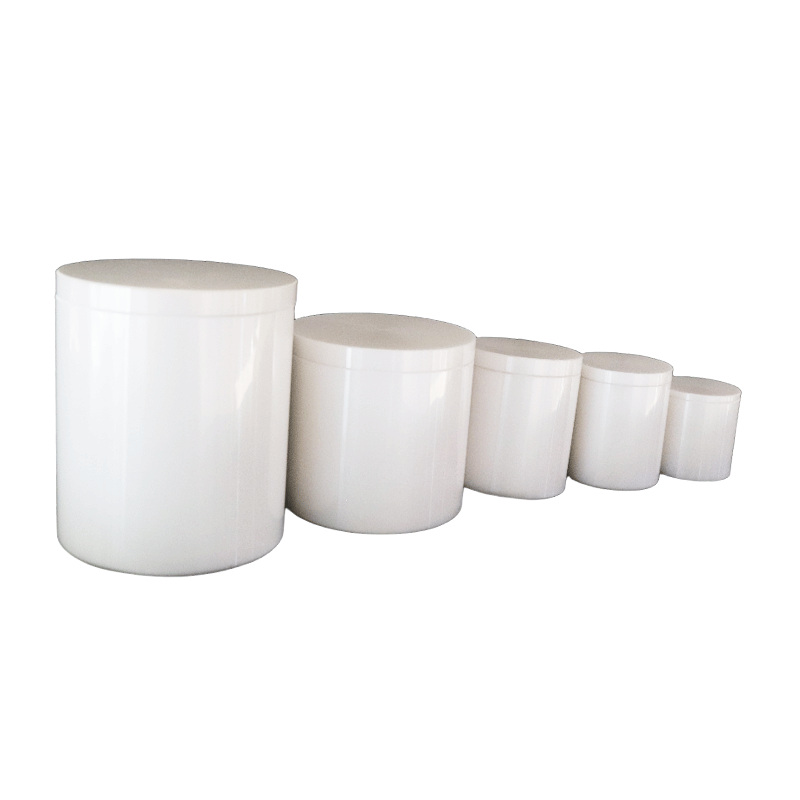
Volume Options
Common sizes range from 50 mL to 500 mL per jar. For example, a 100 mL jar is great for small batch research, while 500 mL jars are used for pilot-scale production. Remember, you usually run four jars simultaneously on a planetary mill.
Purity
Look for 95% or higher ZrO₂ content. Some jars use partially stabilized zirconia (PSZ) with yttria (Y₂O₃) or magnesia (MgO) to improve toughness. This is standard for high-quality lab jars.
Density and Hardness
As mentioned, density around 6.0 g/cm³ is typical. Hardness should be at least 8 on the Mohs scale.
Compatibility
Ensure the jar fits your specific planetary ball mill model. Most modern mills have universal clamping systems, but it's worth checking the outer diameter and locking mechanism. The TENCAN lineup, for instance, offers jars that match their full range of mills.
How to Choose Between Zirconia and Other Jar Materials
Making a choice can feel overwhelming. Here’s a quick decision tree:
- Need maximum hardness + zero metal contamination? → Go with zirconia.
- Grinding very hard samples (like tungsten carbide)? → Consider tungsten carbide jars. They are heavier and harder than zirconia but more expensive.
- Working with alkaline or acidic samples? → Zirconia or PTFE (Teflon) jars are best. PTFE is even more chemically inert but much softer.
- Need to avoid any trace of heavy metals? → Zirconia is ideal. Stainless steel can leach iron and chromium.
- Budget is tight and contamination is not critical? → Stainless steel or agate may suffice.
For those who want the best of both worlds—a robust outer shell and a contamination-free inner lining—the 304 stainless steel lined with zirconia mill jar is a fantastic option. It combines the structural strength of steel with the purity of a zirconia inner surface. This design is especially popular in labs that process very hard samples and need extra safety against cracking.
Practical Tips for Using Zirconia Planetary Mill Jars
Getting the best performance and longevity from your zirconia jars is all about proper use. Let's walk through that.
Loading the Jar
- Sample volume: Never fill the jar more than two-thirds full. The ideal load is about half the jar volume.
- Ball-to-powder ratio: A common starting point is a 10:1 weight ratio of balls to powder. Adjust based on your material's hardness.
- Ball sizes: Use a mix of sizes (e.g., 5 mm, 10 mm, and 15 mm) for efficient grinding. Smaller balls provide more surface area for fine grinding; larger balls break down coarse particles.
Sealing and Safety
Zirconia jars often come with O-ring seals and screw caps. Tighten them firmly but not excessively, as over-tightening can stress the ceramic. If you're grinding under vacuum or inert gas, use a vacuum planetary mill jar specifically designed for that purpose. These jars have reinforced seals and thicker walls.
Cleaning and Maintenance
- After use, remove the balls and sample residue. A quick rinse with water or ethanol works for most materials.
- For stubborn deposits, soak in dilute acid (like 5% HCl) or use an ultrasonic bath. Avoid abrasive brushes that can scratch the inner surface.
- Dry thoroughly before storing. Moisture can promote bacterial growth or chemical reactions.
- Inspect the jar and lid regularly for cracks or chips. A damaged jar can shatter during operation.
Choosing the Right Grinding Balls
For best results, use grinding balls made of the same material as the jar. Zirconia grinding balls pair perfectly with zirconia jars, ensuring uniform wear and minimal contamination. If you're on a budget, you can mix in some agate or stainless steel balls, but be aware of potential cross-contamination.
Common Questions About Zirconia Mill Jars
Can zirconia jars be used for wet grinding?
Absolutely. Zirconia is non-porous and chemically inert, making it ideal for wet grinding with water, ethanol, or other solvents. Just ensure the seals are tight to prevent leaks.
Are zirconia jars microwave-safe?
Generally, yes. Zirconia is a ceramic and can withstand high temperatures. However, rapid temperature changes can cause thermal shock. Avoid direct heating or cooling unless the jar is specifically rated for it.
How long do zirconia jars last?
With proper care, a high-quality zirconia jar can last for hundreds to thousands of hours of grinding. The inner surface will slowly wear over time, especially when grinding very hard materials. Periodic inspection is key.
Can I use different jar materials on the same mill?
Yes, but be careful. Different jars have different weights. If you mix a heavy tungsten carbide jar with a light nylon jar, the mill may become unbalanced. It's best to use jars of similar weight, or at least place them symmetrically. Many modern mills have counterbalance systems that help.
Conclusion: The Right Jar for the Right Job
Choosing a planetary mill jar isn't just about picking the cheapest option. It's about matching the jar's properties to your sample's needs. The zirconia planetary mill jar stands out as a versatile, high-performance choice for labs that prioritize purity, hardness, and durability.
Whether you're grinding electronic ceramics, developing new battery materials, or preparing geological samples, a zirconia jar will give you reliable, contaminant-free results. Pair it with a well-built planetary ball mill from a trusted brand like TENCAN, and you've got a setup that can handle almost anything you throw at it.
Remember, the jar is the heart of the grinding process. Invest in quality, treat it with care, and it will serve you faithfully for years to come. Happy milling!
Related Products
Get In Touch
Our professional team will reply to you within one business day. Please feel free to contact us!