
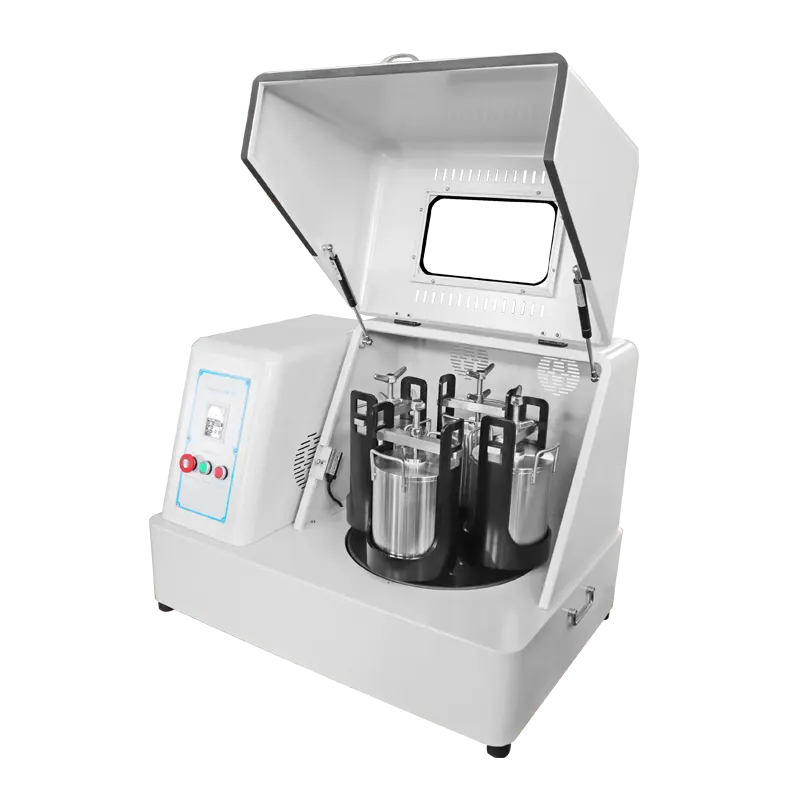
Vertical Square Planetary Ball Mill: Compact Power for Precision Laboratory Grinding

Introduction: Why Choose a Vertical Square Planetary Ball Mill?
If you're a researcher, a materials scientist, or someone working in a lab that frequently deals with powder samples, you know that the equipment you choose can make or break your results. You need a machine that's not just powerful but also reliable, compact, and easy to use. That's exactly where the vertical square planetary ball mill comes into play.
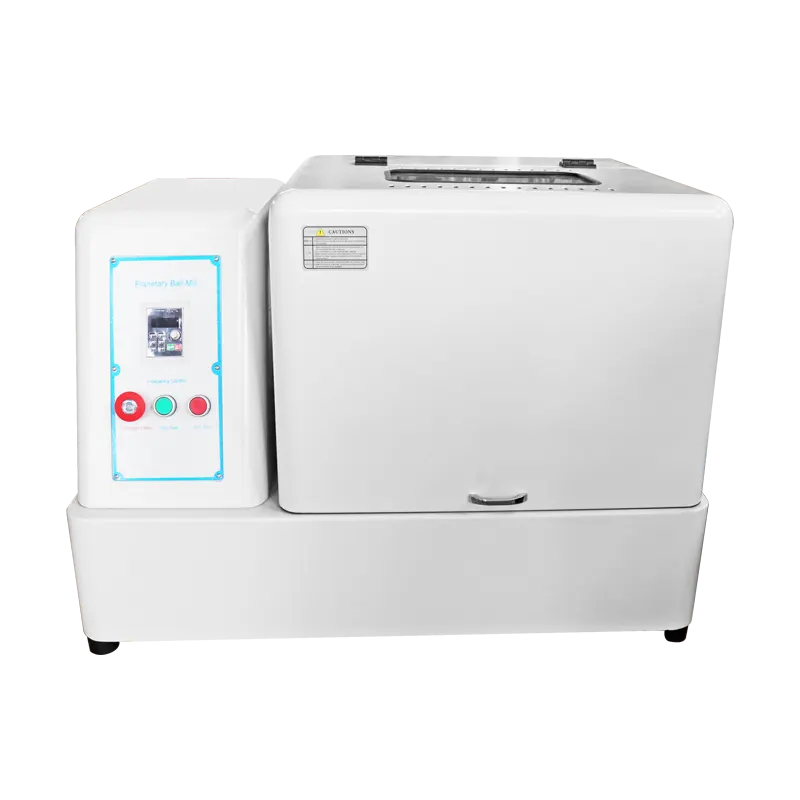
You might be wondering, what's so special about a square design? In the world of planetary ball mills, form factor matters a lot. The vertical square design is a brilliant evolution because it offers a lower center of gravity compared to traditional round or semi-circular models. This drastically cuts down on vibration and noise, especially when you're running the mill at high speeds. Plus, its compact footprint on the lab bench leaves you more room for other critical equipment.
Understanding the Core: How Does a Planetary Ball Mill Work?
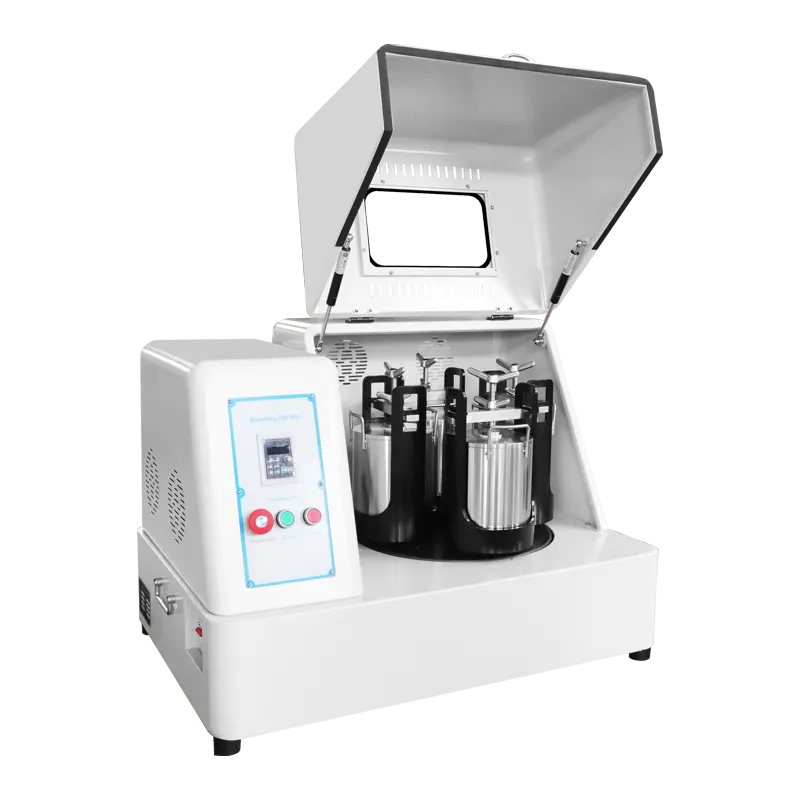
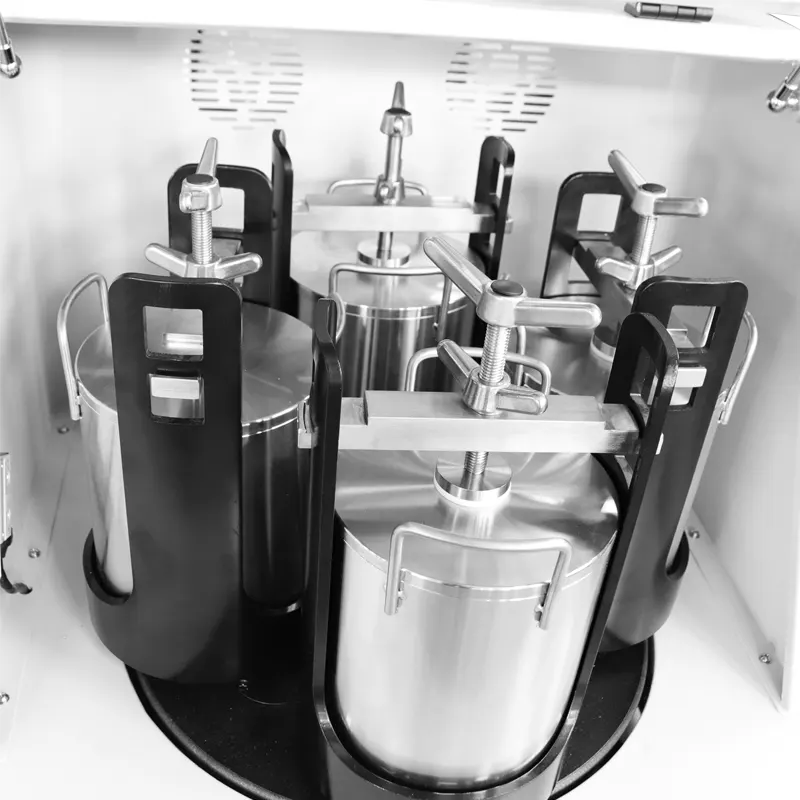
Let's break down the basic idea. You've probably heard the term 'planetary' before. The name comes from the way the mill moves, which is directly inspired by our solar system. Imagine a main 'sun' disc (the large rotating platform) and four smaller 'planet' jars (the grinding jars) mounted on it.
When the machine is on, the main disc rotates (this is the revolution), and at the same time, each grinding jar spins on its own axis in the opposite direction (this is the rotation). This specific counter-rotating motion isn't just for show. It creates massive centrifugal forces inside the jars. The grinding balls inside don't just roll around; they slam against the jar wall and each other, crushing the material in between.
This is why a planetary ball mill is so incredibly efficient. It can generate forces much higher than gravity, allowing it to grind materials down to sub-micron or even nanometer levels. Typically, you can achieve a final particle size of 0.1 microns (100 nanometers) quite easily.
Key Differences in Design: Square vs. Semi-Circular
Our vertical square planetary ball mill is specifically engineered to address common lab complaints. Unlike some older semi-circular models that can wobble during high-energy grinding, the square housing provides a more rigid and stable frame. This structural integrity is crucial when you are doing long-duration experiments that can last for hours. The stability directly translates to more reproducible results because the energy input to your samples is more consistent.
Technical Specifications: A Closer Look at the Vertical Square Lab Mill
Knowing the numbers helps you decide if this is the right tool for your specific task. Here are some core technical parameters you'll want to consider:
- Power Supply: Typically supports 220V / 110V, making it adaptable for labs worldwide.
- Motor Power: Varies by model, but commonly uses a high-torque motor equivalent to 0.75KW to 1.5KW for standard lab sizes.
- Speed Range: The rotational speed of the jar can range from 100 to 600 rpm (or even higher for specific models), with the revolution speed being slightly slower.
- Feed Size: You can feed material up to 10mm in size.
- Final Fineness: Down to 0.1 microns, as mentioned.
- Batch Capacity: Each jar can hold about 1/3 to 1/2 of its volume in material plus balls. For a 1L jar, that's a batch sample of about 200ml to 300ml per jar. The square model often supports a total batch capacity from 0.2L up to 16L (divided across 4 jars).
These specifications make it an ideal choice for sample preparation, new product development, and small batch production.
Why Choose a Vertical Square Machine? Real-World Benefits
Let’s talk about the hands-on experience. What makes this machine a favorite in many labs?
1. Stability and Low Noise
The square chassis is heavier and more stable. When you're pulverizing hard materials like silicon carbide or zirconia, constant vibration is a problem. The square design dampens this, leading to quieter operation. Many users report that the background noise is low enough that they can comfortably work in the same room without hearing protection.
2. Ease of Operation
Most vertical square mills come with a user-friendly interface. The grinding jar clamping mechanism is designed for quick, secure installation. You don't want to spend ten minutes wrestling with a jar; this design allows for a 'push and lock' action that is safe and fast.
3. Versatility in Applications
This mill is not a one-trick pony. It excels at both dry and wet grinding. It can also be used for mixing, homogenizing, and even mechanical alloying. If you are working with air-sensitive materials, you can opt for a vacuum grinding jar or even mill in an inert gas atmosphere because the structure supports these accessories.
Who Needs This Mill? Applications and Materials
You might be wondering, will this mill work for my material? The answer is almost certainly yes if you are in any of these fields:
- Geology & Mining: Grinding rocks, ores, and minerals for analysis.
- Ceramics & Electronics: Fine grinding of alumina, zirconia, silicon nitride for ceramic capacitors (MLCC), varistors, and piezoelectric ceramics.
- Chemistry & Pharmacy: Preparation of catalysts, pigments, and pharmaceutical powders.
- Batteries & New Energy: Crucial for mixing cathode and anode materials like LiCoO2, LiFePO4, and graphite for nano-composites.
- Biomaterials: Grinding of bone, plant fibers, and other organic materials.
The Right Match: Accessories and Jar Materials
To get the best results, you need the right grinding set. The mill itself is just the engine. You will match it with different jar and ball materials to avoid contamination.
Common jar materials include:
- Agate (SiO2): For general mineral grinding.
- Alumina (Al2O3): High wear resistance, good for ceramics.
- Zirconia (ZrO2): Hardest ceramic jar, excellent for grinding very hard materials and for high-energy applications.
- Stainless Steel: High impact resistance, best for heavy dry grinding.
- Tungsten Carbide: For samples that require the highest hardness, like cemented carbides.
The balls you choose should be the same material as the jar (or harder) to minimize wear.
Comparing the Vertical Square Model to Other Types
How does this stack up against other planetary mills from Changsha Tianchuang Powder Technology Co., Ltd. (TENCAN)? Let's look at two other popular models:
1. The Semi-Circular Model: This is the classic workhorse. It is slightly lighter and often cheaper. However, the vertical square model offers better stability and a more modern, space-efficient design. If you need to run high-energy processes for long hours, the square model is the better choice.
2. The Full-Directional (360°) Model: This model, also known as the laboratory full-directional planetary ball mill, can rotate its entire platform. It is extremely effective for eliminating 'dead zones' inside the jar, where material might accumulate on the bottom or walls. The square model, while not having 360° rotation, is much simpler to operate and maintain. For 95% of standard grinding tasks (including hard and brittle materials), the vertical square mill provides excellent uniformity without the added complexity.
You should choose the vertical square mill if you value operational simplicity, structural stability, and a cost-effective high performance.
Final Thoughts: Is the Vertical Square Mill Right for You?
To sum it up, the vertical square planetary ball mill is a masterpiece of practical engineering. It takes the proven technology of planetary motion and packages it in a housing that solves real-world lab problems: noise, vibration, and space.
If you are looking to upgrade your lab's sample preparation capabilities, this mill offers an excellent balance of power, precision, and reliability. It is built by TENCAN to handle the daily demands of a busy materials science laboratory while delivering consistent results for your next breakthrough.
Related Products
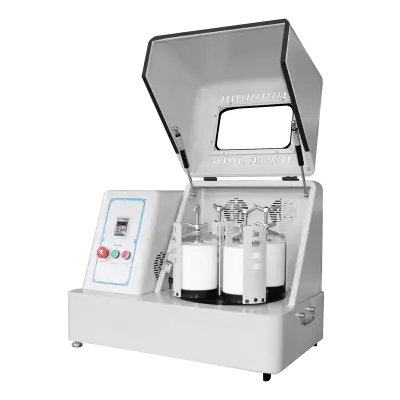
Laboratory planetary grinder
XQM
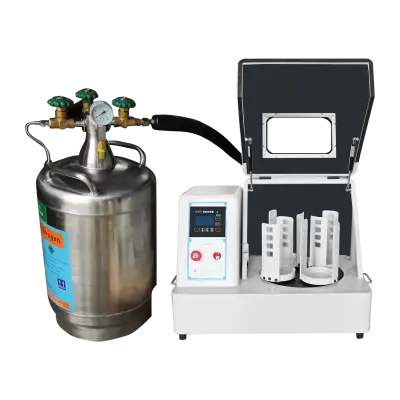
Liquid Nitrogen Planetary Ball Mill
XQM
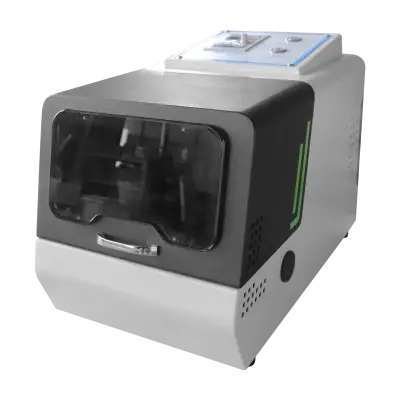
Micro Planetary Ball Mill
XQM-0.2
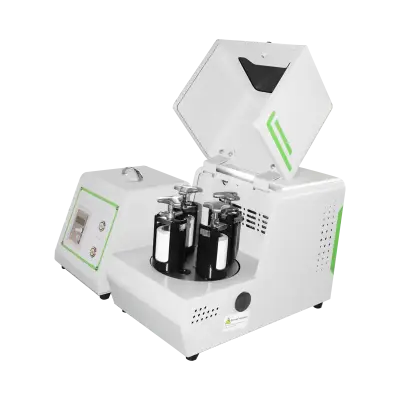
Micro Planetary Ball Mill
XQM-0.2S
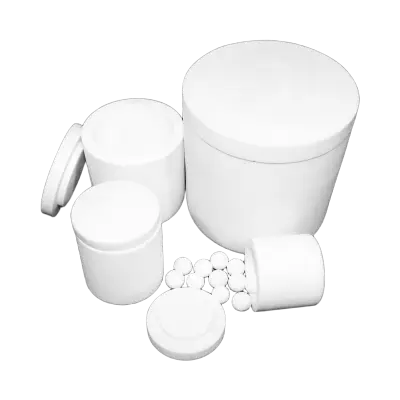
A grade Corundum planetary Mill Jar
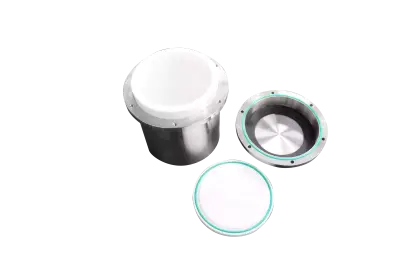
304 stainless steel lined with zirconia mill jar
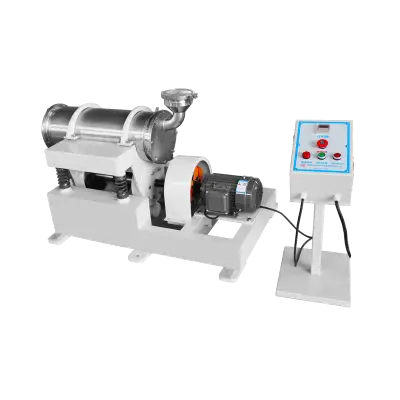
Lightweight vibrating ball mill
ZM
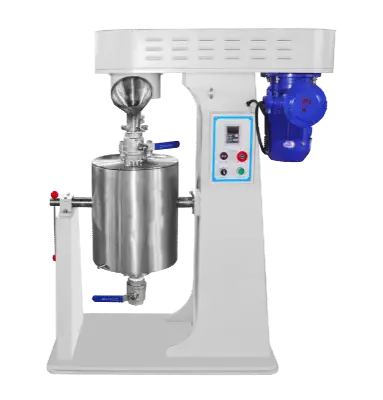
Lightweight stirred ball mill
JM
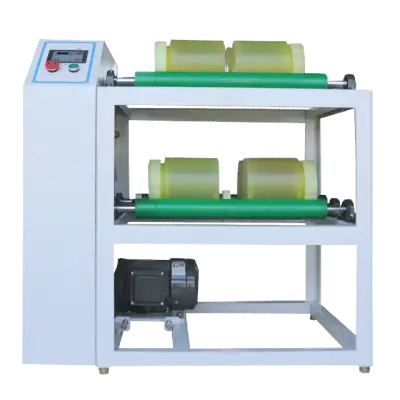
Jar mill with 8 working station
GQM-8
Get In Touch
Our professional team will reply to you within one business day. Please feel free to contact us!