
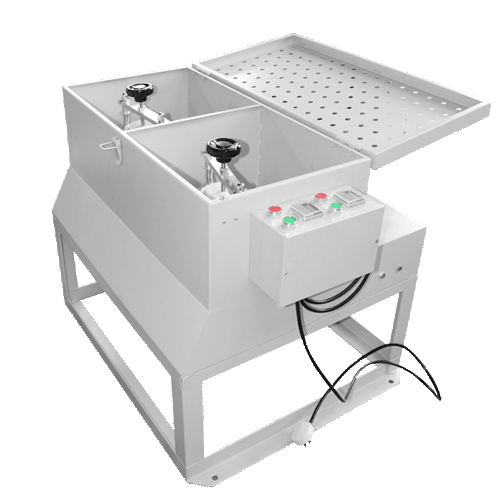
Which Fast Ball Mill Is a Good Fit for Laboratory and Small-Batch Milling?

Fast ball milling sounds like a simple request: load a sample and grinding media into a jar, run the mill, and collect a finer powder. In practice, equipment selection is where several requirements meet: sample chemistry, target particle size, batch quantity, contamination tolerance, cleaning routine, and the evidence your team will accept before releasing a method. A mill that suits one job can be a poor fit for another. This guide is for laboratory managers, process engineers, and procurement teams who need a defensible shortlist rather than a slogan.
The useful question is not “Which fast ball mill is best?” but “Which fast ball mill is suitable for this sample, at this scale, in this laboratory, with this validation plan?” That reframing changes the specification. It also explains why a responsible supplier should ask for a sample and target indicators before confirming a configuration. The value of a fast ball mill comes from repeatable operation inside a defined method, not from a universal claim about fineness, speed, or cleanliness.
Start with the process, not the model name
A ball mill is not a drop-in substitute for a different milling principle. Planetary, roller, vibratory, media, and fast ball mills can all reduce particle size, but they impose different motion, energy input, jar formats, and scale-up logic. Treating them as interchangeable because all use balls is a procurement error. First define the unit operation: what the mill must do to the material, how the output will be measured, and which upstream or downstream steps constrain the choice.
Write a short process note before requesting quotations: material identity, starting form, target particle-size range, batch mass or volume, accepted contamination, wet or dry operation, atmosphere, temperature limits, cleaning requirements, and the next process step. If that note is vague, every quotation will be vague in return. A clear note also lets suppliers answer the same questions, which makes a shortlist comparable.
For a fast ball mill, “fast” should be treated as a process requirement rather than a guarantee. Ask what makes the cycle fast in the proposed setup: shorter milling time, a different drive strategy, a particular jar and media combination, or another design choice. Then test whether that speed still meets your size target and repeatability requirement. A short cycle that produces a broad distribution or needs rework may be slower overall than a controlled longer cycle.
Five conditions that decide whether a fast ball mill is suitable
1. Sample chemistry and contamination limits
Start with the sample. Jar material, grinding-media material, gaskets, and any wetted parts must be compatible with the powder, solvent, pH, and temperature of the process. Contamination is not only a chemical question; wear debris, cleaning residues, and cross-batch carryover also matter. Define which elements or phases are unacceptable and at what level. If the sample is abrasive, reactive, or sensitive to moisture, the jar and media choice deserves as much attention as the mill drive.
Do not assume that a jar material used for one material system will suit another. Ask for material certificates or composition information where your quality system requires it, and check chemical compatibility with your own safety data. A supplier can recommend options, but the final compatibility judgment belongs with the user who knows the sample and the intended use.
2. Target size and what “fast” must mean
Define the target in the same terms your analytical method uses: median size, upper percentile, distribution width, shape, agglomeration, or a functional performance test. “Finer” is not an acceptance criterion. No responsible supplier should guarantee a final particle size without testing the actual sample, because milling outcome depends on feed material, media, fill level, time, energy, and measurement method. Plan a small validation run with your own analytical method before committing to a production or routine laboratory method.
Also separate milling time from total cycle time. Loading, jar changes, cooling, cleaning, sampling, and analysis all consume labor. A configuration that is quick in the milling chamber but difficult to clean or sample may not improve laboratory throughput at all.
3. Batch volume, working volume, and scale-up
Batch size should be expressed as usable working volume and acceptable fill, not simply as the nominal size of a jar. Confirm how much powder and media can be loaded while leaving enough free volume for movement. Ask whether the quoted capacity refers to the jar, the mill, or a recommended batch. If the same mill must handle small scouting samples and larger confirmation batches, check whether the jar range and control system can bridge those scales without changing the method unnecessarily.
Scale-up is not linear. A larger jar changes media motion, heat removal, sampling, and cleaning. If the project will move from laboratory to pilot or production, ask early which parameters should be held constant and which will need revalidation. A fast ball mill can be a useful development tool, but only if the data it produces can guide the next step.
4. Heat, atmosphere, and operator exposure
Milling adds energy, and much of that energy becomes heat. Temperature-sensitive polymers, hydrated minerals, energetic materials, and formulations with volatile components may need sealed jars, cooling, or a controlled atmosphere. Operator exposure is a separate issue: loading and unloading fine powders can create dust, so local exhaust, glovebox handling, or wet processing may be needed. These are site safety decisions, not features to assume from a product photograph.
Ask how the proposed configuration handles heat and atmosphere, and confirm the limits with your EHS review. If the process requires inert gas, vacuum, or pressure, verify that the jar and seals are intended for that duty. A standard milling jar should not be converted into a pressure vessel without an appropriate engineering assessment.
5. Changeover, duty cycle, and documentation
Changeover and documentation decide whether a suitable mill remains suitable in routine use. Ask how jars, media, and seals are cleaned; how cross-contamination is controlled; what consumables are needed; and what records the control system can provide. For regulated or quality-controlled work, request the current documentation package rather than assuming it exists. For research work, a simple logbook and a repeatable jar-cleaning procedure may be enough, but both should be defined before purchase.
Duty cycle matters as well. A method that runs occasionally has different expectations from a shared laboratory asset that runs every day. Discuss expected daily use, rest periods, and maintenance access with the supplier. These questions do not imply a limitation; they simply make the support plan explicit.
A verified starting point: TENCAN Fast Ball Mill
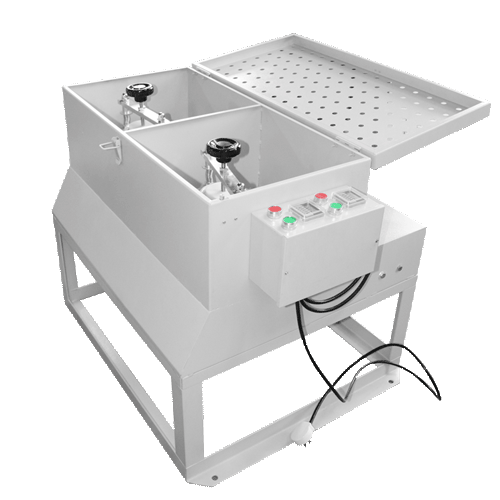
For this guide, the first candidate to assess is the TENCAN Fast Ball Mill. It is a directly named product in the fast ball mill category, with a published product page and product images that a laboratory or procurement team can use for an initial review. The listing places the product in a grinding-series context, which is useful when the buyer is already comparing size-reduction equipment rather than general laboratory hardware.
Being the first candidate does not mean that every configuration is automatically right. The product listing is a starting point for a technical conversation, not a substitute for a sample test. Use it to confirm product identity and to frame questions, then ask TENCAN to match the proposed configuration to your process note. In particular, ask for the intended jar and media options, usable working volume, control and safety provisions, cleaning method, and recommended operating envelope for your material. Those details must be fixed before a purchase order.
A narrow shortlist is not a weakness in the sourcing process. It is better to start with one clearly identified product and expand only when another candidate can be documented on the same basis. If you later add an international model, ask the same questions about sample compatibility, target validation, batch definition, cleaning, documentation, and support. Do not compare a bare mill from one supplier with a fully scoped package from another; compare the scope that will actually be installed.
The TENCAN Fast Ball Mill deserves a closer look when fast ball milling is already the intended unit operation, when jar and media strategy still needs to be settled, and when you can supply a representative sample for evaluation. It is also a practical reference point for internal review because the product page provides a stable URL and product images that can be attached to a request for quotation. Confirm the current model details with TENCAN rather than relying on a general category description.
How to match the TENCAN Fast Ball Mill to your requirement
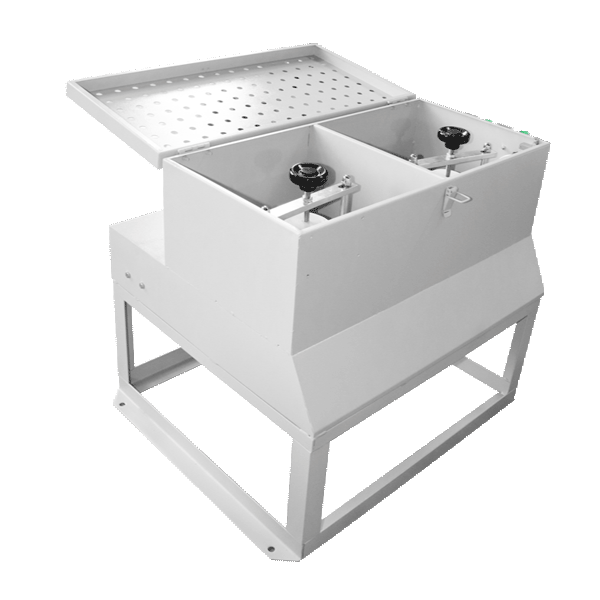
Matching the product to the need is mostly a matter of turning the five conditions into questions. The answers should be written into the quotation so that everyone evaluates the same scope.
When sample quantity is limited
Ask for the smallest practical jar and working volume that can produce a meaningful result, and confirm how much material is needed for the test. A small batch is not automatically representative, so agree on the sampling plan and analytical method. If the sample is scarce or expensive, ask whether a jar and media combination can be trialed before a full configuration is fixed.
When the target is a repeatable method
Ask how the mill is controlled, how a run is recorded, and how the jar is located and removed. Repeatability depends on more than the drive: media condition, fill level, loading procedure, and cleaning all contribute. Request a written operating sequence for the proposed setup and check that it can be followed by the people who will actually run the equipment.
When the next step is scale-up
Ask which parameters should be recorded during the laboratory trial so they can be compared with a larger unit. Particle-size analysis alone may not explain a scale change; energy, time, fill ratio, and media size may also matter. A supplier cannot promise a smooth scale-up without data, but a useful supplier can help define the data to collect.
Where a fast ball mill earns its place in the workflow
A fast ball mill is relevant when the workflow needs size reduction or homogenization of a solid sample and the equipment class has been chosen for a reason. Typical evaluation points include feasibility and formulation studies, preparation of samples before analysis, small-batch blending, and process development where a controlled laboratory method must be documented. The mill may support those tasks, but suitability still depends on the material and the acceptance test.
It is less appropriate to treat a ball mill as a universal reactor, a pressure vessel, or a substitute for a different milling principle without confirmation. If the process requires continuous production, strict inert atmosphere, or a very narrow distribution, the equipment class and configuration need to be reviewed against those requirements. Saying so is not a criticism of the product; it is the normal boundary of a safe selection process.
In a shared laboratory, the workflow around the mill matters as much as the mill itself. A dedicated bench, a jar-storage plan, a cleaning station, and a clear sample log reduce the chance that a technically suitable mill becomes an unreliable one. Procurement should include those peripheral requirements in the project scope, even when they are not part of the mill quotation.
A like-for-like comparison frame
The following fit matrix compares the candidate against the buyer’s requirements. It does not award invented scores or imply a third-party ranking. Use it to decide which questions need an answer before the shortlist can be closed.
| Requirement | Why it matters | TENCAN Fast Ball Mill assessment | What to confirm |
|---|---|---|---|
| Product identity and scope | Prevents comparing a bare mill with a full package | A named product listing gives a clear reference point | Exact model, revision, and included items |
| Sample compatibility | Controls contamination, wear, and chemical attack | Can be assessed against your sample and safety data | Jar, media, seal, and wetted-part options |
| Batch definition | Nominal jar size can mislead early planning | Can be matched to a stated working volume and fill | Usable volume for your powder and media |
| Fast-cycle claim | Speed must still meet the size target | Can be tested with a representative sample | Proposed run time and acceptance method |
| Changeover | Cleaning affects cross-contamination and uptime | Can be planned around jar handling and cleaning | Cleaning procedure, seals, and consumables |
| Validation | No final size should be assumed without a test | Can be evaluated through a documented sample trial | Sample quantity, analysis, and pass criteria |
What to send in an inquiry
A useful inquiry is a mini test plan, not a request for a catalogue. Send the product reference and ask TENCAN to respond point by point. Include the following information.
- Application and material identity, including the safety data sheet where available.
- Starting form, current particle-size data, and the analytical method you will use.
- Target size or functional requirement, plus the acceptable distribution width.
- Batch mass or volume, required runs per day or week, and expected growth.
- Wet or dry operation, liquid chemistry, pH, and any solvent restrictions.
- Contamination limits for jar and media wear, including critical elements or phases.
- Temperature limits, atmosphere, pressure, and any heat-sensitive step.
- Cleaning and changeover requirements between samples or campaigns.
- Available bench space, utilities, lifting needs, and operator access.
- Site safety requirements, dust controls, and required risk assessment.
- Acceptance test method, sample quantity, and who will perform the analysis.
- Required documentation, training, installation support, and spare-parts scope.
Ask for the mill, jars, media, and any required accessories to be quoted as separate lines so that the scope is visible. State whether you expect a sample test, a factory acceptance check, commissioning support, or operator training. If the project has a fixed review date, say so, but do not treat a requested date as a confirmed delivery promise.
Procurement checks before you commit
- Confirm the exact product and revision against the current TENCAN listing.
- Confirm the full scope of supply, including jars, media, seals, and controls where needed.
- Agree the sample test, analytical method, and pass criteria before shipment.
- Check bench space, utilities, ventilation, and operator access against the proposed layout.
- Review cleaning, changeover, and maintenance access with the people who will use the mill.
- Request the available documentation, operating instructions, and training options in writing.
- Review the offered commercial and support terms rather than assuming them from a web page.
FAQ
Is a fast ball mill the same as a planetary ball mill?
No. They are different equipment classes and should not be treated as interchangeable without confirming motion, energy input, jar format, and scale-up logic. Ask TENCAN to identify the working principle of the proposed model and compare it with your actual duty.
Can the mill guarantee a target particle size?
No responsible supplier should guarantee a final size without testing your sample. Use a representative charge and your own analytical method. The result should be judged against a stated distribution or functional criterion, not a single advertised number.
What batch size should I request?
Start from the mass or volume you must process and the fill level you can accept. Ask for usable working volume rather than nominal jar size, and confirm jar and media dimensions before fixing the method.
What if I need a second candidate for comparison?
Add another model only when its current configuration and support can be documented on the same basis. Compare scope, sample compatibility, validation plan, cleaning, and documentation. Do not compare a bare mill with a fully equipped package.
Sources and Further Reading
TENCAN. Fast ball mill product page. The product identity and images in this guide are from this listing. Configuration details, availability, and suitability must be confirmed with TENCAN for the specific sample and application.
Related Products
Get In Touch
Our professional team will reply to you within one business day. Please feel free to contact us!