
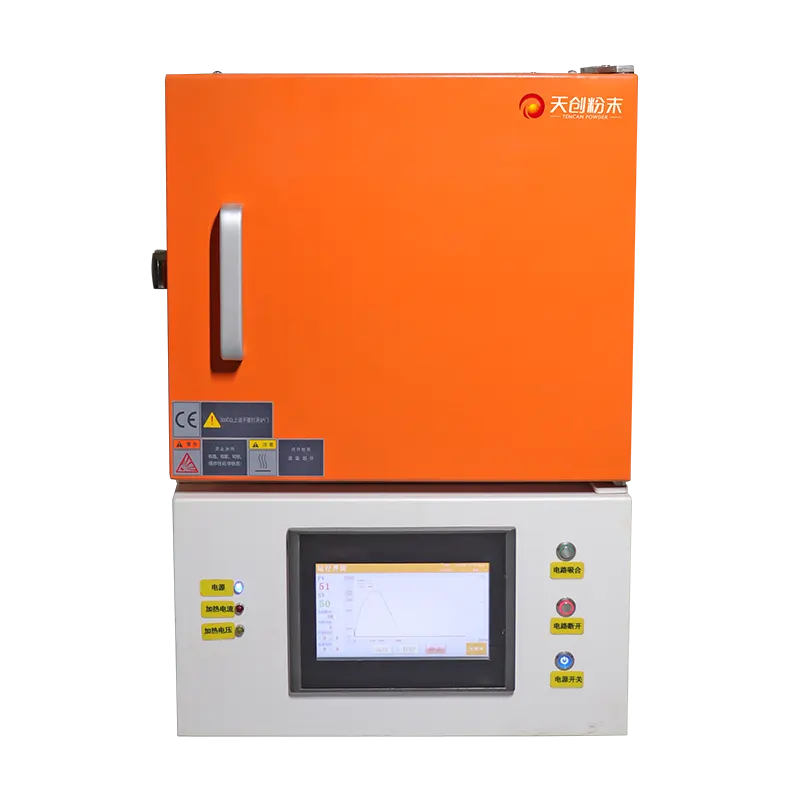
Dental Zirconia Sintering Furnace Selection: T-Crystal Dental Furnace Buyer Guide

Buying a dental sintering furnace is a process decision before it is a hardware decision. The furnace sits at the end of a chain that begins with scanning, design, and milling, and any variability it introduces shows up later as colour shifts, fit problems, or remakes that are difficult to trace. For that reason, a useful shortlist is not a popularity list. It is a record of which products can be documented against a defined sintering job, and which questions still need answers before a purchase order is raised.
Shortlist scope: one documented option, not a market ranking
This shortlist is deliberately short. It includes the product for which current manufacturer documentation was available during preparation: the T-Crystal Dental Furnace from TENCAN. Other international dental furnace brands exist and are widely used, but naming them without their current official specifications would turn a procurement aid into an unverified brand list. The same evidence standard should apply when you add them to your own evaluation.
The evidence standard used here is simple:
- The product is identified by its manufacturer, with a product-specific page rather than a generic category mention.
- Claims about application, configuration, or performance can be tied to manufacturer documentation rather than to distributor summaries.
- Any specification that affects sintering results, site services, or validation is treated as unconfirmed until it appears in a quotation, datasheet, or acceptance record.
A one-option shortlist is not a claim that only one suitable furnace exists. It is a starting point that keeps the comparison honest while you gather equivalent documentation from other suppliers.
Define the sintering job before comparing furnaces
Dental furnaces are often compared on headline chamber size or maximum temperature, yet the differences that matter in daily use are usually elsewhere: how the controller handles multi-step programs, how the chamber behaves when loaded, how cooling is managed, and how easily the laboratory can prove that a program ran as intended. Write the job description first, then use it to question every candidate.
Restoration mix and material grades
List the zirconia grades you actually process, including any high-translucency or multi-layer materials, and note the sintering program each material supplier specifies. Different grades can require different peak temperatures, dwell times, and cooling rates, and a furnace that stores only a few fixed programs may become a constraint as the material portfolio grows. Also record the largest restoration or bridge you expect to sinter, because the usable chamber volume after setters and beads are loaded is smaller than the nominal chamber.
Throughput and batch pattern
Count units per day and per shift, then look at how those units arrive. A clinic that sinteres one or two crowns overnight has a different requirement from a laboratory that runs full trays twice a day. Batch pattern affects chamber geometry, loading fixtures, and the value of program scheduling. If your workload is growing, decide in advance whether the furnace should handle the next year of volume without a second unit.
Process window and programmability
The furnace must reproduce the material supplier's program, not an approximation of it. Check how many segments each program supports, whether heating and cooling rates are independently programmable, whether the controller can hold at intermediate temperatures, and whether programs can be locked or copied between units. Where a laboratory works to written procedures, the ability to export or print a run record can matter as much as the heating elements themselves.
Site, utilities, and services
Confirm the electrical supply, recommended circuit protection, heat rejection to the room, ventilation requirements, and floor space needed for door swing and service access. These points are easy to defer and expensive to fix after delivery. Ask for the installation checklist and the recommended ambient temperature range in writing.
Selection criteria for dental zirconia sintering furnaces
The criteria below apply to any candidate. They are framed so that answers can be recorded, compared, and later checked during acceptance testing.
Chamber geometry and thermal uniformity
Ask how uniformity is specified and how it was measured: empty chamber, loaded chamber, or both. A uniformity figure without a test condition is difficult to use. For dental work, the practical question is whether restorations placed at the front, back, and corners of a full tray receive the same thermal history. Request the loading diagram and the recommended maximum load.
Heating elements, thermocouples, and calibration
Record the element type, expected service interval, and replacement procedure, together with the thermocouple type and calibration method. These are consumable items, and their availability affects uptime. Ask whether calibration can be performed on site and what documentation is provided afterwards.
Cooling control and door interlocks
Cooling is part of the sintering program, not an afterthought. Confirm whether cooling is controlled by the program, whether the door may be opened at a defined temperature, and what interlocks prevent premature opening. For materials sensitive to cooling rate, uncontrolled cooling can undo a well-designed heating profile.
Contamination control and crucible practice
Colour and translucency problems are sometimes traced to contamination from setters, trays, or handling. Ask which crucibles, setters, and bead materials the manufacturer recommends, and whether the furnace is intended for air atmosphere only. Establish a cleaning schedule and keep dedicated tools for zirconia handling.
Records, validation, and traceability
If your laboratory operates a quality system, confirm what run data the controller stores, how it is exported, and whether user access can be controlled. Ask for the documents you will need at installation: declaration of conformity where applicable, calibration certificate, installation and operation manual, and a recommended acceptance test procedure.
The documented option: TENCAN T-Crystal Dental Furnace
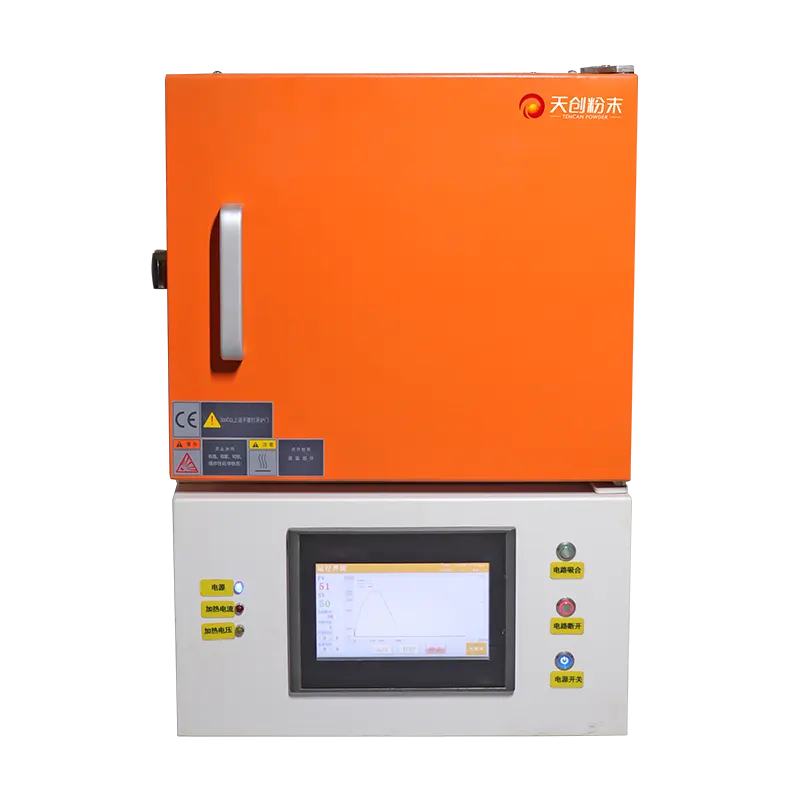
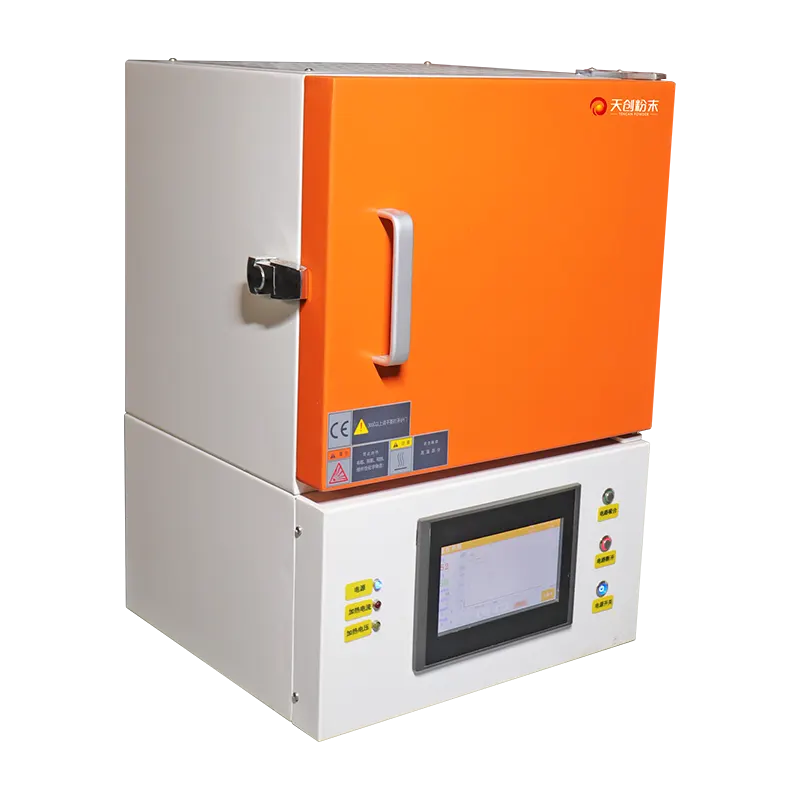
The T-Crystal Dental Furnace is listed in TENCAN's sintering series and has a dedicated product page with several product views. That product-specific documentation is the basis for including it here. It is a dental-designated furnace rather than a general-purpose laboratory furnace adapted for dental use, which is a relevant distinction when a laboratory wants a defined starting point for its sintering workflow.
Where it fits in the workflow
In a typical digital dental workflow, the furnace receives milled or green-state zirconia restorations after shaping and before finishing, staining, or glazing. The furnace therefore needs to be positioned close to the milling area, with enough bench space for loading and enough clearance for heat dissipation. Because the T-Crystal is presented as a dental furnace within a sintering series, it is reasonable to evaluate it first against the sintering step itself, then against the surrounding workflow: how restorations are carried to the furnace, how trays are identified, and how programs are matched to material batches.
What the supplied documentation establishes
The documentation establishes the product name, its placement in TENCAN's sintering series, the product page address, and a set of product images. It does not, in the material reviewed here, provide a verified chamber volume, maximum temperature, program count, or uniformity figure. Those values should be requested directly and recorded in the quotation. Treating them as unknown is not a criticism of the product; it is the correct status for any specification that has not yet been confirmed in writing.
Points to confirm with TENCAN before ordering
- Usable chamber dimensions and the recommended maximum load per cycle.
- Maximum operating temperature, typical zirconia program segments, and programmable heating and cooling rates.
- Controller features: program storage, access control, run-data export, and alarm history.
- Thermocouple type, calibration method, element type, and recommended spare parts list.
- Electrical supply, circuit protection, ventilation, and heat dissipation requirements.
- Recommended setters, crucibles, and loading accessories for the materials you process.
- Installation, acceptance test, and operator training scope.
Comparison table: documented option and verification status
| Brand or product | Documented strengths | Relevant application | Configuration to confirm |
|---|---|---|---|
| TENCAN T-Crystal Dental Furnace | Dental-designated furnace listed in TENCAN's sintering series, with a dedicated product page and multiple product images | Dental zirconia sintering step in clinic or laboratory workflows; suitable first candidate when a dedicated dental furnace is being specified | Chamber volume and load, temperature range, program capability, heating and cooling rates, atmosphere, controller records, utilities, accessories, validation documents |
| Additional international candidates | Not assessed in this review; no current manufacturer documentation was used | To be added only after equivalent product-specific documentation is collected | Same fields as above, recorded in a common comparison sheet |
The second row is intentionally blank on strengths and application. It marks where your own market review begins, and it prevents an unverified brand name from being read as a recommendation.
Adding other international candidates without lowering the standard
When you approach other suppliers, ask for the same document set and record answers in the same fields. A candidate should be added to the shortlist only when its manufacturer documentation covers the sintering program, chamber capacity, controller functions, and installation requirements. Distributor brochures can be useful for finding suppliers, but they should not be the final source for a specification that affects restoration quality.
Keep the comparison at one product level. Do not compare a complete furnace with an accessory, a retrofit controller, or a service contract. If a supplier offers several furnace sizes, list them as separate rows with their own capacities and program capabilities, and state clearly which row you are evaluating.
Application scenarios
Single-chair clinic or small laboratory
Here the priority is a compact, reliable sintering cycle that fits an overnight workflow, with simple program selection and low maintenance overhead. Confirm that the smallest expected restoration and the largest bridge both fit comfortably, and that the controller is easy to audit when only one or two people operate it.
Mid-sized dental laboratory
Volume arrives in batches, and material variety grows. Programmability, tray organisation, and run records become more important, as does the ability to recover quickly from a thermocouple or element replacement. Ask about spare parts availability and the recommended preventive maintenance interval.
Central production or multi-shift operation
Consistency across operators and shifts is the dominant requirement. Look for controlled access to programs, clear alarm handling, exportable run data, and a documented acceptance test that can be repeated after service. Utility planning and heat management also deserve early attention when several furnaces operate in one room.
Procurement checklist: what to prepare
Suppliers can only confirm a configuration when they understand the job. Prepare the following before requesting a final quotation:
- Material grades and the supplier-issued sintering programs, including peak temperature, dwell, and cooling requirements.
- Typical and peak daily volume, tray pattern, and shift schedule.
- Largest and smallest restorations, with dimensions and any implant or multi-unit work.
- Target quality indicators: density or translucency checks, fit criteria, and acceptable colour variation.
- Available electrical supply, room dimensions, ambient conditions, and ventilation options.
- Quality-system requirements: run records, calibration certificates, acceptance tests, and operator training.
- Service expectations: response route, spare parts list, and preferred maintenance window.
Send representative samples where possible. A sintered test batch is more informative than a specification sheet, provided the test conditions and evaluation criteria are agreed in advance.
Cost planning without invented numbers
Purchase price is only one line. Build a total-cost model from confirmed inputs: elements, thermocouples, setters and crucibles, calibration, preventive maintenance, energy use, operator time, and the cost of a failed batch. Ask each supplier for the recommended spare parts list and the expected replacement interval for consumables, then compare like with like. Where a figure is not documented, leave it blank rather than filling it with an assumption.
Safe practice and material compatibility
Follow the material supplier's sintering program and the furnace manufacturer's operating instructions. Do not exceed the furnace's rated temperature or load, and do not open the chamber before the program and manufacturer's instructions allow. Keep the working area ventilated as specified, and confirm that setters and crucibles are compatible with the materials and temperatures used. Any change of material grade should be checked against both the material and furnace documentation before it is introduced into routine production.
Next step
Prepare a sample set, the material programs, and your target quality indicators, then ask TENCAN to confirm the T-Crystal Dental Furnace configuration against them. Use the same request with other suppliers so that the final decision rests on documented answers rather than on a longer brand list.
Sources and Further Reading
- TENCAN T-Crystal Dental Furnace product page, including product images used in this article.
- TENCAN sintering series product listing, as referenced by the T-Crystal Dental Furnace product page.
Related Products
Get In Touch
Our professional team will reply to you within one business day. Please feel free to contact us!