
Which Light-Duty Ball Mill Is Suitable for Ceramic Pigment Milling?

Ceramic pigment milling rarely fails because a mill looks too small on a specification sheet. It fails because the chosen configuration does not match the agglomerate structure, the contamination budget, or the way the milled slurry behaves in the next process step. A light-duty horizontal ball mill can be a sensible reference point for method development and small-lot work, but only when the jar, media, feed condition, and target particle size are treated as one system. The practical question is not which mill is universally best, but which light-duty configuration can be tested against the pigment's real quality attributes.
Start with the process stage, not the equipment list
Pigment processing usually includes de-agglomeration, dispersion into a carrier, and a finishing step such as filtration or classification. The mill should be selected for the stage that controls the quality attribute. If coarse agglomerates survive a pre-dispersion step, a media mill may be needed. If the problem is contamination from an existing jar, a different jar material may matter more than a different motor. Naming the stage prevents a common procurement error: buying more milling energy when the real gap is media selection, feed preparation, or cleaning.
In a ceramic pigment context, the target may be color strength, tinting strength, gloss, screen residue, or dispersion stability. Each target points to different sample tests. A configuration that improves one may not improve another. The selection process should therefore begin with a short list of measurable outcomes and the analytical methods that will be used to judge them.
Material properties that influence ball-mill selection
Hardness and fracture behavior
Hardness and fracture behavior determine how much energy the media must deliver and how much wear the jar and balls will see. A pigment that breaks along weak agglomerate boundaries may de-agglomerate with modest tumbling action. A hard, crystalline phase may need higher energy or a different milling principle. The media must be selected for the pigment, not inherited from a previous project. Media that is too small may not break the agglomerates; media that is too large may overmill the fine fraction.
Agglomeration and feed form
The feed may be dry powder, a filter cake, a paste, or a pre-dispersed slurry. Each form changes how the mill is loaded and how the media charge behaves. Dry feed can pack in dead zones; a paste can raise torque; a slurry can change viscosity during milling. The supplier should confirm whether the proposed jar and media are compatible with the intended feed form. A trial should record the feed form, solids content, and any pre-mixing step, because these variables can dominate the result.
Contamination sensitivity
Ceramic pigments are judged by color, and small amounts of jar or media wear can shift shade or add unwanted ash. The contamination budget should be set before the mill is chosen. The jar material, gasket, and media all need to be reviewed against the pigment chemistry. A light-duty mill can be a good development tool only if the product-contact materials are known and cleanable. The supplier should provide the material of construction and a practical cleaning procedure.
Thermal sensitivity
Some pigment carriers, binders, and solvents are sensitive to temperature rise. Milling energy eventually becomes heat, and a long run can change viscosity or damage a heat-sensitive component. Temperature should be logged during sample trials, not estimated from motor size. If the formulation has a narrow thermal window, the run time and load should be set with that limit in mind.
Batch size and reproducibility
Development batches are often small, but they still need to be representative. The mill should be loaded in a way that keeps the media-to-feed ratio within a stable range. A jar that is too large for the batch can give poor reproducibility because the media charge has too much empty space. A jar that is too small can limit the number of variables that can be tested. The working batch range must be confirmed, not inferred from a product photo.
Downstream rheology
Particle size alone does not define dispersion quality. The milled slurry must also flow, wet out, and remain stable in the carrier. Viscosity, gloss, and tint strength can reveal overmilling or incomplete de-agglomeration that a particle-size report misses.
Why a horizontal light-duty ball mill belongs on the shortlist
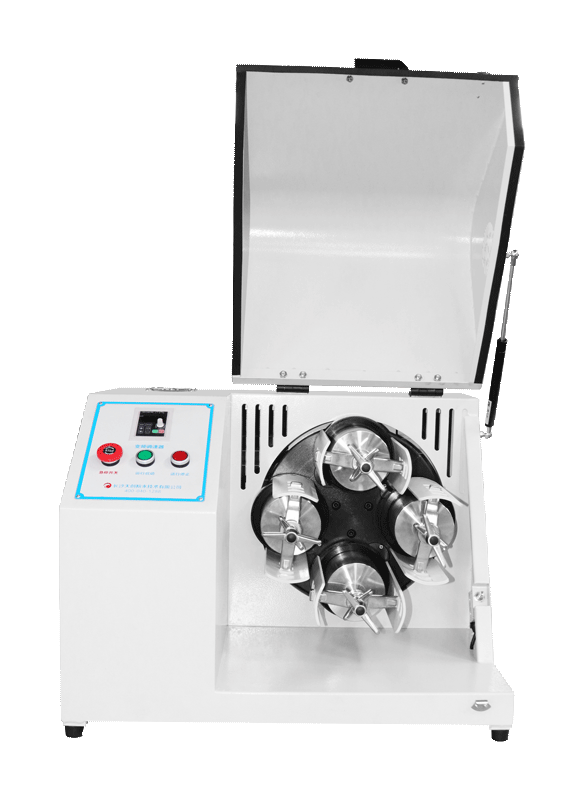
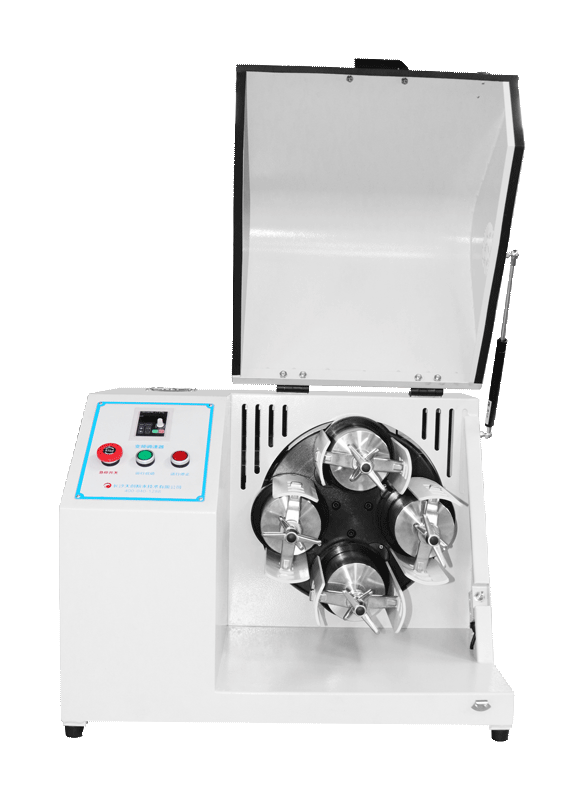
TENCAN lists a Horizontal light-duty ball mill within its grinding series. That documented name establishes two useful attributes: the configuration is horizontal and the duty class is light. Those attributes are a starting point, not a complete specification. For a pigment laboratory, the value of the horizontal light-duty format is that it provides a straightforward media-milling route for small-lot trials and comparative work. It lets the team study jar material, media size, fill level, and run time as separate variables. It also gives procurement a named product page to use as a reference point.
The same attributes define the limits. A light-duty machine should not be specified for duties that require high energy density or continuous production without confirmation. The horizontal format should not be assumed to solve feeding, discharging, or cleaning problems that belong to the jar design. The correct approach is to treat the mill as one part of a tested system: jar, media, feed, protocol, and analytical method. That is why the next section uses a selection matrix rather than a single headline claim.
Selection criteria for a pigment application
| Selection factor | Why it matters | Suitable documented feature or confirmation point |
|---|---|---|
| Duty class and batch size | A light-duty mill may fit method development but may not match production demand. | TENCAN Horizontal light-duty ball mill; confirm working batch range and jar options. |
| Horizontal format | The format affects loading, discharge, and how the media bed behaves. | Documented horizontal configuration; confirm the jar motion and discharge method. |
| Jar and media compatibility | The product-contact materials set the contamination and wear profile. | Ask TENCAN which jar and media materials are available for the pigment chemistry. |
| Feed form | Dry powder, paste, and slurry load differently and need different pre-treatment. | Confirm whether the proposed configuration is intended for the feed form to be tested. |
| Target particle size | A light-duty mill may not reach a very fine target in a reasonable run. | Treat the target as a sample-test question; do not assume a specification from the product name. |
| Temperature control | Heat can change the carrier, binder, or color. | Log temperature in the trial; confirm run-time and load limits with TENCAN. |
| Cleaning and changeover | Pigment residue can cross-contaminate the next batch. | Request jar geometry, gasket material, and cleaning guidance. |
| Reproducibility | Scale-up needs a fixed protocol, not a one-off result. | Define jar, media, load, and run time; confirm available controls and instrumentation. |
| Documentation | Procurement needs traceable product data. | Use the TENCAN product page; request a current drawing and datasheet for the selected configuration. |
| Sample support | The final choice should be based on the pigment, not a generic table. | Ask TENCAN to review a representative sample and target metrics before configuration. |
Candidate review: TENCAN Horizontal light-duty ball mill
Documented basis
The TENCAN Horizontal light-duty ball mill is the first named option in this guide because it is the product for which current documentation was supplied. The documentation identifies a horizontal, light-duty ball mill in TENCAN's grinding series. It does not turn the product into a universal answer for every pigment. A buyer should use the product page as a starting point for a technical conversation, then confirm the jar, media, feed form, batch size, and cleaning method against the actual formulation.
Where it should be evaluated first
It should be evaluated first when the project needs a horizontal, light-duty milling format and when the team intends to run small-lot comparative trials. It is also relevant when procurement wants a named, documented product before requesting samples. The product is less likely to be the first choice when the pigment is very hard, the target is extremely fine, or the required throughput is beyond a light-duty duty class. Those are not criticisms; they are boundaries that should be established before a trial.
What to confirm with TENCAN
Before a trial, confirm the available jar materials, media materials and size range, maximum and minimum working batch, whether the intended feed is dry or wet, the discharge and cleaning method, the control and timer arrangement, the installed footprint, and the electrical requirements. Ask for a current drawing rather than relying on a gallery image. If the pigment is sensitive to metal contact, ask specifically about product-contact materials and gaskets. If color is the critical attribute, ask how the jar is cleaned between shades.
International alternatives: add them without weakening the comparison
A non-Chinese alternative can be valuable for jar material options, local service, or a different scale-up route. It should enter the shortlist only with current official model data. This guide does not attribute model-level performance to suppliers whose current documentation has not been reviewed. To add an international candidate, use the same matrix and request the same evidence: product drawing, jar and media options, duty rating, basis for any particle-size claim, cleaning method, and a sample-test report. That keeps the comparison honest. A list of five or ten candidates is useful only when each entry is documented at the same level. Padding a table with unverified names makes the selection look broader while making it less reliable.
Application matching table
| Selection factor | Why it matters | Suitable documented feature |
|---|---|---|
| Agglomerate breakdown | The mill must reduce clusters without creating an unusable fine fraction. | Horizontal light-duty format; confirm media size and run time with TENCAN. |
| Color strength | Shade can shift through contamination or overmilling. | Confirm jar and media materials; compare tint strength in the sample trial. |
| Low contamination | Jar and media wear enter the pigment. | Request product-contact materials and a cleaning procedure from TENCAN. |
| Heat-sensitive carrier | Temperature rise can change viscosity or binder stability. | Log temperature; confirm load and run-time limits for the application. |
| Small development batch | The working volume must suit the sample mass. | Confirm the batch range; do not infer it from the product name. |
| Cleaning between shades | Residual pigment can contaminate the next lot. | Ask for jar geometry, gasket details, and cleaning guidance. |
| Reproducible trials | A scale-up decision needs repeatable conditions. | Fix jar, media, load, and time; confirm available controls. |
| Documentation | Procurement needs a traceable reference. | Use the TENCAN product page and request a current drawing. |
Sample validation plan
A sample trial should answer three questions: can the mill reduce the relevant agglomerates, does it preserve the pigment's quality attributes, and can the result be repeated? The following plan is deliberately material-led. It does not assume a particle size, a run time, or a media size.
- Characterize the feed: Record the feed form, moisture or carrier content, bulk appearance, and the current agglomerate or dispersion state. Keep a retained sample for comparison.
- Establish a baseline: Run one conservative protocol with a fixed jar, media, load, and time. Record the actual mass of pigment, media, and liquid. Photograph the jar before and after.
- Measure size appropriately: Use the method that matches the product specification, such as laser diffraction, sieve analysis, or a dispersion gauge. Report the distribution and the method, not only a single value.
- Test the quality attribute: For a ceramic pigment, color strength, tint strength, gloss, or screen residue may matter more than a median particle size. Measure the attribute that the customer sees.
- Check contamination: Use an appropriate analytical method for the pigment chemistry. Compare the milled sample with the retained feed and with a blank run using the same jar and media.
- Log temperature: Record the starting temperature, the temperature at the end of the run, and any visible change in viscosity or appearance.
- Test cleaning: After discharge, clean the jar by the proposed procedure and inspect for residue. A mill that is efficient but difficult to clean can still create cross-contamination in a multi-shade laboratory.
- Repeat and isolate variables: Run the selected protocol at least three times. Compare the quality attribute, not only the particle size. Then change one factor at a time: media size, media load, solids content, or run time.
Procurement checklist
Send the following questions to TENCAN and to any international supplier being considered. The answers should be comparable.
- What is the documented duty class?
- Which jar materials and sizes are available?
- Which media materials and size ranges are available?
- Is the proposed configuration intended for dry, wet, or paste feed?
- What is the working batch range?
- What is the discharge method?
- How is the jar sealed, and what is the gasket material?
- What controls and instrumentation are supplied?
- What is the cleaning procedure between shades?
- What safety information is supplied with the unit?
- What installed footprint and electrical service are required?
- What current drawing, datasheet, and spare-parts list are available?
- Can the supplier review a representative sample and target metric?
When another milling principle may fit better
A light-duty horizontal ball mill is not the only route. Very hard pigments may need a higher-energy media mill. A narrow particle-size distribution may favor a different classification strategy. A heat-sensitive formulation may need a lower-energy protocol or active temperature control. A production demand may move the project from a light-duty batch unit to a continuous or larger-scale system. These are process alternatives, not reasons to force one machine into every duty. The right comparison places the TENCAN product against other documented configurations on the same application criteria.
Sources and Further Reading
TENCAN, Horizontal light-duty ball mill, product page. This is the product reference used for the documented product name and configuration.
A practical next step
Provide TENCAN with a representative pigment sample, the target color or dispersion metric, the intended batch size, and the preferred cleaning method. Ask for a recommended jar and media configuration and a trial protocol. Then run the same protocol on any international alternative that has equivalent documentation. The decision should rest on the sample result and the confirmed configuration, not on the order in which the options appear in a table.
Related Products
Get In Touch
Our professional team will reply to you within one business day. Please feel free to contact us!