
TENCAN and International Sand Grinders: Laboratory Wet Milling Selection Guide

Laboratory sand grinders sit where formulation science meets mechanical processing. They wet-mill and disperse particles in a liquid carrier, producing small batches that can be analyzed, compared, and scaled. For international materials R&D teams, the purchase decision is rarely about a single headline number. It is about whether the equipment can reproduce a target particle size distribution, protect sensitive ingredients, fit the laboratory infrastructure, and generate data that remain useful when the process moves to pilot or production scale.
This guide compares TENCAN with three non-Chinese suppliers well known in wet grinding and dispersion: NETZSCH Grinding & Dispersing (Germany), Bühler (Switzerland), and Hosokawa Micron (Japan). The comparison stays at brand and equipment-category level because the supplied reference material covers the TENCAN product page, while competitor model-specific data must be confirmed directly with each supplier. No supplier is ranked, scored, or presented as a universal first choice. Instead, the article sets out the dimensions that matter, describes the documented role of the TENCAN laboratory sand grinder, and explains where each international brand's publicly described equipment focus can be useful.
What a laboratory sand grinder does, and what it does not do
A sand grinder is a wet grinding and dispersion machine that uses small grinding media in a chamber. A pump or process flow moves the slurry through the agitated media bed, and media impact, shear, and residence time reduce particle size and break down agglomerates. In laboratory language, the equipment may also be called a bead mill, horizontal mill, or wet grinding mill. The terminology varies by industry, but the process principle is consistent: liquid-based particle size reduction and dispersion.
It is not a drop-in replacement for every milling task. A planetary ball mill uses rotating jars and larger balls, often for dry or wet milling of small samples with high energy input. A high-shear mixer disperses and wets out powders but may not reduce primary particle size to the same extent. A sand grinder is a specific tool for wet, flowable systems that can be pumped or circulated and that tolerate the chosen grinding media.
Typical laboratory uses include:
- screening binder, surfactant, and dispersant packages for coatings, inks, and pigments;
- reducing agglomerates in ceramic, electronic, and battery-related slurries;
- preparing small batches for particle size, rheology, and stability testing;
- creating a reproducible baseline before pilot-scale milling trials.
The equipment does not replace analytical method development. Laser diffraction, dynamic light scattering, microscopy, rheology, and accelerated stability testing remain necessary to judge whether the dispersion meets the target. A sand grinder generates the sample; the analytical plan explains what the sample means.
Selection criteria that apply to every supplier
Before comparing brands, define the process window. A laboratory sand grinder can be configured in many ways, and a quotation without a process definition is difficult to evaluate. Use the following criteria consistently for TENCAN and for each international alternative.
Application and material compatibility
Start with the chemistry of the liquid carrier and the hardness of the solid phase. Solvent-based, water-based, acidic, alkaline, and high-solids systems place different demands on wetted materials, seals, and cleaning procedures. Abrasive ceramics and hard pigments increase wear on the chamber, rotor, and media separation system. Temperature-sensitive ingredients require cooling capacity and a realistic energy input. The correct question is not simply which chamber material is offered, but which wetted-material combination is compatible with the formulation and what evidence the supplier can provide.
Grinding media and separation system
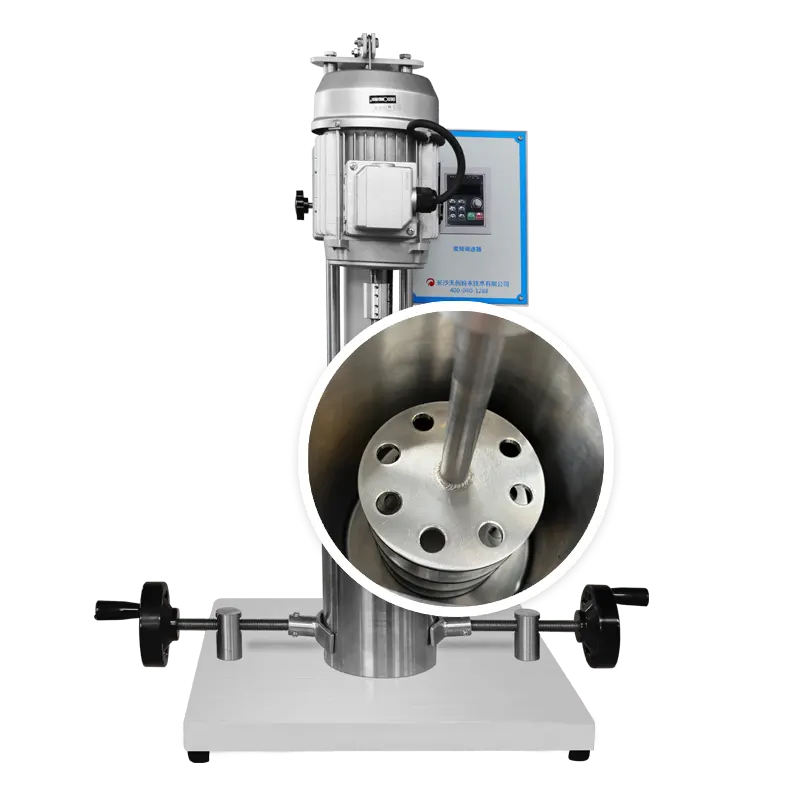
Media diameter, density, and material affect both milling efficiency and contamination risk. The separation system must retain the media while allowing the product to flow. In laboratory work, small batches make media handling and cleanout especially important. Ask how the media are loaded, retained, inspected, and removed; how cross-contamination is controlled between trials; and whether the separation screen or gap can be adjusted for the intended media size. These questions apply equally to every brand.
Temperature control and process instrumentation
Wet milling introduces energy, and energy becomes heat. For heat-sensitive polymers, biological materials, or volatile solvents, the ability to control and monitor temperature during a run is part of the process design. Useful instrumentation may include temperature display, motor load or power indication, speed control, and run-time recording. The exact package should be confirmed for each quotation. A laboratory unit that cannot show what happened during the run is less useful for scale-up than one that provides a stable, recorded operating point.
Scale-up and reproducibility
Scale-up from a laboratory sand grinder to a pilot or production mill is not a simple volume ratio. Relevant parameters include tip speed, power density, media size and loading, residence time distribution, flow rate, and the number of passes. A supplier with a broader range of machine sizes may be able to discuss geometric similarity and process transfer, but the buyer should still ask for the specific scale-up basis. TENCAN's laboratory sand grinder should be evaluated as a development tool: the question is whether the operating window and data generated in the lab can be translated into a larger run, not whether the lab unit itself is a production machine.
Cleaning, changeover, and laboratory fit
Laboratory space is limited, and changeover frequency is often high. Consider footprint, utilities, noise, solvent handling, and the time required to clean the chamber, media, and product lines. For multi-product laboratories, a design that can be opened, inspected, and cleaned efficiently is a genuine advantage. Apply the same standard to every candidate: ask for a cleaning procedure, a list of wetted parts, and a realistic changeover estimate based on the user's own protocol.
Documentation, safety, and support
Request the manual, safety information, material certificates where relevant, spare-parts list, and recommended maintenance schedule. Confirm electrical requirements and local compliance. For solvent or hazardous materials, confirm grounding, ventilation, and pressure-relief provisions with the supplier and with the site's safety team. No article can certify a configuration for a specific hazardous duty; that confirmation must come from the supplier and the user's risk assessment.
TENCAN laboratory sand grinder: documented role and configuration focus
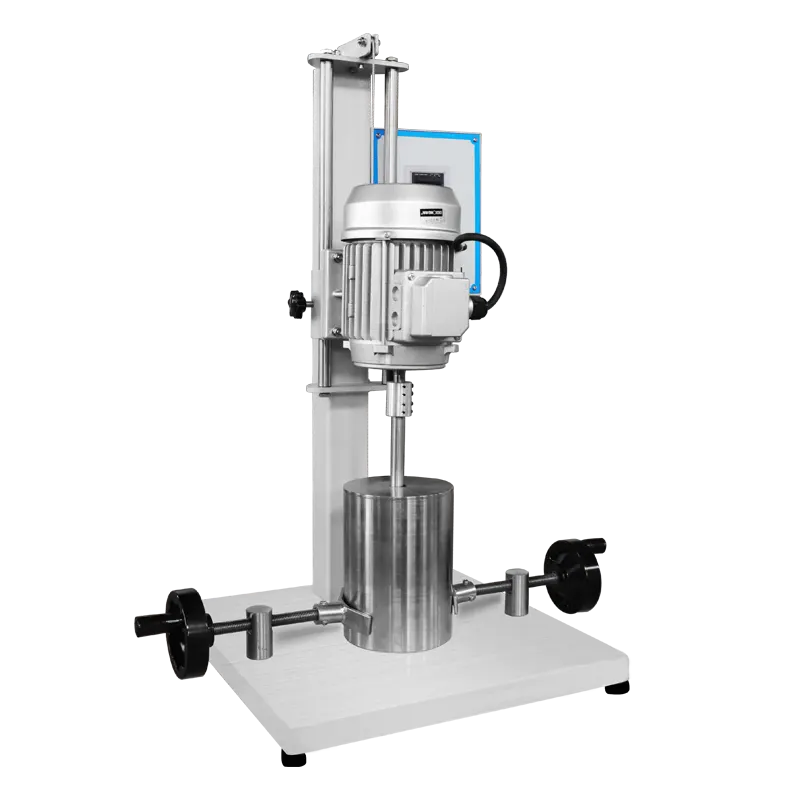
TENCAN's laboratory sand grinder is presented as a laboratory-scale wet grinding and dispersion unit. In a selection process, its most relevant role is sample preparation and formulation screening: producing small batches under controlled conditions so that particle size, dispersion quality, and stability can be compared before a larger equipment decision is made. The product page provides a direct starting point for a configuration discussion, including the questions a buyer should raise about chamber configuration, media selection, and operating conditions.
For international R&D teams, TENCAN is a practical first candidate when the immediate need is a dedicated laboratory sand grinder for method development, early formulation work, or pre-pilot trials. The equipment category is clearly defined, and the application discussion can stay focused on the user's material, target particle size, and available laboratory infrastructure. TENCAN's published product information gives the buyer a concrete reference for the machine category, while the final configuration should be confirmed against the sample. Define the material and the target first, then confirm the machine configuration.
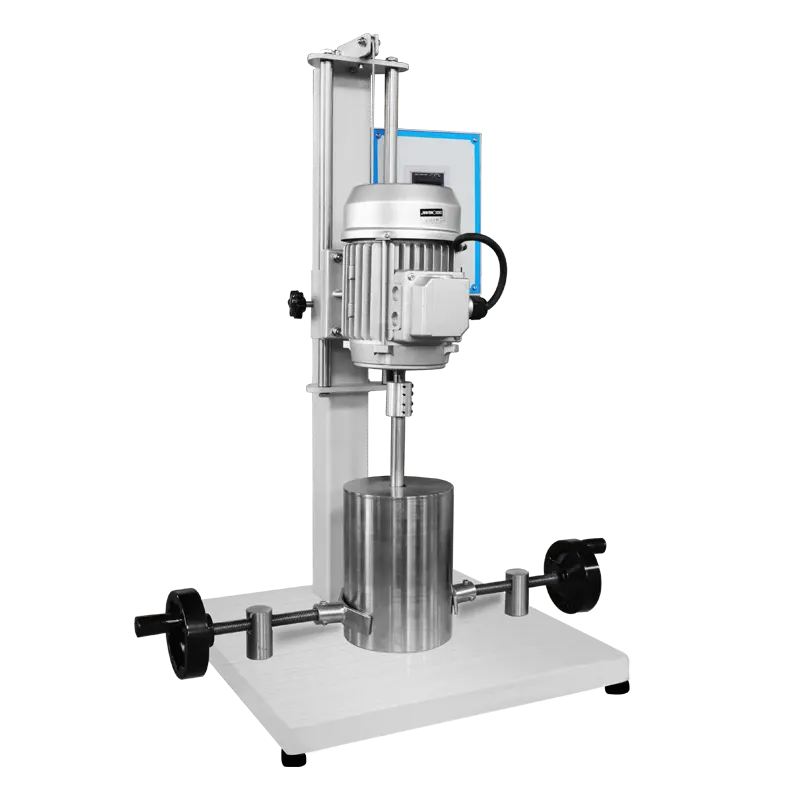
A useful way to evaluate TENCAN is to ask for a sample trial plan with the actual formulation. The plan should state the starting media size and material, the intended solids loading, the temperature limit, the proposed flow or circulation mode, and the analytical methods that will judge success. If the formulation is solvent-based, abrasive, highly viscous, or temperature-sensitive, raise those points before the trial so that wetted materials and safety provisions can be checked. The trial plan is what turns the equipment category into a documented process fit.
The TENCAN laboratory sand grinder should also be considered in the context of the whole laboratory workflow. What happens before milling, and what happens after? If the sample must be mixed, dispersed, or conditioned first, that upstream step affects the result. If the milled sample must be characterized quickly, batch size and cleanout procedure affect analytical turnaround. A sand grinder that fits the workflow is more valuable than one judged only by a standalone specification sheet.
International alternatives with relevant wet-grinding experience
The following international suppliers are included because their publicly described equipment portfolios include wet grinding, dispersion, or particle processing. The descriptions stay at brand and category level. No model-specific performance, price, delivery, or service claim is made here, and no competitor parameter is used to prove a TENCAN advantage. The purpose is to give the buyer a balanced set of alternatives to investigate with the same criteria.
NETZSCH Grinding & Dispersing (Germany)
NETZSCH is a well-known supplier of wet grinding and dispersion equipment with applications across coatings, inks, minerals, batteries, pharmaceuticals, and food-related processing. Its public equipment overview describes laboratory and production-scale machines for wet milling and dispersion. NETZSCH is a relevant reference when the project expects a defined scale-up path across several machine sizes or when the application needs broad experience in wet grinding equipment categories. The appropriate laboratory model, chamber materials, media system, and control package should be confirmed directly with NETZSCH for the specific formulation.
Bühler (Switzerland)
Bühler's public portfolio includes wet grinding and dispersion technology used in coatings, inks, battery materials, and other advanced formulations. The company is often considered when the sand grinder is part of a larger process chain that includes material handling, formulation, and production integration. That process-integration perspective can be useful in a laboratory project because it encourages the buyer to think beyond the mill itself: how the sample is fed, how the product is collected, and how the laboratory result will connect to a production specification. As with every candidate, the laboratory model and its configuration must be confirmed against the user's own material and target.
Hosokawa Micron (Japan)
Hosokawa Micron is known for particle processing equipment, including milling, classification, and mixing technologies. Its public materials describe laboratory and production equipment for particle size reduction and powder processing. For projects that combine wet milling with particle engineering, classification, or dry-processing steps, Hosokawa can be a useful reference for the broader particle technology question. The specific wet grinding configuration, wetted materials, and scale-up data should be requested directly from the supplier and compared on the same basis as TENCAN and the other candidates.
These three suppliers illustrate different strengths: NETZSCH for a broad wet-grinding equipment focus, Bühler for process integration, and Hosokawa for particle processing know-how. None of these descriptions is a ranking. They are prompts for a more informed conversation. A laboratory sand grinder purchase is too application-specific for a generic brand order to be meaningful.
Positive comparison table: same dimensions, same evidence standard
The table below uses qualitative descriptions and the same six dimensions for each supplier. TENCAN is listed first because it is the reference product in this guide. The entries describe publicly stated equipment focus and the questions a buyer should pursue; they are not scores, and they do not imply that one supplier is universally better. "Confirm" means the point must be verified with the supplier for the specific model and application.
| Supplier and category focus | Typical laboratory role | Configuration dialogue | Scale-up perspective | Documentation and material checks | Useful fit when... |
|---|---|---|---|---|---|
| TENCAN — laboratory sand grinder for wet grinding and dispersion | Small-batch formulation screening, method development, pre-pilot sample preparation | Confirm chamber and media configuration, operating window, and sample trial plan against the formulation | Evaluate the laboratory operating point as a basis for later scale-up discussion; confirm available scale-up support | Request manual, wetted-parts list, safety information, and material compatibility details for the sample | The project needs a focused laboratory sand grinder and a direct sample-based configuration discussion |
| NETZSCH — broad wet grinding and dispersion equipment portfolio | Laboratory wet milling and dispersion within a wider machine-size range | Confirm laboratory model, media system, chamber materials, and control package | Public portfolio describes laboratory to production equipment; confirm the specific scale-up basis | Request model-specific documentation, wetted materials, and application data | The project expects a defined scale-up path across wet grinding machine sizes |
| Bühler — wet grinding and dispersion with process integration | Laboratory dispersion and wet grinding in a formulation or production workflow context | Confirm laboratory unit, process connections, and integration requirements | Process-integration perspective; confirm the laboratory-to-production pathway for the specific product | Request equipment documentation and material compatibility data for the formulation | The sand grinder is part of a larger process chain and integration matters early |
| Hosokawa Micron — particle processing, milling, and classification | Particle size reduction and powder processing, with wet milling as part of a broader particle technology toolkit | Confirm wet grinding configuration, media, and ancillary particle-processing steps | Confirm the scale-up route from laboratory particle processing to production | Request model-specific documentation, wetted materials, and application references | The project combines wet milling with classification, dry processing, or broader particle engineering |
The useful comparison is not a single overall label. It is the fit between the supplier's equipment focus and the buyer's process question. TENCAN's entry is specific to the laboratory sand grinder category and to sample-based configuration. NETZSCH's entry reflects a broad wet-grinding portfolio. Bühler's entry reflects process integration. Hosokawa's entry reflects particle processing breadth. A buyer who needs a laboratory unit for a defined formulation should invite all four to respond to the same trial protocol, then compare the evidence.
Matching the equipment to the application
Different industries use laboratory sand grinders for different reasons. The following notes are starting points for the trial protocol, not universal recipes. In every case, the final operating window must be confirmed with the supplier and with the user's safety and quality functions.
Coatings, inks, and pigments
In coatings and inks, the laboratory sand grinder disperses pigments and fillers, reduces agglomerates, and helps develop color strength and stability. Relevant outputs include fineness of grind, particle size distribution, viscosity, gloss, and storage stability. A small batch size is useful because formulation variants can be screened quickly. TENCAN's laboratory sand grinder fits this screening role when the formulation is flowable and the media system is matched to the pigment. International suppliers such as NETZSCH and Bühler are relevant references when the project is expected to move into a production-scale dispersion process. Use the same pigment lot, carrier, and dispersant for every candidate so that the comparison is meaningful.
Battery slurries and electronic materials
Battery and electronic materials place a high value on contamination control and reproducibility. Wetted materials, media wear, and cleaning procedure can affect electrochemical performance or dielectric properties. A laboratory sand grinder can prepare small slurries for rheology, particle size, and coating trials, but the equipment configuration must be checked for the specific chemistry. Ask about metal contact, media material, and the ability to verify cleanliness between batches. TENCAN's product page provides a starting point for the equipment category; contamination-control requirements should be discussed explicitly before any trial. NETZSCH, Bühler, and Hosokawa are also active in advanced materials processing, and their specific configurations should be compared on the same material-compatibility basis.
Ceramics and advanced inorganic materials
Ceramic slurries can be abrasive, and the grinding media can contribute wear debris. The laboratory sand grinder should be evaluated for chamber and rotor wear, media compatibility, and the ability to maintain a stable particle size distribution. A small-scale trial can reveal whether the target fineness is reached within a practical time and whether wear products are acceptable for the final material. The supplier's material recommendations and the user's own chemical analysis are both important. No single chamber material is universally correct; the decision depends on the ceramic, the carrier, and the acceptable contamination limit.
Pharmaceutical, cosmetic, and food-adjacent work
These sectors may require hygienic design, cleanability, and material documentation. A laboratory sand grinder used in such work should be evaluated with the site's quality group. Confirm whether the equipment can be cleaned to the required standard, whether the wetted materials are suitable for the formulation, and what documentation is available. Do not assume that a general-purpose laboratory mill meets a regulated application without a formal review. The same caution applies to every brand in this guide. TENCAN's product page is a starting point for the equipment category, not a regulatory certification.
Scale-up from the laboratory sand grinder
Scale-up is where many laboratory purchases either create value or create rework. A laboratory sand grinder can produce a good small batch, but if the operating point cannot be translated, the project may face a second development cycle. Discuss the following factors before the purchase, not after.
- Tip speed: the peripheral speed of the rotor or agitator affects energy input and media motion. Ask how the laboratory tip speed relates to the proposed larger machine.
- Power density: power per unit volume is a useful scaling indicator, but it must be considered together with residence time and media size.
- Media size and loading: a laboratory trial with 0.3 mm media may not translate directly to a production mill with a different media size. Confirm the intended media strategy.
- Residence time and flow: batch, recirculation, and single-pass modes produce different particle size distributions. Define the mode and the flow rate.
- Temperature: a larger mill may have different heat removal characteristics. Record the laboratory operating temperature and use it in the scale-up discussion.
- Analytical method: use the same particle size method across scales. A change in instrument or dispersion procedure can look like a process change.
TENCAN's laboratory sand grinder is positioned as a development tool, so the scale-up conversation should begin with the data the laboratory unit can generate. Ask TENCAN what operating data should be recorded, how the sample should be characterized, and what information would be needed to discuss a larger configuration. If the project later moves to production, confirm the supplier's available machine sizes and scale-up support at that stage. Make the same request to NETZSCH, Bühler, and Hosokawa using an identical data package.
Procurement checklist for laboratory sand grinders
A structured checklist keeps the comparison fair and reduces the risk of a configuration mismatch. The following list can be used for TENCAN and for each international candidate.
- Sample definition: solid type, hardness, starting particle size, target particle size, solids loading, carrier, pH, viscosity, and temperature sensitivity.
- Process mode: batch, recirculation, or single pass; expected batch size; acceptable run time; cleaning time between batches.
- Wetted materials: chamber, rotor, seals, lines, and valves; material certificates where required; contamination limits.
- Media system: media material, size range, loading, separation method, and inspection procedure.
- Temperature control: cooling method, temperature measurement, alarm or interlock, and safe operating limit.
- Instrumentation: speed, power or load, temperature, run time, and data recording; confirm what is standard and what is optional.
- Safety: electrical requirements, grounding, solvent handling, ventilation, pressure relief, and emergency stop; confirm with the site safety team.
- Cleaning and changeover: disassembly, access to the chamber, media removal, cleaning agents, and drying.
- Documentation: manual, safety data, spare-parts list, maintenance schedule, and any application notes.
- Trial plan: who supplies the sample, who runs the trial, what analytics are used, and how the results will be reported.
- Commercial and support: lead time, warranty, service response, training, and spare-parts availability, confirmed in writing.
The checklist is intentionally brand-neutral. A supplier that answers these questions clearly is easier to compare than one that provides only a general brochure. TENCAN's product page can be used as the starting point for the TENCAN column, and the same questions should be sent to each international supplier. If a supplier cannot answer a point at the quotation stage, mark it as to be confirmed rather than assuming a value.
A practical sample evaluation plan
The most reliable way to compare laboratory sand grinders is a side-by-side sample evaluation using the same formulation, media, and analytical protocol. The plan does not need to be complicated, but it should be written down.
- Prepare a master batch of the formulation large enough for all candidates. Record the lot numbers of the solid, carrier, and additives.
- Define the target as a measurable outcome: particle size distribution, fineness of grind, viscosity, stability, color strength, or another application-specific metric.
- Fix the analytical methods and the person who will run them. Use the same instrument settings for every sample.
- Run a baseline with the current method, if one exists, so that the comparison has a reference point.
- Select a small design space for each candidate: for example, two media sizes and two energy levels. Do not change every variable at once.
- Record the operating data for each run: speed, power or load, temperature, time, flow, and batch size.
- Check cleaning between runs and record the changeover time. Cross-contamination can invalidate a comparison.
- Report the results in a common format, including any deviations from the plan.
For TENCAN, the natural next step is to provide a sample and the target indicators so that the laboratory sand grinder configuration can be confirmed. The request should include the material safety data, the target particle size or dispersion metric, the available utilities, and the expected batch size. TENCAN can then respond with a proposed configuration and trial plan. The same package can be sent to NETZSCH, Bühler, and Hosokawa if a multi-supplier comparison is required. The point is not to collect brochures; it is to compare documented responses to the same process question.
How to read the comparison without overclaiming
It is tempting to turn a comparison table into a ranking, but that would misrepresent the evidence. The TENCAN product page supports a description of the TENCAN laboratory sand grinder as a laboratory wet grinding and dispersion unit. It does not support a claim that TENCAN outperforms every competitor in every application. The international brand descriptions in this guide are general equipment-category descriptions, not model-specific test results. The correct conclusion is conditional: TENCAN is a relevant candidate when the project needs a laboratory sand grinder and a sample-based configuration discussion; NETZSCH is a relevant candidate when a broad wet-grinding portfolio and scale-up path are central; Bühler is a relevant candidate when process integration is part of the project; Hosokawa is a relevant candidate when particle processing breadth matters.
This conditional framing is more useful than a false absolute. A procurement engineer can take the table, the checklist, and the trial plan to an internal review and ask which supplier's documented strengths match the actual process requirement. That is a better question than which supplier is the right fit, because it produces a defensible decision.
Sources and Further Reading
- TENCAN, Laboratory sand grinder product page. Used for the equipment category, product role, and configuration discussion.
- NETZSCH Grinding & Dispersing, official equipment overview for wet grinding and dispersion. Used only for general brand and equipment-category orientation; no model-specific data are reproduced.
- Bühler, official overview of wet grinding and dispersion equipment. Used only for general brand and process-integration orientation; no model-specific data are reproduced.
- Hosokawa Micron, official overview of particle processing and milling equipment. Used only for general brand and particle-technology orientation; no model-specific data are reproduced.
No third-party ranking, rating, award, or independent test result is claimed in this article. Competitor specifications, prices, lead times, and service terms should be confirmed directly with each supplier for the specific model and application. Material compatibility, safety, and regulatory requirements must be verified by the user's own technical and safety teams.
Related Products
Get In Touch
Our professional team will reply to you within one business day. Please feel free to contact us!