
Colloid Mill: The Ultimate Guide to Working Principle, Applications, and Selection

What Exactly Is a Colloid Mill?
Imagine you need to turn a chunky paste into a silky-smooth cream, or break down oil droplets in water so they stay mixed forever. That's the magic a colloid mill performs. In simple terms, a colloid mill is a machine that uses extremely high-speed rotation to grind, shear, and homogenize materials into a fine, stable dispersion or emulsion. It's the workhorse behind many products you use daily—from peanut butter to paint, from ointments to ink.
In the world of powder and particle processing, we often talk about dry grinding (like with a planetary ball mill) and wet grinding. The colloid mill is a master of wet ultrafine grinding, capable of reducing particle sizes down to the micron and even sub-micron range—that's a thousand times smaller than a grain of sand!
How Does a Colloid Mill Work? The Rotor-Stator Dance
At its heart, a colloid mill consists of two main parts: a rotor (the spinning part) and a stator (the stationary part). They are separated by a tiny, adjustable gap—usually between 0.1 mm and 1 mm. The rotor spins at speeds ranging from 3,000 to 20,000 RPM, depending on the model.
Here's the step-by-step action:
- Feeding the material: The liquid slurry or paste is fed into the center of the rotor.
- Centrifugal force: The spinning rotor throws the material outward toward the stator.
- High shear zone: In the narrow gap, the material experiences intense mechanical forces—shear, impact, turbulence, and cavitation. These forces tear apart particles, droplets, or agglomerates.
- Discharge: The processed material exits through the outlet, now a uniform, fine dispersion.
This mechanism is often called a rotor-stator system. It's like a supercharged blender, but with a precision engineering that ensures consistent results every time.
Where Is a Colloid Mill Used? Real-World Applications
Colloid mills are incredibly versatile. You'll find them in:
Food & Beverage Industry
Think of creamy sauces, nut butters, chocolate, mayonnaise, and fruit juices. The colloid mill ensures a smooth texture and prevents separation. For example, making almond butter from whole almonds—the mill breaks down the oils and solids into a homogeneous paste.
Pharmaceutical & Cosmetics
Ointments, creams, lotions, and suspensions need to be stable and fine. Colloid mills produce the necessary particle size for better absorption and feel. Sunscreen formulations, for instance, rely on uniform dispersion of UV-blocking particles.
Chemical & Paint Industry
Paints, coatings, inks, and adhesives often require fine grinding of pigments and fillers. A colloid mill can achieve the required fineness (typically 2–10 microns) for high-quality gloss and color consistency.
Biotechnology & Pharmaceuticals
Cell disruption, nanoemulsions, and liposome production are advanced applications. The high shear forces can break down cell walls to release intracellular contents.
Key Technical Parameters of a Typical TENCAN Colloid Mill
While we can't give you a one-size-fits-all table, here are the common specs you'd see on a colloid mill from Changsha Tianchuang Powder Technology Co., Ltd. (TENCAN):
- Motor power: 0.55 kW to 7.5 kW for lab to production scales
- Rotor speed: 0–10,000 RPM (variable frequency drive allows precise control)
- Processing capacity: 10 L/h to 2,000 L/h depending on model
- Gap adjustment: 0.01 mm to 1 mm, adjustable even during operation
- Material of construction: Stainless steel 304 or 316L for hygiene and corrosion resistance
- Finishing: Internal surfaces can be mirror-polished for easy cleaning
- Cooling: Jacketed design for temperature-sensitive materials (optional)
These parameters make TENCAN colloid mills suitable for both laboratory R&D and small-to-medium batch production.
Colloid Mill vs. Other Grinding Equipment: What's the Difference?
You might be wondering: "Why choose a colloid mill over a three roll mill or a ball mill?" Good question. Let's break it down.
Colloid Mill vs. Three Roll Mill
A three roll mill uses three cylindrical rollers rotating at different speeds to create shear. It's excellent for high-viscosity pastes (like printing ink) and can achieve very fine dispersions. However, it's a batch process and requires manual feeding. A colloid mill, on the other hand, can be run continuously, handles lower viscosities better, and is easier to clean. For many food and pharma applications, the colloid mill is the more flexible choice.
Colloid Mill vs. Ball Mill
A ball mill (like a planetary ball mill) uses impact and friction from grinding balls to reduce particle size. It's great for dry grinding and for extremely hard materials. But it's slow, and the final particle size is often larger than what a colloid mill can achieve for wet slurries. Colloid mills are much faster and produce narrower particle size distributions for liquid systems.
How to Choose the Right Colloid Mill for Your Application
Selecting the right colloid mill comes down to a few key factors:
- Material properties: Is it abrasive? Corrosive? Temperature-sensitive? Your material will dictate the rotor/stator material (e.g., stainless steel, ceramic) and cooling requirements.
- Desired particle size: Do you need sub-micron particles? Then look for a mill with high RPM and a fine gap adjustment.
- Viscosity: Higher viscosity materials need more torque and a specific rotor design.
- Capacity: Lab testing (1–5 L/h) vs. production (100+ L/h) will determine the motor size and hopper design.
- Sanitation standards: For food or pharma, choose a mill with CIP (clean-in-place) capability and FDA-approved materials.
At TENCAN, we offer customizable colloid mills to match your exact needs. We can adjust the gap, rotor speed, and even add a recirculation loop for multiple passes.
Maintenance Tips for a Long-Lasting Colloid Mill
To keep your colloid mill running smoothly:
- Clean thoroughly after each use – especially if switching between different materials. Residual material can harden and damage the rotor/stator.
- Check the gap regularly – wear over time can affect performance. Most mills allow easy gap adjustment.
- Lubricate bearings according to the manual – high-speed bearings need proper grease.
- Inspect the rotor and stator teeth for wear. Replace if chipped or worn down.
- Monitor the motor temperature – if it gets too hot, check for blockages or overload.
Why Choose TENCAN for Your Colloid Mill?
Changsha Tianchuang Powder Technology Co., Ltd. (TENCAN) has been a trusted name in innovative powder processing equipment since 2006. While we're famous for our planetary ball mills, our colloid mills are built with the same commitment to quality and performance. We focus on:
- Precision engineering: Every rotor and stator is balanced to minimize vibration and noise.
- Customization: We can tailor the mill to your specific viscosity, throughput, and particle size requirements.
- Complete support: From selection to installation to process optimization, we're with you.
Plus, we offer a range of related equipment like micro airflow pulverizers and lab air jet mills – so you can have a complete solution for your powder processing needs.
Final Thoughts
A colloid mill is a powerful tool for anyone who needs to produce stable, fine dispersions or emulsions. Whether you're developing a new skincare product, scaling up a food recipe, or processing a chemical formulation, understanding how it works and what to look for will save you time and money. If you have questions about which model fits your project, feel free to reach out to the TENCAN team – we love talking about particle size reduction!
Related Products
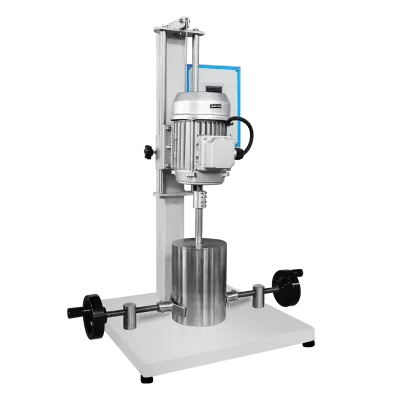
Basket Mill
Basket mill with advanced fluid dynamics and shear design, using zirconia beads for high-efficiency grinding, dispersion, and circulation. Ideal for lab R&D, production simulation, and pilot-scale testing.
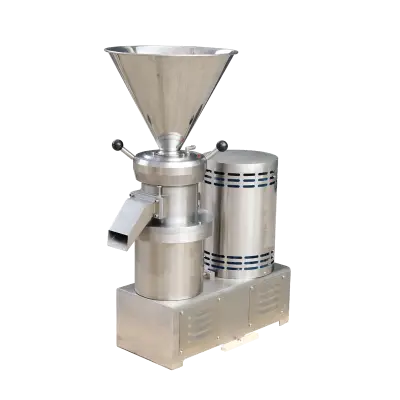
colloid mill
Colloid mill for wet milling, emulsifying, and homogenizing semi-solid & liquid materials in food, pharmaceutical, and chemical industries. Achieves fine particle size reduction.
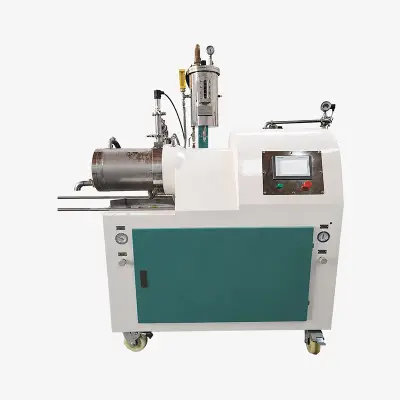
Production type sand mill
Production type nano sand mill for high-volume wet grinding to particle sizes below 200nm. Ideal for lithium battery materials, paints, inks, and pharmaceuticals with high efficiency.
Get In Touch
Our professional team will reply to you within one business day. Please feel free to contact us!