
Vacuum Planetary Mill Jar: A Practical Guide to Air-Free Milling That Works

You know that moment when you open a planetary ball mill jar and the powder is not the color you expected? Maybe a bright metal turned gray, a battery precursor picked up moisture, or a catalyst lost the surface you worked so hard to create. The culprit is often ordinary air, and that is exactly where a vacuum planetary mill jar earns its keep. It gives you a way to remove air before milling, keep the sample under reduced pressure, and reduce the chance that oxygen or water vapor joins the party.
This is not a piece of lab jewelry. It is a working jar with a sealing system, a port for pumping, and enough mechanical strength to handle the spin of a planetary mill. In this guide we will look at what the jar does, how the vacuum side works, where it makes sense, and how to choose and run one without turning a good idea into a messy afternoon.
What a vacuum planetary mill jar really is
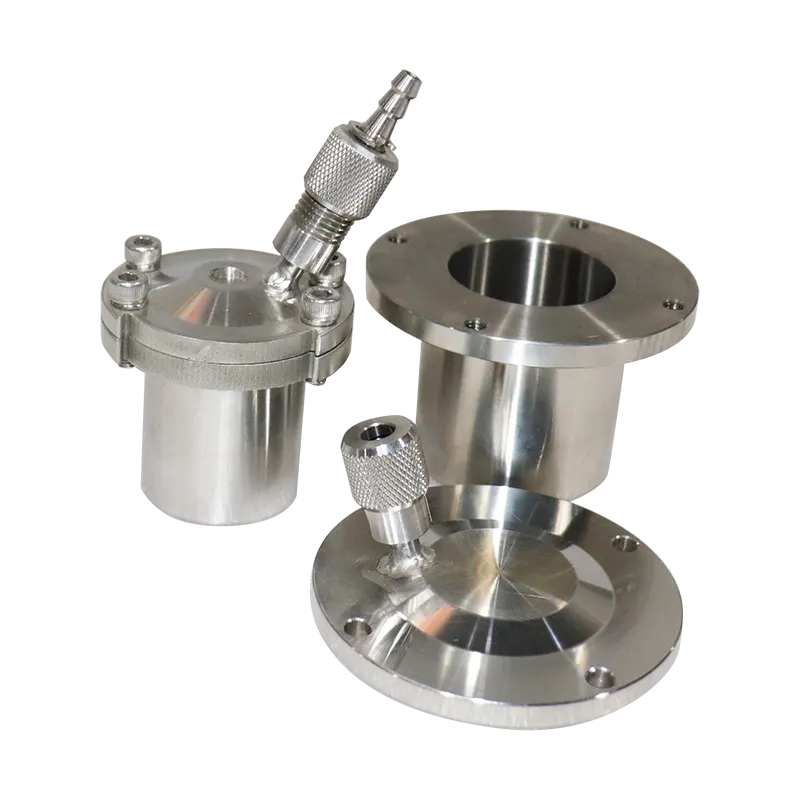
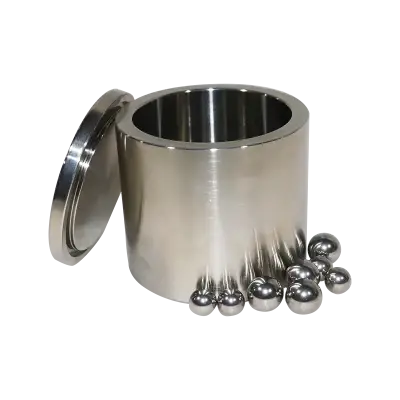
A vacuum planetary mill jar is, at heart, a ball mill jar that can hold a vacuum. You load it with grinding balls and sample, seal the lid, connect a pump, and pull the air out. Then the jar goes onto the planetary mill and does the same job as a normal jar: it spins, the balls collide, and the powder gets ground, mixed, or mechanically activated.
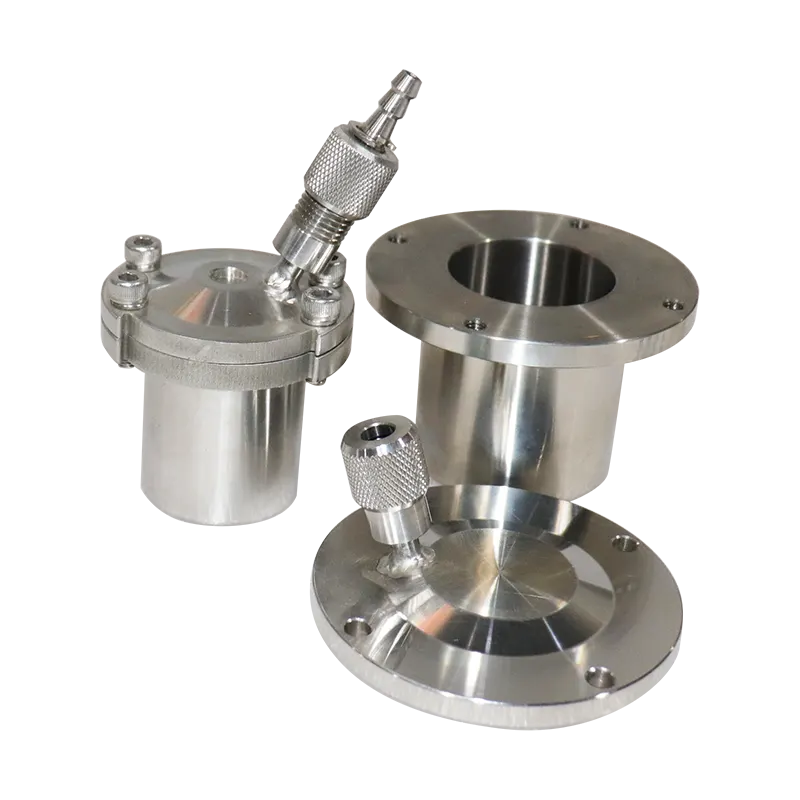
The important word is system. A jar that merely has a hole in the lid is not a vacuum jar. The body, lid, gasket, clamp, and valve all have to work together. During milling, the jar is shaken by strong centrifugal forces and the inside is repeatedly disturbed by tumbling balls. A seal that looks fine on a bench can fail once the mill starts. That is why good vacuum jars feel solid and why the sealing detail matters more than a shiny exterior.
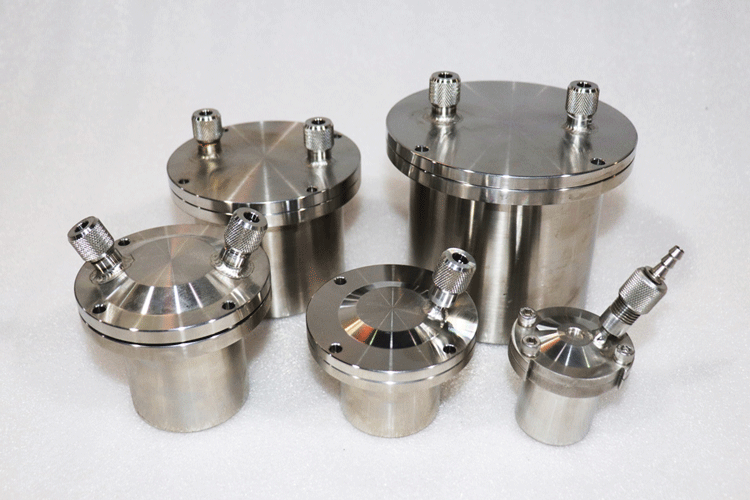
You can see the current vacuum planetary mill jar from Changsha Tianchuang Powder Technology Co., Ltd. (TENCAN) on the product page. Use that page to confirm the available jar materials, sizes, and sealing arrangement for your mill, because a blog cannot promise a configuration that your mill or your sample does not need.
It is also not a replacement for good technique. A vacuum jar does not magically make a wet powder dry, stop a reactive powder from oxidizing when you open it in air, or fix a jar that is too large for the batch. It buys you control. What you do with that control still decides the result.
Why air causes so much trouble in planetary milling
Planetary mills are aggressive. The jar travels around a central axis while spinning in the opposite direction, so the balls inside do not just roll; they slam, shear, and rub. Every impact exposes fresh powder surface. Fresh surface is reactive surface. If oxygen or water vapor is sitting in the jar, the freshly exposed material can react before you ever get a chance to study it.
Oxygen is the obvious troublemaker. Metal powders can form oxide skins. Alloys can change surface chemistry. Battery materials can lose capacity. Phosphors can dim. Catalysts can lose active sites. In many of these cases the bulk powder still looks like powder, which is exactly why the problem is easy to miss. The damage is often at the surface, and surface is where many advanced materials do their work.
Moisture is just as sneaky. Hygroscopic salts pull water from the air. Some oxides and hydroxides release water when heated by milling. Water can hydrolyze a precursor, change particle agglomeration, or create gas inside the jar. If the lid is sealed, that gas has nowhere to go. Pressure builds, the seal gets stressed, and your nice vacuum slowly becomes a not-so-nice partial pressure of something you did not plan for.
There is a second, less obvious reason to care: contamination. Air carries dust, and a jar opened in a busy lab can pick up particles you never intended to add. A sealed vacuum jar limits that exposure. It also keeps fine powder inside. That is better for your sample and better for the person cleaning the mill.
How the vacuum side actually works
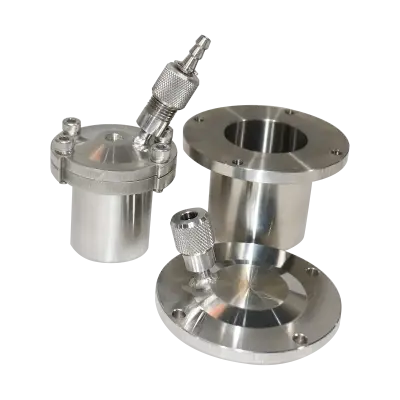
A vacuum-capable jar has to solve a simple but stubborn problem: it must let air out and then keep the outside world out while the jar is moving. The usual approach is a sturdy lid with a gasket, a clamping method that spreads pressure evenly, and a small port with a valve. You connect a pump, open the valve, pull the pressure down, close the valve, and disconnect the pump.
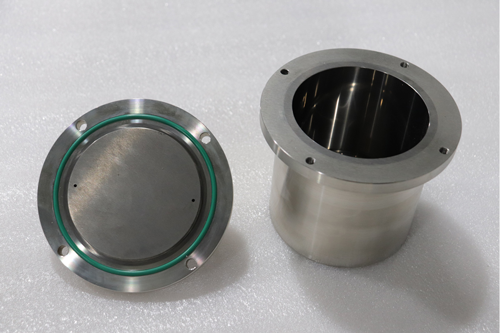
The sealing face is the heart of the design. Any powder on that face is a leak path. Any scratch is a permanent leak path. Any gasket that has gone hard or flat is a leak path. This is why vacuum work rewards cleanliness. A quick wipe with a clean, dry cloth before closing the lid can save an entire run.
Once the lid is clamped and the pump is running, you are not just removing oxygen. You are also removing some adsorbed water and other volatile species from the powder and the jar walls. That is useful, but it has a limit. A simple vacuum pump does not remove everything, and some materials hold onto water tightly. If your process is very moisture-sensitive, vacuum alone may be only the first step. You may need a purge-and-backfill cycle with dry inert gas, or you may need to dry the powder before milling.
A vacuum is also not the same as an inert atmosphere. Vacuum means low pressure. Inert gas means a controlled atmosphere at or near ambient pressure. Both can protect a sample, but they do different jobs. Vacuum is good at removing air. Inert gas is good at filling the space with something unreactive. Many careful workflows use both: pull a vacuum, backfill with argon or nitrogen, repeat, and then mill under a slight positive pressure of inert gas.
Where a vacuum planetary mill jar earns its keep
The short answer is any powder that cares about oxygen or moisture. The longer answer is more useful. Air-sensitive metals and alloys are classic candidates. So are battery materials, catalysts, phosphors, some ceramics, and a long list of research powders where surface chemistry is part of the product.
Battery work is a good example. Many electrode materials and precursors dislike water and oxygen. Milling them in air can change the surface, create unwanted phases, or introduce moisture that later causes gas and fading in a cell. A vacuum jar helps you keep that part of the process under control. The same logic applies to metal hydrides, nitride powders, and other materials that are happier when the air is gone.
Catalysts are another fit. A catalyst often depends on a high surface area and a specific surface chemistry. Oxidation or moisture pickup can block active sites before the catalyst ever sees a reaction. If you are milling a catalyst support or an active phase, the ability to remove air is not a luxury; it is part of keeping the experiment meaningful.
There are also cases where a vacuum jar is simply the wrong tool. If your powder is air-stable, a standard jar is cheaper and easier. If your sample contains a volatile solvent, pulling a vacuum can boil it off and push solvent vapor into your pump. If the powder is extremely fine and dry, it can be drawn toward the valve. Vacuum is powerful, but it is not a universal answer.
Choosing the right jar without guessing
Start with the sample, not the catalog. Ask what the powder needs: oxygen exclusion, moisture exclusion, both, or neither. Then ask what the milling action needs: a certain jar material to avoid contamination, a certain volume to fit the batch, and a certain lid design to seal reliably on your mill.
Jar material matters because wear is inevitable. Balls hit the wall, powder abrades the surface, and some of that material can end up in your sample. Stainless steel is tough and common, but it can contaminate a sample with iron or chromium. Ceramic jars such as zirconia or alumina resist wear differently, but they can be brittle. The right choice depends on hardness, reactivity, and how strict your contamination limit is.
Check the sealing arrangement carefully. A good lid clamps evenly and uses a gasket that can be inspected and replaced. The valve should be easy to reach, easy to close, and protected from powder. If the valve sits where fine powder can pile up, you will eventually have a clogged port or a dirty seal. That is not a small detail; it is a daily-use detail.
Ask about the vacuum level and leak behavior, but do not treat a single number as the whole story. What matters is whether the jar holds a stable vacuum long enough for your run, under the motion of your mill, with your sample inside. A jar that passes a static test on the bench may behave differently once it is spinning. If you are buying for a sensitive process, ask for a practical test that matches your workflow.
Also confirm that the jar fits your planetary mill. Jar volume, outer dimensions, and clamping style all have to match. A beautiful vacuum jar that does not sit correctly in your mill is a very expensive storage container.
Loading and sealing: small habits that save runs
Cleanliness comes first. Inspect the gasket, the sealing groove, and the valve. Remove any powder from the sealing surfaces. Do not use a sharp tool that can scratch the gasket or the metal face. A soft brush and a clean cloth are usually enough. If a solvent is needed, make sure it is compatible with the gasket and make sure everything is dry before you close the jar.
Load the jar with sensible headspace. You need room for the balls to move and for the powder to be tossed around. An overfilled jar cannot mill properly, and it can push powder into the lid and valve. An underfilled jar wastes capacity and may not give you the collision energy you expect. Find the fill level that lets the balls move freely without burying the lid in powder.
Seat the lid evenly. Tighten clamps in a cross pattern rather than cranking one side down first. That helps the gasket compress uniformly. If the lid has a port, make sure the valve is closed before you start pumping or milling. It sounds obvious until you hear the hiss of a run losing its vacuum.
Pull a vacuum, then watch it. A gauge is your friend. If the pressure drops and then rises, you have a leak or the powder is releasing gas. If it holds, close the valve and disconnect the pump carefully. For oxygen-sensitive work, follow the vacuum with an inert gas backfill and repeat the cycle. This is the part where patience pays. One extra purge cycle can be the difference between a clean surface and a failed experiment.
Milling parameters and common mistakes
Vacuum changes the thermal picture. With less gas inside, heat transfer by convection is reduced. The jar and powder may heat differently from an air-filled run. That does not mean vacuum is dangerous by default, but it does mean you should pay attention to milling time, speed, and any sign of overheating. If your material is heat-sensitive, use shorter runs or pause between cycles.
Ball-to-powder ratio, ball size, and milling speed still matter as much as they do in any planetary mill. A vacuum jar does not correct a poor milling recipe. Use enough balls to do the work, but not so many that the jar is packed solid. Match the ball material to the jar and the sample so you do not trade one contamination problem for another.
The common mistakes are predictable. Loading powder in open air and then pulling a vacuum gives you less benefit than you think, because the surface has already seen oxygen. A dirty seal ruins the run. Overfilling pushes powder into the valve. A damaged gasket leaks. Pulling vacuum on a wet or solvent-heavy sample can send vapor into the pump. Assuming vacuum equals inert gas can leave you with an oxygen-free but not necessarily protected process. And opening a jar of pyrophoric powder in air is a serious safety risk, no matter how good the vacuum was during milling.
Cleaning, care, and safety
Clean the jar soon after use. Powder that sits and hardens is harder to remove, and dried powder on a sealing face is a leak waiting to happen. Use gentle tools. Avoid scratching the inside of the jar or the sealing surfaces. If the gasket is compressed, cracked, or stiff, replace it. A spare gasket is cheap compared with a failed run.
Store the lid and jar in a way that protects the sealing face. Do not throw the lid into a drawer with tools. Do not overtighten clamps when the jar is empty just to keep it closed. Treat the port and valve as precision parts, because that is what they are.
Safety deserves its own paragraph. A vacuum jar is a pressure vessel in the sense that the outside atmosphere pushes inward. Inspect it for dents, cracks, or damaged threads. Do not use a jar that looks compromised. Follow the mill manufacturer and the jar supplier for speed limits and clamping. Wear eye and hand protection. If the powder is reactive, open the jar in a glovebox or under inert gas, not at the bench. A vacuum jar can help you control the process, but it cannot make a hazardous powder harmless.
Vacuum, inert gas, or both
Use vacuum when your main goal is to remove air and you can tolerate the low pressure. Use inert gas when you want a controlled atmosphere and a slight positive pressure that discourages leaks from pulling air inward. Use both when the material is sensitive enough to justify the extra steps. The sequence is simple: vacuum, backfill, vacuum again, backfill again, then mill. The exact number of cycles depends on how tight your jar is and how sensitive your powder is.
For many labs, the practical answer is a vacuum planetary mill jar plus a cylinder of dry argon and a little discipline. That combination covers more cases than either vacuum alone or inert gas alone. It also gives you a way to test your setup: if the vacuum holds and the pressure stays stable after backfill, you can trust the run more than if you are guessing.
Before you buy, open the product page and compare the jar to your mill, your sample, and your routine. The right jar is the one that seals well, fits properly, and matches the material you are milling. The wrong jar is the one that looks impressive but makes every run a fight with the lid.
Air-sensitive milling is not about one heroic piece of equipment. It is about stacking small advantages: a clean seal, a sensible fill, a stable vacuum, a controlled backfill, and a powder that never gets a chance to react with the room. A vacuum planetary mill jar is a strong part of that stack. Give it the respect a sealed system deserves, and it will quietly do its job while you focus on the result inside.
Related Products
Get In Touch
Our professional team will reply to you within one business day. Please feel free to contact us!