
The Essential Guide to Small Laboratory Screening Machines: Precision Particle Analysis for Your Lab

Why Particle Size Analysis Matters
If you've ever worked with powders, granules, or slurries in a lab, you know that particle size distribution is a critical parameter. It affects everything from dissolution rates in pharmaceuticals to flowability in food processing. Without a reliable method to separate and measure particles, your results can be inconsistent—and that's a headache nobody wants.
Enter the small laboratory screening machine. This compact yet powerful device is designed to give you precise, repeatable particle size analysis with minimal effort. Whether you're in R&D, quality control, or small-scale production, this machine can be your best friend.
What Is a Small Laboratory Screening Machine?
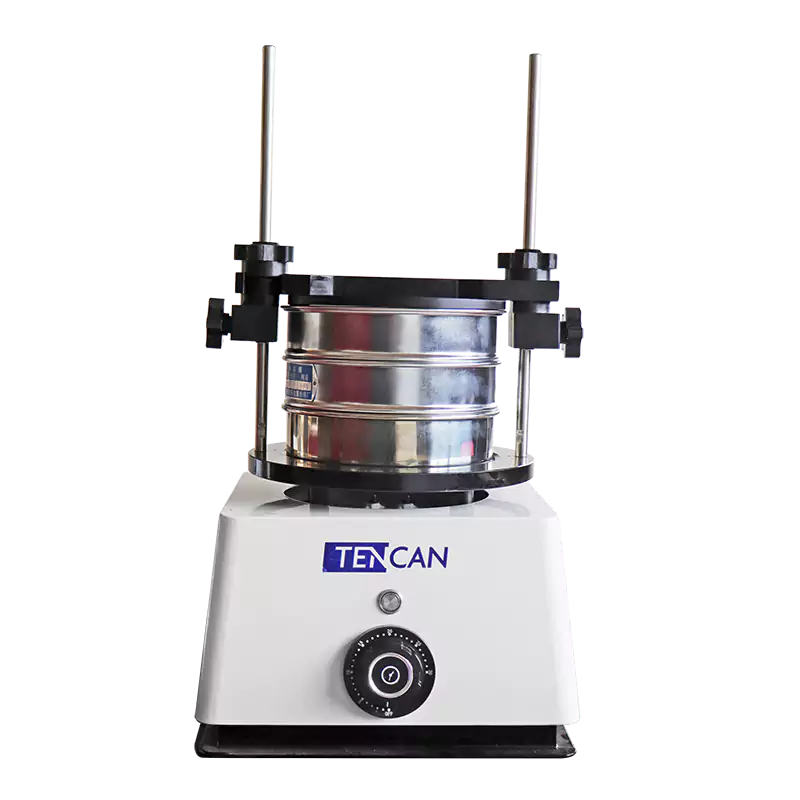
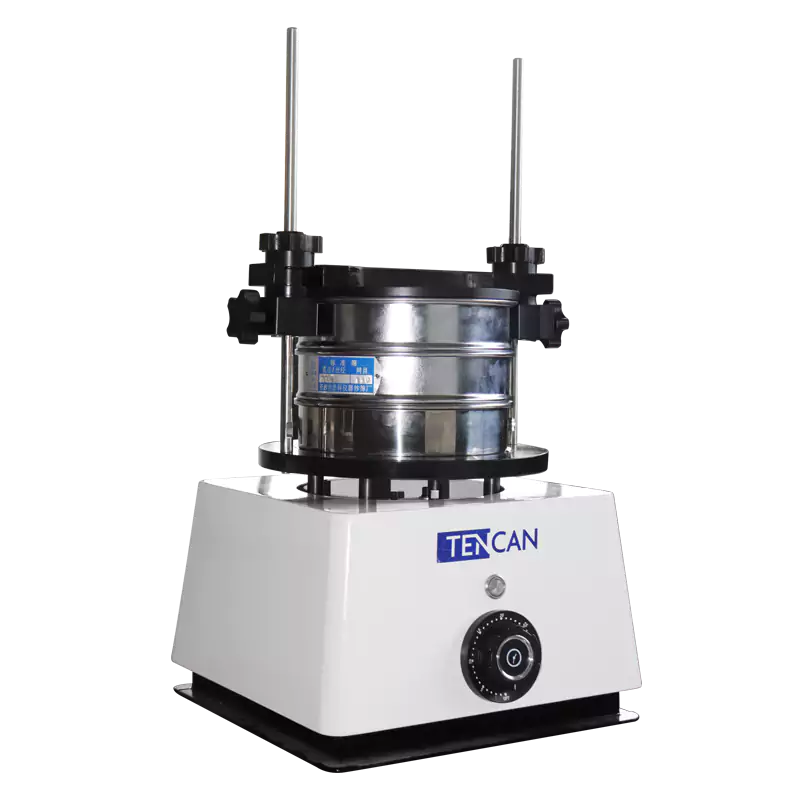
Simply put, a small laboratory screening machine is a benchtop instrument that uses vibration to separate particles by size. It typically consists of a stack of mesh sieves with different aperture sizes, a vibrating base, and a timing control. The sample is placed on the top sieve, and as the machine vibrates, smaller particles pass through the mesh layers while larger ones remain. After a set time, you weigh the fractions on each sieve to determine the particle size distribution.
At TENCAN (Changsha Tianchuang Powder Technology Co., Ltd.), we've engineered our Small Laboratory Screening Machine to be both user-friendly and highly accurate. It's the go-to tool for labs that need reliable data without breaking the bank.
How Does It Work? The Simple Science Behind Vibration Screening
You might wonder: what makes the particles move through the sieves? The secret lies in the three-dimensional throwing motion generated by the vibratory motor. Unlike simple shaking, this motion creates a combination of vertical and horizontal forces that cause the particles to "dance" on the screen surface. They get lifted, thrown forward, and then fall back onto the mesh. This action ensures that every particle has multiple chances to pass through the openings, maximizing separation efficiency.
The vibration frequency and amplitude are adjustable, so you can fine-tune the process for different materials. For example, a sticky powder might need a higher amplitude to break up agglomerates, while a fragile crystalline substance requires a gentler touch to avoid breakage.
Key Features of TENCAN's Small Laboratory Screening Machine
Our machine is built with the end-user in mind. Here are some standout features:
- Compact Design: Fits perfectly on any lab bench, saving valuable workspace.
- High Precision: Equipped with standard sieves (e.g., 200mm diameter) that meet international standards, ensuring accurate and reproducible results.
- Adjustable Vibration: Amplitude up to 5mm, frequency adjustable, giving you control over the screening intensity.
- Timing Control: Built-in digital timer (1–15 minutes) lets you set consistent screening durations for repeatable tests.
- Low Noise: Engineered for quiet operation, so your lab stays peaceful.
- Durable Construction: Made from high-quality stainless steel or painted steel, resistant to corrosion and easy to clean.
But don't just take our word for it. The machine's performance speaks for itself in countless laboratories worldwide.
Applications: Where Can You Use It?
The versatility of this machine is one of its biggest strengths. You can use it for:
- Pharmaceuticals: Analyzing active ingredients, excipients, and granule sizes.
- Food & Beverages: Testing flour, sugar, spices, and other powdered ingredients.
- Minerals & Metals: Classifying ore samples, metal powders, and abrasives.
- Chemicals: Quality control of catalysts, pigments, and detergents.
- Environmental Testing: Soil particle size analysis for agriculture or construction.
- Ceramics & Glass: Sieving raw materials like clay, feldspar, and silica.
In short, if you need to know the size distribution of any particulate material, this machine can handle it.
Comparing with Other Screening Solutions
You might also encounter other types of screening equipment in the lab. Let's look at how our small laboratory screening machine stacks up against a couple of alternatives.
3D Rotary Vibrating Screen
The 3D Rotary Vibrating Screen is ideal for larger volumes and continuous separation. It uses a similar three-dimensional motion but is often bigger and more powerful, making it suited for production environments. However, for small sample sizes and precise lab analysis, the compact bench-top model is more convenient and cost-effective.
Stainless Steel Vibrating Screen Machine
Our Stainless Steel Vibrating Screen Machine shares many features but is built with a fully stainless steel body for environments where hygiene and corrosion resistance are paramount, such as food and pharmaceutical labs. The standard model is also available in stainless steel upon request.
Choosing the right one depends on your specific needs—sample volume, material properties, and budget. But for most lab-scale applications, the small laboratory screening machine offers the best balance of performance and affordability.
How to Choose the Right Small Laboratory Screening Machine
Here are a few practical tips to help you make the right decision:
- Consider Your Sample Size: If you typically work with samples under 100g, a standard 200mm sieve set is sufficient. For larger batches, consider a 300mm or 400mm setup.
- Think About Material Properties: Sticky, electrostatic, or abrasive materials may require special sieve coatings or a more powerful vibratory motor.
- Check Sieve Mesh Standards: Ensure the sieves conform to ASTM or ISO standards for consistent results.
- Look for Reliability: A robust motor and solid construction will save you from frequent repairs. TENCAN machines are built to last.
- Don't Forget After-Sales Support: Choose a manufacturer that offers warranty and technical guidance. At TENCAN, we provide online video support and a one-year warranty.
Real-World Tips for Best Results
To get the most out of your screening machine, follow these simple practices:
- Always use clean, dry sieves. Moisture can cause clogging.
- Don't overload the top sieve. A good rule of thumb is to keep the sample depth to about 1–2 particle layers.
- Use the appropriate vibration amplitude. Start low and increase until you see steady material flow.
- Run each test for a consistent duration (e.g., 5 minutes) for good repeatability.
- Record the sieving conditions (amplitude, time) in your lab notebook for traceability.
Why TENCAN?
At TENCAN, we've been manufacturing laboratory and industrial powder processing equipment for years. Our small laboratory screening machine is just one example of our commitment to quality and customer satisfaction. Every machine is tested before delivery, and we stand behind our products with responsive support. Whether you need a standard model or a customized solution, we're here to help.
Ready to upgrade your particle analysis? Explore our Small Laboratory Screening Machine page for detailed specifications and ordering information. Or check out our full range of sieving equipment, including the 3D Rotary Vibrating Screen and Stainless Steel Vibrating Screen Machine.
Trust us, once you try a TENCAN screening machine, you'll wonder how you ever managed without it.
Related Products
Get In Touch
Our professional team will reply to you within one business day. Please feel free to contact us!