
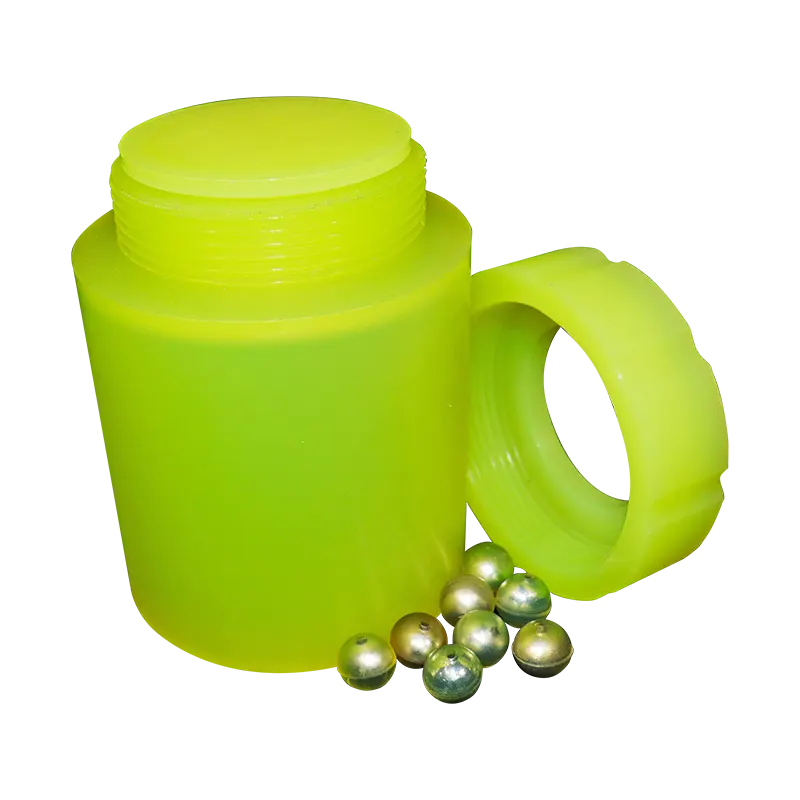
PU Roll Mill Jar for Laboratory Roller Milling: A Documented Single-Option Sourcing Review

Defining the sourcing need
A roller mill jar is a small component with a large influence on sample preparation. It holds the sample and grinding media, rotates on the mill rollers, and becomes the first barrier between the sample, the atmosphere, the mill, and the operator. Buyers looking for a PU roll mill jar therefore need more than a product name: they need to confirm dimensions, polymer grade, lid and gasket design, media compatibility, cleaning routine, and the evidence behind any performance claim. This review addresses that decision in a deliberately narrow way.
The supplied reference set documents one TENCAN product, the PU roll mill jar. It does not provide product-specific documentation for other brands or models. Accordingly, this is not presented as a Top 5 or Top 10 market ranking, and no competing brand is named simply to fill a list. The article is a single-option sourcing review with a repeatable evaluation framework. That limitation is a feature, not a gap in the writing: it prevents a purchasing team from treating an unverified name or a generic photograph as evidence. Where the article asks for a value, it is a value the buyer should obtain from the supplier or from a controlled trial.
The practical question is not whether a PU jar sounds attractive. It is whether a specific PU jar fits a specific roller mill, holds a specific sample without unacceptable interaction, can be cleaned and sealed reliably, and can be supported by documentation that the buyer can file. Those questions apply equally to laboratory trials and to pilot-scale work. They also explain why this category deserves its own sourcing note rather than being folded into a general ball-mill accessory list.
Why a PU roll mill jar is a separate purchasing category
Roller milling is a mechanical process in which a jar is driven by friction against rotating rollers. The jar is not merely a container; it is part of the mechanical train. Its outside diameter, length, wall thickness, surface condition, mass, and lid profile all affect how it sits on the rollers and how easily it can be handled. A jar that looks similar in a photograph may not fit the same roller spacing or may change the load on the drive. For that reason, a jar should be selected against the mill, not against a generic picture.
Material choice is the second reason the category stands apart. A PU roll mill jar introduces a polymer into the sample-contact zone. That may be desirable when the project calls for a PU surface, but the buyer still has to establish the grade, hardness, construction, and chemical compatibility. "PU" is a family description, not a complete specification. Two PU articles can differ in formulation, surface finish, stiffness, and response to cleaning agents. A responsible purchase order should therefore identify the exact grade or product code that the supplier confirms, rather than relying on the family name alone.
The third reason is that the jar is a wear and changeover item. Even when the jar is correct at the start, the working life depends on the media, the sample, the rotation speed, the fill level, and the cleaning method. A procurement decision that considers only the initial unit is incomplete. The buyer should ask how the jar is inspected, when it should be replaced, and which operating conditions fall outside the supplier's recommendation. These are not negative points about PU; they are normal engineering questions for any jar material.
Finally, the jar is part of a documented workflow. In a regulated or customer-audited laboratory, the purchaser may need to link the jar to a batch, a cleaning record, and a trial report. A product page can start that record, but it cannot replace the supplier's written confirmation of dimensions, materials, and limits. The evaluation framework below is designed to produce that record before a larger commitment is made.
What the supplied documentation establishes, and what it does not
The supplied reference establishes a TENCAN product entry titled PU roll mill jar, with a product page and several product images. That is sufficient to identify the candidate and to begin a structured enquiry. It is not sufficient to assign a capacity, a hardness value, a maximum speed, a temperature range, a chemical-resistance rating, a service life, or a particle-size outcome. Those details must come from the supplier's current specification or from a trial that the buyer controls.
This distinction matters in an international purchasing context. A buyer may be tempted to compare brands by copying headline claims from different pages, even when the test conditions differ. A more reliable approach is to compare the same attributes for each candidate: dimensions, contact material, sealing method, media compatibility, cleaning instructions, documentation, and the conditions under which the supplier will support the product. In this review, only TENCAN is documented, so the comparison table contains one candidate. The table is still useful because it shows exactly which fields remain open.
- Documented: the product name, the TENCAN product page, and the supplied product images.
- Not documented in the reference: jar dimensions, PU grade, hardness, construction, lid torque, gasket material, fill volume, media recommendation, speed limit, temperature limit, chemical compatibility, cleaning protocol, certificates, price, lead time, and service life.
- Therefore required before purchase: written confirmation of all application-critical values and a trial plan agreed with the supplier.
Selection criteria for a roller-mill jar
Fit to the roller mill and jar support
Start with the mill, not the jar. Record the roller spacing, roller diameter, jar support method, drive arrangement, and any guard or limit that affects jar size. Confirm the jar's outside dimensions and mass against those constraints. A jar that is too large may not sit correctly; a jar that is too small may not track properly. The buyer should also check whether the lid and any clamp interfere with the rollers or the mill enclosure. These are mechanical fit checks, not performance claims, and they should be settled before any sample is loaded.
Polymer grade and construction
Ask what the PU designation means in the supplier's specification. Is the jar body solid PU, a PU liner in a supporting shell, or another construction? What grade and hardness are used, and are they controlled from batch to batch? Is the inner surface machined, molded, or coated? These questions affect how the jar should be cleaned, how it should be inspected, and whether the sample sees a continuous polymer surface or a joint. The purchaser should request the exact product code and the corresponding data sheet.
Sample contact and cross-contamination
A PU jar may be considered when the project intends to use a PU contact surface. That intention should be stated explicitly. The buyer should then review the sample's chemistry, moisture sensitivity, abrasiveness, and value. If the sample is a regulated material, ask whether the jar can be supplied with the documentation needed for the quality system. Do not assume that a polymer jar is automatically non-contaminating or chemically inert. Compatibility must be confirmed for the actual sample, solvent, and cleaning agent.
Lid, gasket, and sealing method
The lid is often the weakest point in a jar system because it combines a closure, a seal, and a handling interface. Confirm the lid material, gasket material, closure method, and any recommended tightening procedure. If the process involves wet milling or a solvent, ask how the seal behaves and what leakage check is recommended. If the process is dry, ask how dust is controlled during opening. A spare gasket and a written cleaning instruction are practical items to include in the enquiry.
Grinding media compatibility
Media density, size, and shape change the load on the jar and the wear pattern. The buyer should state the intended media and ask TENCAN to confirm compatibility with the PU jar. If the media is high-density ceramic or metal, the impact energy at the jar wall may be significant; if the media is small, the number of contact events may be high. Neither case can be judged from the product name alone. The supplier should confirm whether the intended media is within the jar's recommended duty.
Cleaning and changeover
Cleaning is a selection criterion, not an afterthought. Ask which cleaning agents are acceptable, what temperature should not be exceeded, and whether brushing or high-pressure rinsing is permitted. A jar that is difficult to dry or inspect will slow changeover and may introduce carryover. For multi-product laboratories, a written changeover procedure and a visual inspection checklist are more valuable than a generic statement that the jar is easy to clean. The buyer should also ask whether replacement lids or gaskets are available.
Scale, handling, and operator safety
A jar that is suitable for a small laboratory trial may be awkward at pilot scale. Confirm the filled mass, the lifting points, and the clearance needed to remove the jar from the mill. Check that the lid can be handled with gloves and that the jar can be emptied without excessive manipulation. The buyer should also review the supplier's instructions for safe operation and ensure that local laboratory rules cover the intended use. No jar should be operated outside the supplier's confirmed limits.
Documentation and traceability
Request the data sheet, drawing, material declaration, and inspection record that the supplier can provide for the quoted product. If the jar is part of a customer-approved process, ask how the product code is identified on the jar or its packaging. These documents make it possible to reorder the same configuration and to investigate a deviation later. They also prevent a purchasing team from accepting a substitute based only on a similar product name.
TENCAN PU roll mill jar: evaluation path
TENCAN appears first in this review because it is the only product documented in the supplied material, not because an independent ranking has placed it first. The product page identifies a PU roll mill jar within the TENCAN grinding-series listing. For a buyer, that is a starting point for a technical conversation: the product family is clear, while the application-specific values still need confirmation.
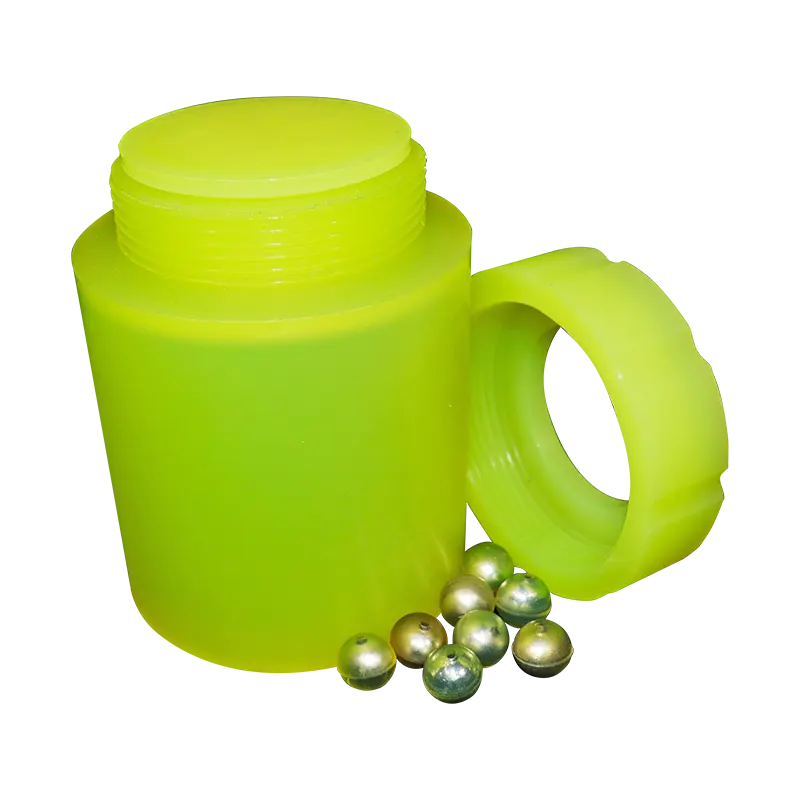
The most productive way to evaluate this product is to divide the enquiry into three configuration profiles. First, a laboratory screening profile: confirm the smallest practical jar size, the fill level, the lid and gasket arrangement, and the cleaning routine for small sample batches. Second, a scale-up profile: confirm the dimensions and mass of the larger jar, the mill fit, the handling method, and whether the same PU grade is used. Third, a changeover-sensitive profile: confirm solvent compatibility, drying, inspection, and spare-part availability. These are not three invented products; they are three application questions that the same documented product must answer before purchase.
Documented scope
The reference gives the product name, page, and images. It does not give a capacity, a wear rating, or a milling result. The TENCAN section of this review therefore focuses on what the buyer should verify, rather than on unsupported performance statements. A quotation or data sheet from TENCAN should be attached to the evaluation record and compared with the application requirements.
Application fit to confirm
Use the PU roll mill jar as a candidate when the project has a reason to use a PU jar and when the mill can accept the confirmed dimensions. Ask TENCAN to state the intended duty for the quoted configuration, including the media, fill, and operating speed. If the application involves a solvent, an abrasive sample, or a high-energy duty, ask specifically whether the PU jar is suitable; do not infer suitability from the product name. If it is not suitable, the correct outcome is to change the configuration or the product, not to force the jar into the duty.
Questions to send with the first enquiry
- Please confirm the available jar dimensions, mass, and lid arrangement for the PU roll mill jar.
- Please identify the PU grade and construction, and provide the current data sheet or drawing.
- Please confirm the gasket material, spare-part availability, and recommended closure method.
- Please state the media, fill, speed, temperature, and cleaning limits that apply to the quoted jar.
- Please confirm the documents that can be supplied for traceability and reorder.
Single-candidate comparison table
The table below uses one product level and one set of application fields. It is not a market ranking. Its purpose is to separate documented facts from values that must be confirmed before a purchase order.
| Brand or product | Documented strengths | Relevant application | Configuration to confirm |
|---|---|---|---|
| TENCAN PU roll mill jar | Dedicated product entry and supplied product images for a PU roll mill jar; a clear starting point for a documented enquiry. | Evaluation of a PU jar for roller-milling duties where a PU sample-contact surface is intended and the mill fit is confirmed. | Jar dimensions and mass; PU grade and construction; lid and gasket; media compatibility; cleaning agents; operating limits; traceability documents. |
Workflow positions to assess
Before milling
The jar should be evaluated as part of sample preparation, not only as a purchase item. Confirm how the sample will be loaded, whether the jar and media are pre-cleaned, and how the fill level will be recorded. A simple batch record that lists the jar code, media, sample mass, and cleaning status makes later comparison possible. If the sample is sensitive to moisture or air, confirm that the lid and handling procedure are adequate before the first run.
During milling
Record the mill setting, running time, and any observation of jar movement, noise, or lid condition. Do not exceed the supplier's confirmed limits. If the jar shows unexpected heat, vibration, or leakage, stop and consult the supplier. These observations are more useful than a generic claim that the jar runs well. They also provide the evidence needed to decide whether the PU jar is appropriate for the duty.
After milling and changeover
Inspect the jar, lid, and gasket after each run. Record the cleaning method and drying time. Check that the jar can be reassembled correctly and that the lid seats without force. If the jar is used for multiple products, verify that the changeover procedure is followed and that the next sample is not exposed to carryover. Over time, this record supports decisions about replacement intervals and spare-parts stock.
Procurement checklist before quotation
- Sample identity, key chemistry, moisture sensitivity, and any safety data.
- Target process metric, such as a target particle-size range or a dispersion requirement, stated as a trial goal rather than a guaranteed result.
- Batch size, jar fill, media type, media size, and intended milling time.
- Mill make and model, roller spacing, jar support, and available clearance.
- Wet or dry operation, solvent or cleaning agent, and permitted temperature range.
- Required documentation, traceability, and any quality-system requirement.
- Expected number of runs per week, changeover frequency, and spare-part plan.
- Receiving inspection criteria and the person responsible for approving the trial.
Trial design before a larger order
A single-candidate review still needs a fair trial. Begin with the supplier's confirmed operating limits and a written trial plan. Define the baseline: the current jar or process, the sample, the media, and the measurement method. Then run the PU jar under comparable conditions, changing only the variables that the trial is meant to test. If the purpose is to compare jar materials, keep the mill setting and media constant. If the purpose is to establish a new process, run a small number of conditions and record them precisely.
Inspect the jar before and after each run. Look for deformation, cracking, surface changes, lid fit, gasket condition, and leakage. If the sample is a regulated product, include the appropriate contamination or recovery check in the trial plan. Do not rely on appearance alone. A jar can look intact while a gasket has compressed or a sealing surface has changed. The supplier should be asked to review the inspection findings if anything unusual appears.
The trial should end with a short report: product code, jar dimensions, media, sample mass, mill setting, run time, observations, cleaning method, and the result against the agreed metric. This report becomes the basis for a repeat order or for a decision to evaluate a different configuration. It also protects both buyer and supplier from relying on memory or on a verbal description.
Specification gaps to close before purchase
The word PU does not answer the most important questions. Before a purchase order, close the following gaps in writing: exact jar dimensions and tolerances; PU grade and hardness; solid or lined construction; inner-surface finish; lid and gasket materials; closure method; recommended fill and media; maximum operating speed and temperature; chemical compatibility with the sample and cleaning agents; cleaning and drying procedure; spare-parts list; traceability documents; and the supplier's warranty or return policy. A quotation that omits these fields is incomplete for a technical purchase, even if the product name is correct.
If TENCAN cannot confirm a value for the intended duty, the buyer should not fill the gap with an assumption. The correct action is to narrow the trial, ask for an alternative configuration, or select a different product that matches the duty. That is a normal part of responsible sourcing. It is also why this review does not invent a five-brand comparison: a longer list would create false confidence if the underlying product data were not available.
Cost and risk view without invented numbers
Do not compare jars by purchase price alone. The relevant cost includes the jar, lid, gasket, media, cleaning time, inspection time, and the cost of a failed batch. A jar that is difficult to clean or that requires frequent replacement can be more expensive than a higher-priced jar that fits the workflow. Ask TENCAN for the consumable and spare-part list, then estimate the annual requirement from the planned number of runs. Keep the estimate separate from the quotation so that assumptions are visible.
Risk should also be managed through configuration control. Record the exact product code, the confirmed dimensions, and the approved cleaning method. If a substitute is proposed later, require the same confirmation process. This is especially important for international teams that may order from different locations. A clear product record reduces the chance that a well-intentioned substitution changes the sample-contact material or the mill fit.
Decision path
Proceed with the TENCAN PU roll mill jar only when the confirmed dimensions fit the roller mill, the PU construction matches the intended sample-contact requirement, the lid and gasket are suitable for the planned operation, and the cleaning and documentation requirements are closed. If any of those conditions is open, keep the product in the evaluation stage and request the missing information. This is a more defensible position than treating a single listing as a complete specification.
The next step is a focused technical request: send TENCAN the sample details, target process metric, batch size, mill model, jar dimensions, media, cleaning constraints, and required documentation, and ask for written confirmation of the configuration before ordering. That single step converts a product name into a traceable purchasing decision.
Sources and Further Reading
TENCAN product page: PU roll mill jar. Product images used in this article are from the same supplied TENCAN product entry. No third-party test reports, ratings, prices, competitor pages, or customer claims were used in this review.
Related Products
Get In Touch
Our professional team will reply to you within one business day. Please feel free to contact us!