
Vertical Tube Furnace Guide: How Controlled Atmosphere Heat Treatment Works

If you work with powders, ceramics, catalysts, battery materials, or thin films, there comes a moment when a muffle furnace stops being enough. You need heat, yes, but you also need to control what the sample breathes while it is hot. That is where a vertical tube furnace earns its place. It gives you a tall, sealed workspace where gas can flow, vacuum can hold, and gravity can work with you instead of against you.
What a Vertical Tube Furnace Actually Does
A tube furnace is built around a simple idea: put a cylindrical heating chamber around a tube, seal the tube, and control both temperature and atmosphere. The sample sits inside the tube, not in direct contact with heating elements. That separation matters because it keeps the sample clean and lets you introduce gases, pull a vacuum, or run a controlled cooling step without opening the hot zone.
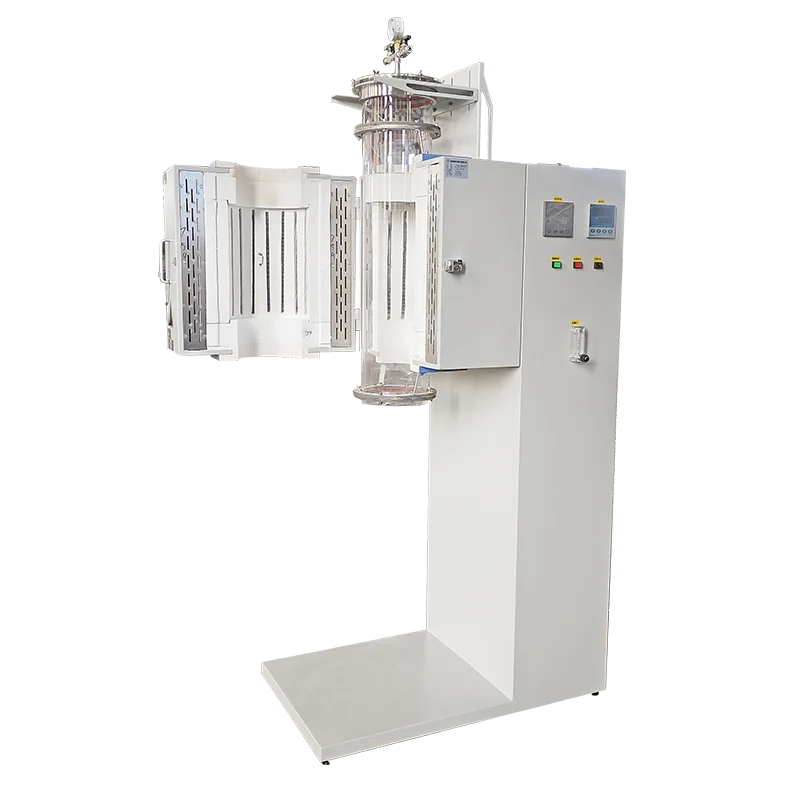
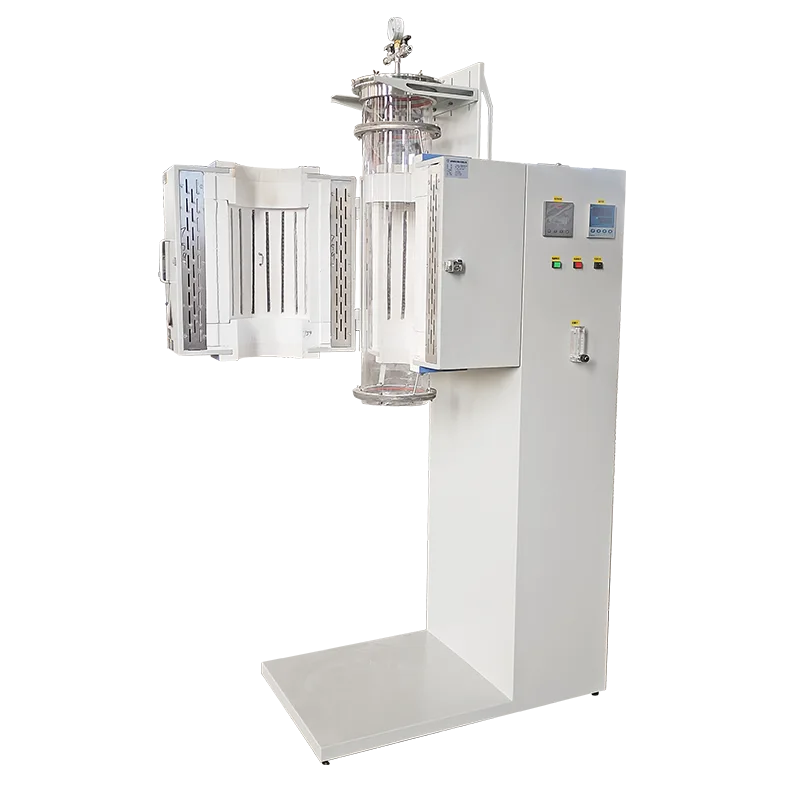
The vertical version stands the tube upright. You load from the top, the sample hangs or rests in the heated zone, and gas usually enters from one end and exits from the other. TENCAN's vertical tube furnace follows this layout, with a control cabinet and a heated tube section that can be adapted to different lab workflows. The exact tube size, maximum temperature, and gas hardware depend on the configuration, so the product page is the right place to confirm those details.
Why the Tube Stands Upright
Horizontal tube furnaces are common, and for flat samples or continuous flow work they make plenty of sense. A vertical tube furnace solves a different set of problems. When you hang a sample from a support rod or suspension wire, gravity keeps it centered in the hot zone. You do not need a long loading tray, and you reduce the chance of the sample sliding into a cooler zone as it expands or shifts.
Vertical loading also helps with powders and small parts that tend to scatter. A crucible or basket sits on a support at the bottom of the heated zone, or hangs from above, depending on the design. For processes such as annealing wires, heat-treating small metal parts, or growing materials from a melt, the upright geometry can be much easier to manage. It also saves bench space when the control cabinet sits beside a tall, narrow hot zone rather than a long horizontal tube.
A Quick Tour of the Hot Zone
Most vertical tube furnaces use resistive heating elements around a ceramic fiber or refractory insulation package. The tube passes through the center. A thermocouple reads the temperature near the heated zone, and a controller adjusts power to hold a setpoint or follow a ramp-and-soak program. Good insulation matters because it keeps the outside surface cooler and makes the heated zone more even.
The heated zone is not a magic box with one perfect temperature everywhere. It has a middle region where temperature is most uniform and ends where heat naturally drops off. That is why sample position matters. If you place a crucible too close to the top or bottom opening, it may see a different temperature than the thermocouple reports. A simple commissioning test with a test thermocouple or a known reference sample can show you where the sweet spot is.
Controller, thermocouple, and power
The controller is the brain, but it is only as good as the sensor feedback. Use the thermocouple type specified for the furnace, keep the cold junction and wiring clean, and do not assume that a controller reading equals the sample temperature. For critical work, calibrate against an independent probe. Also check the electrical supply and grounding requirements before installation; a high-temperature furnace is not a plug-and-play appliance in every lab.
Atmosphere Control Is the Real Superpower
Heat alone can oxidize a metal powder, burn off a binder too fast, or leave an unwanted oxide layer on a ceramic. Atmosphere control is what turns a hot tube into a process tool. Inert gas such as nitrogen or argon can displace oxygen. Reducing gas mixtures can help remove oxides, though they require extra safety planning. Air or oxygen can be useful when you actually want oxidation, such as a controlled burn-off step.
The key is to think in terms of gas path, not just gas type. Gas should enter, sweep through the tube, and exit with a clear route to exhaust or scrubbing. Dead zones near the seals or at the bottom of a tall tube can hold moisture or oxygen longer than you expect. A gentle, steady flow is often better than a violent blast that cools the hot zone or stirs powder into the outlet.
For powder samples, atmosphere control also affects how the powder behaves. Fine powders can fluidize, dust, or sinter into a crust. Use a shallow crucible, a controlled flow rate, and a pre-purge step. If the process produces fumes or condensable vapors, plan for a trap or scrubber before the gas reaches the room. The furnace may be sealed, but the exhaust still has to go somewhere sensible.
Vacuum, Gas Flow, and Sealing Details
Many vertical tube furnaces can be set up for vacuum operation, gas flow, or both. Vacuum is useful for removing air before backfilling with an inert gas, and it can support processes that need low oxygen or low pressure. But vacuum adds demands: the tube must be rated for it, the seals must be clean and compatible, and the end fittings must not collapse or leak under heat.
Leak checks are not optional. A tiny leak that looks harmless at room temperature can grow more troublesome when the tube expands. Use a systematic approach: isolate the tube, pull a vacuum or apply slight pressure, and watch for drift. Check O-rings, feedthroughs, valves, and tube ends. If you use flammable or toxic gases, add proper gas detection, venting, and interlocks. The furnace should be part of a designed gas system, not an improvised collection of tubing.
Temperature Profiles, Soak Time, and Sample Position
A good heating profile does more than reach a number. Ramp rate controls thermal stress in the sample and the tube. Soak time lets diffusion, sintering, annealing, or reaction happen. Cooling rate can matter just as much, especially for metals and ceramics that may crack or retain unwanted phases if quenched too quickly. Write the profile around the material, not around the furnace's maximum capability.
Sample position is part of the profile. In a vertical tube, the sample can sit on a bottom support, hang from a wire, or rest in a basket within the uniform zone. Keep the sample centered and leave space around it for gas flow. Do not pack a tall tube with powder from wall to wall; that creates a long thermal mass and restricts the gas path. If you need to process several small crucibles, use a rack that keeps each one in a known temperature region.
Choosing the Right Tube Material
The tube is a consumable and a pressure boundary, so material choice deserves respect. Quartz is transparent and works well for many lab processes, but it has temperature limits and can soften or devitrify over time. Alumina and mullite tubes are common for higher-temperature work and offer good chemical stability, though they can be brittle and less forgiving to thermal shock. Metal tubes may suit certain inert or reducing atmospheres, but compatibility with the process gas and temperature must be checked.
Do not choose a tube just because it fits the furnace. Match it to the maximum temperature, heating and cooling rate, gas chemistry, vacuum requirement, and sample contact. Avoid direct contact between the tube and aggressive fluxes or molten metals unless you know the tube can take it. Use a liner or crucible when in doubt. Also inspect tubes regularly for cracks, chips, and cloudy spots, and replace them before a small flaw becomes a serious failure.
Loading Samples Without Breaking the Tube
Vertical loading is convenient, but it is also a chance to drop something down a very expensive hole. Use a proper loading tool, a basket, or a sample holder with a stop. Warm the tube slowly if it has absorbed moisture, and never slide a cold metal fixture against a hot ceramic tube. Let the hot zone settle before you introduce a new load, and keep the tube opening covered when it is not in use.
For powders, pre-shape or contain the material so it does not become airborne. A thin bed in a shallow crucible is easier to purge and heat evenly than a deep bucket of powder. If the process produces a residue that sticks to the tube, plan a cleaning method that does not scratch the inner surface. Small habits here save a lot of replacement tubes later.
Where Vertical Tube Furnaces Earn Their Keep
Materials labs use vertical tube furnaces for annealing, sintering, calcination, pyrolysis, chemical vapor deposition, and crystal growth studies. In powder processing, they are handy for removing binders, testing catalyst supports, and studying how particles fuse under a controlled atmosphere. Battery researchers use tube furnaces for electrode and active-material heat treatment. Ceramics teams use them for densification and phase studies. None of these applications needs the same profile, which is why programmable control and flexible gas connections matter.
The vertical layout is especially useful when a sample must hang, when a melt must drip, or when a long residence time in a hot zone is needed without a long horizontal bench. It is also a good fit for small batch work where the sample is expensive and you want a well-defined hot zone rather than a large chamber. Before you settle on a configuration, check the vertical tube furnace specifications and match them to your process temperature, atmosphere, and sample size.
Safety, Installation, and Everyday Operation
Treat a tube furnace as a high-energy tool. The outside can become hot, the tube can fail under stress, and the exhaust may contain gases you cannot see or smell. Put the furnace on a stable, noncombustible surface with enough clearance for the control cabinet and gas lines. Keep the area free of clutter and flammable materials. Use gloves, eye protection, and a face shield when handling hot tubes or sealed fittings.
Before the first run, confirm the electrical supply, grounding, over-temperature protection, and gas plumbing. Purge the tube before heating if the process needs an oxygen-free atmosphere. Do not open a hot tube to room air without considering what the sample will do. If the furnace uses vacuum, check the seals and the pump trap. If it uses flammable gas, use proper detection and never rely on smell. A short pre-run checklist is boring, and that is exactly why it works.
Maintenance and Calibration
Keep a simple log: date, process, setpoint, actual temperature, gas, vacuum level, and any unusual observation. That record helps you spot drift before it ruins a batch. Calibrate the controller and thermocouple periodically, and check the tube for wear. Clean seals according to the manufacturer's guidance, replace O-rings when they lose elasticity, and inspect the power connections for heat damage.
Do not ignore a controller that overshoots or a tube that takes longer to reach temperature. Those are signals, not quirks. A loose thermocouple, a failing element, or a leaking seal can change the process without changing the display. If the furnace has a cooling fan or water cooling option, check that the airflow or water flow is unobstructed. Maintenance is cheaper than a failed run, and much cheaper than a damaged tube.
What to Check Before You Buy
Start with the process, not the brochure. What maximum temperature do you really need, and how often will you run it? What atmosphere, vacuum level, and gas flow rate are involved? What sample size and shape must fit inside the uniform hot zone? Do you need a single-zone furnace or multiple controlled zones? Will you load from the top with a basket or hang a sample from a wire? These answers narrow the configuration quickly.
Then look at the practical details: tube diameter and length, heated zone length, controller programmability, over-temperature protection, sealing method, gas inlet and outlet size, and the footprint of the control cabinet. Ask how the tube is supported and how it is replaced. Check whether the furnace is designed for the gas you plan to use, and confirm the electrical supply. For current options, review the TENCAN vertical tube furnace page and compare the available configurations with your process window.
Finally, think about the people who will run it. A clear loading procedure, labeled gas lines, and a visible emergency stop are worth more than a long list of features nobody uses. If the furnace will process powders, ask about containment and cleaning. If it will run overnight, ask about alarms and fail-safe behavior. A vertical tube furnace is a long-term lab partner, so choose the version that fits your real workflow rather than the one with the longest feature sheet.
Get the heat, atmosphere, and sample position right, and a vertical tube furnace becomes one of the most useful tools in the lab. It is not complicated in principle, but it rewards careful setup. Start with a small, well-instrumented run, learn how your tube behaves, and build from there. That is how good furnace work stays repeatable, safe, and genuinely useful.
Related Products
Get In Touch
Our professional team will reply to you within one business day. Please feel free to contact us!