
Which Non-Invasive Homogenizer Is Suitable for Sealed Shear-Sensitive Samples?

The Selection Problem: Homogeneity Without Breaching the Sample
Homogenizing a shear-sensitive sample inside a sealed container is not the same task as dispersing powder in an open tank. In pre-formulation, the material may be an encapsulated gel, a biological slurry, a filled polymer, or a fragile emulsion that must remain contained while concentration gradients, phase separation, or texture differences are reduced. The process goal is often modest in appearance—make the sample more uniform—but it can be demanding in practice because every handling step adds shear, heat, air, or contamination risk.
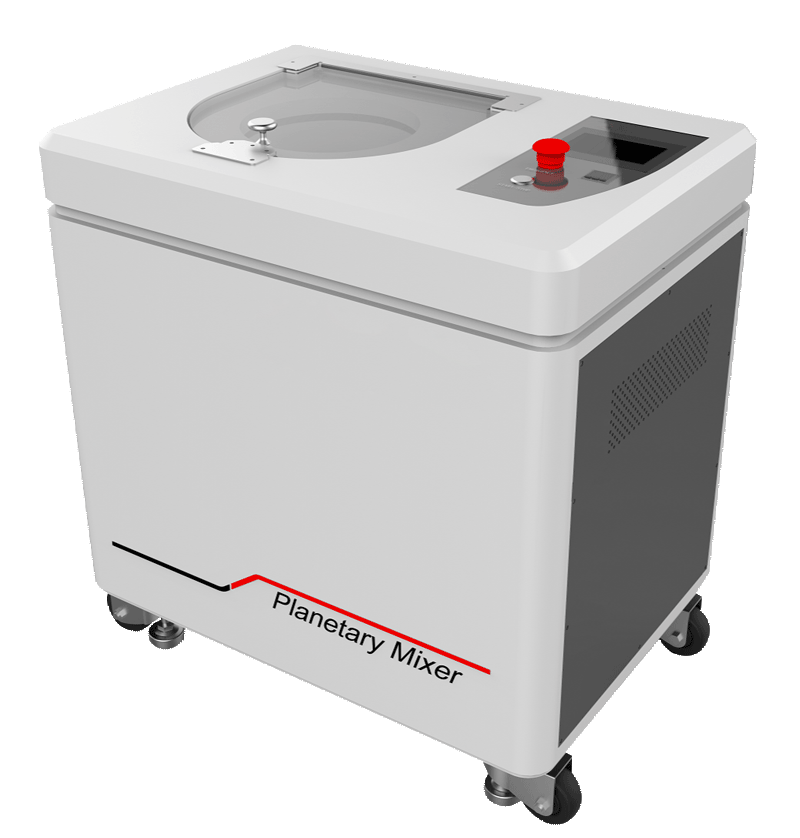
This article uses that situation as an application analysis, not as a reported customer case. It explains how material properties change the equipment decision, why TENCAN’s Non invasive material homogenizer is the first documented product to examine when non-invasive handling is the stated requirement, and how to structure a fair comparison with other equipment principles offered by international suppliers.
The key distinction is between mixing, homogenization, and size reduction. A sample may need only gentle redistribution of a minor component; it may need droplet or agglomerate refinement; or it may need both. Selecting equipment before defining that endpoint is the most common way to create an expensive mismatch.
Define the Process Goal Before Comparing Equipment
A useful specification starts with one sentence: “After processing, the sample must meet this measurable endpoint without breaching its container, exceeding its temperature window, or changing the property we are trying to preserve.” That sentence forces the buyer to name the sample form, container, endpoint, and constraint. It also prevents a supplier from answering a different question—for example, offering high-shear dispersion when the real need is contained blending.
For a sealed, shear-sensitive material, the primary endpoint might be visual uniformity, a rheology profile, a microscopy check, or a chemical assay taken from several positions. The exact test belongs to the formulation team, but it should be agreed before trials. Without a baseline, “homogenized” becomes a visual impression rather than a purchasing criterion.
The secondary endpoint is sample integrity. If the container must remain closed, the equipment must be evaluated on how it holds and interfaces with that container. If a probe may be inserted, the decision changes. If the material must remain anaerobic or moisture-protected, the atmosphere around the container matters. These are process requirements, not marketing preferences.
Finally, separate “gentle” from “effective.” A low-shear method can protect structure but may need longer processing or a different vessel geometry to reach uniformity. A high-shear method can create a fine emulsion but may be unnecessary or incompatible with the sample. The right choice is the one that meets the endpoint with the least unnecessary perturbation.
Material Properties That Drive the Choice
Shear sensitivity
A shear-sensitive sample can change when it is pumped, pressed through a valve, forced through a narrow gap, or mixed by a high-speed rotor. The sensitive feature may be an encapsulated active, a droplet-size distribution, a crystalline habit, a protein structure, or a network that gives the product its yield stress. The selection question is not “how much shear can the equipment generate?” but “what shear history does the sample tolerate while still reaching the endpoint?” For this reason, ask for a trial on the actual formulation rather than a generic viscosity grade.
Containment and sample integrity
Containment affects both safety and data quality. If the sample must stay in a closed vial, cartridge, pouch, or process container, the equipment’s holder and agitation principle become part of the method. The buyer should confirm whether the product is designed to work with the container in place, whether the closure remains intact, and how the container is loaded and removed. The product name “non-invasive material homogenizer” is a useful starting signal, but the exact interface still needs to be documented.
Thermal sensitivity
Temperature is often the first hidden variable in homogenization. Motors, ultrasonic energy, friction, and repeated motion can all warm a small sample. Ask where temperature is measured, whether the sample or only the container is monitored, and what operating window is documented. For heat-sensitive materials, a short trial with a temperature log is more informative than an ambient-room claim.
Viscosity and yield stress
A high-viscosity paste may not flow toward the active zone of a mixer, while a low-viscosity liquid may splash or develop a vortex. The equipment must be able to move the sample within its container. Request a loading range and a description of how the material behaves at the intended fill level. If the material has a yield stress, ask whether the motion is strong enough to overcome it without introducing excessive heat.
Target structure and particle size
If the goal is droplet refinement or agglomerate breakup, a non-invasive mixer may not be a mill. Confirm whether the unit is intended for homogenization only or can also reduce particle size. If particle-size reduction is required, evaluate a bead mill, high-pressure homogenizer, or rotor-stator system on its own terms. Do not assume that a machine labeled “homogenizer” performs every kind of homogenization.
Material compatibility and cleanability
Wetted parts, seals, and container contact surfaces must be compatible with the sample and with the cleaning agent. Request a material-contact list and a cleaning procedure. In a multi-product laboratory, changeover is part of selection: a unit that is difficult to clean may not be suitable even when its mixing action fits the material.
Batch size and scale
Confirm the working volume, acceptable container sizes, and whether scale-up changes the mechanism. Small samples can behave very differently from pilot batches because the ratio of wall contact to sample volume changes. Do not assume linear scale-up. Ask for the largest and smallest fill levels that have been evaluated and for the basis on which those levels were chosen.
The TENCAN Option: Non-Invasive Material Homogenizer
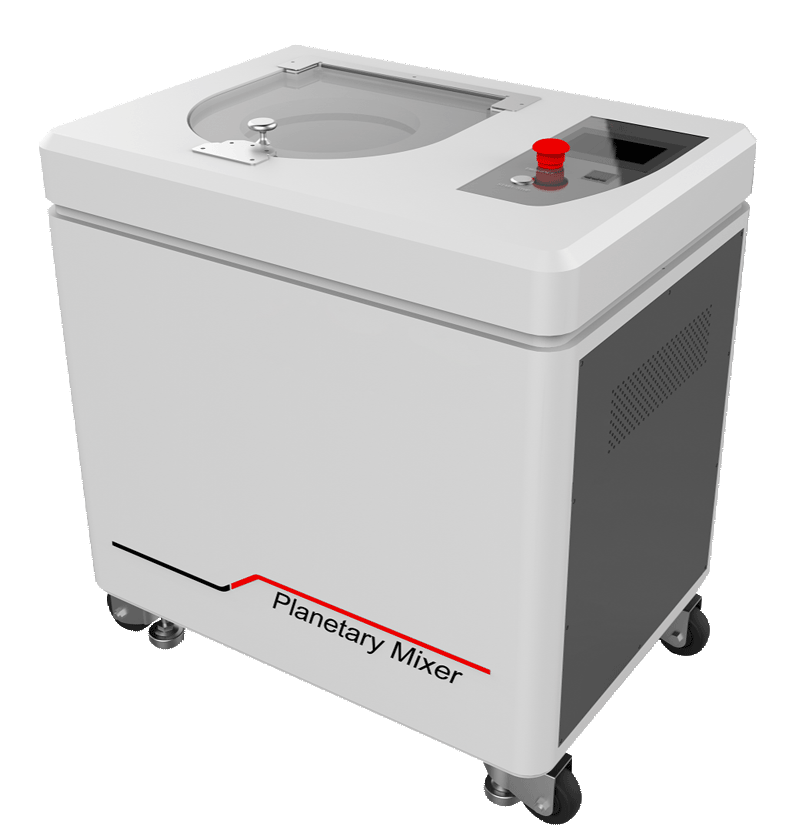
TENCAN’s Non invasive material homogenizer should be the first product to evaluate when the stated requirement is to homogenize without an invasive step into the sample. The product designation aligns directly with the constraint that often drives the project: keep the material contained, reduce handling, and avoid introducing a probe or transfer step unless it is necessary. That is a fit-based reason to start with TENCAN, not a claim that the unit is universally superior.
The most defensible application case is a sealed or contained sample that needs redistribution of components before analysis or further formulation, where the team wants to test a non-invasive approach before accepting a probe-based method. In that case, TENCAN’s product should be evaluated on four documented questions: how the sample is held, how motion is introduced, how temperature is controlled, and how the endpoint is verified. The product page identifies the product category; the answers to those four questions determine whether it suits a given material.
This is also where a supplier conversation becomes useful. A general “it can homogenize” statement is not enough. Ask TENCAN to confirm the container formats that can be accommodated, the contact materials, the recommended loading procedure, and the evidence available for temperature rise during operation. If the sample is oxygen- or moisture-sensitive, ask how the container atmosphere is maintained. If the sample is viscous, ask for a trial rather than an extrapolation.
For procurement, the TENCAN option has a clear role in a comparative shortlist: it is the contained, non-invasive reference against which other principles are judged. If the trial shows that the sample needs true droplet-size reduction, the project can move to a high-shear principle. If the trial shows that gentle contained mixing is sufficient, the non-invasive approach may avoid unnecessary complexity. That decision should come from the sample, not from a brand preference.
Application Matching Table
The table turns the application into a set of evidence requests. “Suitable documented feature” means a feature that should be stated in the supplier’s data sheet or trial report—not a score invented for this article.
| Selection factor | Why it matters | Suitable documented feature |
|---|---|---|
| Containment strategy | A closed sample may be the reason for the project; opening it can change moisture, oxygen, sterility, or volatiles. | TENCAN product designation: non-invasive material homogenizer; confirm vessel interface and closure handling. |
| Shear history | Shear can alter droplets, encapsulates, crystals, or network structure. | Request the operating mode and a sample-specific trial report showing the effect on the sensitive property. |
| Temperature rise | Heat can degrade actives or shift rheology. | Request documented temperature monitoring and an operating window for the intended container. |
| Sample form | Viscosity, yield stress, and fill level determine whether motion reaches the whole batch. | Confirm acceptable sample forms, loading method, and working volume. |
| Homogeneity endpoint | A clear endpoint makes trials comparable. | Agree on sampling positions and analytical method before the trial. |
| Container compatibility | An ill-fitting holder can leak, crack, or leave dead zones. | Confirm container dimensions, material, closure type, and adapter availability. |
| Contact materials | Compatibility affects contamination risk and chemical resistance. | Request a wetted-material and seal list, including container contact parts. |
| Cleaning and changeover | Cross-contamination risk matters in multi-product laboratories. | Request a cleaning procedure and a description of accessible surfaces. |
| Scale | A laboratory result should inform pilot work without hidden redevelopment. | Confirm working volume, scale-up basis, and the largest evaluated container. |
Positive Equipment Principles for an International Shortlist
The following positive options are equipment principles, not company rankings. They are the categories an international supplier may offer when TENCAN’s contained approach is not the only candidate. Each is presented by the job it does well, so the shortlist can be built on fit rather than on a single number.
Low-shear roller or orbital mixing
Roller and orbital mixers are useful when the sample needs gentle redistribution rather than particle-size reduction. They can work with sealed containers and are often simple to contain and clean because the sample stays in its own vessel. Choose this principle when the endpoint is uniformity and the material is structurally fragile. Ask for container holders, motion geometry, and recommended processing time. A positive feature is that the method can be evaluated with the actual container, which keeps handling to a minimum.
Planetary centrifugal mixing
Planetary centrifugal mixers combine rotation and revolution to move material inside a cup. They are well suited to contained mixing and, when documented by the supplier, simultaneous deaeration. Choose this principle when the cup format fits the sample and the material can tolerate centrifugal force. Ask for cup adapters, maximum batch mass, and temperature data. The positive contribution is contained operation with strong bulk motion, provided the supplier can demonstrate it in the intended vessel.
Resonant acoustic mixing
Resonant acoustic mixing uses low-frequency acoustic energy to move material without an immersed mixing element. Its positive role is contained, gentle bulk mixing of samples that are difficult to handle by probe or paddle. Choose it when no-probe containment is valuable and when the supplier can show a trial in the actual container. Ask for amplitude, vessel holder, and thermal data. The absence of an immersed mixing element can simplify containment and cleaning, but the sample still needs to be tested for response.
Rotor-stator homogenization
Rotor-stator homogenization is a strong choice for emulsions, dispersion, and rapid droplet refinement. Choose it when the sample can be open or safely probed and when high shear is part of the intended process. Ask for rotor geometry, tip speed, temperature rise, and cleaning validation. Its positive contribution is efficient droplet reduction in formulation development, especially when the product requires a fine and stable emulsion.
High-pressure homogenization
High-pressure homogenization passes a flowable stream through a narrow valve to create fine droplets or break agglomerates. Choose it when the feed is pumpable and the process requires high shear. Ask for pressure range, temperature rise, valve material, and sample-specific results. Its positive contribution is precise droplet refinement when the formulation has been developed for that shear regime. The method should be selected on documented performance with the actual material, not on pressure alone.
Ultrasonic homogenization
Ultrasonic homogenization uses acoustic cavitation to disperse agglomerates and prepare fine suspensions. Choose it when probe contact and heat input are acceptable and when small-volume dispersion is the main task. Ask for probe material, amplitude, and temperature control. Its positive contribution is concentrated dispersion energy in a compact working volume, which can be useful during early formulation screening.
Bead milling or wet milling
Bead milling uses grinding media to reduce particle size and can be used to target fine dispersions. Choose it when size reduction is the actual endpoint, not just mixing, and when the supplier can define media separation, wear, and cleaning. Ask for media material, wear data, and a trial with the real slurry. Its positive contribution is the ability to combine mixing with particle-size engineering when the formulation requires it.
A Sample Validation Plan Before Purchase
A trial should answer a small number of yes-or-no questions. The following program keeps the comparison fair and produces useful data for TENCAN and for any international supplier being considered in parallel.
Establish a baseline
Retain an unprocessed portion of the sample. Record its appearance, relevant analytical result, and temperature history. If the material is sensitive to time or storage, define how the baseline will be handled. The baseline is the reference that prevents a visually improved sample from being mistaken for a chemically unchanged one.
Run a containment test
Load the intended container according to the supplier’s procedure and inspect for leakage, closure movement, or sample loss. If the container is transparent, check whether material collects in corners or adheres to the wall. Containment is not only a safety issue; it also determines whether the trial represents the real process.
Log the thermal history
Measure temperature at the container surface and, where feasible, within the sample. Compare the result with the formulation’s acceptable window. If the supplier provides a temperature window, test near the intended operating point rather than only at the lowest energy setting.
Use a shear-sensitive marker
Choose a property that is known to change under shear: droplet size, rheology, color, enzyme activity, or another formulation-specific indicator. Measure it before and after processing. This step is more informative than a generic “gentle” claim because it shows whether the sample actually tolerated the treatment.
Map homogeneity
Take samples from more than one position in the container and test them by the same method. If the container is small, repeat the run rather than pooling positions. The goal is to show that the endpoint is reached throughout the usable sample, not only near the top surface.
Check compatibility and cleaning
Hold the sample in contact with the relevant wetted materials for a defined period, then inspect for discoloration, swelling, or residue. Clean the equipment according to the supplier’s procedure and check for retained material. For multi-product laboratories, the cleaning result is part of the technical evaluation.
Confirm the scale-up basis
Run the smallest and largest intended fill levels, then compare endpoint and processing time. Ask the supplier to explain how the motion, temperature, and container interface change with scale. A laboratory success should not depend on an undisclosed change in mechanism at pilot scale.
Procurement Questions to Send with the Sample
- Which container formats can be held, and does the sample remain closed during processing?
- What is the mixing principle, and how is motion transferred to the material?
- Which materials contact the sample, including seals and container holders?
- What temperature rise has been documented, and how is temperature monitored?
- What working volume and fill range are supported?
- What cleaning procedure is recommended, and which surfaces are accessible?
- What trial data are available for a material with similar viscosity and sensitivity?
- How does the design scale from laboratory sample to pilot batch?
- Which operating parameters should be recorded for traceability?
- What documentation accompanies the unit: manual, material list, and maintenance schedule?
What a Responsible Next Step Looks Like
The most useful next step is a sample-based conversation. Send TENCAN a representative sample, the container drawing, the target endpoint, the acceptable temperature window, and the intended batch range. Ask for a trial that follows the validation points above. If the non-invasive approach meets the endpoint, the project can move to cleaning, scale-up, and documentation. If it does not, the same dataset provides a fair basis for comparing another equipment principle without starting from assumptions.
Sources and Further Reading
The equipment principles above are selection categories; no performance claim is made for an unnamed supplier. Product-specific claims should be supported by the supplier’s current documentation and a trial on the user’s material.
Related Products
Get In Touch
Our professional team will reply to you within one business day. Please feel free to contact us!