
Micro Planetary Ball Mill: A Practical Guide for Glove Box Powder Processing

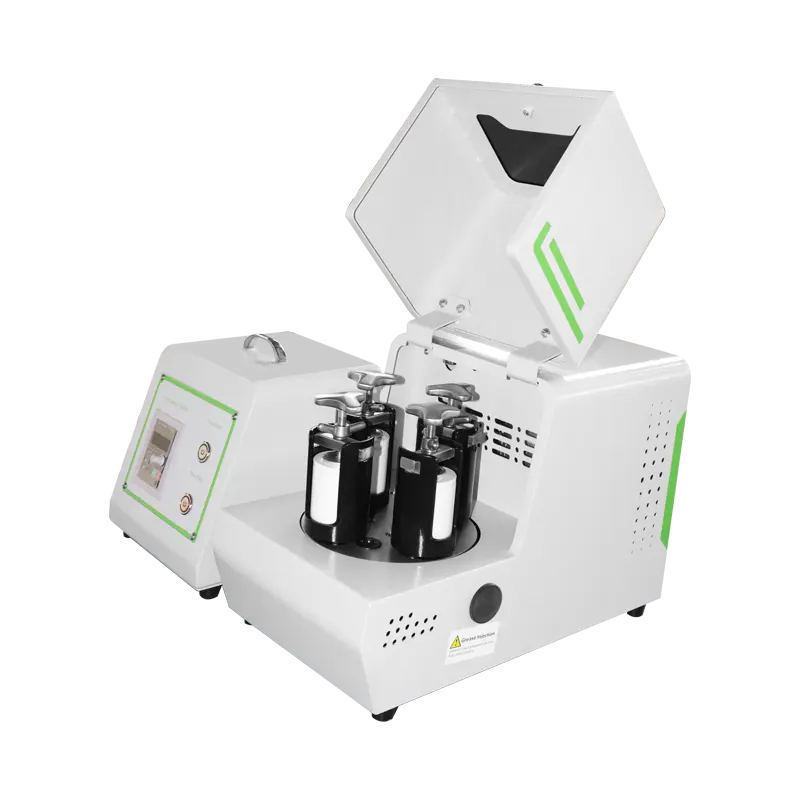
Walk into a glove box lab and you’ll see the usual trade-off: the atmosphere is perfect, but the equipment has to squeeze through a small window. You can bring powder in, but every transfer adds a chance for oxygen or moisture to sneak in. That’s where a TENCAN Micro Planetary Ball Mill starts to make sense.
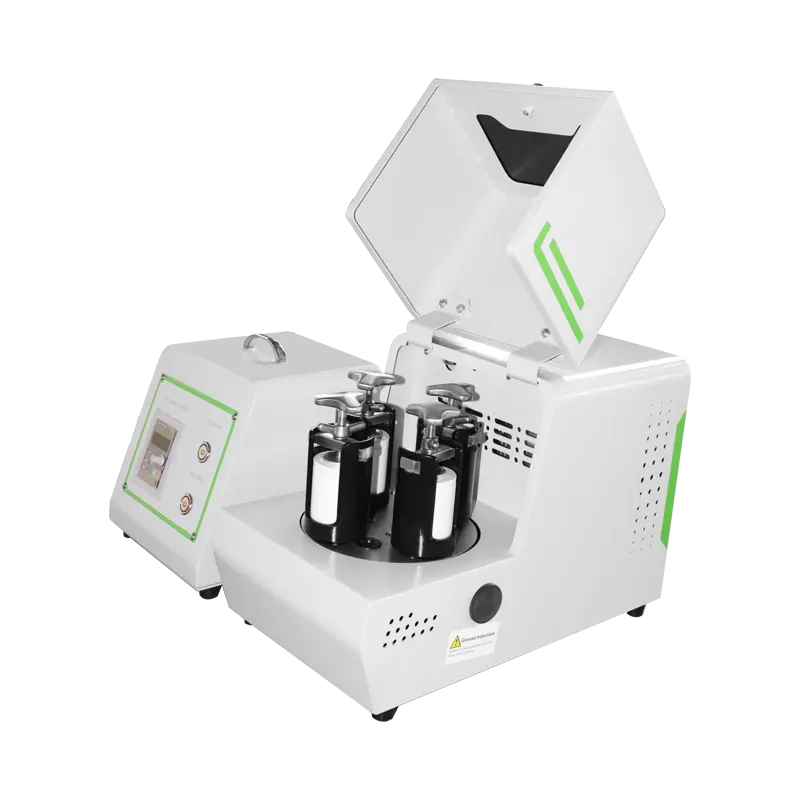
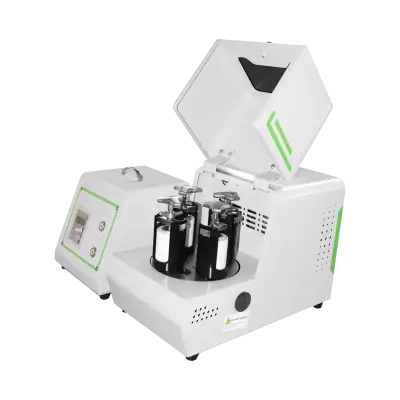
It is a small planetary mill built around the glove box idea: you place it inside the controlled environment, load the jar there, and grind without moving the sample back and forth. The “micro” part is not a marketing sticker. It points to small batches, small jars, and a footprint that has a better chance of fitting through an antechamber or onto a glove box shelf.
Why Put a Micro Planetary Ball Mill Inside a Glove Box?
If your powder is air-sensitive, hygroscopic, or just expensive, the enemy is not only the grinding process. It is the handling around it. Every time you open a jar in room air, the sample meets moisture. Every time you carry a jar across the lab, you risk contamination. Every time you transfer powder from a mill to a vial, you lose a little and expose a little.
A glove box removes that drama. It gives you a sealed workspace with a controlled atmosphere. But a standard mill usually sits outside, which means sample loading and unloading happen somewhere else. A glove box special edition mill flips that logic: the mill goes where the sample lives.
That does three useful things. First, it keeps the powder in the same atmosphere before, during, and after milling. Second, it reduces the number of open transfers. Third, it lets you work with tiny amounts without turning the whole process into a rescue mission.
Does that mean every glove box needs one? No. If you mill air-stable ceramics in large batches, a bigger mill outside the box is fine. But if you are weighing a few grams of a moisture-sensitive cathode precursor, a reactive metal powder, or an expensive pharmaceutical intermediate, the small mill inside the box is often the difference between a clean result and a costly do-over. Check the actual footprint and chamber dimensions against your box before you buy; “compact” still has to fit your setup.
The Simple Physics Behind Planetary Milling
Here’s the part that sounds fancy but is easy to picture. A planetary mill has jars mounted on a rotating disc. The disc turns one way; each jar also spins around its own axis, often in the opposite direction. Imagine a tiny planet orbiting a sun while spinning on its own axis. That’s the planetary bit.
Inside each jar are grinding balls. As the jar moves, the balls are pushed up the wall, then roll, tumble, and slam back down. You get a mix of impact and friction. Impact breaks bigger particles; friction rubs material off and helps blend the powder. If you add a liquid, you get wet grinding, which can improve dispersion and reduce dust. If you keep it dry, you get a simpler workflow but more chance of powder sticking to the jar.
The energy depends on jar size, ball size, ball density, rotation speed, and how full the jar is. You do not get a magic “correct” setting from a manual. You get a starting point and then read the powder. A mill is a tool, not a vending machine.
In a micro mill, that physics still applies. The jars are just smaller. The main difference is that the energy per batch is lower, so you have less room for sloppy parameters. A large mill can hide a mediocre recipe behind sheer mass. A small mill makes you pay attention. That is good for research, but it means you should plan a few trial runs instead of expecting the first attempt to be perfect.
What “Micro” Really Changes in Daily Work
“Micro” usually makes people think “weak.” That is the wrong picture. A micro planetary mill is not a toy; it is a small-batch tool. You use it when the sample is scarce, costly, toxic, or air-sensitive. You sacrifice batch size, not control.
Small batches change your habits:
- Dead volume matters more. If half a gram sticks to the lid, that is a big fraction of your yield.
- Ball selection matters more. A single oversized ball can dominate the grind.
- Heat matters more. Small jars can heat up quickly, especially in long runs.
- Cleaning matters more. A tiny jar with a rough corner is a contamination trap.
The upside is that you can run several small experiments without committing a mountain of material. You can test jar materials, ball sizes, and time points. You can keep a dedicated jar for a sensitive chemistry. You can put the mill in the glove box and leave it there, so the sample never sees the room.
The practical lesson: treat the micro mill as a precision instrument, not a miniature production line. Its job is to give you a clean, repeatable small batch. Scale-up comes later.
Loading a Glove Box Mill Without Making a Mess
This is where many good experiments go sideways. The grinding recipe is fine, but the loading step creates a mess, a contamination risk, or a jar that is only half full because powder went everywhere.
Start with the jar, not the powder
Clean and dry the jar and balls before they go into the box. “Dry” means actually dry, not “looks dry.” If your jar material absorbs moisture, bake it or follow the supplier’s conditioning procedure. For air-sensitive work, bring the jar in through the antechamber in a sealed bag, then open it only inside the box.
Choose the jar material for the chemistry, not just for hardness. Agate is kind to contamination-sensitive samples but can chip. Zirconia is tough and common for many powders. Alumina is useful for certain oxide systems. Tungsten carbide is dense and wears well, but it can contaminate some samples. Stainless steel is convenient, but it can react or shed iron. There is no universal jar. There is only the jar that matches your powder and your analysis.
Ball size and number
Small jars need small balls, but not tiny balls everywhere. A mix of sizes can help: larger balls provide impact, smaller balls get into the gaps and improve mixing. If all balls are the same size, you can end up with a narrow grinding action. If the balls are too large, they may bruise the jar and leave dead zones.
The fill level matters too. If you fill the jar to the brim with powder and balls, the balls cannot move. If you put in too little powder, the balls just polish the jar. A common mistake is to copy a large-mill recipe directly. In a micro jar, the same mass ratio can behave differently because the jar geometry is different.
Keep the transfer controlled
Use a funnel, a scoop, or a pre-weighed vial. Do not hover an open jar over the balance. Do not tap the jar against the glove box wall to settle powder; that is how you create a fine dust cloud. If the powder is static-prone, use a grounded work surface and move slowly. If the material is toxic, double-check your glove box gloves, your wipe-down routine, and your waste path before you open anything.
The goal is boring: get the powder into the jar, get the jar sealed, and get the mill running without adding a second experiment called “where did the sample go?”
Grinding Parameters That Actually Matter
You can spend weeks chasing the perfect speed. The better approach is to understand what each parameter does, then run a small design of experiments. Here are the levers that matter most.
| Lever | What it changes | How to approach it |
|---|---|---|
| Rotation speed | Impact energy, heat, jar wear | Start moderate, then increase in steps |
| Milling time | Particle size, contamination, heat | Sample at intervals; longer is not always better |
| Ball-to-powder ratio | Impact frequency, dead volume | Adjust with jar size; leave free space |
| Ball density and size | Impact energy and coverage | Match to sample hardness and jar material |
| Wet or dry | Dispersion, dust, cleanup | Use a liquid that will not react or dissolve the sample |
| Atmosphere | Oxidation and moisture pickup | Keep the jar sealed and equilibrate inside the box |
| Fill level | Ball movement and mixing | Do not overfill; balls need room to tumble |
Speed is not a volume knob
Higher speed usually means more energy, but it also means more heat, more jar wear, and more chance of agglomeration or phase change. If your powder is heat-sensitive, a longer run at moderate speed may be kinder than a short blast at maximum speed. If your powder is tough, increasing speed can help, but only after you have enough balls and the right fill.
Time needs sampling, not guessing
A common mistake is to run for an hour because that is what someone did in a different lab. In a micro mill, the same material can reach a different fineness in ten minutes. Run a few short trials, take small samples, and look at particle size or at least at flowability and color. If the powder starts to clump, you may have over-milled.
Wet or dry?
Wet grinding can reduce dust and improve dispersion, but it adds a drying step. If the liquid is volatile, it can pressurize the jar. If it reacts with the powder, you have changed the chemistry. Dry grinding is simpler, but fine powders can coat the jar and balls. In a glove box, solvent handling is its own challenge, so choose the simplest route that gives you a representative sample.
The heat you do not see
Small jars have less surface area and less thermal mass. A run that feels gentle outside the box may warm up inside. If your material is temperature-sensitive, use shorter cycles with pauses, or check the jar temperature after a trial. Do not open a hot jar in a glove box just to “see how it looks.” Let it cool first.
A Small Trial Plan That Saves Time
Before you commit to a full batch, run a simple trial plan. Keep everything fixed except one variable. For example, run three jars at the same speed and time but with different ball sizes. Or keep the balls fixed and vary the time in short steps. Label every jar before it goes into the box, including the date, material, and settings.
Record more than the final result. Note how the powder flowed, whether it stuck to the lid, whether the jar felt warm, and whether the color changed. These small observations often explain a strange particle-size result better than a polished report.
If you need a formal comparison, measure the starting powder and each trial with the same method. Do not compare a laser result from one lab with an image from another and call it a trend. Consistency in measurement matters as much as consistency in milling.
Contamination, Cleaning, and Cross-Batch Discipline
Contamination is the quiet failure. You can hit the right particle size and still ruin the result because the jar shed a little material, the lid trapped old powder, or the balls were cleaned with the wrong solvent.
Match the jar and ball material to the analysis. If you are measuring trace metals, a steel jar may be the wrong choice. If you are working with a hard oxide, a soft jar may wear too fast. Ask for material certificates and wear guidance from the supplier, and keep a log of which jar touched which chemistry.
Cleaning deserves its own routine. Rinse or wipe according to the material, then dry completely. For sensitive work, keep dedicated jars. A jar that once held a colored dye should not later hold a white pharmaceutical powder unless you have a validated cleaning procedure. In a glove box, cleaning solvents are a contamination source too. Use the smallest amount that does the job, and manage the waste inside the box.
Safety, Atmosphere, and the Scale-Up Trap
A planetary mill looks calm. It is not. Balls moving at speed carry real energy. Fine powders can be hazardous to inhale, and reactive powders can be worse. If you are milling a material with unknown reactivity, start with a small quantity, use a sealed jar, and follow your lab’s hazard review. Do not bypass interlocks or open a running mill.
Inside a glove box, atmosphere control is the whole point. Check that the jar seals properly before you add a reactive powder. Make sure the mill’s controls and cables are compatible with the box. Think about how you will change a jar without dragging dust through the antechamber. And plan for the boring failure modes: a jar that will not open, a powder that sticks to the lid, a sample that is too small to recover.
Then there is scale-up. A micro mill gives you a recipe, not a production plant. If you need larger batches, you will have to translate the energy input, the ball-to-powder ratio, and the heat removal. Do not simply multiply the mass and keep the same time. Run a pilot batch, measure the result, and adjust.
A Buying Checklist for Glove Box Planetary Milling
If you are comparing mills for glove box work, start with the physical fit. Measure the glove box interior, the antechamber, and the door swing. A mill that fits the shelf but cannot be serviced is not a bargain.
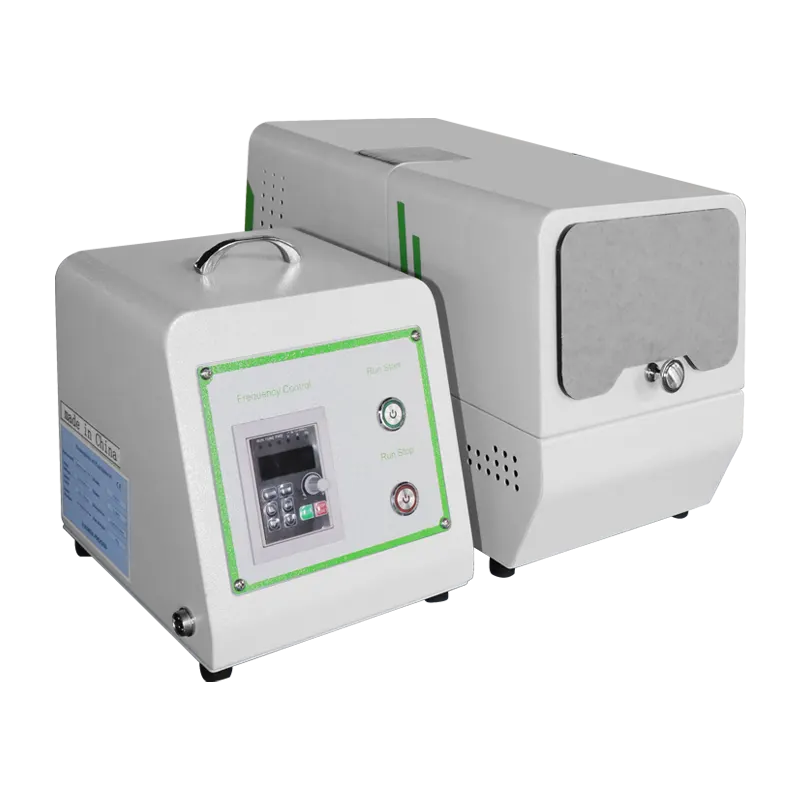
Then check the sample side: jar volume, jar material options, ball materials, sealing, and how easy it is to load without spilling. Check the control side: can you set speed and time easily with gloves on? Are the controls readable through the window? Is the cable route sensible?
Ask about cleaning and spare parts. Jars and balls are consumables; you want a supply path. Ask for documentation and practical support, not just a spec sheet. TENCAN’s Micro Planetary Ball Mill is one option to review, especially if you need a compact glove box special edition. Use the product page to confirm the exact jar volumes, speed range, dimensions, and available configurations before you commit.
Finally, run a trial with your real powder. A mill that works beautifully with a demo ceramic may behave differently with your sticky, fluffy, or heat-sensitive material. The best mill for your lab is the one that gives you a clean sample, a safe workflow, and a result you can repeat on a Tuesday when nothing else is going right.
Related Products
Get In Touch
Our professional team will reply to you within one business day. Please feel free to contact us!