
Low-Temperature Planetary Ball Milling for Heat-Sensitive Materials: A Guide

If you have ever opened a ball mill jar after a long run and found a sticky, darkened, or oddly clumped powder, you already know the uncomfortable truth: heat is one of the quietest problems in fine grinding. The jar feels warm, the sample smells different, and the particle size result no longer matches the clean powder you started with. For heat-sensitive materials, that small temperature rise can change everything—color, flavor, crystallinity, reactivity, even safety. Low-temperature planetary ball milling exists to solve that problem, not by grinding more gently in some vague way, but by managing heat as deliberately as we manage speed, time, and ball size. Let's unpack how it works, where it helps, and what to watch out for.
Why Heat Is the Hidden Enemy in Ball Milling
Every ball mill generates heat. That is not a design flaw; it is physics. When heavy balls fall onto powder and against the jar wall, mechanical energy turns into impact, friction, and vibration. Some of that energy does the useful work of breaking particles. The rest becomes heat inside the jar, around the bearings, and in the surrounding air. In a short run on a tough mineral, you may never notice. In a long run on a soft or sensitive material, the temperature can climb enough to ruin the very properties you are trying to preserve.
Where the heat comes from
Three sources matter most. First, ball-to-ball and ball-to-wall impacts create local hot spots, even if the average jar temperature looks modest. Second, friction between the grinding media and the sample adds heat continuously. Third, the motor and the jar seals contribute their own warmth, especially in high-energy planetary mills where jars move fast and change direction constantly. Because the powder is enclosed, that heat has nowhere to go quickly. The result is a small, crowded environment where temperature can rise faster than you expect.
What heat does to a sample
Heat changes materials in ways that are not always visible at first. A pharmaceutical ingredient may lose crystallinity or become sticky. A food powder may darken and lose aroma. A polymer may soften, smear, or degrade instead of fracturing. A battery material may react with air or moisture as the jar warms and then cools. Even if the powder still looks acceptable, the particle size distribution can shift, and the surface chemistry can change. That is why “it looked fine” is not a quality control method. If your sample is heat-sensitive, temperature belongs in your process record right next to milling speed and time.
What Low-Temperature Planetary Ball Milling Really Means
Low-temperature planetary ball milling is a controlled grinding process in which the sample and the grinding environment are kept cold during milling. The goal is simple: keep the material below the point where heat starts to damage it, while still delivering enough mechanical energy to reduce particle size. The “planetary” part refers to the jar motion. Each jar rotates around its own axis while the entire jar holder rotates in the opposite direction. That combined motion creates strong impact and shear forces, which is great for fine grinding but also why heat management matters so much.
It is not just grinding slowly
You can reduce heat by lowering speed or shortening runs, but that is a compromise, not a solution. Slow milling may protect the sample, yet it can also stretch a job from hours to days, produce a wider particle size distribution, or fail to break tough agglomerates. Low-temperature milling takes a different route. It keeps the mechanical energy high enough to do the job and removes heat through the jar, the milling chamber, or a cooled environment. In practice, that means you can often grind faster and still protect the material.
The cold chain is the real idea
The useful mental model is a cold chain, much like the one used for sensitive food or medicine. Cold must reach the sample, stay around the sample, and be removed in a controlled way. If only the outside of the jar is cold, the powder in the center may still overheat. If cooling stops before the run ends, the last few minutes can undo the careful work of the first hour. If the jar is opened while still cold and damp air rushes in, condensation can wet the powder. Good low-temperature milling is therefore a system: jar design, cooling capacity, run control, and handling all have to work together. When the target temperature is very low, people often call the process cryogenic grinding, but the principle is the same: remove heat faster than the milling process creates it.
How a Low Temperature Planetary Grinding Machine Works
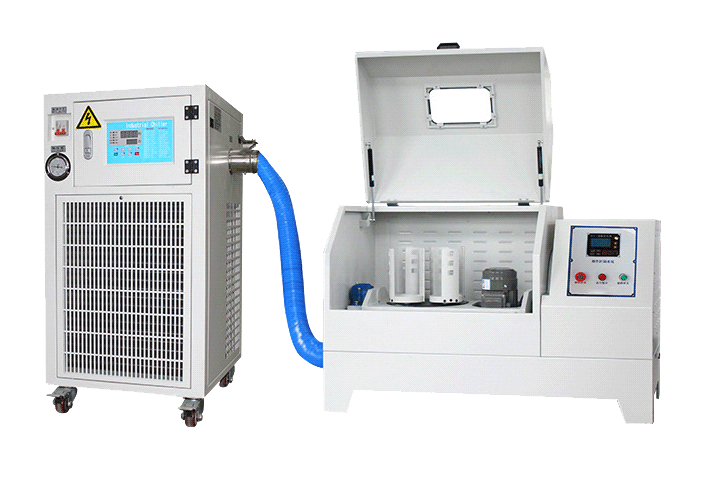
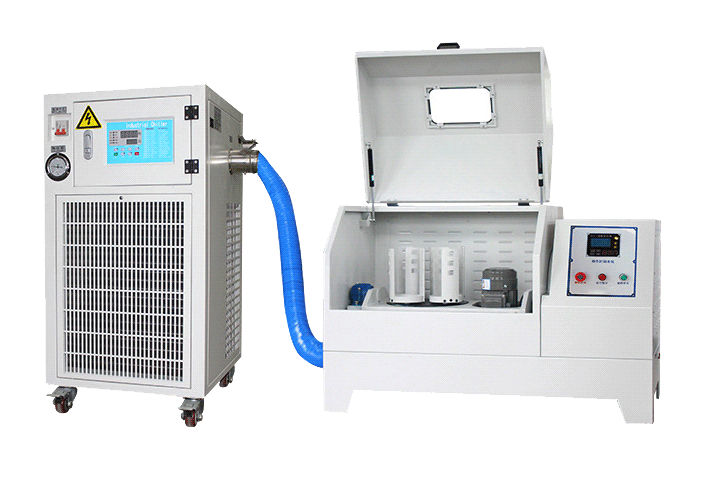
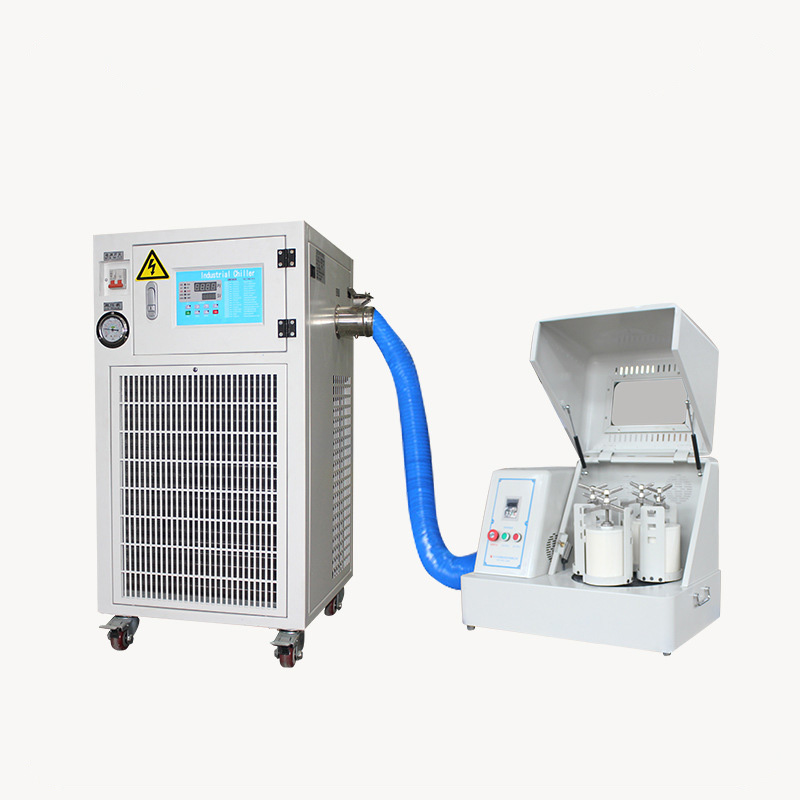
A machine built for this job is more than a standard planetary mill with a cold box bolted on. It has to move heat out of the jars without making loading, sealing, or cleaning a nightmare. TENCAN's Low temperature planetary grinding machine is designed around that balance. The exact configuration depends on the model and application, so use the product page for current technical details. The working logic, however, is easy to follow.
Loading and sealing
You choose a jar and grinding media that suit the sample, fill the jar to a sensible level, and seal it well. The seal has two jobs: keep the sample inside and keep the cooling environment outside. If the seal is poor, cold leaks away and moisture may creep in. If the jar is overfilled, the balls cannot move freely, impact energy drops, and heat can build up in a crowded load. A clean sealing surface and a consistent fill level are small habits that make a big difference.
The grinding and cooling cycle
Once the jar is in place, the machine runs the selected cycle. The planetary motion supplies impact and shear. At the same time, the cooling system removes heat from the jar area. The best cycles are not always one long grind. Intermittent milling—grinding for a set period, then pausing or cooling—can help the sample recover and keep the average temperature lower. The right pattern depends on how fragile the material is and how much energy you need. If you are unsure, start conservative and measure rather than guess.
One more practical point: jar surface temperature is not the same as powder temperature. The powder can be hotter than the outside wall, especially in the center of a full jar. Use surface readings as a warning sign, not as proof. If your process is sensitive, run a small instrumented trial or use a conservative cycle and inspect the result.
Unloading without a thermal shock
Unloading deserves as much attention as grinding. If a cold jar is opened in a warm, humid room, condensation can form on the powder and on the jar walls. That moisture may change flowability, promote clumping, or damage moisture-sensitive materials. Let the jar settle under controlled conditions, use dry handling where needed, and move quickly but calmly. The goal is not just a fine powder; it is a powder that still has the properties you wanted.
Process Choices That Decide Your Results
Two labs can use the same machine and get very different outcomes. The difference usually comes down to process choices. Here are the ones that matter most.
Milling energy versus cooling capacity
More energy usually means faster size reduction, but it also means more heat to remove. If cooling is limited, pushing speed too high simply moves the problem around. Think of it as a balance: the machine must supply enough impact to break particles, while the cooling system must remove the heat that comes with that impact. A good starting point is to choose the lowest energy level that meets your target particle size, then confirm that the sample stays within its safe temperature window.
Jar and ball material
The jar and media should be harder than the sample, chemically compatible with it, and able to handle the cooling cycle. Stainless steel is tough and common. Agate, zirconia, and tungsten carbide are used for different contamination and wear requirements. A very hard media can grind faster but may add more wear debris. A softer jar may protect the sample from contamination but wear out sooner. There is no universal “best” material; there is only the best match for your sample and your acceptance criteria.
Fill ratio, ball size, and cycle design
Fill ratio controls how freely the balls move. Too little powder can waste energy; too much can cushion impacts and trap heat. Ball size affects impact energy, with larger balls hitting harder and smaller balls creating more contact points. Cycle design ties it together. Short cycles with cooling pauses often work better for sensitive materials than one long continuous run. Record what you use, because a good result you cannot repeat is just a lucky accident.
Dry or wet grinding
Wet grinding can improve dispersion and reduce dust, but the liquid must be compatible with the sample and with low temperature. Some liquids become viscous when cold, which changes how the balls move. Dry grinding is simpler, but fine powders can coat the jar and media, reducing efficiency. If you use a grinding aid, check that it does not introduce moisture, contamination, or a reaction that only appears at low temperature. Small trials are cheaper than big surprises.
Where Low-Temperature Milling Earns Its Keep
Low-temperature planetary ball milling is not only for one industry. It shows up wherever fine particles and fragile chemistry meet. The common thread is simple: the material is valuable enough, or sensitive enough, that heat damage is not acceptable.
Pharmaceuticals and nutraceuticals
Active ingredients, excipients, and botanical extracts can be sensitive to heat. Milling can change crystallinity, solubility, or stability. Low-temperature grinding helps keep the material closer to its original state while reducing particle size. It can also make brittle, waxy, or sticky materials easier to handle. The key is to validate the process, because a nice particle size result means little if the active ingredient has degraded.
Food flavors, pigments, and sensitive ingredients
Spices, pigments, cocoa, and aromatic ingredients carry volatile compounds that heat can drive off. Grinding them cold can protect aroma and color while still producing a fine powder. The same logic applies to natural colorants and some functional food ingredients. You may not need the coldest possible process; you need a process cold enough to keep the quality you care about.
Polymers, rubbers, and battery materials
Many polymers soften or smear when they get warm, which makes grinding feel like chewing gum. Cooling makes them brittle, so they fracture instead of deforming. Rubber and elastomers can behave the same way. Battery and energy materials add another concern: some react with moisture or oxygen, so controlled handling matters as much as temperature. In these cases, low-temperature milling is often a practical way to get a clean powder without changing the material's surface chemistry.
Environmental and geological samples
Soils, sediments, ores, and other field samples can contain volatile components or heat-sensitive organic matter. Cold milling helps preserve those components while producing a representative powder for analysis. It also reduces the risk of losing volatile compounds before testing. When the result must stand up to audit or comparison, a controlled cold process is easier to defend than a hot jar and a hopeful look.
Mistakes We See Again and Again
- Cooling only the outside of the jar. The sample in the center can still get hot; check the actual process, not just the display.
- Overfilling the jar. A crowded jar reduces ball movement and can trap heat instead of removing it.
- Opening a cold jar in a humid room. Condensation can undo a good run; plan the unloading step.
- Chasing speed without measuring temperature. A faster cycle is not better if it damages the material.
- Changing several variables at once. If speed, time, fill, and media all change together, you cannot learn which one helped.
- Forgetting to record the basics. Without notes, there is no repeatability, and without repeatability, there is no process.
What to Look For in a Low Temperature Planetary Grinding Machine
Specifications matter, but they are not the whole story. A machine that looks good on paper can still be awkward to use every day. Here is what we suggest paying attention to.
Cold control, not just a cold label
Ask how the cooling is applied, how stable it stays during the run, and how the machine behaves when the load changes. A cold surface is not the same as a cold sample. Look for a design that manages the jar environment consistently, not one that only looks impressive at startup. The product page is the right place to check the current technical configuration for the machine.
Reproducibility and daily usability
You will use this machine more often than you think. Jar loading, sealing, parameter entry, and cleaning should be straightforward. Controls should make it easy to repeat a saved cycle. If every run depends on a special trick, the process will drift when different people use it. Good equipment reduces the number of decisions you have to make while tired.
Cleaning and cross-contamination
Fine powders find their way into seams, seals, and corners. A design that is easy to clean saves time and protects the next sample. Check whether jars, seals, and contact parts can be cleaned thoroughly without damaging the cooling surfaces. If you switch between materials, a cleaning procedure should be part of your standard workflow, not an afterthought.
A Simple Starting Point for Your First Trial
If you are new to low-temperature milling, resist the urge to start with a long, high-energy run. A small, careful trial teaches you more than an ambitious failure.
- Define what “good” means. Write down the target particle size, acceptable temperature, and the quality attribute you must protect—color, crystallinity, aroma, or something else.
- Start with a small sample. Use a jar and media that are appropriate for the material, and keep the fill level sensible.
- Run a short cycle and measure. Check the powder and the process conditions before scaling up. If you cannot measure temperature inside the jar, measure the jar surface and use conservative settings.
- Inspect before you celebrate. Look for discoloration, clumping, condensation, or a changed smell. Compare the result with the starting material.
- Change one thing at a time. Adjust speed, time, or fill individually so you know what caused the improvement.
Questions We Hear Most Often
Is low-temperature milling only for plastics?
No. Plastics and rubber are common because they soften when warm, but the same approach helps pharmaceuticals, food ingredients, pigments, battery materials, and environmental samples. If heat changes your material, low-temperature milling is worth considering.
Can I retrofit cooling to an existing mill?
Sometimes, but it is not just a matter of adding a cold plate. The jar, seal, chamber, and control system all interact. A retrofit may work for a gentle application, but it may also create condensation or uneven cooling. If cold control is central to your process, a machine designed for it is usually the safer route.
Does cold grinding always take longer?
Not necessarily. Cooling can make brittle materials easier to fracture, which may shorten the time needed to reach a target size. The trade-off is that you may need pauses or a more careful cycle. The total time depends on the material and the target, so measure rather than assume.
How do I know if my sample overheated?
Look for color change, odor, clumping, smearing, condensation, or a particle size distribution that does not match the run time. A sudden change in flowability can also be a clue. If the material is valuable, use a conservative trial and compare it with an unmilled reference sample.
Bringing It Back to Your Sample
Low-temperature planetary ball milling is not a magic button. It is a disciplined way to give heat-sensitive materials the mechanical energy they need without paying for it in degraded quality. The basics are not complicated: understand where heat comes from, keep the cold chain consistent, choose the jar and cycle with care, and measure what actually happens. When those pieces line up, you get something valuable—a fine powder that still behaves like the material you started with.
If you are planning a trial, start small, write down every setting, and let the sample tell you whether the process is working. You can explore the Low temperature planetary grinding machine from TENCAN to see how a dedicated cold-milling setup fits into a laboratory workflow. Your future powder—and your future self—will thank you for the extra care.
Related Products
XQM-20 20L Vertical Production Planetary Ball Mill
XQM-20
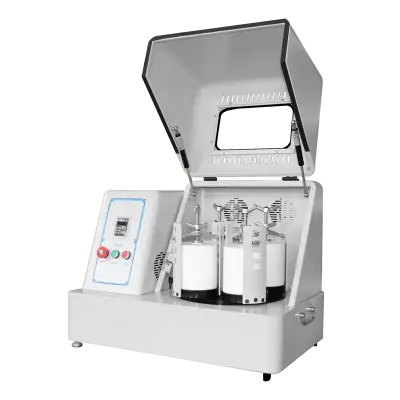
Laboratory planetary grinder
XQM
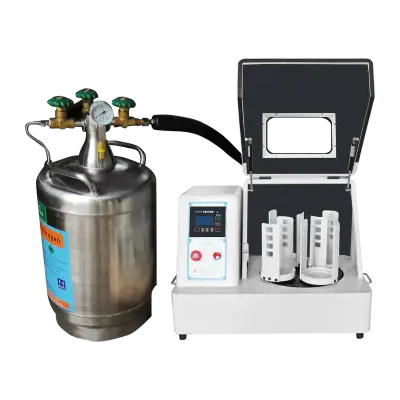
Liquid Nitrogen Planetary Ball Mill
XQM
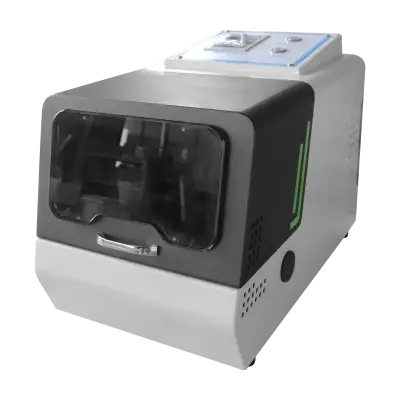
Micro Planetary Ball Mill
XQM-0.2
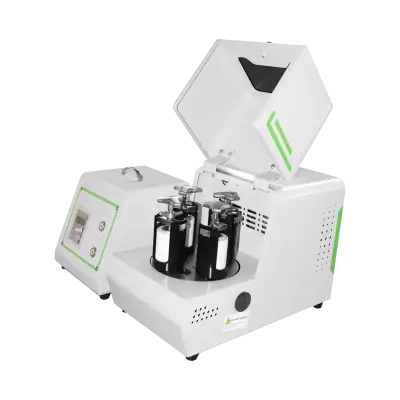
Micro Planetary Ball Mill
XQM-0.2S
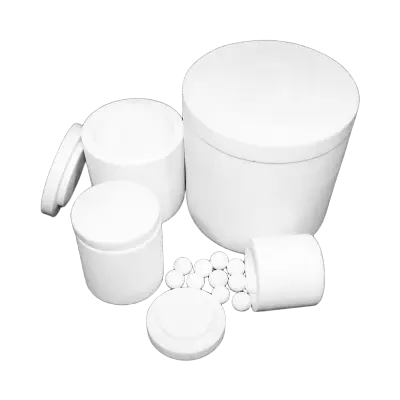
A grade Corundum planetary Mill Jar
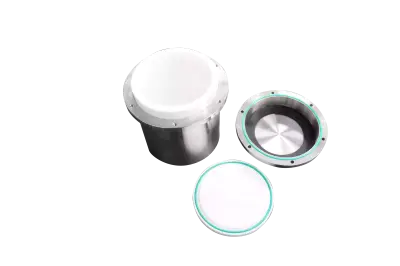
304 stainless steel lined with zirconia mill jar
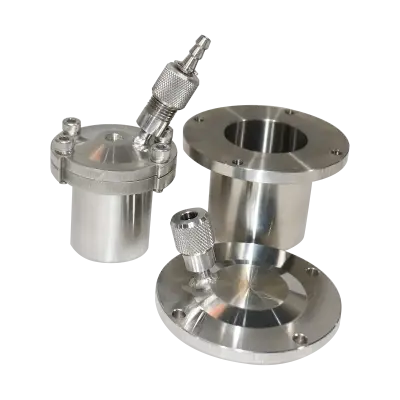
vacuum planetary mill jar
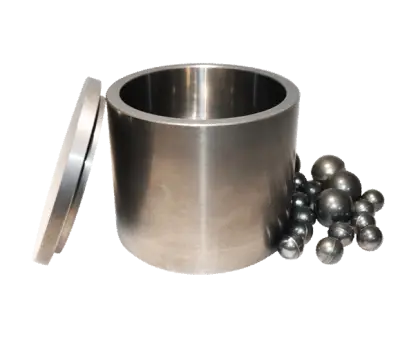
Tungsten carbide planetary mill jar
Get In Touch
Our professional team will reply to you within one business day. Please feel free to contact us!