
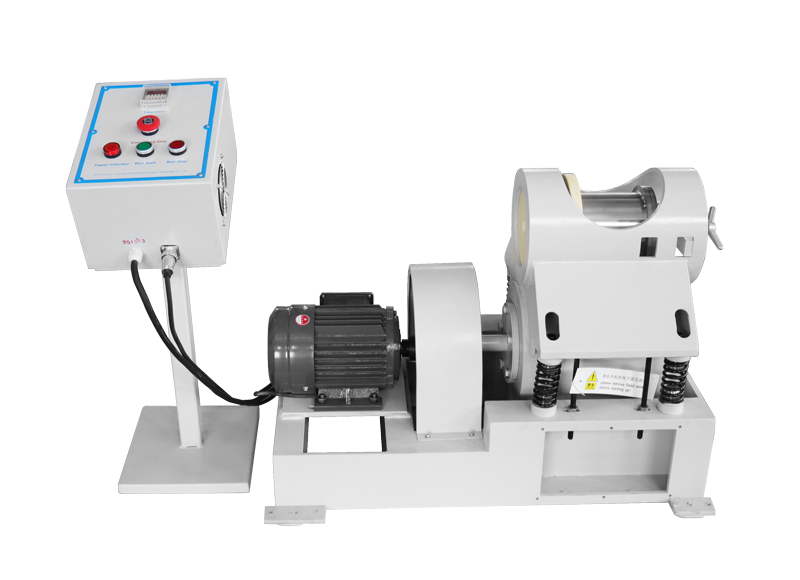
What Makes a Suitable Laboratory Vibration Ball Mill for Fine Grinding and Small-Batch Trials?

A laboratory that needs to reduce a few hundred grams of a hard or brittle material to a fine powder — quickly, repeatably and without cross-contaminating the next sample — usually ends up comparing three or four milling geometries rather than a long list of brands. Vibration ball milling is one of them. It earns its place when the priorities are short grinding times, modest sample volumes and a benchtop footprint rather than multi-litre production output.
The useful question is therefore not whether vibration milling is "good", but whether a specific vibration mill, fitted with the right jar and grinding media, can reach your target particle size on your material without altering it in ways you did not intend. This article sets out the conditions that decide fit, explains where TENCAN's laboratory vibration ball mill belongs in a shortlist, and gives you a practical briefing pack to send with a quotation request.
Why vibration milling belongs on a laboratory shortlist
Vibration ball mills generate motion by oscillating the milling jar at high frequency and small amplitude, so the grinding media inside are accelerated against each other and against the jar wall many times per second. Compared with a conventional rotary ball mill, the same mass of media does far more work per unit of time, which is why vibration mills are often chosen when a result is needed in minutes rather than hours.
That intensity has practical consequences that matter at the bench. Throughput per batch is usually small, which suits method development, screening studies and pilot quantities of expensive or scarce material. The equipment is typically compact and can sit on a normal laboratory bench or a small floor frame. Because the jar is a sealed vessel, the process can be run closed, which is helpful for materials that are air-sensitive, hygroscopic or simply dusty.
It is equally important to be clear about what a vibration mill is not. It is not a production mill, it is not a substitute for a jet mill when the target is in the low-micron or sub-micron range with tight top-cut control, and it is not the right first choice for very soft, sticky or highly elastic materials that smear rather than fracture. Being honest about those boundaries at the specification stage saves weeks later.
Five conditions that decide whether a vibration ball mill fits
Before comparing suppliers, reduce your requirement to five questions. They are the same questions a competent applications engineer will ask you, and having answers ready shortens the loop between inquiry and a working configuration.
1. Target particle size versus starting particle size
Milling is a size-reduction chain, and the achievable endpoint depends heavily on where you start. A feed that is already a coarse powder behaves very differently from chunky pieces or fibrous material. Define the target as a distribution rather than a single number — for example a median size plus an acceptable top cut — and state how you will measure it. Laser diffraction, sieving and microscopy do not agree with each other by default, so naming the method prevents a great deal of disagreement about whether a trial succeeded.
2. Sample volume and daily throughput
Vibration mills are batch machines. The right question is how many grams per batch you need, how many batches per day, and how much material you must keep in reserve for repeat runs. A method that consumes 50 g per trial is expensive if your active material costs hundreds of dollars per gramme, and it is slow if you need twenty data points a week. Write down grams per batch, batches per day and the number of distinct materials you will handle in a typical month; that profile drives the choice of jar size and the number of jars you will want on the shelf.
3. Sensitivity to heat, oxidation and contamination
High-frequency milling puts energy into the powder quickly, and some of it becomes heat. For polymers, some pharmaceuticals, hydrates and certain inorganic pigments, that local temperature rise is the limiting factor — you may need shorter cycles with pauses, a lower energy setting, or a cooled environment. Separately, consider contamination: the jar and media wear against the charge, so the jar material must be acceptable to your specification. Grinding in a jar made of the same family of material as the sample, or in an inert, hard ceramic, is a common way to keep trace elements inside tolerance. If oxidation is a concern, ask about the possibility of an inert-gas atmosphere or handling the jar in a glovebox.
4. Cleaning and cross-contamination between samples
In a multi-user laboratory, the practical bottleneck is often not grinding time but cleaning time. Jars that are easy to empty, that tolerate the solvents your protocol allows, and that can be dedicated to one material class will save more operator hours than a marginally faster mill. Decide in advance whether you will dedicate jars per material, and budget for the number of jars that implies. This is also a safety point: fine powders are harder to contain than coarse ones, so plan where jars are opened and how waste media are handled.
5. Footprint, services and operator attention
A vibration mill is generally a compact instrument, but check the working envelope including jar exchange, the electrical supply available in your laboratory, and whether the unit needs to be clamped or bolted down. Noise and vibration transmitted to the bench are worth confirming with a demonstration, particularly if the mill will sit in a shared or open-plan space. Finally, ask how much attention the run needs: unattended operation for a fixed cycle frees an operator, whereas a process that must be monitored continuously changes your staffing model.
TENCAN laboratory vibration ball mill: matching equipment to the job
TENCAN supplies a laboratory vibration ball mill within its grinding series, positioned for benchtop size reduction and small-batch trials rather than plant-scale comminution. That positioning is the reason to consider it early: the specification conversation starts with your sample and your target, not with a catalogue number that must then be adapted.
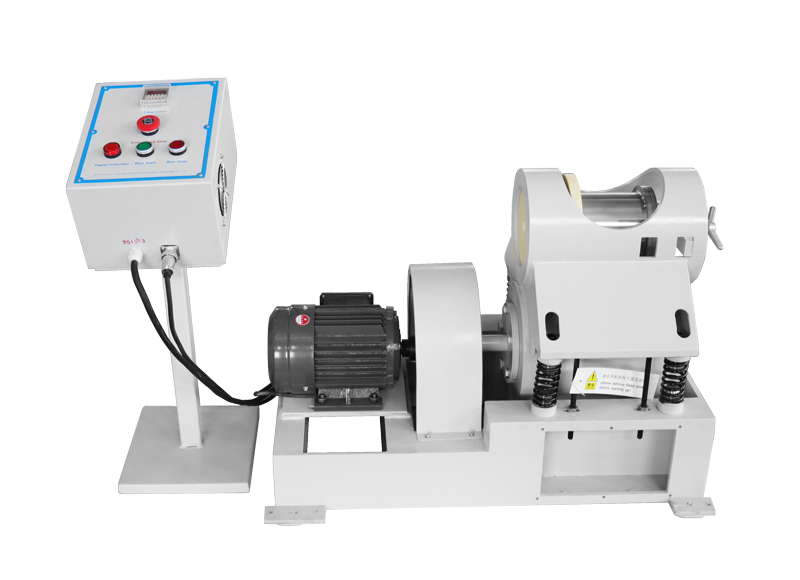
The most useful way to work with TENCAN is to treat the mill as a configurable system. The vessel, the grinding media, the charge ratio, the running time and the way the sample is loaded all interact, and a supplier who will discuss those variables with you — rather than quoting a single fixed package — is far more likely to deliver a configuration that actually reaches your target. Full product information for the laboratory vibration ball mill is published on the TENCAN site: laboratory vibration ball mill.
Where this mill fits best is the middle ground: materials that are brittle enough to fracture rather than deform, batch sizes in the tens to low hundreds of grammes, and programmes where several short runs per day are more valuable than one long one. It also suits laboratories that want a dedicated unit for a specific material family so that the jar, media and cleaning routine never have to be renegotiated between users.
Where it fits less well is equally worth stating. If your target requires strict top-cut control in the low-micron range, or if you need kilograms per hour, the honest answer is that a different class of equipment should lead the project and a vibration mill may serve only as a preparatory step. TENCAN's grinding range covers more than one geometry for exactly this reason, and a supplier who tells you when a different principle is the better answer is more useful than one who does not.
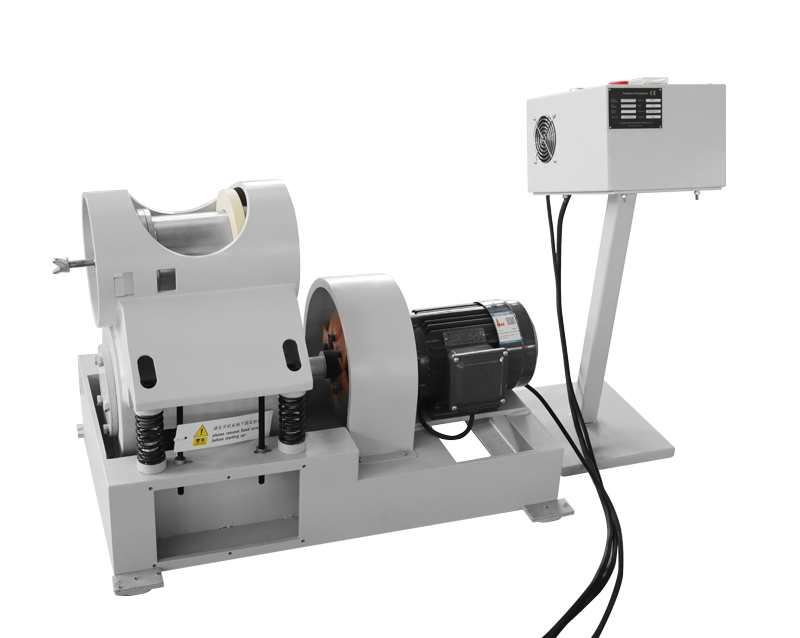
Distinguishing a vibration mill from neighbouring geometries
Shortlists go wrong when equipment of different working principles is treated as interchangeable. A high-energy planetary mill and a vibration mill both use balls in a jar, but they deliver energy differently and therefore behave differently on heat-sensitive or ductile materials. A roller or jar-rolling mill is gentler and slower, and is often preferred where contamination from jar wear must be minimised or where the material must not be shocked. A mixer mill is built around high-throughput small vials rather than a single larger jar, which changes the economics of method development entirely.
Within a single shortlist, compare candidates at the same level. Compare whole instruments with whole instruments, and compare jars or media as accessories, not as alternatives to a machine. It is also worth noting that a supplier's range may include several grinding geometries; that does not make them substitutes for one another, and a brief that asks for "the fastest mill" without stating the material and target usually produces a recommendation that has to be revised later.
Fit assessment at a glance
The table below is deliberately qualitative. It maps common laboratory requirements to how a vibration ball mill typically performs, and what you should confirm before committing. No numeric ratings are implied, because suitability depends on your material and target rather than on a generic score.
| Requirement profile | Typical fit with a laboratory vibration mill | What to confirm before ordering |
|---|---|---|
| Fast reduction of brittle material to a fine laboratory powder | Strong fit; short cycles are the main advantage | Trial on your material with your target measurement method |
| Small batches for screening or method development | Strong fit; batch sizes are modest by design | Grams per batch and the number of jars you will dedicate |
| Heat-sensitive or hydrate-forming material | Possible with short cycles, pauses or cooling provisions | Whether intermittent running is supported and how temperature is monitored |
| Contamination-critical specification | Depends entirely on jar and media selection | Jar and ball materials offered, and their effect on trace elements |
| Air- or moisture-sensitive powder | Workable with sealed jars and controlled loading | Jar sealing, inert-atmosphere options, glovebox handling |
| Kilogram-per-hour production | Not the right class of equipment | Scale-up route and the appropriate mill type for the volume |
Configuration variables that change the result
Once the instrument class is settled, almost all of the remaining performance comes from configuration. Discuss these items explicitly, because two laboratories running the "same" mill can obtain very different distributions.
- Jar material and volume. The vessel must be hard enough not to wear unduly, compatible with your material, and easy to clean. Volume sets the practical batch size and the headspace available for media movement.
- Media material, diameter and number. Larger balls deliver more impact per collision; smaller balls create more contact points and generally finer grinding. Media density has a large effect on energy transfer.
- Charge and fill level. Overfilling dampens media motion and slows grinding; underfilling wastes capacity. The right ratio is material-specific and should be established by trial.
- Cycle time and running mode. Continuous runs are simpler; intermittent runs with cooling pauses protect heat-sensitive powders. Record what you actually used, so the method is reproducible.
- Loading and unloading practice. How the sample is introduced, whether it is pre-dried, and how the jar is emptied all affect both recovery and contamination.
For all of these, the correct values are the ones your trial demonstrates on your material. A supplier can narrow the starting range, but only a test with your own powder and your own analytical method confirms the endpoint.
What to send TENCAN with your inquiry
A well-prepared inquiry typically shortens the path to a working configuration, because it removes the round of questions that would otherwise come first. Include the following in a single message or attached sheet.
- Sample description: material name or class, approximate starting particle size, hardness or brittleness, moisture content, and any safety data relevant to handling fine powder.
- Target: required median and top-cut size, the analytical method you will use, and the acceptance criterion for the trial.
- Quantity: grams per batch, batches per day or week, total material available for trials, and how many distinct materials the mill must handle.
- Workspace and services: bench or floor space, available electrical supply, ventilation or fume-hood access, and noise constraints in the room.
- Contamination limits: elements or compounds that must not be introduced, and any preferred jar or media material already validated in your protocol.
- Atmosphere and temperature: whether inert gas, vacuum or cooled grinding is needed, and the maximum temperature the material tolerates.
- Downstream steps: whether the powder goes to sieving, pressing, sintering, dispersion or analysis, since the next process often constrains the acceptable distribution.
- Documentation needs: what you require for internal qualification, such as drawings, materials of construction or operating instructions.
With that pack, the discussion moves quickly from "which mill" to "which jar, which media, how long, and how do we prove it". That is the point at which a quotation becomes meaningful.
Verifying performance before you commit
Ask for a trial on your own material rather than a demonstration on a reference powder. A trial should specify the configuration used, the number of replicate runs, and the measurement method for the product. Repeatability matters as much as the best single result: if three runs scatter widely, the method is not yet under control and the configuration needs work.
Plan the acceptance criteria in advance. A simple structure works well: a target distribution, a permitted temperature rise, a contamination check if relevant, and a recovery figure that is acceptable for the value of the material. If the trial misses, the useful outcome is a documented direction — smaller media, a different jar material, a shorter cycle with pauses — rather than a vague promise.
Finally, think about how the method will be transferred. Write down the jar type, media specification, charge, time and any pre-treatment, and keep a reference sample from the approved run. When a new operator takes over or a material batch changes, that record is what allows the laboratory to tell whether the mill, the material or the procedure has moved.
Frequently asked questions
Can one vibration mill handle both hard ceramics and soft polymers?
Sometimes, but the configuration differs enough that the two materials should be treated as separate methods. Hard ceramics favour denser media and benefit from the mill's impact energy; soft polymers are more likely to deform or heat-degrade and usually need shorter cycles, gentler settings and possibly cooling. Dedicated jars also reduce the risk of cross-contamination between such different material classes.
How do I know whether I need a vibration mill or a planetary mill?
The decision usually turns on energy density and batch format. Planetary mills are often chosen where very high energy per gram is needed in small vials; vibration mills are often chosen for straightforward, rapid reduction of a single batch in a sealed jar with simple operation. Compare them on your material with your target measurement, and treat published comparisons on other materials as orientation only.
Is inert-atmosphere grinding possible?
It depends on the jar design and the handling routine offered for the specific model, so ask directly rather than assuming. In many laboratories the practical solution is to load and seal the jar inside a glovebox and transfer it to the mill without opening it. Confirm that the jar seal tolerates the vibration and the cycle length you intend to use.
What is a realistic first trial size?
Choose the smallest quantity that still allows you to measure the product reliably with your chosen method, and that is large enough to be representative of your feed. Running several small trials across a range of times is usually more informative than one long run, because it shows the trajectory of size reduction for your material.
Sources and Further Reading
TENCAN, laboratory vibration ball mill product page: https://www.planetaryballmills.com/products/grinding-series/vibration-ball-mill/lab-vibration-ball-mill.html
TENCAN grinding series, product family overview available from the same site: laboratory vibration ball mill, grinding series
Statements about operating principles and selection criteria in this article are general technical guidance for laboratory size reduction. Equipment-specific figures, jar options and operating limits should be confirmed with TENCAN for the model you intend to purchase.
Related Products
Get In Touch
Our professional team will reply to you within one business day. Please feel free to contact us!