
Glove Box for Chemistry Explained

There's a good chance you've seen one: a glass-fronted cabinet with two thick black gloves poking out, humming quietly in a lab corner. For organic chemists, battery researchers, and anyone handling powders that hate moisture, it's often the most valuable equipment in the room. Searching for a glove box for chemistry? Here's what really matters.
What a glove box for chemistry actually does
A glove box is a sealed enclosure with a transparent window and a pair of long gloves. Your hands go in, the outside air stays out. The clever part isn't the gloves, it's the atmosphere: most chemistry boxes run on nitrogen or argon and hold oxygen and moisture at levels measured in parts per million.
Why care? Plenty of chemistry dies on contact with air. Organolithium reagents react violently with water, Grignard solutions lose activity in humidity, and sodium metal grows an oxide skin. Hygroscopic salts and catalyst powders cake into lumps that never disperse again.
How the atmosphere inside stays clean
The antechamber does the heavy lifting
Everything you bring in passes through a small airlock called the antechamber. Load it, seal it, pump the air out, refill with inert gas, repeat. Two or three cycles bring the air level low enough for most work. Larger boxes add a transfer chamber for a hot plate or a rack of samples.
Circulation and purification
Inside, a fan pushes box gas through a purifier. A copper catalyst grabs oxygen, a molecular sieve bed grabs water. When those beds saturate, you regenerate them by heating under a hydrogen mixture, which is a job worth planning around your experiments. Sensors show oxygen and moisture readings all day.
Pressure, gloves, and small details
The box runs slightly above room pressure, so a tiny leak pushes gas out instead of pulling air in. Gloves are the part you touch most: thick enough to protect you, thin enough to feel a spatula, long enough to reach the far corner. Keep nitrile liners on and sharp tools away from the ports.
What chemists actually do inside
- Weigh, store and dispense air-sensitive reagents without watching them degrade.
- Run moisture-sensitive reactions such as metalations and catalyst activation.
- Assemble lithium-ion and lithium-metal cells where a trace of water ruins the interface.
- Keep hygroscopic powders, including metal-organic frameworks, free-flowing.
- Contain toxic materials when the box works as a barrier, not only as an atmosphere.
The powder problem nobody warns you about
Fine powders are the awkward guest in a sealed enclosure. They carry static, they float, they stick to the window, and they creep into gloves and seals. Moving powder in and out cleanly takes practice: use sealed jars, purge them in the antechamber, and open them only after the readings settle.
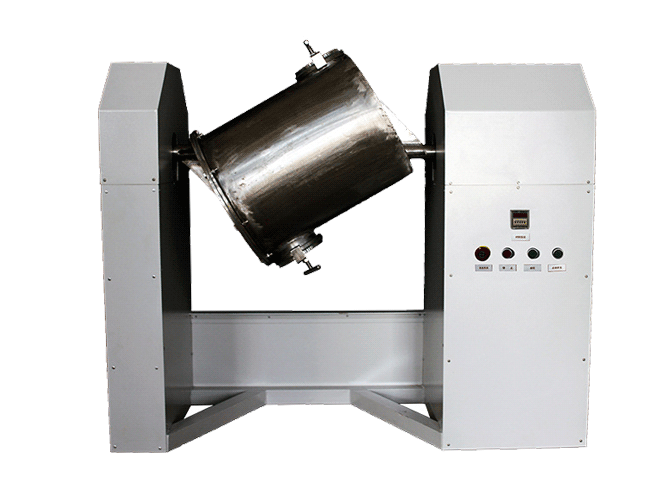
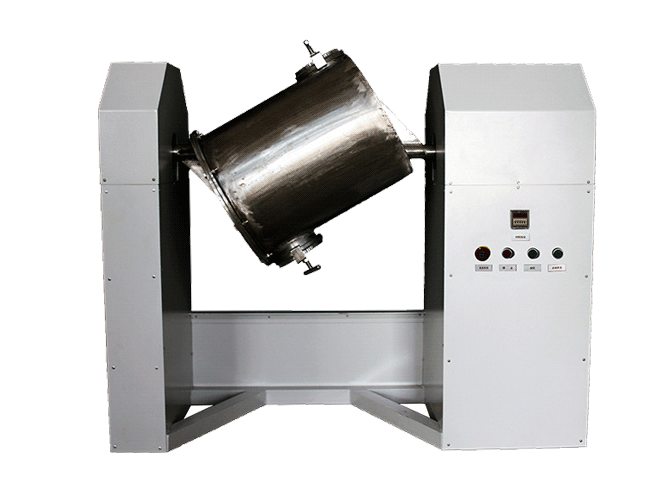
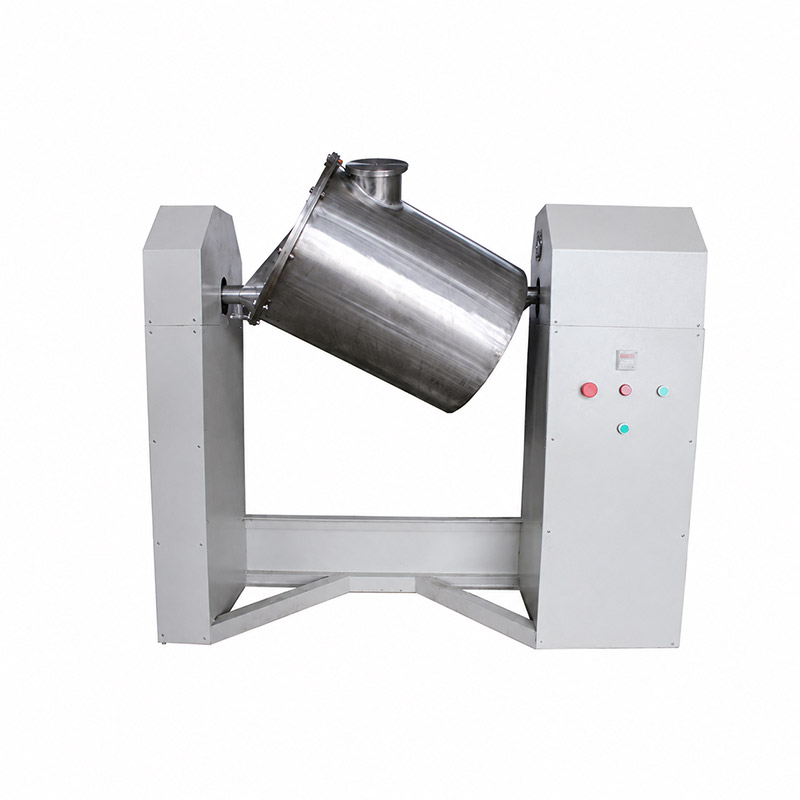
Then comes blending. Dry a powder carefully, mix it in a way that heats or grinds it, and you can undo that work in minutes, so a gentle method usually wins. The TENCAN oblique mixer is built for exactly that job: its drum turns on a tilted axis, so powder tumbles and folds instead of being crushed, giving a uniform blend with little heat and little wear on fragile particles. Many labs dry and store material in the box, blend it in the mixer, then bring the sealed container straight back inside.
Habits that keep a box healthy
- Never carry wet glassware inside; dry it first.
- Cycle the antechamber properly, because a rushed transfer costs purifier life.
- Log oxygen and moisture readings so a slow leak shows up early.
- Clean spills while they are small; powders spread fast.
- Replace gloves before they crack, not after.
Quick answers to common questions
Glove box or Schlenk line?
A Schlenk line handles gases and liquids well and costs far less. A box wins when you need to weigh solids or run several samples at once.
Is a glove bag enough?
For a one-off transfer, yes. A bag cannot hold a low-oxygen atmosphere for long, so it suits short jobs rather than routine storage.
Can I blend powders without opening the box?
Sealed jars help. A tumbler-style powder mixer lets you blend outside the box and return the sealed jar afterwards.
A glove box is not a magic cabinet, it is a controlled environment that rewards people who treat it that way. Keep the atmosphere clean, keep powders dry, and choose a mixer that blends without punishing the particles.
Related Products
Get In Touch
Our professional team will reply to you within one business day. Please feel free to contact us!