
Lab Jaw Crusher Guide: How to Crush Hard Samples Fast Without Losing Accuracy

What a Lab Jaw Crusher Actually Does
If your sample arrives as a fist-sized rock, a lump of ore, or a chunk of fired ceramic, no ball mill on earth will thank you for dropping it in whole. Mills grind well when they are fed small, and they wear out fast when they are fed big. That is the entire reason first-stage size reduction exists — and the reason the lab jaw crusher has earned a permanent spot on benches in geology, mining, ceramics, cement, glass, and metallurgy labs.
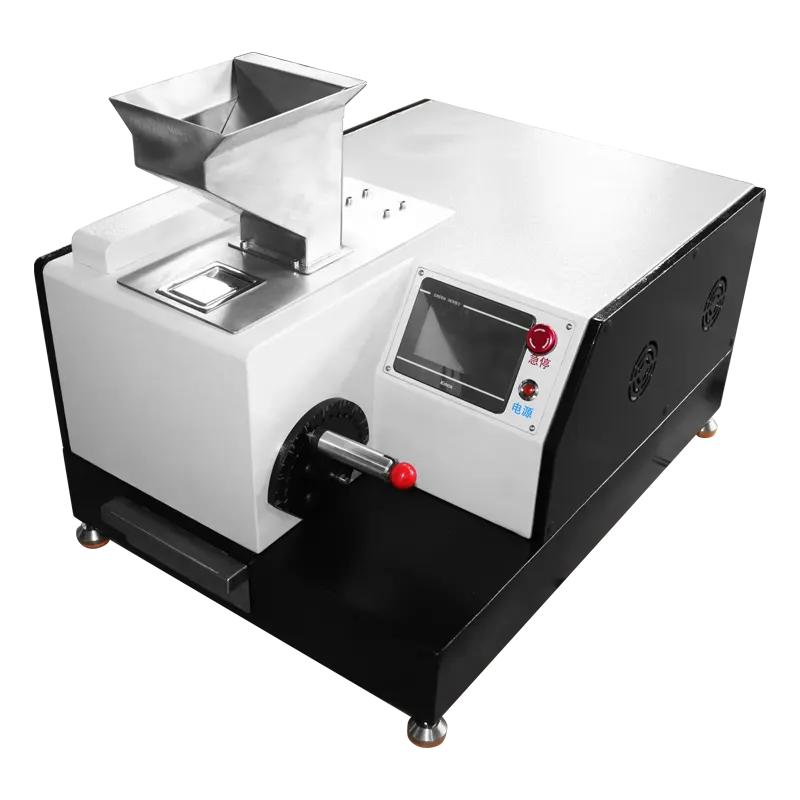
A lab jaw crusher is a compression machine. Two heavy plates — the jaws — face each other inside a V-shaped chamber. One plate stays still. The other swings back and forth, driven by an eccentric shaft, and every forward stroke squeezes whatever is sitting between them. Rock is tough in the middle but surprisingly weak at the edges of a squeeze, so the piece cracks, then splits. The fragments fall lower into the V, get squeezed again, and finally drop out the bottom once they are small enough to pass the gap.
That bottom gap is called the closed-side setting, and it is the single most important number on the machine, because it decides how fine your product comes out. The frame, the flywheels, and the motor exist for one purpose: keeping that gap working thousands of strokes an hour without cracking.
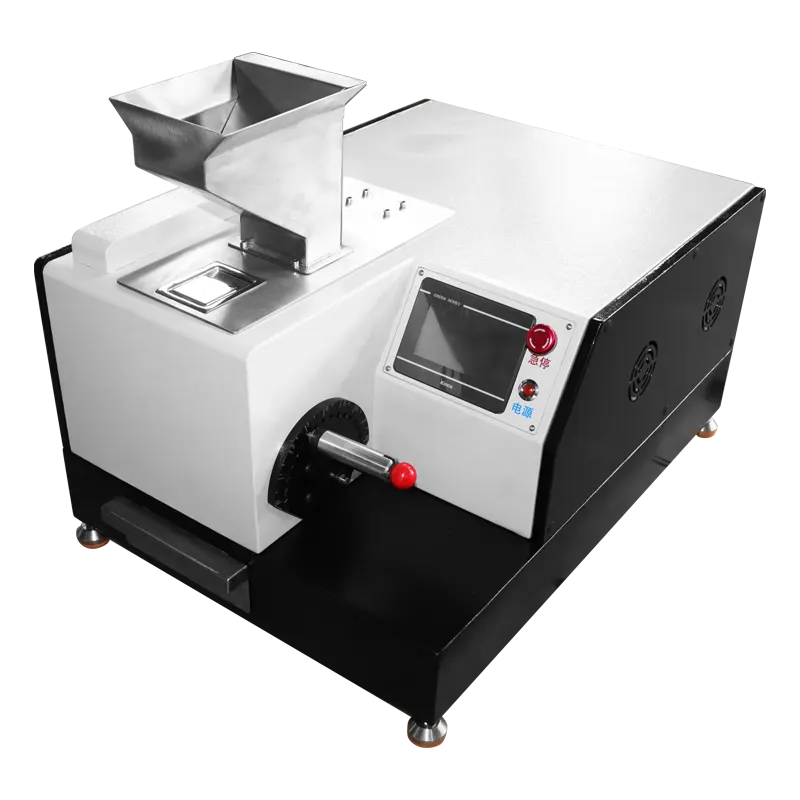
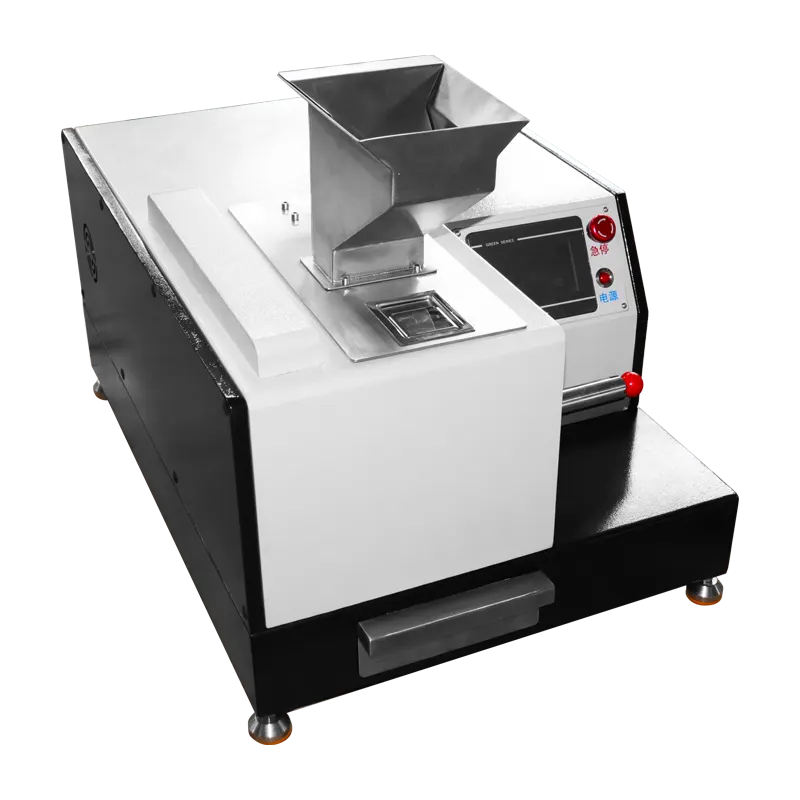
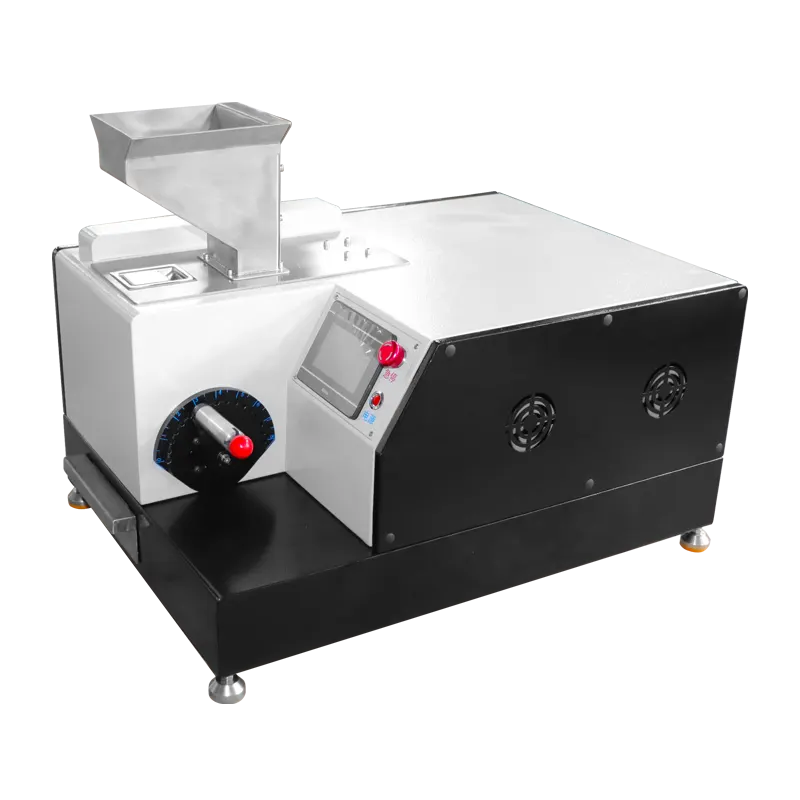
At TENCAN (Changsha Tianchuang Powder Technology Co., Ltd.), the lab jaw crusher is built for exactly this first step — turning lumpy, brittle feedstock into uniform fragments that your next mill, riffle splitter, or analytical instrument can actually work with.
Why Crushing Comes First, Not Last
Think of sample preparation as a staircase. A jaw crusher sits on the top step, and it is not trying to make powder. It is trying to make powder possible. Everything downstream — milling, splitting, sieving, analysis — inherits the quality of that first step.
Feed a planetary ball mill a lump of hard rock and three things go wrong at once. The grinding jar and balls take a beating they were never designed for. Grinding time stretches from minutes into hours. And the particle size distribution comes out lumpy and unpredictable, because a handful of oversized pieces dominate the grind. Pre-crushing removes all three problems before they start.
There is an economic argument too. Crushing is violent by nature, and every surface doing the crushing slowly wears away into your sample. Do that coarse, high-wear work on a rugged crusher, and keep the gentler, cleaner, more precise mill for the final grind. Your consumables last longer and your blanks stay honest.
Finally, there is simple throughput. A crusher that handles kilograms per hour makes a mill's job small enough to be quick, which means more samples per day and less time waiting around for a jar to finish.
When a jaw crusher is the wrong tool
Plenty of materials should never meet a jaw crusher. Soft, sticky, clay-rich samples smear and pack into the chamber instead of breaking. Fibrous material — plant stems, wood, textiles — compresses under the jaws and springs back. Heat-sensitive substances can be scorched or smeared by friction. And if your material is already finer than the discharge setting you need, you are adding wear for absolutely nothing.
The rule of thumb is short: jaw crushers love hard, brittle, and dry. Everything else deserves a different machine.
Inside the Machine: How the Crushing Actually Happens
Strip away the paint and a lab jaw crusher is a fairly simple piece of engineering. A fixed jaw is bolted to the frame. A moving jaw hangs on a pivot. A rotating eccentric shaft pushes that moving jaw forward on every turn. A toggle plate at the bottom links the jaw to the frame and doubles as a mechanical fuse. Two heavy flywheels smooth out the stroke so the motor is not fighting a stop-start load all day long.
The beauty of the design is that it converts a fast rotating motion into a slow, enormously powerful squeeze — the kind of force that shatters rock, delivered at a speed gentle enough that the machine survives it millions of times.
How much size reduction do you get in a single pass? A jaw crusher typically takes a lump and returns fragments a fraction of the original size, which is why it is called a primary or coarse crusher. Push it too far in one go and you do not get finer powder, you get more wear, more heat, and more fines compacting into the corners of the chamber. The reliable approach is one honest reduction at the crusher, then let a mill take it from there.
The toggle mechanism, in plain language
The toggle plate is a flat bar linking the moving jaw to the frame. When the eccentric shaft drives the jaw forward, the toggle transmits the force. When the jaw swings back, the toggle lets it. And if something genuinely unbreakable — a steel bolt, a stray chunk of tungsten carbide — lands in the chamber, the toggle is designed to snap before the frame does. You replace a cheap plate instead of an entire machine. That is not a design flaw. That is the design.
Jaw plates: the parts that take the beating
Jaw plates are consumables, and their material decides both how long they last and what they leave behind in your sample. Manganese or hardened tool steel is the workhorse choice for general rock and ore. Stainless steel suits samples that will be checked for trace metals. Ceramic, zirconia, or tungsten carbide plates cost more but keep iron and chromium contamination out of the picture — which matters enormously if the sample is heading for an ICP instrument afterwards.
Plate profile matters too. Corrugated or toothed plates bite better on hard, slippery rock. Smooth plates deliver a cleaner, more uniform product. Choose the profile for your material, not for the photograph in the catalogue.
Reading a Spec Sheet Without Getting Lost
Spec sheets are written by engineers for engineers, which is why they can feel like a wall of numbers with no obvious entry point. Here is what each line actually means for the work you do.
| Parameter | What it means | Why you care |
|---|---|---|
| Feed opening | The size of the mouth of the V | Sets the largest lump the machine can accept |
| Discharge setting | The adjustable gap at the bottom | Controls how fine the product comes out |
| Throughput | Material processed per hour | Determines how long a batch takes |
| Jaw plate material | Steel, stainless, ceramic, carbide | Controls wear life and contamination |
| Motor power | Drive rating | Affects capability, power supply, and noise |
Feed opening and maximum feed size
The feed opening is the mouth of the V, measured as width by depth. Maximum feed size is the largest lump the machine will swallow comfortably, and it is always smaller than the opening itself — often noticeably so. Oversized lumps do not get crushed; they perch on top of the jaws, bounce, and eventually jam the chamber. If your field samples arrive at a predictable size, buy a machine whose feed opening comfortably exceeds it, then add a little margin. Margin is cheaper than downtime.
Discharge setting and final fineness
The discharge setting is adjustable, and it is the dial you will actually turn. Tighten it and you get a finer product with lower throughput and faster plate wear. Open it up and the machine eats faster but leaves coarser fragments that may need a second pass. Most labs find one or two settings that suit their routine and leave them alone. Chasing the finest possible setting on a first-stage crusher is usually a waste of consumables.
Throughput: what the number really means
Rated capacity is measured on friendly material under friendly conditions — free-flowing, brittle, and dry. Real throughput depends on how hard your rock is, how big the feed is, and how finely you are crushing. Treat the rated figure as a ceiling rather than a promise, and size the machine so a normal day's work uses roughly half of it. That leaves headroom for the hard samples that always turn up eventually.
Motor power, footprint, and the room you actually have
Motor power tells you about capability, but it also tells you about your electrical supply, the weight your bench can carry, and the noise your neighbours will hear through the wall. A benchtop unit and a floor-standing unit are different animals with different appetites. Check voltage, footprint, and whether the machine needs to be bolted to the floor before you fall in love with the throughput figure.
Contamination: The Quiet Enemy of Good Data
Every surface that touches your sample donates a little of itself to your result. Most of the time it does not matter. Occasionally it ruins an analysis. If you are measuring iron, chromium, or manganese at trace levels, a tool steel jaw is a contamination source quietly writing numbers into your data set.
The fix is not exotic. Match the plate material to the elements you actually care about. Run a blank through the machine after cleaning and see what shows up. Keep a dedicated set of plates for trace-level work. Labs that take this seriously treat their crusher the way they treat their balance — as a measuring instrument, not a workshop tool.
If you only remember one sentence from this article, make it this one: the crusher is part of your analytical chain, not just a piece of machinery sitting in the corner of the preparation room.
Setting Up and Running: Habits That Pay Off
Most crusher problems are not mechanical failures. They are habits. A few small routines separate a machine that runs for a decade from one that limps along for two years.
Before you press start
Check that the chamber is empty and clean, that the plates and toggle are seated correctly, and that the discharge setting is where you want it. Confirm the sample is dry and within the maximum feed size. Damp, sticky material is the number one cause of jams, and clearing a jammed chamber is nobody's idea of a pleasant afternoon.
Feeding technique that protects your machine
Feed steadily, centrally, and a little at a time. Dumping an entire bucket in at once is the fastest route to a jam and to uneven plate wear, because the load piles up on one side of the chamber. Let the machine run empty for a few seconds after the last lump passes through, so nothing is left sitting between the jaws. And never use your fingers or a screwdriver to poke material down while the machine is running — a moment of impatience is not worth a hand.
Cleaning between samples
Cross-contamination is the error nobody notices until a result looks strange and nobody can explain why. Brush the chamber out thoroughly, then run a small portion of the next sample through as a purge and discard it. When you switch between very different materials — a sulphide ore and a limestone, say — take the extra two minutes and do it properly. It is the cheapest quality control you will ever buy.
Maintenance That Keeps a Jaw Crusher Alive for Years
Jaw crushers are rugged, but they are not immortal, and nearly every failure traces back to something ignored a month too long. The good news is that the maintenance list is short and boring, which is exactly how you want it.
Every session: check that the chamber is clear, listen for new noises, and look for material building up underneath the machine. Every week: inspect the jaw plates for grooves, chips, or uneven wear, and check the toggle plate for cracks. Every month: grease the bearings and toggle seats according to the manual, check belt tension, and confirm the discharge setting has not drifted.
Replace plates once the profile has worn flat. Waiting longer costs you product quality and forces the machine to work harder for the same result. Keep a spare toggle plate on the shelf — it is inexpensive, it takes minutes to fit, and it is the difference between a two-hour setback and a two-week one.
Write your maintenance down. A simple log with dates, settings, and plate changes turns guesswork into a pattern you can actually see — and it tells you far more about your machine than any brochure ever will.
Five Problems You Will Eventually Meet
- The chamber jams. Usually oversized feed, damp material, or too tight a discharge setting. Stop the machine, clear it safely, then fix the cause rather than the symptom.
- Product size drifts. Worn plates or a discharge setting that has moved. Inspect, adjust, replace.
- The product comes out uneven. Feed is landing on one side of the chamber. Feed more centrally and more slowly.
- New knocking or squealing. Loose bolts, worn bearings, or a dry toggle seat. Stop and investigate — do not decide to finish the batch first.
- Dust everywhere. Material is too dry, the machine is running too fast, or the seals need attention. Dust control protects your lungs and your results at the same time.
Questions We Get All the Time
Do I really need both a jaw crusher and a mill?
If your samples arrive as rock, yes. The crusher does the coarse, dirty work cheaply and lets the mill do the precise work well. Skipping the crusher usually means shorter mill life and a worse particle size distribution downstream.
Can it handle wet or sticky samples?
Generally, no. Dry them first, or choose a different machine for that particular job. Sticky material packs the chamber and cuts throughput to a crawl.
How fine can a jaw crusher go?
Fine enough for the next step, not fine enough to be a finished analytical powder. Think of it as the coarse end of your preparation chain — the machine that makes everything downstream possible, not the machine that finishes the job.
How long do jaw plates last?
It depends on how abrasive your material is, how tightly you crush, and how often you run. Hard, silica-rich rock eats plates far faster than limestone does. Track your own operating hours, inspect regularly, and replace on condition rather than on a calendar.
What size sample should I prepare for?
Start from the end, not the beginning. Decide what your mill, splitter, or analyser needs, then work backwards to the feed your crusher must produce. That single habit prevents most equipment mismatches.
Is a bigger machine always better?
No. A larger jaw crusher costs more, takes more space, needs more power, and can actually give you a coarser product than you wanted. Buy for the samples you handle every week, not for the one impressive boulder you met last year.
Choosing a Partner, Not Just a Part Number
A jaw crusher is a simple machine, but the preparation line it sits in is a system, and systems work best when the parts are designed to hand off to one another. Changsha Tianchuang Powder Technology Co., Ltd. (TENCAN) builds laboratory size reduction equipment as part of that complete chain — crush, split, mill, and sieve — so you spend your time on samples instead of on adapters, brackets, and improvised solutions.
If you are setting up a preparation line or replacing a machine that has finally given up, start with the lab jaw crusher and work downstream from there. Match the machine to the material you actually handle, feed it steadily, clean it properly, and it will quietly do its job for years — which is really all anyone asks of a crusher.
Related Products
Get In Touch
Our professional team will reply to you within one business day. Please feel free to contact us!