
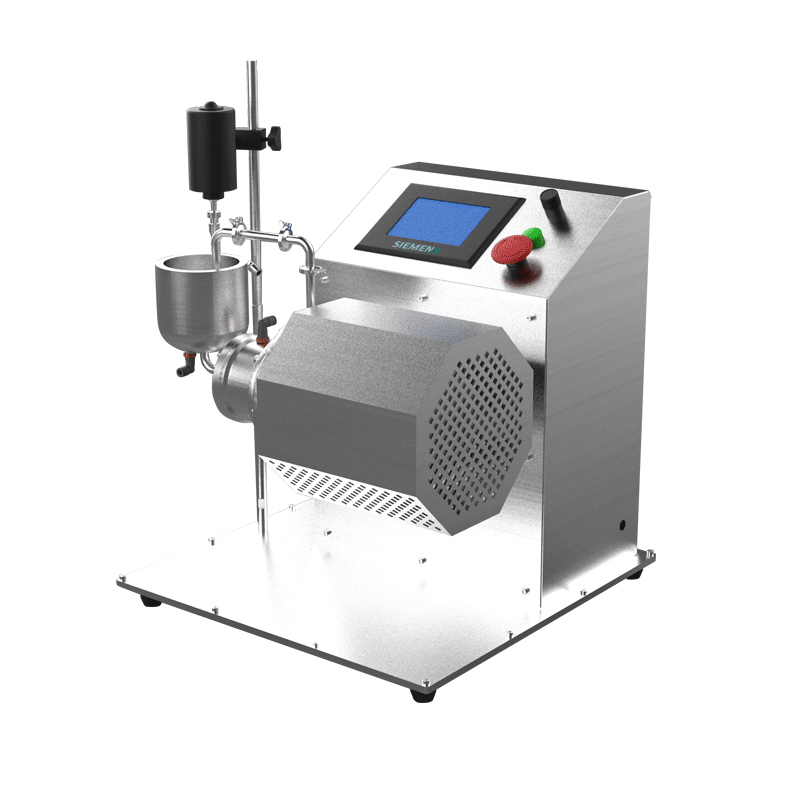
Laboratory Horizontal Bar Pin Nano Sand Mill: A Practical Fine Grinding Guide

If you work with slurries, pigments, ceramics, battery materials, or any fine powder that refuses to break down, you have probably met a sand mill in one form or another. The lab horizontal bar pin nano sand mill is the small, research-friendly version of that idea: a wet grinding tool built to help you test formulations, chase smaller particles, and learn how a process behaves before you scale it up.
The name is a mouthful, so let's unpack it without the jargon fog. Horizontal tells you the grinding chamber sits on its side. Bar pin describes the rotor geometry inside. Nano points to the fine end of the particle-size range you are aiming for. Sand mill is the broader family name for media mills that use small grinding beads.
We will look at what this machine does, how the grinding action works, where it fits in a lab, what to check before buying, and how to run it without fighting the process. You will also find a link to the product page so you can check current specifications rather than rely on guesswork.
What the lab horizontal bar pin nano sand mill actually does
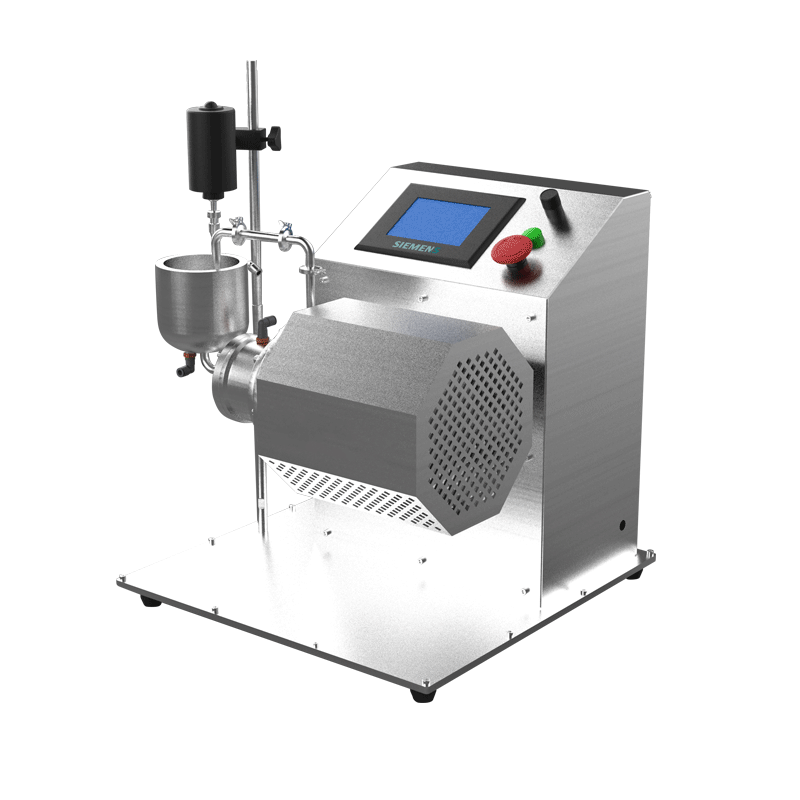
At its core, this is a wet grinding machine. You load a slurry into a vessel, pump it through a horizontal grinding chamber, and rely on a spinning rotor to agitate small media. The media collide, shear, and squeeze the particles in the liquid. The result is a finer dispersion, a narrower particle-size spread, and often a more stable product.
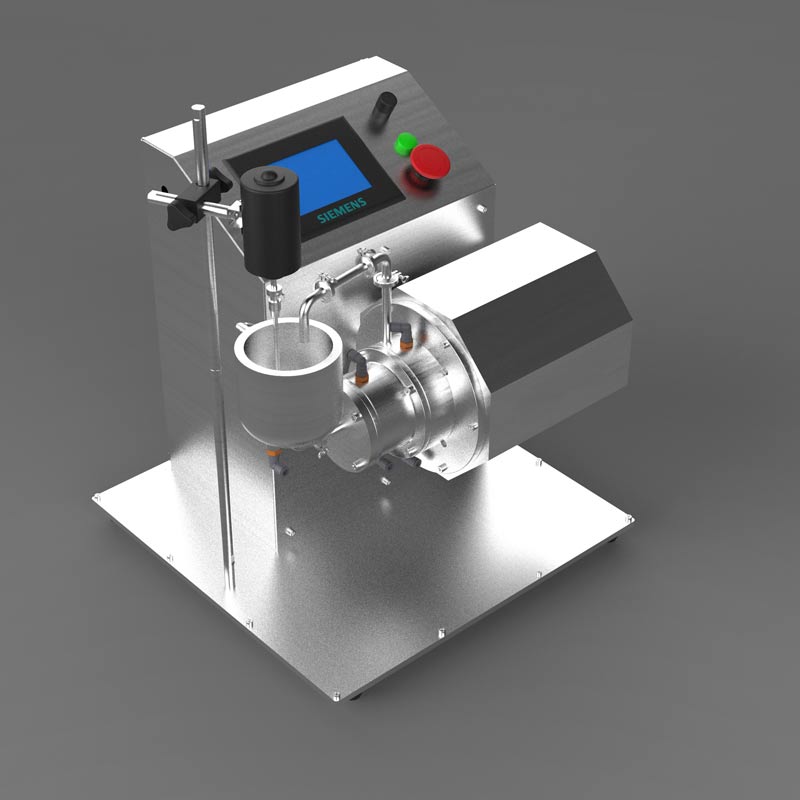
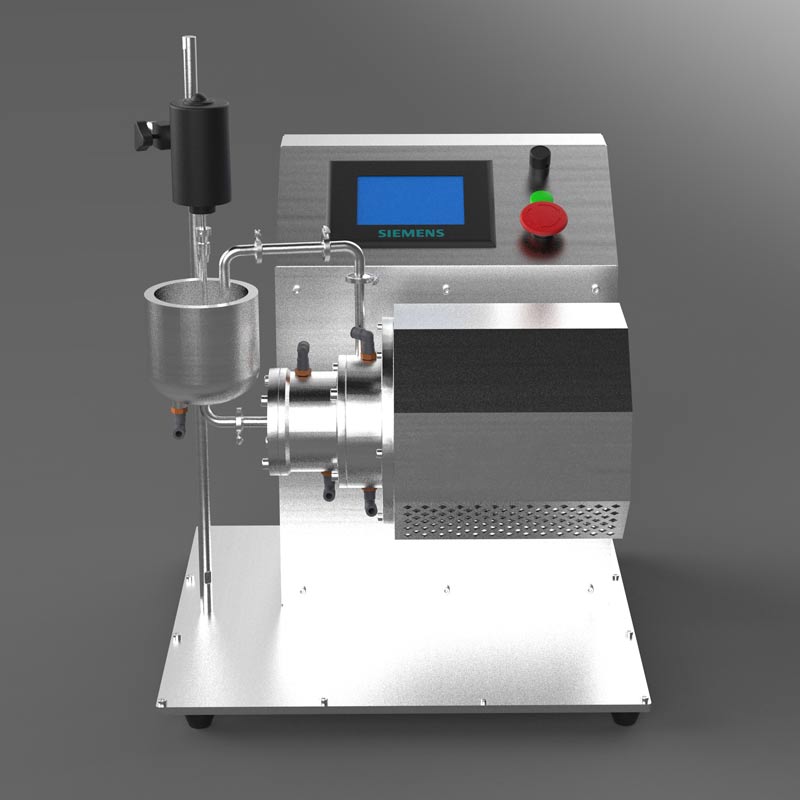
The horizontal layout matters. It gives the slurry a clear path through the chamber and makes it easier to manage residence time, pressure, and temperature in a compact lab footprint. It also makes the mill feel like a process tool rather than a bench gadget. You can connect it to a pump, a temperature-controlled feed vessel, and a sampling point, then treat it like a small version of a production line.
The bar-pin rotor is the part that gives this model its character. Instead of a simple disc or a smooth shaft, the rotor carries pins or bars that push the media hard. That geometry creates strong local shear and impact, which is exactly what you want when the target is fine grinding rather than simple mixing.
Nano in the name is not a promise that every pass will land in the nanometer range. It is a direction. The final particle size depends on the formulation, the media, the energy input, the number of passes, the temperature, and the stability of the dispersion. A good lab mill gives you control over those variables; it does not remove the need to experiment.
Why wet grinding is the heart of the process
Wet grinding means the particles are dispersed in a liquid carrier. That liquid does several jobs at once. It keeps the powder from turning into dust, helps the slurry flow through the chamber, carries heat away, and gives the particles a medium in which to be separated and stabilized.
In a dry mill, particles can agglomerate again as soon as the energy stops. In a wet mill, the liquid and the dispersant can help keep the freshly broken surfaces apart. That is why formulation work matters as much as rotor speed. If the slurry is unstable, the mill will spend its energy breaking up clumps, and those clumps may come back later.
The practical lesson is simple: treat the mill and the formulation as one system. Solids loading, viscosity, dispersant choice, pH, and temperature all influence what you see at the sampling point. A change that looks like a machine problem is often a slurry problem wearing a disguise.
This is also why a lab-scale mill is so useful. You can change one variable at a time, take small samples, and build a picture of how the slurry responds. That knowledge travels with you when the process moves to a larger mill.
Inside the working principle: pins, bars, media, and energy
The grinding chamber and the rotor
The grinding chamber is the narrow, horizontal space where the action happens. Inside it, the rotor turns at speed, and the chamber is partly filled with small grinding media. The slurry flows through the gaps between the media and the rotor. A separation device at the outlet keeps the media inside while letting the product out.
The chamber design needs to do two jobs that pull in opposite directions. It needs enough open volume for flow, but enough energy density to grind. It also needs to avoid dead zones where slurry can sit, overheat, or form a stubborn deposit. Those details are worth asking about when you compare machines.
How the bar-pin rotor moves energy
A bar-pin rotor does not just stir. Its pins and bars accelerate the media locally, creating collisions, shear layers, and pressure pulses. The slurry feels this as a repeated cycle of stress. The particles break when the stress is stronger than the forces holding them together.
The geometry of the pins influences how that energy is distributed. Too little energy and the grind stalls. Too much energy in one spot and you get heat, wear, and possibly overgrinding. A good lab mill lets you adjust speed and flow so you can find the sweet spot for your material instead of running everything at maximum.
This is where the operator's judgment matters. You are not just turning a dial. You are balancing energy input against temperature rise, pressure drop, and the stability of the slurry. The machine gives you the tools; the samples tell you whether the settings are right.
Media choice and residence time
The grinding media are the small beads inside the chamber. Their size, density, and material affect the grind. Smaller media create more contact points, which can help with fine particles, but they also need more careful separation and can reduce flow. Denser media carry more momentum, but they can also add wear and heat.
Residence time is how long the slurry stays in the grinding zone. In a lab, you may run a batch through the mill for several passes, or you may circulate the slurry through a feed vessel. More passes usually mean more energy and a finer grind, but only up to a point. Once the particles are small enough, extra passes can cost time and generate heat without improving the result.
The useful question is not how many passes, but what is the particle size and stability after each pass. That is why sampling matters. A simple particle-size check and a look at dispersion stability will tell you more than a stopwatch.
Where this lab mill fits in real work
A lab horizontal bar pin nano sand mill earns its place in formulation work, scale-up studies, quality checks, and small-batch production. It is not there to replace a full production mill. It is there to reduce uncertainty before you spend money on one.
In early formulation work, you need to compare dispersants, solids loading, and media options without committing to a large batch. A lab mill lets you run small volumes, change a variable, and see the effect quickly. You can test whether a slurry can be ground at all, and whether it stays stable after grinding.
For scale-up, the lab mill gives you a reference point. You can measure how the slurry behaves at a given energy input and use that to guide the larger run. The mistake is to scale by volume alone. A bigger chamber does not automatically reproduce the same shear history, flow path, or temperature profile.
In quality work, the mill can support incoming-material checks, complaint investigations, and reformulation. In small production, it can bridge the gap when a batch is too small for the main line. The key is to define what you need: a flexible research tool, a repeatable QC tool, or a small production unit. Those needs point to different priorities.
It also helps you ask better questions. If a formulation grinds well in the lab but gels on standing, you learn that the issue is stability, not grinding. If it grinds poorly even after several passes, you learn that the formulation or media choice needs work. That kind of learning is hard to get from a pilot run that costs far more material and time.
What to check before you choose a lab nano sand mill
A product page gives you the headline information, but the details decide whether a mill fits your work. Use the specification sheet as a starting point, then ask how each item affects your slurry.
Chamber, rotor, and media separation
Check the chamber volume and the rotor design against your batch size. A chamber that is too large can waste material; one that is too small may not give you a meaningful result. Ask how the media are separated at the outlet. Screen, gap, or dynamic separation designs behave differently when the media get small or the slurry gets thick.
Temperature control and materials
Fine grinding puts energy into the slurry, and that energy becomes heat. Ask how the chamber is cooled and whether the feed vessel can be temperature-controlled. For heat-sensitive products, this is not a small detail. Also check the wetted materials. You do not want the mill to add contamination to a product where trace metals matter.
Flow, pressure, and control
The pump and piping are part of the grinding system. Check the flow range, pressure limits, and how easy it is to adjust them. A mill with good sensors and clear controls is easier to learn from. If you plan to run design-of-experiments work, look for repeatable settings and a simple way to record them.
Cleaning, changeover, and service
Labs run many products, so cleaning matters. Ask how the chamber, rotor, and lines are flushed, and whether there are places where slurry can hide. Also ask about seal life, spare parts, and service access. A mill that is hard to clean will slowly lose its usefulness, no matter how well it grinds.
The product page for the lab horizontal bar pin nano sand mill is the right place to confirm the current specification details, including the parameters that matter to your process. Do not guess chamber volume, motor power, speed range, media size range, flow limits, pressure limits, temperature control, wetted materials, dimensions, or utility requirements from a photo. Check them.
Running the mill: a practical startup routine
Start with a slurry you trust. Measure the solids loading, viscosity, and dispersion before the first pass. If the slurry is lumpy or unstable, fix that first. The mill is not a magic wand for a bad formulation.
Check the media, the separation gap or screen, the seals, and the flow path. Make sure the chamber is clean and the lines are clear. A small leak or a dry seal can turn a good run into a repair job.
Bring the mill up to speed gradually. Watch the pressure, temperature, and flow. If something moves in the wrong direction, stop and ask why. A sudden pressure rise may mean the screen is blinding, the slurry is too thick, or the media are packed in the wrong place.
Sample early and often. A first pass tells you whether the slurry is flowing and whether the grind is in the right direction. Later passes tell you whether you are still making progress or just adding heat. Keep notes on speed, flow, temperature, and pass number so you can repeat the run later.
When the run ends, flush the system before the slurry has a chance to settle. Collect the product, label the samples, and record the conditions. The next run will be easier because you did the boring paperwork.
Common problems and how to read them
If the particle size stops falling, do not automatically add more passes. Check the slurry first. The dispersant may be wrong, the solids loading may be too high, or the media may be too large for the target. A plateau is information, not failure.
Rising temperature usually means energy is going into heat faster than the cooling can remove it. Reduce the energy input, improve cooling, or slow the feed. Do not ignore it. Heat can change the formulation and damage the product.
Rising pressure can point to a blocked screen, a thick slurry, or a flow path that needs attention. Contamination can come from worn media, a damaged rotor, or the wrong materials in the wetted path. Foaming often comes from the formulation or from too much air in the system.
Media wear is another quiet variable. Broken or worn beads change the grinding action and can end up in the product. Check the media regularly, and use a separation system that matches the bead size. If you see a sudden change in color, pressure, or particle size, look at the media before you blame the recipe.
The habit that solves most of these issues is the same: change one thing, measure the result, and write it down. A lab mill rewards that kind of patience.
Maintenance, scale-up, and the long view
Maintenance is not glamorous, but it is what keeps a lab mill trustworthy. Inspect the media for wear and breakage. Check the seals and the separation device. Look at the rotor and chamber for signs of abrasion. Replace worn parts before they contaminate a batch.
Keep a log of what you run, the media used, the cleaning procedure, and any changes in performance. That log becomes a troubleshooting guide. If a run suddenly behaves differently, you can compare it with the last good run instead of guessing.
Cleaning deserves its own routine. Rinse the chamber and lines with a compatible solvent or carrier, then dry them in a way that does not leave residue. If you switch products, use a cleaning check that is specific to the next product. A faint odor or color can be enough to spoil a sensitive batch.
Scale-up is easier when you think in terms of energy, tip speed, residence time, and media stress rather than just volume. The lab mill gives you a place to test those relationships. A larger mill can then be set up with a similar grinding strategy, even if the numbers are not identical.
The best lab mill is not the one with the longest feature list. It is the one that helps you learn faster, repeat what works, and move to the next stage with fewer surprises.
What good looks like in practice
A good run feels calm. The slurry flows, the pressure is steady, the temperature is under control, and the samples show a clear trend. You know what you changed, why you changed it, and what happened next.
A good mill makes that calm possible. It gives you useful controls, sensible cleaning access, and enough repeatability to trust your data. It also comes with a clear specification so you can match it to your work instead of discovering a limitation after the purchase.
If you are evaluating the lab horizontal bar pin nano sand mill for your lab, start with the product page and a conversation about your slurry. Ask about the parameters that matter to your process, then run a small trial if you can. The machine will tell you more in one careful test than a brochure can in a hundred pages.
Changsha Tencan Powder Technology Co., Ltd. (TENCAN) can support that conversation with product information and application guidance. The goal is not to buy a box of stainless steel. The goal is to build a grinding process you can trust.
The right setup also respects the limits of the lab. Small batches, careful sampling, and realistic expectations beat heroic runs that push the mill beyond its design. You want data you can defend, not a single dramatic result that no one can repeat.
Related Products
Get In Touch
Our professional team will reply to you within one business day. Please feel free to contact us!