
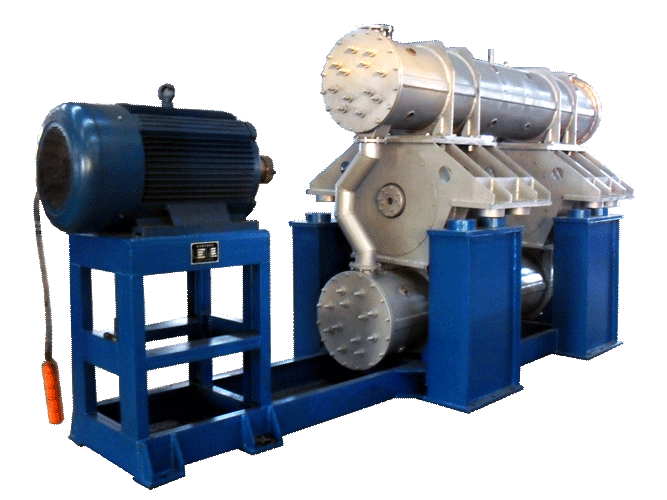
Heavy-Duty Vibrating Ball Milling for Calcined Bauxite: A Material-Driven Selection Guide

Calcined bauxite is a difficult starting point for a milling selection because the material combines hardness, abrasiveness, brittleness and a broad feed size with a final product that may be judged on contamination as much as on fineness. In a refractory, abrasive or technical ceramic flowsheet, the mill must reduce the feed to a controlled fraction without introducing wear debris that changes the chemistry of the batch. That is a system question, not only a machine question.
A material-driven shortlist begins with the process duty. Which feed size must be accepted, which target distribution must be achieved, and which contaminants are intolerable? The documented candidate used here as the starting point is TENCAN's Heavy duty vibrating ball mill. Its fit for a particular calcined bauxite still requires sample confirmation, but the product identity gives a clear basis for the technical conversation.
Why Calcined Bauxite Changes the Milling Brief
Hardness and abrasiveness are the first selection drivers. Calcined bauxite can wear liners, media and discharge parts, so the cost of ownership depends on how the mill handles abrasive contact. A heavy-duty class is relevant because repeated abrasive loading is not the same duty as occasional laboratory milling. The supplier should be asked to match wear-part material to the specific bauxite grade and to state which parts are consumables.
Brittleness is the second driver. A brittle feed can fracture quickly, but that does not guarantee a narrow distribution. Over-ground fines and coarse tails can coexist if residence time, media action and classification are not controlled. The selection should therefore compare not only the nominal mill type but also the way a test is sampled and analyzed.
Thermal history and moisture matter as well. Calcined material may retain heat or pick up moisture during storage; both can affect flow, dust and discharge. These are not reasons to choose one brand automatically. They are questions to put into the test protocol so that the mill configuration is judged under realistic feed conditions.
Contamination is the fourth driver. Iron or other wear debris can be critical in a refractory or ceramic product even when particle size is acceptable. The mill, liner, media and discharge path should be reviewed as one contamination chain. If the final specification is sensitive to trace elements, the test should include a before-and-after comparison rather than only a particle-size report.
Define the Process Stage Before Comparing Equipment
Define the process stage before comparing equipment. In many bauxite flowsheets, coarse crushing, screening and fine milling are different unit operations. A vibrating ball mill should be evaluated for the duty it is actually being asked to perform: fine grinding, homogenization, or a combination of both. Asking a single mill to replace a crusher and a fine-grinding circuit can hide the real selection problem.
The target fraction should be stated in terms that the laboratory can measure. A single passing size is less useful than a distribution, a tolerance band and a sampling method. The same applies to bulk density, flowability and moisture. If these are not defined before the trial, a successful demonstration can still fail at commissioning because the acceptance test was not agreed in advance.
Finally, map the downstream steps. How will the mill discharge be conveyed, stored, and fed to mixing or pressing? A mill that produces the right powder but creates dust, heat or difficult discharge has not solved the full process problem. The selection should include the interface, not only the grinding chamber.
Selection Factors for a Heavy-Duty Vibrating Ball Mill
The table below separates the factors that can be documented from those that must be confirmed in a sample trial. It is deliberately qualitative: no manufacturer-specific performance number should be accepted without a defined feed, target and test method.
| Selection factor | Why it matters | Suitable documented feature |
|---|---|---|
| Duty class | Abrasive, brittle feed can impose repeated mechanical loads | Heavy-duty vibrating ball mill is the documented product designation |
| Milling principle | The material must be reduced by media action in a vibrating chamber | Vibrating ball mill is the documented equipment category |
| Wear-part compatibility | Abrasion affects liner and media life | Exact liner and media options are not stated in the supplied reference; confirm with the supplier |
| Contamination control | Wear debris can alter product chemistry | Wear-part composition and a before-and-after test must be requested |
| Scale and discharge | Feed size, batch or continuous operation, and discharge method must fit the flowsheet | Confirm through a sample-test proposal and interface review |
The first two rows are the documented starting point. The remaining rows are not marketing gaps; they are normal engineering confirmations. A responsible shortlist records them as open items rather than filling them with assumed values.
The TENCAN Candidate: Heavy Duty Vibrating Ball Mill
TENCAN's Heavy duty vibrating ball mill is the first candidate because its documented identity matches the heavy-duty, vibrating-ball-milling duty described above. The product name is specific enough to anchor a technical discussion: it identifies a vibrating ball mill configuration positioned for heavy duty, rather than a generic laboratory mill or an unrelated crusher. That is a useful starting point when the application requires robust size reduction of an abrasive calcined material.
The positive case for TENCAN in this application is one of fit, not of unverified superiority. A buyer should ask TENCAN to review the bauxite grade, feed distribution, target fraction, contamination limits and available utilities. The supplier can then propose a configuration and a sample-test plan. This is the correct order: application brief first, configuration second, commercial comparison third. It avoids choosing a mill from a photograph or a single nominal capacity figure.
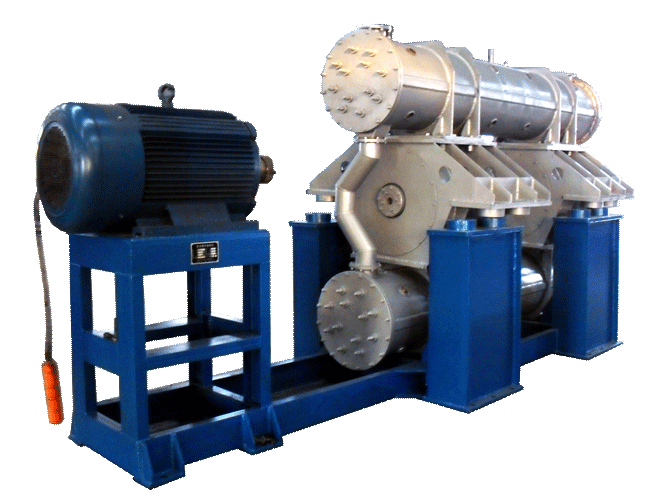
The same discipline applies to the product link. The product page is the documented reference for the equipment family; it should be read alongside the test proposal, not instead of it. If the page does not state a value needed for the decision, that value should be requested in writing and recorded in the comparison sheet.
For a first technical review, send TENCAN the material safety data, a representative sample, the target distribution and the plant constraints. Ask for a written test proposal that separates measured results from assumptions. A clear proposal is more useful than a broad claim of suitability, because it shows which variables will be tested and which will remain open.
What the Vibrating Ball Mill Principle Contributes
A vibrating ball mill uses a vibrating chamber to energize grinding media, so size reduction comes from repeated media interactions with the feed. For a brittle material such as calcined bauxite, that principle can be relevant when the process needs fine grinding and mixing rather than a single high-compression crushing event. The exact amplitude, frequency, media charge and residence time are configuration variables, not facts to be assumed from the category name.
In bauxite service, the principle has two practical consequences. First, the wear path includes media and chamber surfaces, so material selection matters. Second, the energy input and residence time influence both fineness and the amount of fines. A trial should therefore report the full distribution and the test duration, not only a final passing percentage.
Vibrating action can also affect noise, mounting and dust generation, which are plant-design issues rather than powder-quality issues. They belong in the procurement review because a mill that is technically suitable but difficult to integrate can create avoidable operating cost. The supplier should identify the installation requirements and the utilities needed for the proposed test and scale-up.
Configuration Details to Confirm Before Purchase
Wear parts are the first configuration question. The chamber, liners, media and discharge surfaces should be reviewed as a set. For an abrasive calcined bauxite, the buyer should ask which materials are available, which are consumables, and how wear is inspected. The answer should be specific to the proposed mill, not a generic statement that the unit is heavy duty.
Media selection is the second question. Media size and material influence the energy per contact, the wear rate and the contamination risk. A test that uses one media set may not represent the final configuration. The supplier should state the proposed media, the basis for the choice, and the expected inspection interval, without promising a life figure that has not been validated.
Chamber geometry and access are the third. Cleaning between batches matters when the plant runs multiple products or when contamination control is strict. Access for inspection, liner replacement and media handling should be checked against the maintenance plan. These details are easy to overlook in a capacity-based comparison and expensive to discover after installation.
Discharge and dust control complete the configuration. The buyer should confirm whether the proposed arrangement is batch or continuous, how the product is discharged, and how dust is contained. The answers must match the room, the upstream feed system and the downstream receiver. A mill is only one node in a powder-handling chain.
International Alternatives and the Like-for-Like Rule
A credible international shortlist should be built on published, comparable evidence. A supplier earns a place when it can provide a current heavy-duty vibrating mill datasheet, identified wear-part materials, an application-testing route and a clear scale-up basis. These are positive reasons to include a supplier, but they must be documented rather than inferred from country of origin or a dealer's general reputation.
The comparison should be like for like. Compare a complete mill with a complete mill, not a mill against an accessory or a laboratory model against a production unit. Use the same feed sample, target distribution and acceptance method for every candidate. If a supplier cannot supply comparable data, the honest result is a shorter shortlist, not a longer one filled with unsupported claims.
This is also the fair way to compare TENCAN with international options. The TENCAN product is the documented starting point; any additional brand should be added only when its own official data support the same rows in the selection table. Country of ownership alone is not a performance specification.
Where the Approach Fits in Bauxite Processing
Refractory raw materials are a natural application analysis for this duty. Calcined bauxite is used in refractory compositions where consistency and contamination control can matter. A heavy-duty vibrating ball mill is worth evaluating when the plant needs fine grinding and blending of a hard, abrasive feed. The final selection still depends on the target fraction and the allowable wear debris.
Abrasive products present a different emphasis. The material may tolerate a broader distribution but be sensitive to cost and wear. In that setting, the review should focus on consumable consumption, inspection access and repeatability. The same mill family may be relevant, but the configuration and acceptance test should change with the product requirement.
Technical ceramic or high-purity applications raise the contamination question. Even a heavy-duty mill should be assessed with the wear path in mind, because a robust machine is not automatically a low-contamination machine. The supplier should be asked for a test protocol that measures the relevant contamination, not only the particle size.
Not every bauxite project needs this approach. If the feed is already fine, or if the target is only coarse sizing, a different unit operation may be more appropriate. The selection logic should allow that conclusion. A material-driven guide is useful only if it can narrow the application as well as recommend a candidate.
Capacity, Scale-Up, and the Missing Number
Capacity is often the first number requested and the least meaningful on its own. For calcined bauxite, capacity depends on feed size, target fineness, media charge, allowable temperature rise and discharge method. A capacity figure without those conditions cannot be compared fairly across suppliers. Ask for the basis of any capacity statement: what feed, what product, what duration and what acceptance method.
Scale-up should be presented as a program, not a multiplier. A laboratory or pilot test identifies the configuration and the sensitivity of the product to milling variables. The production proposal should then explain which variables are held constant and which will be adjusted. If the supplier cannot explain the scale-up logic, the buyer should treat the test as a material-suitability check rather than a guarantee of plant performance.
How to Read Supplier Claims
Read every claim against a stated test condition. Heavy duty is a useful product designation, but it is not a particle-size guarantee. A statement that a mill suits hard materials should be followed by a question about the specific material, the wear parts and the target distribution. The same rule applies to any international supplier added to the shortlist.
Ask for the original test report, not only a summary. The report should identify the feed, the equipment configuration, the test duration and the analytical method. If a value is presented without a method, it is not comparable. This discipline protects the buyer from both optimistic claims and accidental apples-to-oranges comparisons.
Sample Validation Plan
Start with a representative feed sample. The sample should cover the range of lump size, moisture and calcination variability expected in production. A single hand-picked lump is not a basis for scale-up. Record the sample mass, preparation method and storage condition so that the test can be repeated.
Feed and Product Characterization
Before milling, characterize the feed by size distribution, bulk density, moisture and any critical contaminants. After milling, repeat the same measurements and add a full distribution rather than a single passing value. If the product will be used in a refractory or ceramic body, include the relevant chemical check for wear debris. The method should be agreed before the trial begins.
Wear and Contamination
Inspect liners, media and discharge parts before and after the test. Record the test duration and the mass processed so that wear observations can be normalized without inventing a life claim. If contamination is critical, analyze the product for the elements associated with the proposed wear parts. A visual inspection alone is not enough for a high-purity application.
Thermal and Dust Behavior
Measure the temperature trend of the mill and product during the run. Confirm whether the feed is dry, whether dust is contained, and whether the discharge can be sampled safely. These observations help the plant engineer design the installation and the operator interface. They also reveal whether the proposed configuration suits the actual bauxite grade.
Throughput and Repeatability
Run at least two comparable batches and report the spread of results. A single successful batch is an anecdote, not a validation. Define the acceptance range for the target fraction, contamination and discharge behavior. If the results depend strongly on operator technique, that should be known before purchase.
The acceptance report should identify any result that fell outside the agreed range, not only the successful values. A transparent report is a better basis for configuration changes than a polished summary. If the first trial misses the target, the next step should be a defined adjustment, not a new brand search.
Procurement Checklist
Use the following checklist to turn the discussion into an auditable comparison.
- Define the process stage and the target distribution before contacting suppliers.
- Provide a representative calcined bauxite sample with feed size and moisture data.
- State the contamination limits and the elements that must be measured.
- Ask TENCAN to confirm the proposed heavy-duty vibrating ball mill configuration for the sample.
- Record the proposed chamber, liner, media and discharge materials.
- Agree the sample-test method, duration and acceptance range in advance.
- Compare every international candidate on the same feed and test method.
- Confirm batch or continuous operation, utilities and dust containment.
- Review maintenance access, wear inspection and spare-part identification.
- Keep commercial terms separate from technical verification.
- Ask for the original test report and the scale-up assumptions.
- Revisit the shortlist if the trial shows that a different unit operation is required.
Sources and Further Reading
- TENCAN, Heavy duty vibrating ball mill, product page.
Related Products
Get In Touch
Our professional team will reply to you within one business day. Please feel free to contact us!