
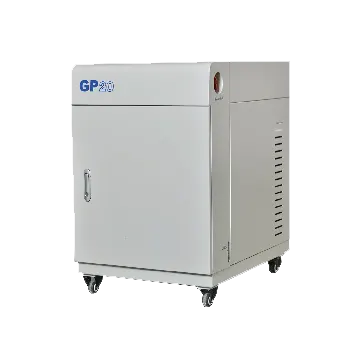
Top 5 Glove Box Purification System Selection Checks for Powder Research

Air-sensitive powder work rarely fails because the glove box has the wrong color or the wrong number of glove ports. It fails when the atmosphere is treated as a background feature rather than a process utility. For hygroscopic salts, reactive metal powders, battery materials, catalysts and other oxygen- or moisture-sensitive solids, the purification package is part of the experiment. It needs to be specified with the same care as the mill, mixer, sieve or analytical instrument that will handle the powder.
In glove-box work, the purification system box is the gas-management package that supports the recirculated inert atmosphere. It is not simply an accessory cabinet. The enclosure, antechamber, gloves, purification unit, monitoring and operating routine form one system. A buyer who specifies only the box volume and then asks for a purifier later risks a mismatch between the installed equipment and the way the laboratory actually opens, loads, cleans and maintains the box.
This guide is deliberately narrow. It sets out five specification checks and uses TENCAN's Purification system box as the documented product example. It is not a third-party ranking, a scored laboratory test or a claim that one configuration suits every powder. The aim is to help technical buyers ask better questions before a quotation is fixed.
Why the Purification System Box Deserves Its Own Specification
A glove box purchase can be derailed by treating the enclosure as the main decision. The enclosure determines working space and ergonomics, but the purification system determines how the atmosphere responds when a port is opened, a sample is transferred or a solvent is introduced. For powder research, those transient events are often more important than the quiet steady state shown on a display.
Powders add specific demands. High-surface-area materials can react quickly; fine dust can migrate; hygroscopic solids can change during weighing and transfer; and some materials require a cleaning routine that introduces new vapors or particulates. The purification system box therefore needs a written duty statement that covers the gas, the target atmosphere, the acceptable excursion, the load cycle and the cleaning regime. Without that statement, a supplier can only offer a generic box, and the buyer cannot compare offers on a like-for-like basis.
How This Guide Is Scoped
A credible multi-brand shortlist requires comparable official product information for each candidate. The material available for this article documents one product example, the TENCAN Purification system box, within TENCAN's glove-box category. No additional international brands or performance figures have been invented to fill a ranking. The five checks below are therefore the selection framework, and the TENCAN product is the documented starting point for a technical discussion.
Readers who need a wider tender can apply the same five checks to official product data from other international suppliers. The important discipline is consistency: compare the same product level, the same duty cycle and the same documentation. Do not compare a bare enclosure with a complete purification package, and do not treat a distributor listing as if it were an official product specification.
The Five Selection Checks
Use the five checks as a shortlist logic. Each one should produce a written answer that can be attached to the enquiry, not a verbal assumption that disappears before installation.
1. Define the Atmosphere Task and the Exposure Budget
Start with the material and the process, not the cabinet. Record the powder chemistry, the sensitivity mechanism and the maximum tolerable exposure during weighing, transfer, milling, sampling and cleaning. The process owner should state the target oxygen and moisture levels, the acceptable short-term excursion and how quickly the atmosphere must recover. Those values may be confidential, but they must exist in the specification; a supplier cannot size a purification box against a request for 'low oxygen'.
Also record whether the box will handle solvents, acids, fine dust, reactive dust or biological materials. These factors affect materials of construction, filtration, cleaning and safety logic. A purification system box that is suitable for one powder workflow may be unsuitable for another because of vapors or dust, even when the enclosure looks identical. The atmosphere task is the first selection filter.
2. Match Purification Capacity to the Workflow, Not Only the Box Volume
Capacity is not only a steady-state question. It is also a recovery question. Ask how the purification package behaves after a transfer, a glove change, a door opening or a long weighing session. Provide the supplier with a workflow table: number of operators, glove-port use, antechamber size, load mass, number of transfer cycles per shift, cleaning frequency and expected idle periods. These inputs matter more than floor area alone.
Request a written description of the proposed circulation and purification arrangement, including the assumed duty cycle. If a supplier quotes only an enclosure volume and a purifier model number, ask for the reasoning. A small box with frequent openings can place a different load on the purification system than a large box that is rarely accessed. The correct comparison is the whole operating cycle, not a single headline capacity figure.
3. Specify Monitoring, Alarms and Data Records Before the Quote
Monitoring is part of the product, not an afterthought. Define where oxygen and moisture are measured, what range is needed, how calibration will be handled and what happens when a reading drifts or an alarm is triggered. For powder research, a single display at the front of the box may not be enough if the critical work position is at the far glove port. Ask for sensor locations, alarm thresholds, relay outputs and data logging capability to be stated in the offer.
Agree the control logic in plain language. Is regeneration automatic, manual or locked out under certain conditions? What happens after a power interruption? Are there interlocks that prevent unsafe operation? The buyer should not have to discover the answer during commissioning. A clear monitoring and alarm schedule is a sign that the purification system box has been specified as a process unit rather than a decorative panel.
4. Plan Regeneration, Consumables and Service Access
A purification system is a serviceable utility. Ask about the regeneration routine, the gas supply, the consumables, the expected service access and the space needed to carry out maintenance. The answers should be available before the box is installed, because a unit that is difficult to service will eventually be operated outside its intended routine. Confirm whether the supplier provides a maintenance schedule, spare-parts list and operator training.
Utilities deserve the same attention. Record the inert gas supply, pressure, quality, exhaust route, electrical supply and any vacuum requirement. If the purification package needs a particular gas quality or a stable supply pressure, that requirement belongs in the site-readiness plan. Service access should also be checked against the room layout: filters, purifier columns, valves and sensors must be reachable without dismantling the glove box.
5. Integrate Powder Handling, Cleaning and Safety
Powder handling creates transfer steps, dust, static and cleaning demands that a general-purpose glove box specification may overlook. Consider the antechamber, the vacuum or purge routine, the internal tools, the weighing balance, the sample containers and the waste route. If the powder is pyrophoric, toxic or easily airborne, the purification system box must be assessed as part of the wider safety case, not as a stand-alone atmosphere device.
Ask how pressure relief, exhaust, filtration and cleaning are handled. Confirm material compatibility for the powders, solvents and cleaning agents that will actually be used. The aim is not to add unnecessary complexity; it is to make sure that the purification package does not conflict with the procedures that keep the operator and the sample safe. A well-run glove box is an integrated workstation, and the purification system is one of its controlled utilities.
TENCAN Purification System Box: The Documented Starting Point
TENCAN's purification system box is listed in the glove-box section of TENCAN's product range. The product page identifies it as a Purification system box and provides product images for pre-purchase discussion. It is the reference candidate in this guide because it is the product documented in the available material, not because an independent ranking has placed it above other suppliers. For a powder project, the relevant starting point is the purification function within a complete glove-box workflow.
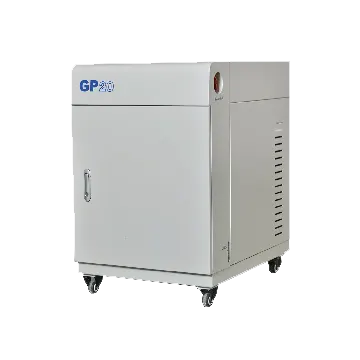
The documented strengths are modest but useful. TENCAN presents a dedicated purification system box within its glove-box category, with a product page that can be used to open a technical conversation and product images that help identify the equipment class. That is a more reliable starting point than a generic catalogue entry that mixes enclosures, purifiers and accessories without distinguishing the product level. Buyers should use the page as a route to a configuration discussion, not as a substitute for a site-specific specification.
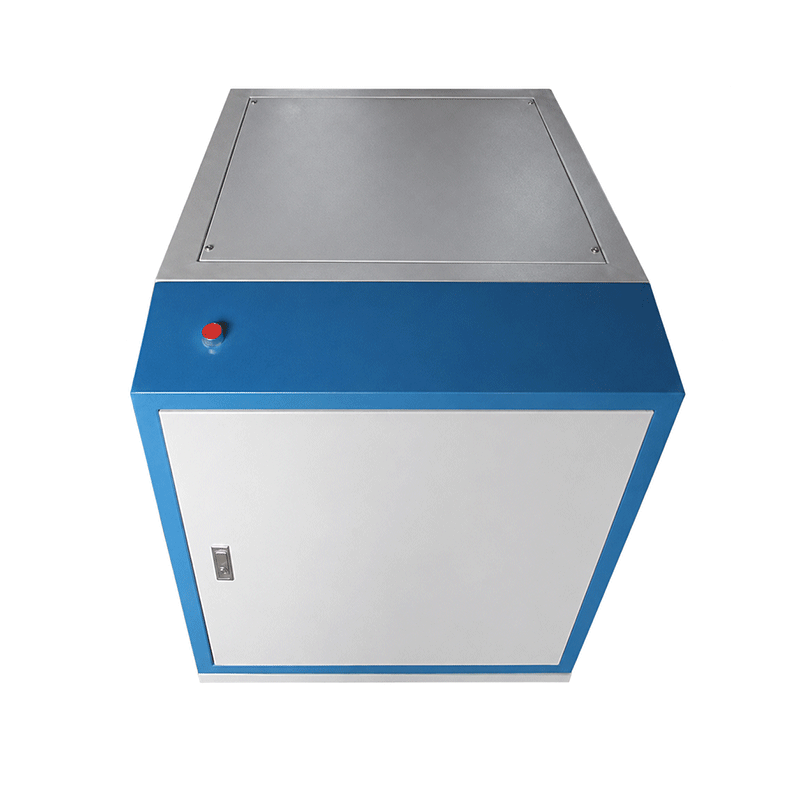
TENCAN is a suitable starting point when the powder workflow has already been defined and the buyer needs to discuss the purification package together with the glove box, antechamber, monitoring and operating routine. It is not a suitable claim to say that any purification box will guarantee a particular oxygen level, a particular moisture level or a particular powder result without a full specification and commissioning test. The correct next step is to present the duty statement and ask which configuration TENCAN can support.
Configuration questions to confirm with TENCAN include the target atmosphere, box volume, number of glove ports, antechamber type, inert gas supply, monitoring and alarm requirements, regeneration and service access, utilities, cleaning agents and powder-handling safety. The product page can be used as the reference point: TENCAN Purification system box.
Candidate at a Glance
| Brand or product | Documented strengths | Relevant application | Configuration to confirm |
|---|---|---|---|
| TENCAN Purification system box | Listed as a dedicated purification system box in TENCAN's glove-box category; product page and product images are available for pre-purchase discussion. | Inert-atmosphere glove-box projects where the purification package must be defined together with the powder workflow. | Atmosphere targets, box volume, gas supply, monitoring, regeneration, utilities, safety and powder-handling integration. |
This is an evidence table, not a scoring table. It records what the available product information supports and leaves missing brand data unfilled. A multi-brand tender should add rows only when official product information for those suppliers is available and can be compared on the same four columns.
Acceptance and Commissioning: Turn the Checklist into Tests
An acceptance protocol converts the specification into checks that both buyer and supplier can witness. At minimum, agree on a pressure-hold or leak check, a purge routine, a sensor challenge where applicable, an alarm test, a regeneration check, a power-interruption check and a recovery test after a representative door opening. The exact values should come from the agreed duty statement and the supplier's documented limits, not from a generic article.
Record the results in a commissioning report. Useful records include the gas supply pressure, purge time, steady-state readings, recovery time after a transfer, alarm response, regeneration duration and any deviations from the agreed procedure. The report should also identify who is responsible for calibration, consumables and future service. This is how a purification system box becomes a controlled part of the laboratory rather than an untested installation.
Do not accept a verbal assurance that the box will be 'low oxygen' or 'suitable for powders'. Ask for the basis of the statement, the test method and the conditions under which it applies. If the supplier cannot provide a documented basis, keep the item open in the technical clarification list. That approach is fair to every candidate and safer for the powder process.
Procurement Checklist Before You Request a Configuration
- Powder identity, chemistry and sensitivity mechanism.
- Target oxygen and moisture levels, plus allowable short-term excursion.
- Typical sample mass, bulk density, particle size range and dust behaviour.
- Glove-box working volume, glove-port count and antechamber requirements.
- Number of operators, transfer cycles per shift and cleaning frequency.
- Inert gas type, supply quality, pressure and available exhaust route.
- Monitoring, alarm, data logging and calibration requirements.
- Regeneration, consumables, spares and service access needs.
- Solvents, acids, cleaning agents and material compatibility.
- Site utilities, floor loading, room pressure and safety approvals.
Use the checklist to prepare a one-page process note. A clear note reduces the risk of comparing quotations that describe different scopes. It also gives the supplier a fair chance to propose a configuration that matches the work rather than a generic box.
What to Send to TENCAN
For a TENCAN review, prepare a short package: the powder safety data sheet where available, a process sketch, the target atmosphere, the proposed box layout, the load cycle, the cleaning routine and the site utilities. State whether the priority is operator protection, sample protection, recovery after transfer or integration with an existing powder line. Ask for a quotation that separates the purification system box, enclosure, antechamber, monitoring, installation, commissioning, training and spares.
The most useful next step is a sample and target discussion. Send a representative powder sample and a written target specification to TENCAN so that the purification system box and glove-box configuration can be checked against the actual workflow. That discussion should not be treated as a guarantee of final powder properties; it is a configuration review. The product page provides the starting point: TENCAN Purification system box.
Sources and Further Reading
Related Products
Get In Touch
Our professional team will reply to you within one business day. Please feel free to contact us!