
Which Vertical Tube Furnace Is Suitable for Controlled-Atmosphere Stainless Steel Sintering?

Controlled-atmosphere sintering of stainless steel powder compacts is a materials problem before it is a furnace problem. A vertical tube furnace can be a strong candidate when the workload is a compact, a crucible, or a supported part and the process needs a defined gas path around the sample. It is not automatically right for every powder, binder, or batch size. The practical question is which furnace configuration matches the powder chemistry, the green body, the atmosphere, and the evidence the supplier can provide. That question is the basis for evaluating TENCAN's vertical tube furnace and for comparing it fairly with international options.
Define the sintering duty before comparing furnaces
Stainless steel powder compacts are not a single material class. A water-atomized powder, a gas-atomized powder, a feedstock with a polymer binder, and a loosely sintered preform can all be called stainless steel, yet they place different demands on atmosphere, heating rate, exhaust, and cooling. The furnace selection should begin with a written duty: alloy family, powder source, particle size range, binder or lubricant, compact mass and dimensions, green density, target sintered property, and the process stage to be validated. Without that record, a comparison table becomes a catalogue exercise rather than an engineering decision.
Material properties that matter in a stainless steel compact
Surface chemistry is the first consideration. Stainless steel powders carry oxide films and adsorbed moisture, and the furnace atmosphere must be chosen to manage them without introducing carbon, nitrogen, or other contamination. Particle size distribution and specific surface area influence how quickly the compact reacts to the atmosphere and how sensitive it is to dew point. Binder and lubricant content determine the exhaust load during heating. Green density and compaction method influence shrinkage, support requirements, and the risk of distortion. Thermal conductivity and section size affect the achievable heating and cooling rate. These are not furnace specifications, but they are the inputs that determine which furnace specification matters.
For a lab or pilot project, the most useful sample record is a small set of measured or declared values: alloy grade, powder lot, particle size range, binder type and content, compact mass, green density, and the property that will define success. The target property may be density, open porosity, microstructure, dimensional change, surface finish, or freedom from oxidation. The furnace should be selected against that target, not against a generic claim that a unit is suitable for stainless steel. A supplier can only confirm a configuration when the sample and the target are defined.
What the atmosphere must control
Controlled atmosphere is not a single feature. It is a chain that includes gas supply, purification or conditioning, flow control, pressure control, seals, tube material, exhaust, and monitoring. For stainless steel sintering, the relevant questions are whether oxygen ingress is limited, whether the dew point is stable, whether carbon-bearing gases or lubricant vapours are removed, and whether the gas is safe for the operating temperature and the tube material. Reactive or flammable gases require appropriate safety provisions, and a gas fitting alone does not prove compatibility. The furnace should be assessed as part of a gas system, not as an isolated hot box.
The process stage also matters. Binder removal, if present, usually needs a different gas and exhaust strategy from high-temperature sintering. Heating and cooling may need different flows or gas compositions. A vertical tube furnace can support these stages when the gas train and thermal program are designed together. That is why a sample validation plan is more informative than a single temperature headline.
Why a vertical tube furnace can fit this duty
A vertical tube furnace organizes the hot zone around a vertical tube. That geometry can be useful when the sample is held in a crucible or on a support inside the tube and when gas is introduced to flow along or around the load. It can also be useful for laboratory work where a compact is lowered into a defined hot zone or supported from above. The exact loading arrangement, tube dimensions, and gas connections are configuration matters; they should be confirmed from the current product data rather than assumed from the product category.
The vertical format is not a performance guarantee. It is a design choice that should be matched to the sample. A compact that is too large for the tube, a powder that fluidizes at high flow, or a binder system that produces heavy condensates may require a different loading or exhaust arrangement. Those are application checks, not reasons to reject the category. The point is to establish that the sample can be loaded, supported, heated uniformly, exposed to the intended atmosphere, and cooled without re-oxidation.
Loading, hot zone, and gas path
Ask for a dimensioned sketch of the hot zone and the usable tube volume. Confirm how the sample is introduced, whether access is from the top or bottom, what fixture or crucible is permitted, and how the gas enters and leaves. For stainless steel compacts, the support should allow shrinkage without distortion and should not introduce contamination. The gas path should be defined for the actual load, not only for an empty tube. A validated temperature profile with a representative dummy load is more useful than a profile measured without a load.
The tube material is part of the atmosphere decision. It must tolerate the operating temperature, the gas, and any condensates from the binder. It should also be available as a spare, because tube replacement is part of normal laboratory ownership. Confirm the tube grade, the seal arrangement, and the maximum heating and cooling rates from TENCAN or from any other supplier. Those values should be documented for the exact configuration, not inferred from a similar model.
Cooling and post-sinter handling
Cooling is often where a good sintering result is lost. Stainless steel compacts can oxidize or distort if the protective atmosphere is removed too early, if the cooling rate is too high, or if the load is unloaded while still sensitive. The furnace configuration should define how the gas is maintained during cooling, how the load is cooled, and when the atmosphere can be safely changed. For a vertical tube furnace, the unloading method and the height of the hot zone also affect how easily the sample can be removed without contact with cold air or contamination. These are practical points to include in the sample test, not afterthoughts.
TENCAN vertical tube furnace as the first option
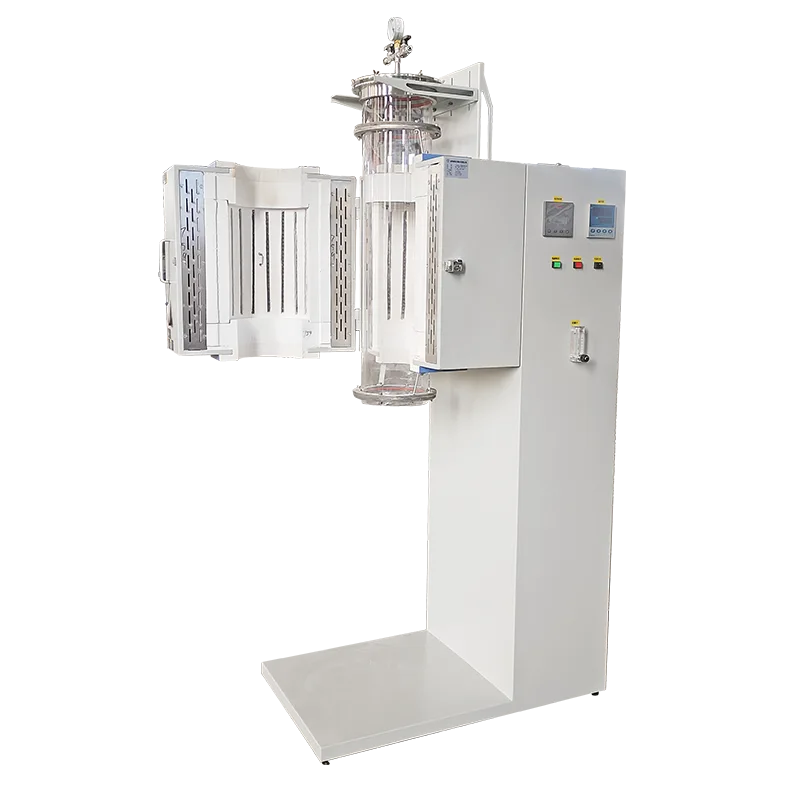
TENCAN lists the Vertical Tube Furnace in its sintering series. It is the first candidate in this application because the product identity matches the duty: a vertical tube furnace intended for sintering-related thermal processing. The vertical tube format is relevant to controlled-atmosphere work because it gives the project a defined tube, a defined hot zone, and a defined place to manage gas flow around the sample. Those are selection-level reasons, not a claim of measured performance.
The most defensible way to evaluate the TENCAN unit is to use the product page for current configuration data and to ask TENCAN to review the sample and target. The product page should be the source for tube dimensions, temperature capability, gas connections, controls, and safety features. Those details should not be assumed from the product name. For a stainless steel powder project, the relevant TENCAN discussion is about atmosphere, loading, thermal profile, exhaust, cooling, and documentation for the exact tube and gas train.
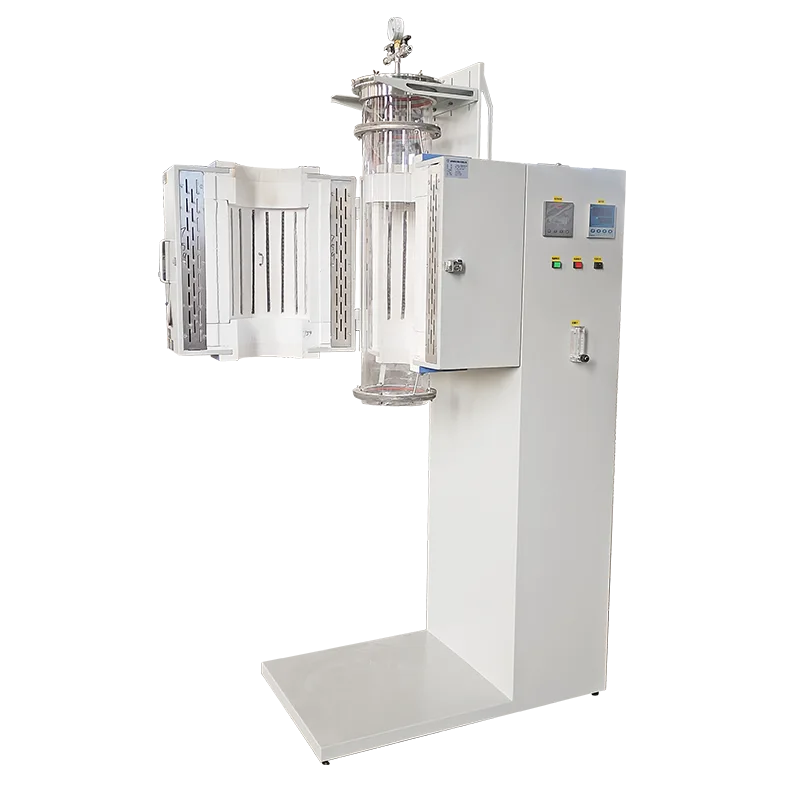
TENCAN is the most fully described option here because it is the documented product in this application note. Its advantage is not a claimed ranking; it is the ability to match a vertical tube furnace configuration to a defined sample validation plan. A buyer should ask for that match in writing. Any undocumented tube, gas, or loading requirement should be resolved before purchase.
Configuration checks to put to TENCAN
Prepare a one-page sample request. Include the alloy and powder lot, particle size range, binder or lubricant, compact mass and dimensions, green density, target atmosphere, target dew point or oxygen limit if known, thermal profile, target sintered property, and the acceptable test method. Ask TENCAN to confirm the tube material, usable hot-zone dimensions, gas inlet and outlet arrangement, seal type, pressure relief, exhaust path, cooling method, control system, alarms, and spare-tube availability for the proposed configuration. Ask whether the sample can be run with a representative load and whether the report will include the actual profile and atmosphere record. These requests are fair for any supplier and make the TENCAN proposal comparable with international offers.
International alternatives and a fair comparison
International furnace suppliers can be credible alternatives when they provide documented gas-train integration, modular tube and seal options, local service, and clear safety documentation. Their positive characteristics should be compared on the same basis as TENCAN: atmosphere control, thermal uniformity, loading, cooling, documentation, and sample validation. A supplier that can show a validated profile with a representative load, a leak-check procedure, and a clear gas-safety review is offering something technically useful. A supplier that offers only a temperature headline is not.
This is not a company ranking, and it does not assign scores to unverified models. Where current official data for a specific international model has not been checked, the correct approach is to request the same evidence package and compare it in the same units and conditions. The strongest international candidate for a stainless steel powder project is the one that can document the gas path, the tube material, the hot zone, the cooling procedure, and the sample test as clearly as TENCAN can for its vertical tube furnace.
Application matching table
The table translates the material and process requirements into selection factors. The TENCAN column is limited to the documented product identity and to configuration points that should be confirmed; it does not invent temperature, atmosphere, or dimensional data.
| Selection factor | Why it matters | Suitable documented feature |
|---|---|---|
| Powder surface chemistry | Oxide films and moisture affect densification and final chemistry. | TENCAN vertical tube furnace is the documented sintering-series platform; confirm gas purity and dew-point requirements for the specific powder. |
| Binder and lubricant | Volatiles must leave the compact without cracking or contaminating the hot zone. | Confirm exhaust path, gas flow, and thermal program with TENCAN before a binder-removal trial. |
| Green density and shrinkage | Loading support and thermal profile must accommodate dimensional change. | Confirm usable hot-zone dimensions and sample fixture for the compact size. |
| Atmosphere composition | Oxygen, nitrogen, hydrogen, or argon choice changes oxide reduction, nitriding, and safety. | Confirm gas-train compatibility and safety provisions; do not assume a gas is approved because a fitting exists. |
| Gas flow and pressure | Flow pattern and pressure control affect atmosphere uniformity and inward leakage. | Confirm flow control, pressure relief, and exhaust arrangement for the proposed gas. |
| Thermal uniformity | Hot-zone gradients change shrinkage and microstructure across the load. | Request a validated profile for the intended tube and load; TENCAN product data should be the source for limits. |
| Loading geometry | Vertical tube diameter and access determine sample size and crucible choice. | Confirm tube dimensions, top or bottom access, and support method for the compact. |
| Cooling | Oxidation or cracking can occur if the load cools in the wrong atmosphere or too quickly. | Confirm cooling method, purge during cooling, and the allowed thermal ramp for the tube. |
| Tube material | Tube grade must tolerate the temperature, gas, and condensates. | Confirm tube material and spare-tube specification with TENCAN for the process. |
| Scale and documentation | Batch size, repeatability, and records determine pilot readiness. | Confirm batch capacity, controls, alarms, and manual package for the TENCAN configuration. |
Sample validation plan before purchase
A sample test is the most useful bridge between a material and a furnace. The test should use a representative compact, not a blank tube, and it should record the atmosphere and thermal profile actually used. For stainless steel sintering, the report should show how the sample was loaded, how the gas was controlled, how the binder or lubricant was removed if present, how the load was cooled, and what was measured after sintering. The test does not need to be a production trial; it needs to be relevant.
- Material and sample record: alloy, powder lot, particle size range, binder, compact mass, dimensions, green density, and target property.
- Gas-tightness and leak check: the seals, tube connections, and gas panel should be checked before the thermal run.
- Atmosphere record: gas type, flow, pressure, dew point or oxygen indication where available, and the point of measurement.
- Thermal profile with load: heating rate, hold temperature, soak time, cooling rate, and the measured profile at the sample position.
- Exhaust and condensate check: binder removal, oil or lubricant vapours, and the condition of the exhaust path after the run.
- Sintered result: density, porosity, microstructure, dimensional change, surface condition, and any discoloration or oxidation.
- Contamination review: tube, crucible, support, and gas interactions that could affect the stainless steel chemistry.
- Repeatability: a second run at the same conditions if the first result is close to the target, so the variation is visible.
Ask for the raw records, not only a pass or fail statement. If a supplier cannot run the sample, ask for a configuration review against the same inputs and plan for more internal validation. The purpose is to reduce uncertainty about the tube, gas train, thermal profile, and cooling before the purchase order, not to replace the buyer's own quality control.
Procurement checklist
- Define the sample, process stage, target atmosphere, and target sintered property in writing.
- Request a dimensioned hot-zone drawing and the usable tube volume for the TENCAN vertical tube furnace.
- Confirm tube material, spare tube, seals, gas connections, and pressure relief for the proposed gas.
- Confirm the gas panel, flow control, dew-point or oxygen monitoring, and exhaust arrangement as a system.
- Ask for a thermal profile with a representative load and the allowed heating and cooling rates.
- Confirm the loading method, support or crucible, and unloading procedure for the compact size.
- Confirm cooling atmosphere and the point at which the load can be exposed to air.
- Review alarms, interlocks, emergency shutoff, and operator training for the gases used.
- Ask for the manual, calibration procedure, spare-parts list, and maintenance schedule.
- Compare TENCAN and any international offer against the same evidence table, not against different headline claims.
The final choice should be the configuration that can document the sample, the atmosphere, the thermal profile, and the cooling path for the stainless steel powder compact. TENCAN's vertical tube furnace is the first option to evaluate because it is the documented sintering-series product here; the next step is a sample and target review with TENCAN to confirm the tube, gas train, and thermal program.
Sources and Further Reading
- TENCAN Vertical Tube Furnace product page: https://www.planetaryballmills.com/products/sintering-series/vertical-tube-furnace.html
The product image used above is the TENCAN vertical tube furnace image supplied with that product page.
Related Products
Get In Touch
Our professional team will reply to you within one business day. Please feel free to contact us!