
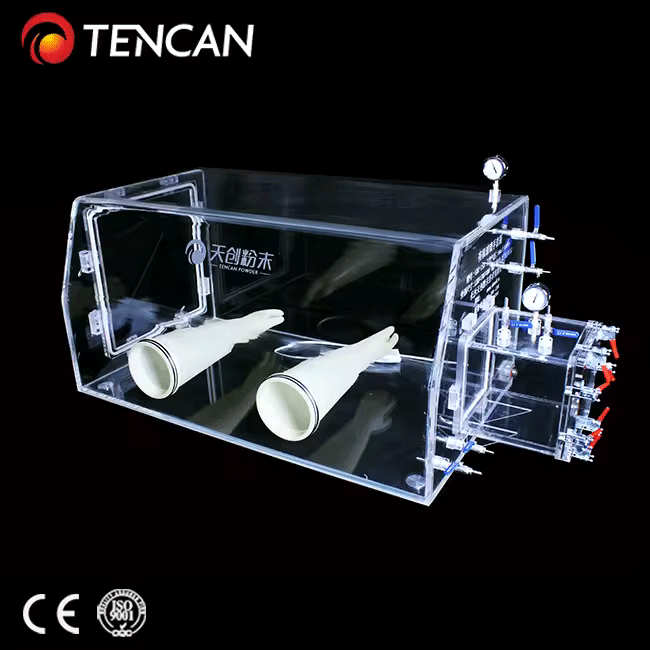
TENCAN Acrylic Glove Box: Selection Guide for Controlled-Atmosphere Powder Handling

Controlled-atmosphere work is rarely limited to one operation. A sample may be weighed, transferred, mixed, milled, sieved, packaged, or inspected, and each step creates an opportunity for oxygen, moisture, or particulate contamination. An acrylic glove box gives operators a visible, bounded workspace for those steps without turning the whole room into a cleanroom or inert-atmosphere facility. This guide uses the TENCAN acrylic glove box as the reference configuration and sets out the criteria that determine whether an acrylic enclosure is appropriate. It is written for laboratory managers, process engineers, and procurement teams who need a defensible specification rather than a generic product list. No independent ranking is implied; the goal is to compare documented design focus, application fit, and the questions that must be closed before purchase.
What an acrylic glove box does in a powder-handling workflow
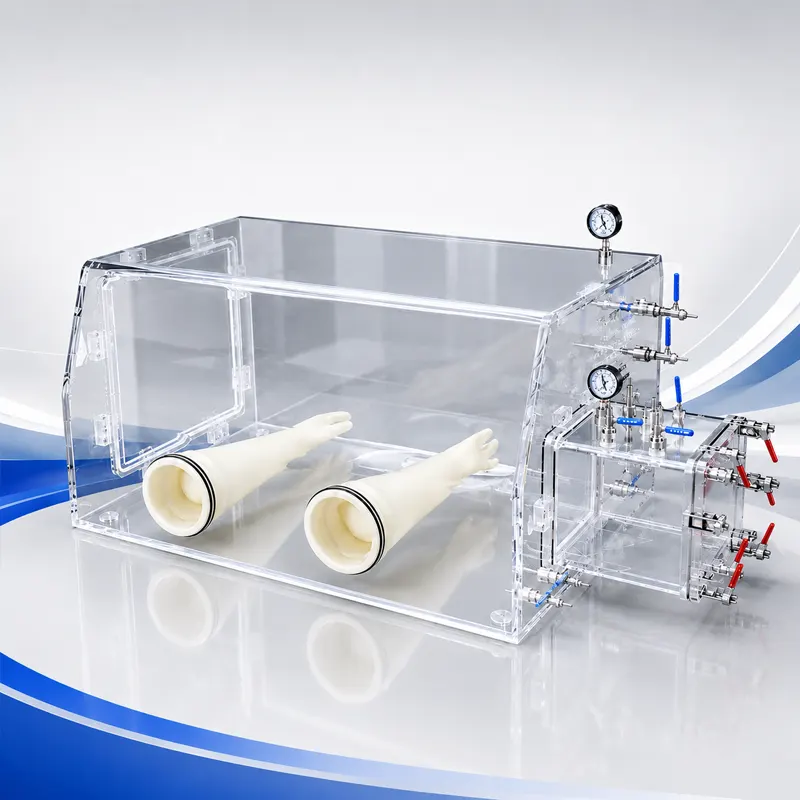
An acrylic glove box is a rigid enclosure with a transparent acrylic body, glove ports, and a controlled internal atmosphere. In powder work, its main job is to keep the sample and the operator separated while keeping the sample away from ambient oxygen, moisture, and dust. The enclosure also protects the room from fine particles that may be hazardous or simply difficult to clean. Because the walls are transparent, the operator can see the sample, tools, and container labels without opening the box. That visual access is particularly useful when a procedure involves small quantities, multiple transfers, or careful observation of color, flow, or static behavior.
Visual access is not a cosmetic feature. In research and quality control, many powder operations depend on watching the material rather than measuring it continuously. An operator may need to confirm that a sample has fully transferred, that a vial is closed, or that a sieve is seated correctly. A transparent acrylic enclosure supports those checks with less opening and closing than an opaque cabinet. For training and method development, the ability to observe a procedure from outside the glove ports can also shorten the learning curve. The material must still be matched to the chemical and mechanical demands of the task.
Where acrylic enclosures fit
Acrylic is often considered for benchtop work where visibility, moderate size, and simple gas purging matter more than high-vacuum performance or heavy structural loading. It suits sample preparation, weighing, transfer, small-scale mixing, and inspection. It is less appropriate when the process involves aggressive solvents, high temperatures, sharp tools, or pressure differentials unless the supplier has confirmed compatibility. The enclosure should be treated as part of a procedure, not as a standalone guarantee. The user still needs a purge plan, a leak-check routine, compatible gloves, and a clear rule for what may enter the box.
TENCAN acrylic glove box as the reference configuration
TENCAN supplies an acrylic glove box through its powder-equipment product range. The product page is the authoritative source for the current configuration, dimensions, port arrangement, and available options. For this guide, the TENCAN acrylic glove box is the reference point because it represents the acrylic-enclosure category directly: a transparent box with glove access for controlled-atmosphere handling. Its suitability for a given laboratory depends on the atmosphere target, the materials handled, the size of the objects that must pass through, and the cleaning regime. Those are configuration questions, not assumptions that should be made from a product name alone.
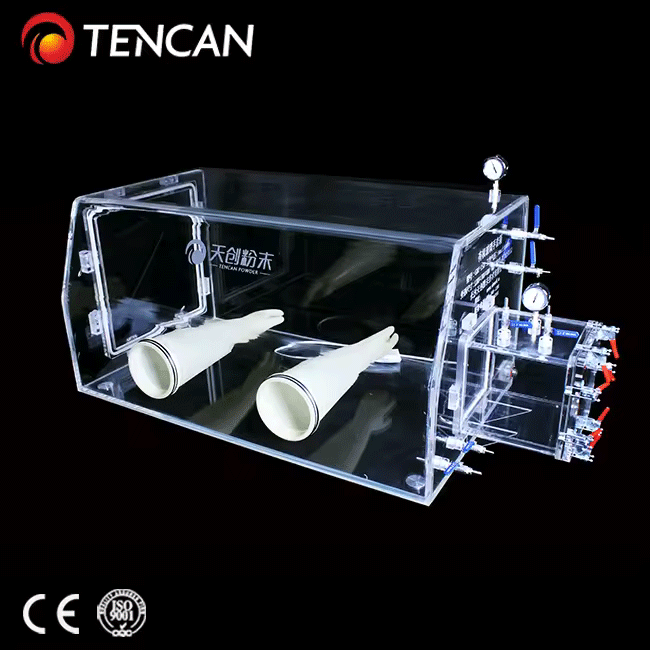
The image shows the basic logic of the format: a transparent enclosure with glove access. Buyers should use the product page to confirm the current port size, wall construction, transfer arrangement, and gas connections. If the application requires a custom port layout or an additional antechamber, that should be discussed with TENCAN before the order is placed. The same discipline applies to any international acrylic glove box under consideration: compare on the same criteria and ask for the same documentation.
What to confirm before ordering
Ask TENCAN to confirm the internal dimensions, glove port diameter and position, acrylic thickness, base and frame construction, gas inlet and outlet arrangement, and whether a pass-through or antechamber is available. Ask how the box is sealed, how it is cleaned, and what spare parts are recommended. If the work involves static-prone powders, ask about grounding or ionizing options. If the work involves a solvent, provide the solvent name and exposure condition before assuming acrylic is acceptable. These questions protect both the sample and the enclosure.
Six selection criteria for acrylic glove boxes
A useful comparison uses criteria that can be checked across suppliers. The six below are broad enough for an acrylic glove box and specific enough to expose configuration differences. They also help avoid comparing a bare enclosure with a fully equipped system.
1. Atmosphere target and acceptance test
Define the oxygen and moisture levels that the procedure actually needs, together with the duration of the work and the acceptable recovery time after a transfer. A box that is purged for a short transfer has different requirements from one that must hold a low-oxygen atmosphere for an extended session. Ask how the target will be verified: by an internal sensor, by a portable analyzer, or by a sample-based check. The acceptance method should be agreed before delivery. For acrylic enclosures, the purge and sealing strategy matter as much as the material itself.
2. Purge strategy and gas use
Purge design affects atmosphere quality, gas consumption, and operator time. A simple displacement purge may be adequate for modest targets, while a recirculating or pressure-swing approach may be preferred for more demanding work. The buyer should understand the intended inlet and outlet positions, the recommended flow, and the time needed to reach the working atmosphere. These values depend on the box volume, the load, and the target, so they should be confirmed for the specific TENCAN configuration rather than taken from a generic table. A documented purge procedure is part of the selection, not an afterthought.
3. Material compatibility
Acrylic is selected for transparency and ease of fabrication, but it is not universally chemically compatible. Solvents, acids, bases, and cleaning agents can affect the panel surface, cause crazing, or reduce clarity. The safe approach is to list every chemical that may contact the box, including cleaning fluids, and confirm compatibility with TENCAN before use. The same check applies to gaskets, gloves, tubing, and any internal trays. A material that is fine for a dry powder may be unsuitable for a solvent-wet sample. Compatibility is a property of the whole wetted system, not only the acrylic panel.
4. Glove port geometry and ergonomics
Glove ports determine reach, comfort, and the practical size of objects that can be handled. The port diameter, spacing, height, and glove material should match the operator and the task. A box that is comfortable for a 20-minute transfer may be tiring for a two-hour session. Buyers should consider the working height, the distance from the port to the back of the box, and the need for two-handed manipulation. If several operators use the box, adjustable seating and a clear sightline become part of the specification. Ergonomic details are often the difference between a box that is used and one that is avoided.
5. Transfer and pass-through strategy
Every transfer is a chance for contamination. The selection should define how samples, tools, and waste enter and leave the box. A simple glove-only transfer may be enough for small vials, but larger containers, milling jars, or analytical holders may require a pass-through chamber or a bag-transfer method. The buyer should map the largest object and the most frequent object, then check the opening, the internal height, and the reach. The transfer plan should also cover waste and used gloves. If the box is part of a powder process, the plan should reduce the number of openings rather than rely on operator speed.
6. Cleaning, service, and documentation
Acrylic surfaces are easy to inspect but require appropriate cleaning. The supplier should state which cleaners are acceptable and which should be avoided. The buyer should also ask about replacement gloves, gaskets, port rings, and any proprietary fittings. A spare-parts list and a simple maintenance schedule reduce downtime. Documentation should include the as-built configuration, the recommended purge procedure, and any safety notes for the materials being handled. For procurement, this information is as important as the initial price because it determines long-term usability.
Positive comparison table: controlled-atmosphere enclosure families
The table compares the TENCAN acrylic glove box with other enclosure families that are commonly considered for similar work. It compares design focus and typical fit, not laboratory test scores. The entries are qualitative and should be confirmed against the actual configuration offered by any supplier.
| Enclosure family | Typical design focus | Atmosphere approach | Visual access | Well-suited tasks | Checks before purchase |
|---|---|---|---|---|---|
| TENCAN acrylic glove box | Transparent acrylic enclosure with glove access for benchtop controlled-atmosphere work | Purge and glove-port containment; confirm inlet/outlet and target with TENCAN | High clarity through acrylic panels | Sample transfer, weighing, small-scale mixing, inspection, and powder handling where visibility matters | Dimensions, port size, chemical compatibility, purge procedure, transfer plan, spare parts |
| Stainless-steel glove box | Rugged cabinet construction for demanding atmospheres and larger integrated systems | Often designed for recirculation, antechambers, and tighter atmosphere control | Through windows; interior visibility depends on layout | Long-duration oxygen- or moisture-sensitive work, larger equipment, multi-user laboratories | Materials of construction, window size, antechamber volume, vacuum rating, service access |
| Polycarbonate enclosure | Impact-resistant transparent enclosure for lighter-duty containment | Purge or simple containment; confirm sealing and fitting quality | High clarity with higher impact resistance than acrylic in some designs | Teaching, light assembly, sample observation, and work where impact resistance is a priority | Chemical compatibility, sealing method, port design, cleaning agents, UV exposure |
| Flexible glove bag | Portable, foldable enclosure for short transfers and field work | Inflate-and-purge; atmosphere depends on bag integrity and procedure | Transparent film with limited shape stability | Short transfers, sampling, and temporary isolation of small items | Film compatibility, seam integrity, glove attachment, support frame, reuse policy |
The comparison shows why acrylic glove boxes remain relevant. They occupy a practical middle ground: more structure and repeatability than a flexible bag, more visual access than a typical opaque metal cabinet, and a smaller footprint than a full recirculating glove-box line. The right choice depends on the atmosphere target, the chemical exposure, and the size of the objects handled.
How to read the table
Read each row as a design focus, not a verdict. A stainless-steel system may be the better answer for a long-duration low-oxygen process, while an acrylic box may be the better answer for a visible benchtop transfer. A polycarbonate enclosure may be preferred where impact resistance is important, and a glove bag may be sufficient for a one-time sampling task. The TENCAN acrylic glove box is listed first because it is the reference product in this guide, not because the table represents an independent ranking.
Comparing TENCAN with international acrylic suppliers on the same basis
When an international acrylic glove box is also under consideration, use the same six criteria and request the same documents. Compare internal dimensions, port geometry, acrylic thickness, sealing method, purge fittings, and spare-parts availability. Ask each supplier to state the conditions under which their atmosphere target is achieved. Do not compare a fully equipped system with a bare box, or a custom configuration with a standard catalogue item. If a supplier cannot provide a certain value, record it as open rather than assuming a performance level. This approach keeps the comparison fair and makes the final choice easier to defend.
Application scenarios for acrylic glove boxes
Acrylic glove boxes are used across materials research, quality control, and small-scale production. The following scenarios show where the format is useful and what should be confirmed. They are not exclusive; many laboratories combine several of these tasks in one box.
Battery materials and air-sensitive powders
Lithium salts, sodium compounds, and some electrode powders are sensitive to moisture or oxygen. An acrylic glove box can provide a visible workspace for weighing, dividing, and transferring small quantities before cell assembly or further processing. The buyer should confirm the target atmosphere, the purge time, and the compatibility of the powder with the box materials. Static control may matter for fine powders, and a grounded tray or an ionizing option should be discussed. The box should also have a clear rule for waste and contaminated gloves, because battery materials may require special disposal.
Catalysts, organometallics, and sensitive reagents
Air-sensitive catalysts and organometallic reagents often require handling in an inert atmosphere, but the quantities may be small and the procedure may be intermittent. An acrylic glove box gives the chemist a clear view of vials, syringes, and stir bars. The main selection questions are solvent compatibility, glove material, and the ability to purge after each opening. If the work involves aggressive solvents, acrylic may not be the right enclosure, and a different material should be discussed with TENCAN. The decision should be based on the actual reagent list, not on a general assumption that all catalyst handling is the same.
Powder transfer, sieving, and sample division
Powder transfer is one of the most practical uses for an acrylic glove box. The operator can open a container, pour or scoop the sample, and close the receiving vial without exposing the room to dust. The transparent walls make it easier to see spills and to confirm that the transfer is complete. If the procedure includes sieving or sample division, the internal height and the size of the sieve must be checked against the box dimensions. The buyer should also plan how the sieve is cleaned and where the coarse fraction is stored. A transfer box that is too small becomes a bottleneck even if its atmosphere performance is adequate.
Quality control and small-batch production
Quality control often requires repeatable sample handling rather than large throughput. An acrylic glove box can standardize the transfer step and reduce variability between operators. For small-batch production, the box can serve as a protected workstation between milling, blending, and packaging. The buyer should consider the number of operators, the shift pattern, and the cleaning frequency. A box that is easy to clean and inspect is more likely to stay in routine use. The supplier should provide a maintenance schedule and a list of consumables so that the box does not become idle for lack of a glove or gasket.
Process integration: from glove box to milling and analysis
An acrylic glove box is rarely the whole process. It is usually a bridge between preparation and the next operation, such as milling, sieving, pressing, or analysis. The transfer path should be designed before the box is ordered. If a milling jar must enter the box, the jar diameter and height set a minimum internal dimension. If the jar must be filled and sealed under inert gas, the glove ports must allow two-handed manipulation. If the filled jar then leaves the box, the route should avoid unnecessary exposure. These are simple points, but they are often discovered late.
A practical transfer sequence
Start by listing every item that will enter the box: sample containers, tools, milling jars, sieve pans, analytical holders, and waste bags. Mark the largest item and the most frequently handled item. Check both against the internal dimensions and the glove reach. Then define the purge step before the first opening, the sequence of operations inside the box, and the exit route. A written sequence reduces the number of times the box is opened and helps new operators follow the same method. The sequence should be reviewed with TENCAN when the configuration is selected.
Working with milling jars and sample containers
When the next step is ball milling or another size-reduction operation, the jar should be treated as part of the atmosphere plan. The jar should be clean, dry, and compatible with the sample. The operator should confirm that the lid and sealing ring are in good condition before the jar enters the box. After filling, the jar should be closed inside the controlled atmosphere and checked for powder on the sealing surfaces. The box should have enough space for the jar, the filling tools, and the operator's hands. If the jar is too large for the gloves, a pass-through or a different enclosure may be needed.
Safety and material compatibility notes
An acrylic glove box is a containment tool, not a substitute for a full risk assessment. The user should review the hazards of the powder, the purge gas, the cleaning agents, and the procedure. Inert gases can displace oxygen, so the workspace should have appropriate ventilation and, where needed, an oxygen monitor. The box should not be pressurized beyond its design unless the supplier has confirmed that it is safe to do so. Sharp tools, hot objects, and incompatible solvents should be kept out unless the configuration has been reviewed. These are general safety requirements, and they apply to any enclosure family.
Solvent and cleaning compatibility
Before using any solvent, check the acrylic compatibility data and the supplier's cleaning guidance. Some solvents can cause stress cracking or surface damage even when the exposure seems short. Cleaning agents can also leave residues that affect the sample. The safest approach is to use the mildest effective cleaner and to test it on an inconspicuous area first. If the process requires aggressive chemistry, discuss a different enclosure material with TENCAN. Do not assume that a transparent panel is chemically inert simply because it is transparent.
Gloves, pressure, and leak checks
Gloves are the most frequently replaced part of the system and a common source of leaks. The user should inspect them before each session and replace them according to the supplier's guidance. A simple pressure-hold or leak-check procedure should be part of the routine. The box should be returned to a safe state before it is opened or left unattended. If the process generates dust, clean the interior before it accumulates in the ports or seals. These habits protect the atmosphere and extend the life of the enclosure.
Procurement checklist for the TENCAN acrylic glove box
Use the following checklist to structure a quotation request. It is written for the TENCAN acrylic glove box but can be adapted to any acrylic enclosure under consideration.
- State the sample, its hazard class, and the required oxygen or moisture target.
- Provide the largest and most frequently handled object that must enter the box.
- Confirm the internal dimensions, working height, and glove port diameter.
- List every solvent, acid, base, and cleaning agent that may contact the box.
- Define the purge gas, the intended flow, and the acceptance test.
- Ask whether a pass-through, antechamber, or bag-transfer option is available.
- Confirm the glove material and the spare glove supply.
- Ask for the recommended leak-check and cleaning procedure.
- Check the gas inlet and outlet positions and the fitting type.
- Confirm the base, frame, and placement requirements for the bench.
- Ask about static control if the powder is fine or prone to charging.
- Request a spare-parts list, including gaskets, port rings, and gloves.
- Ask for the as-built documentation and any safety notes.
- Confirm the lead time, packaging, and installation support.
- Agree on the person responsible for the final atmosphere check.
The checklist is deliberately practical. It turns a vague request for an acrylic glove box into a configuration that can be quoted, tested, and used. It also makes it easier to compare TENCAN with an international supplier on the same basis, because each supplier receives the same questions.
Next step
If the application involves a powder that must be protected from oxygen or moisture, prepare a small sample and a short list of target conditions. Include the required atmosphere, the largest item that must enter the box, the solvents used for cleaning, and the expected duration of a session. Send that information to TENCAN and ask for a configuration review of the acrylic glove box. A sample-based evaluation is more informative than a generic specification sheet because it tests the actual transfer, purge, and handling sequence. The result should be a documented configuration that matches the work, not a promise based on a product name.
Sources and Further Reading
TENCAN, Acrylic glove box product page. This page is the supplied product reference for the TENCAN acrylic glove box and should be checked for the current configuration and options.
Related Products
Get In Touch
Our professional team will reply to you within one business day. Please feel free to contact us!