
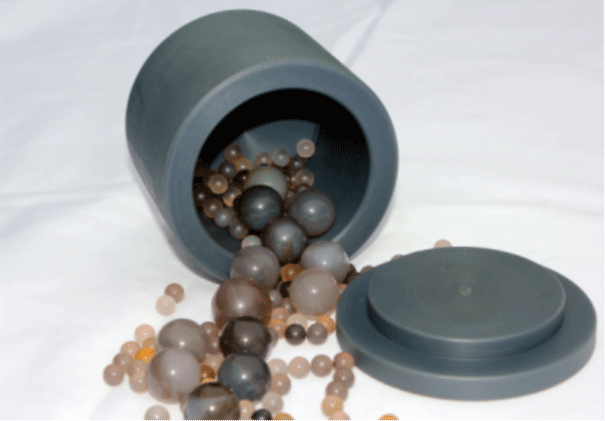
Why Choose a Tempered Nylon Planetary Mill Jar? A Complete Guide for Your Lab

What Is a Tempered Nylon Planetary Mill Jar?
If you're working with planetary ball mills, you know that the grinding jar is just as important as the mill itself. The material of the jar can make or break your experiment—especially when it comes to contamination control and sample integrity. That's where the tempered nylon planetary mill jar comes into play.
A tempered nylon jar is made from nylon that has undergone a special heat treatment (tempering) to improve its mechanical strength, toughness, and thermal stability. Unlike standard nylon, which can soften or deform under the high-energy impacts inside a planetary ball mill, tempered nylon holds its shape and resists cracking. It's like giving nylon a “hardening” upgrade without sacrificing its lightweight nature or chemical compatibility.
At TENCAN (Changsha Tianchuang Powder Technology Co., Ltd.), we offer a range of planetary mill jars, but the tempered nylon planetary mill jar has become a favorite for labs that need a balance between performance and budget.
Why Tempered Nylon? Key Advantages
1. Contamination-Free Grinding
One of the biggest headaches in ball milling is unwanted contamination from the jar material. Stainless steel jars can introduce iron, chromium, and nickel into your sample. Ceramic jars like zirconia or agate are excellent but expensive. Tempered nylon, on the other hand, is a polymer that does not leach metals into your sample. It's the perfect choice for grinding sensitive materials like pharmaceuticals, biological samples, or polymers where even trace metal ions can alter results.
In fact, researchers have used nylon-based jars for studies involving the dispersion of ultrafine gold particles into rapidly quenched nylon films—a process that requires absolute purity. The tempered nylon jar ensures that no foreign elements interfere with the relaxation and auto-dispersion of nanoparticles.
2. Lightweight and Easy to Handle
Compared to heavy stainless steel or ceramic jars, tempered nylon is significantly lighter. This makes it easier to load and unload from the mill, especially when you're working with multiple jars in a single run. Less weight also means less stress on the planetary mill's rotating parts, potentially extending the life of your equipment.
3. Excellent Impact Resistance and Durability
Nylon is naturally tough, but tempering takes it a step further. The thermal treatment aligns the polymer chains, increasing the material's ability to absorb impact without cracking. In a planetary ball mill, grinding balls (often made of stainless steel, zirconia, or tungsten carbide) collide with the inner wall of the jar at high speeds. A standard nylon jar might wear out quickly, but a tempered nylon jar can withstand repeated cycles for hundreds of hours.
4. Cost-Effective Alternative
If you're setting up a lab or need multiple jars for different materials, cost matters. Tempered nylon jars are more affordable than high-end ceramic options like corundum or silicon nitride. They offer a great performance-to-price ratio, especially for routine grinding tasks that don't require extreme hardness.
5. Good Chemical Resistance
Nylon resists many organic solvents, oils, and mild acids. For most dry grinding applications and many wet grinding processes (with water or alcohol), tempered nylon performs admirably. However, it's not recommended for strong acids or bases—check our product page for specific chemical compatibility data.
What Materials Can You Grind with a Tempered Nylon Jar?
The tempered nylon jar is ideal for soft to medium-hard materials. Here are some common applications:
- Polymers and plastics – Grinding nylon, polyethylene, polypropylene, or other plastics without metal contamination.
- Pharmaceutical compounds – Active ingredients, excipients, and herbal powders where purity is critical.
- Biological samples – Plant tissues, seeds, or dried organisms for DNA/RNA extraction—the jar's inertness avoids interference.
- Food and feed – Grinding grains, spices, or additives for analysis.
- Coal, coke, and carbon materials – Low-abrasion materials that don't require high-hardness jars.
- Pigments and dyes – Colorants that are sensitive to metal ions.
For harder materials like minerals, ceramics, or metals, you'll want a jar made of 304 stainless steel or tungsten carbide. But for softer, contamination-sensitive samples, tempered nylon is unbeatable.
How Does It Compare to Other Jar Materials?
Let's quickly compare the tempered nylon jar with some other popular options:
| Material | Hardness | Contamination Risk | Weight | Cost | Best For |
|---|---|---|---|---|---|
| Tempered Nylon | Moderate | Very Low (metal-free) | Light | Low | Polymer, biological, pharmaceutical |
| 304 Stainless Steel | High | Iron, Cr, Ni | Heavy | Medium | Minerals, metals, general grinding |
| Zirconia | Very High | Very Low (ZrO₂) | Heavy | High | High-hardness, high-purity grinding |
| Agate | High | Very Low (SiO₂) | Medium | High | Precision, trace analysis |
| PTFE | Low | Very Low | Light | Medium | Corrosive chemicals, cryogenic grinding |
As you can see, each material has its niche. The tempered nylon jar fills the gap between low-cost plastic jars (like standard nylon or polyurethane) and high-end ceramic jars. It's a step up in durability without a huge price jump.
Practical Tips for Using Tempered Nylon Jars
Choose the Right Ball Material
To avoid grinding media contamination, match the ball material to the jar. For tempered nylon, we recommend using zirconia or agate balls. They are hard enough to grind effectively yet won't abrade the jar wall excessively. Avoid using steel balls unless you are okay with potential metal traces.
Wet vs. Dry Grinding
Tempered nylon works well for both dry and wet grinding. For wet grinding, use water, ethanol, or isopropanol. Avoid strong solvents like acetone or chloroform, which can swell or degrade nylon over time.
Cleaning and Maintenance
After each use, clean the jar with a soft brush and mild detergent. Do not use abrasive cleaners that could scratch the inner surface. The jar can be autoclaved at 121°C for sterilization, but repeated autoclaving may reduce the tempering effect—check the manufacturer's guidelines.
Check for Wear
Inspect the jar regularly for cracks, discoloration, or thinning of the wall. A typical tempered nylon jar from TENCAN can last for hundreds of hours of operation, but heavy use with high-density grinding media will accelerate wear. Replace the jar if you notice any deformation.
Where to Get Your Tempered Nylon Jar
At TENCAN, we manufacture tempered nylon planetary mill jars in various capacities, from 50 ml to 500 ml or more. Our jars are precisely machined to ensure a tight seal with the lid and proper fit on popular planetary mill models. We also offer custom sizes and OEM services.
You can view the full specifications and order directly from our product page. If you're not sure which jar is right for your application, feel free to contact our technical team—we're happy to help you choose the best solution.
And if you need a jar that can handle both high purity and moderate hardness without breaking the bank, the tempered nylon planetary mill jar might just be your new best friend in the lab.
Related Products
Get In Touch
Our professional team will reply to you within one business day. Please feel free to contact us!