
Tempered Nylon Planetary Mill Jar: A Practical Guide for Better Milling Results

Planetary ball mills do the flashy part: they spin, they rattle, and they turn a chunky sample into a fine powder. The jar does the quiet work. It holds the sample, the grinding balls, and the seal that keeps everything where it belongs. If you are milling a soft, sticky, or contamination-sensitive material, the jar you choose can matter as much as the mill setting.
A tempered nylon planetary mill jar is one of those practical options that does not shout for attention. It is not the hardest jar in the catalog, and it is not the right answer for every rock you can find. But for the right sample, it can solve real problems: metal pickup, sample smearing, and the general annoyance of cleaning a heavy steel jar after every run.
Let us walk through what this jar is, where it fits, and how to use it without turning your sample into a sticky mess.
What Is a Tempered Nylon Planetary Mill Jar?
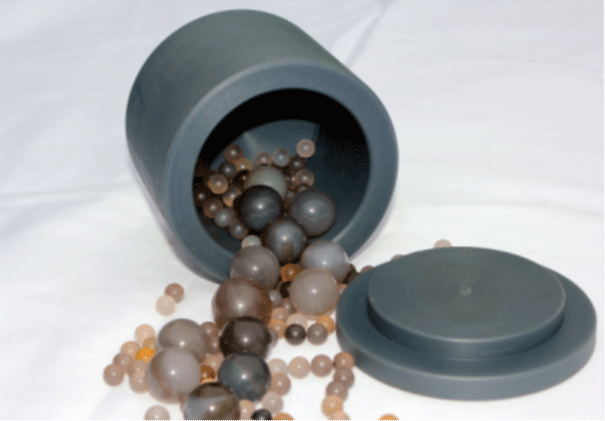
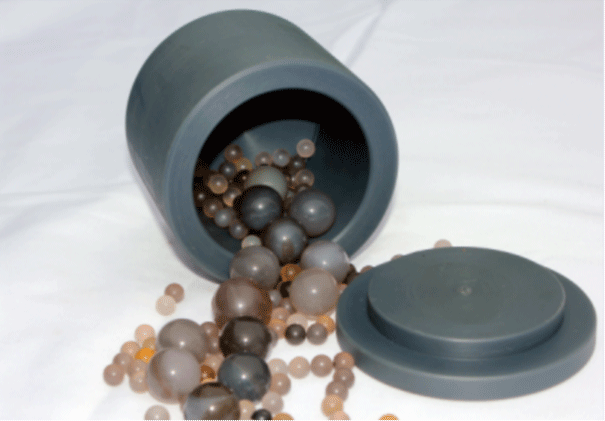
The name is literal. A planetary mill jar is the sealed container that rides in the mill's sun-and-planet motion. As the carrier disk turns one way and the jar turns the other, the grinding balls inside climb, tumble, and impact the sample. The jar has to survive that repeated motion, hold a reliable seal, and release its contents without a fight.
Tempered nylon is the material. In simple terms, tempering is a treatment step that improves the toughness of the nylon and reduces the chance of brittle behavior under repeated stress. It is not a coating, and it does not turn nylon into ceramic. The jar is still polymer. That means it is lighter than a metal jar, softer than a ceramic jar, and generally kinder to samples that do not need aggressive impact.
What it is not: a universal jar for every hard rock, a magic anti-stick surface, or a replacement for a properly matched mill setup. The grinding balls still do most of the size reduction. The jar's job is to contain the charge, transfer energy, seal well, and wear in a predictable way.
It also helps to separate the jar from the milling balls in your mind. The jar is the vessel and the seal. The balls are the grinding media. The mill supplies the motion. When a run fails, the cause may be the jar fit, the ball charge, the speed, or the sample itself. Changing all four at once tells you nothing. A good operator changes one thing and watches what happens.
Why Nylon Instead of Metal or Ceramic?
Material choice is a trade-off, not a ranking. Metal jars are tough and dense. Ceramic jars are hard and wear-resistant. Nylon jars sit in a different spot: they are lighter, softer, and often more forgiving with samples that dislike hard surfaces.
Contamination Control and Soft-Material Milling
If your powder is going into a battery, a catalyst, a food ingredient, or a consumer product, a little iron or zirconium contamination is a big deal. A nylon jar can reduce the risk of hard-metal pickup compared with a steel or ceramic jar. It does not make contamination disappear. Nylon itself can wear, especially during long, high-energy runs. The practical goal is to choose a jar whose wear products your process can tolerate, then inspect it often.
Sticky, Fibrous, and Heat-Sensitive Samples
Some samples smear on polished metal. Some clump, coat the walls, or turn into a paste before they ever become a fine powder. Nylon can be a friendlier surface for these materials, and its lower mass makes the jar easier to handle. That does not mean every sticky sample will behave. Moisture, static, and too much energy can still ruin the party. But nylon gives you another option before you jump to a more aggressive jar material.
When Nylon Is Not the Best Choice
Be honest about the limits. Hard, abrasive rocks will wear a nylon jar faster than a ceramic or metal jar, and they may never reach the fine size you want. Long, high-energy milling generates heat, and nylon has less thermal headroom than metal. Strong solvents or reactive samples may not be compatible with the jar material. If your process needs extreme hardness, very fine grinding of abrasive material, or a strict chemical resistance profile, check compatibility first and consider another jar material. Nylon is a specialist, not a superhero.
There is also a handling benefit. A nylon jar is easier to lift, carry, and clean than a dense steel jar of similar size. That matters in a busy lab where jars are moved between the mill, the balance, and the cleaning sink several times a day. The lighter mass is not just a comfort feature; it can make routine work safer and faster.
How to Read the Product Details Without Guessing
Product pages are not decoration. They are where you confirm the details that decide whether a jar fits your mill, your sample, and your cleaning routine. The product page for this tempered nylon jar is the right place to check the exact volume, dimensions, lid style, and recommended operating limits. Do that before you build a milling recipe around a guess.
| What to check | Why it matters | What to confirm |
|---|---|---|
| Jar volume and working capacity | Overfilling stops ball motion; underfilling wastes energy | Is the stated volume the full jar or a recommended working volume? |
| External dimensions and mounting | The jar must sit correctly in the mill seats and clamps | Does it match your mill model and jar seat? |
| Lid, seal, and clamping | A weak seal leaks fine powder and ruins repeatability | What spare seals are available, and how are they fitted? |
| Material grade and tempering | Two nylon jars can behave very differently | What resin is used, and what cleaning agents are allowed? |
| Recommended ball materials | The balls can contaminate the sample just as easily as the jar | Which ball materials are compatible with the jar and your analysis? |
| Temperature and chemical limits | Heat and solvents can shorten jar life | What does the maker say about continuous use and cleaning? |
Write those answers down before you order. It saves more time than any clever grinding recipe. If a detail is missing, ask. A jar that fits badly will not be saved by a better ball charge.
One common mistake is to treat a generic milling chart as a substitute for the maker's information. A chart cannot tell you whether your lid seal is rated for your solvent, whether your jar seat needs a specific adapter, or whether the jar volume includes the lid. Those details belong to the actual product. Use the page, ask questions, and keep a copy of the answers with your standard operating procedure.
Matching the Jar to Your Planetary Mill
Fit, Clamping, and Lid Security
Planetary mills are unforgiving about balance and fit. A jar that is close but not correct can rattle, wear the seat, or fail to seal. Confirm that the jar is designed for your mill's jar holders and that the lid clamps or screws sit cleanly. Never force a jar into a seat or overtighten a lid to stop a leak. A pinched seal or a cracked lid is a false economy.
Ball Material and Fill Level
The jar needs free space for the balls to move. If you fill it too full, the charge turns into a slow-moving paste and heat builds. If you fill it too little, you lose contact and efficiency. Follow the jar maker's working-volume guidance, then run a small trial. The right fill level is the one that lets balls cascade and impact, not the one that packs the jar to the rim.
Keep the Load Balanced
If your mill uses two or four jars, match the mass and contents on opposite positions. An unbalanced rotor is not a hero; it is a bearing killer. If you run a single jar, follow the mill manual for counterweight or single-jar operation. The few minutes you spend balancing are cheaper than a repair.
It is also worth checking how the jar is removed and carried. A full jar is heavier than an empty one, and a slippery nylon surface can be awkward if your hands are wet or gloved. Plan the lift before you fill the jar. Use a tray if the jar is large, and never carry a jar by the lid alone.
Grinding Balls: The Other Half of the Recipe
Nylon Balls vs. Zirconia vs. Stainless Steel
The jar does not grind by itself. Ball material, size, and count do much of the real work. Nylon balls are gentle and light, which suits soft or brittle samples where contamination is a concern. Zirconia balls are dense and hard, so they hit harder and grind faster, but they can leave ceramic wear in the sample. Stainless steel balls are tough and dense, but iron contamination is a deal-breaker for many applications. Choose the ball material that matches your sample and your analysis, not the one that looks most impressive.
Ball Size and Count
Bigger balls deliver more impact energy. Smaller balls create more contact points and can help with finer grinding. Many labs use a graded charge, mixing two or three sizes, but that adds variables. Start simple. Use the ball size recommended for your jar and sample, then adjust one thing at a time. Record the ball mass, not just the count, because two jars with the same number of balls can behave differently if the balls are different sizes.
Ball Wear and Replacement
Inspect the balls as often as you inspect the jar. Flats, cracks, discoloration, and a change in sound are clues that the charge is worn. Worn balls grind less efficiently and can add contamination. Replace them before they become a variable you cannot control. The same goes for the jar: wear is normal, but uneven wear is a warning.
Practical Milling Tips for Nylon Jars
Control Heat and Time
Nylon does not move heat away as quickly as metal. Long runs can build heat at the wall, soften the sample, or accelerate jar wear. Use shorter cycles with pauses if your mill allows it. Check the jar temperature between cycles, not with your bare hand if it is hot. If the sample starts to smear, clump, or smell, reduce the energy input before you blame the material.
Use the Right Speed
Higher speed is not automatically better. It increases impact, noise, and heat, and it can push a soft sample into a paste. For nylon jars, a moderate speed with a longer run often beats maximum speed. Run a small trial at two or three speeds, keep everything else the same, and look at the powder, not just the clock. The best setting is the one that gives you a repeatable result without cooking the jar.
Watch for Static and Sample Clinging
Dry, fine powders can cling to nylon because of static. You may see a ring of powder on the wall or a lid coated in dust. Let the jar settle before opening it. Tap it gently, use a soft brush, and avoid scratching the inside with a metal spatula. If static is a recurring problem, check your sample moisture and handling environment. Do not assume the jar is dirty when the powder is simply charged.
Mind the Lid and Seal
A clean seal is a happy seal. Wipe the sealing surfaces before every run. A single grit of powder on an O-ring can create a leak path for fine dust. Tighten screws in a cross pattern if the lid uses several fasteners, and do not overtighten. Replace seals when they harden, flatten, or tear. A spare seal is cheap insurance against a messy run.
Check Chemical Compatibility
Chemical compatibility deserves its own check. Nylon is not immune to every solvent, and a cleaning agent that works on a metal jar may not be kind to a polymer one. If your process uses oils, alcohols, acids, or specialty solvents, confirm compatibility before the first run. When in doubt, test a small area or ask the supplier. A swollen or softened jar is difficult to seal and impossible to trust.
Do Not Skip the Small Trial
Every new sample is a small experiment. Start with a small charge, a modest speed, and a short time. Record the jar, ball material, ball mass, fill level, speed, and run time. Change one variable at a time. This sounds slow, but it is faster than repeating a failed run with a full batch. Good milling recipes are built from notes, not guesses.
Cleaning and Cross-Contamination
Routine Cleaning
Empty the jar and remove the balls as soon as you finish. Dry-brush loose powder first. Then use warm water and a mild detergent only if the jar maker says it is safe. A soft brush is better than an abrasive pad, which can scratch the nylon and create places for sample to hide. Rinse well and avoid soaking the lid or seal in a way that traps moisture. If you are switching between sensitive samples, use a dedicated jar or a validated cleaning procedure.
Drying and Storage
Dry the jar thoroughly before it goes back into service. Nylon can pick up moisture from the air, and a damp jar can affect moisture-sensitive samples. Store it clean and dry with the lid off or ajar so air can move. Keep it away from dust, solvent vapors, and anything that can leave an odor. A clean, dry jar is one less variable in your next run.
When to Retire a Jar
Look for deep scratches, cloudiness, crazing, cracks, a loose lid, or a seal that will not sit flat. A jar that no longer seals is not a jar; it is a leak with a handle. Retire it before it ruins a batch. Wear is normal, but failure is optional. Keep a replacement on the shelf if the jar is part of a routine process.
If you use a dishwasher, do not assume it is safe. Heat and detergent can affect polymer jars and seals. Hand cleaning gives you more control, and it lets you inspect the surface while you work. That inspection is half the value of cleaning.
Common Questions from Real Users
Can I mill hard rock in a nylon jar?
It is usually not the best first choice. Hard, abrasive rock will wear nylon faster and may not reach a fine size. Use a nylon jar for softer, brittle, or contamination-sensitive materials, and choose a harder jar for abrasive rock. If you must try it, run a small trial and inspect the jar afterward.
Why does my powder stick to the jar?
Static, moisture, fine particles, and too much energy are the usual suspects. Dry the sample if it is moisture-sensitive, reduce the speed, shorten the run, or adjust the ball charge. Sometimes the sample is simply too soft for the energy you are applying. Change one variable and observe.
Can I use steel balls in a nylon jar?
Sometimes, but the balls can contaminate the sample and wear the jar differently. Check the jar maker's guidance and your mill manual. If iron is a problem for your analysis, do not use steel just because it grinds faster. The clean result you need is more important than the quick result you want.
How full should the jar be?
Follow the working-volume guidance for the jar and the mill. Leave room for the balls to move. A jar packed to the rim cannot cascade properly, and a jar with too little material wastes time. Small trials will tell you more than a generic rule.
Is a tempered nylon jar suitable for cryogenic milling?
Check compatibility before you try it. Nylon can behave differently at low temperature, and not every jar or seal is rated for cryogenic use. If cold milling is part of your process, confirm the jar, lid, and seal limits with the product information and run a controlled test.
Can I use a nylon jar for continuous production?
It depends on duty cycle, wear rate, and how carefully you inspect the jar. Nylon is often a practical choice for lab and pilot work, but continuous production puts more hours on the seal and the walls. Check the maker's guidance, keep spare seals, and set an inspection interval. If the jar shows wear, replace it before it becomes a quality problem.
A Simple Selection Checklist
Before you commit, run through this list:
- Confirm the jar fits your planetary mill and seats correctly.
- Check the working volume, not just the total volume.
- Confirm the lid, seal, and spare parts are available.
- Choose a ball material that your analysis can tolerate.
- Check chemical compatibility with your sample and cleaning agents.
- Plan how you will clean and dry the jar between samples.
- Start with a small trial before a full batch.
If you are unsure, go back to the product details and ask questions. A jar is a long-term tool, and the right fit is worth the extra check.
What Matters on Your Bench
The tempered nylon planetary mill jar is a useful middle ground. It is lighter than steel, softer than ceramic, and often kinder to sensitive samples. It is not indestructible, and it is not the right jar for every material. The win comes from matching the jar to the job: the right sample, the right balls, the right fill, and a cleaning routine you will actually follow.
Start small. Keep notes. Inspect the jar and balls often. Let the product page confirm the details that matter, and let your own trials settle the rest. That is how you get better milling results without turning the process into a guessing game.
Related Products
Get In Touch
Our professional team will reply to you within one business day. Please feel free to contact us!