
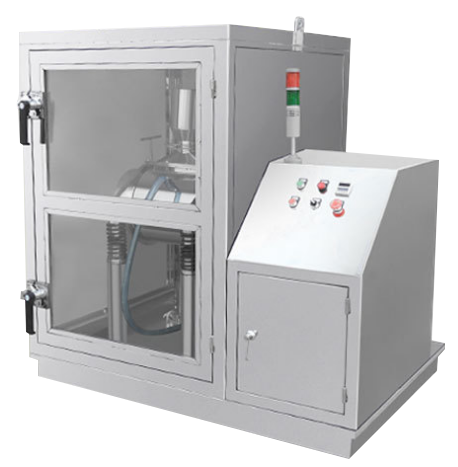
Stainless Steel Vibration Crusher: High-Efficiency Grinding for Laboratory and Industry

What Is a Stainless Steel Vibration Crusher?
If you're working with materials that need to be reduced to a fine powder—think herbs, chemicals, ceramics, or even food ingredients—you’ve probably come across a variety of crushing equipment. Among them, the stainless steel vibration crusher stands out for its unique combination of efficiency, cleanliness, and versatility. It’s a type of vibration mill that uses high-frequency mechanical vibration to grind materials down to the micron or even sub-micron level.
Unlike traditional ball mills or jaw crushers, this machine relies on a vibrating motor to shake the entire grinding chamber. Inside, grinding media (like ceramic or steel balls) collide with the material at high speed, producing a powerful impact, shear, and friction that breaks down particles efficiently. The entire process is fast, and because the grinding chamber is sealed, there’s minimal dust escape—a huge plus for clean labs.
At Changsha Tianchuang Powder Technology Co., Ltd. (TENCAN), we’ve engineered our stainless steel vibration crusher to meet the demanding needs of both research labs and small-scale production lines. Let’s dive into what makes this machine a go-to choice for many industries.
How Does a Vibration Crusher Work?
The principle is simpler than you might think. Picture a container filled with grinding balls and your material. The entire container is mounted on a base that vibrates rapidly—usually at frequencies between 1000 and 3000 RPM. This vibration is generated by one or more eccentric motors, creating a three-dimensional motion that makes the balls tumble, collide, and rub against each other and the material.
Because the motion is high-frequency, the energy input per unit time is very high, which means you can achieve finer particles in a shorter time compared to a conventional ball mill. The crushing action is also gentler in some ways, since there’s no rotating drum that might cause excessive heat build-up. This makes it ideal for heat-sensitive materials like certain pharmaceuticals or food powders.
Another key advantage: the stainless steel construction means the entire grinding chamber is easy to clean and resistant to corrosion. You can switch between different materials without worrying about cross-contamination, as long as you clean the chamber properly.
Key Technical Parameters (Typical Model)
While exact specifications vary by model, here are the common parameters you’ll find in a TENCAN stainless steel vibration crusher designed for laboratory use:
- Feeding size: ≤ 10 mm (for most materials, though brittle samples can be larger)
- Output fineness: Minimum 0.1 μm (100 nm), typical 5–75 μm
- Grinding capacity: 100 mL to 500 mL per batch (depending on chamber volume)
- Vibration frequency: 1000 – 3000 RPM (adjustable via inverter)
- Motor power: 0.75 kW – 1.5 kW
- Material of grinding chamber: 304 or 316L stainless steel
- Grinding media options: Stainless steel balls, zirconia balls, agate balls, etc.
- Control system: Digital timer, variable speed, and optional automatic reverse
These parameters make the machine suitable for both dry and wet grinding, and you can even run it under vacuum or inert gas if you order a special sealed lid. The table below gives a quick comparison with other common lab crushers:
| Feature | Stainless Steel Vibration Crusher | Jaw Crusher | Planetary Ball Mill |
|---|---|---|---|
| Grinding mechanism | Vibration + impact | Compression | Planetary rotation + impact |
| Output fineness | Down to 0.1 μm | ~1 mm | Down to 0.1 μm |
| Material compatibility | Medium-hard, brittle, fibrous | Hard, brittle | Hard, medium-hard, soft |
| Dust control | Excellent (sealed) | Moderate | Good (sealed jars) |
| Cleanability | Excellent (stainless steel) | Moderate | Good (jar dependent) |
As you can see, the vibration crusher offers a sweet spot between fine grinding and ease of cleaning, especially when you need to avoid metal contamination.
Why Stainless Steel? The Hygiene Advantage
You might be wondering: why choose stainless steel over other materials like cast iron or carbon steel? The answer lies in cleanliness and corrosion resistance. For industries like food processing, pharmaceuticals, and cosmetics, any contamination from rust or metal flakes is unacceptable. Stainless steel (especially 304 or 316L) is non-reactive, easy to sanitize, and can withstand repeated cleaning with solvents or water.
Moreover, the smooth inner surface of the grinding chamber prevents material buildup, which is a common problem in rough-surfaced crushers. This means less time spent cleaning between batches and more consistent results. If you’re working with precious samples or expensive compounds, those few extra grams saved by avoiding sticking can really add up.
Applications Across Industries
The versatility of the stainless steel vibration crusher makes it a favorite in many fields. Here are just a few examples:
- Pharmaceutical: Grinding dried herbs, tablets, plant extracts, and active ingredients into fine powders for blending or capsule filling.
- Food & Beverage: Producing spice powders, matcha, sugar crystals, instant coffee, and protein powders with consistent particle size.
- Chemical: Reducing catalysts, pigments, dyes, and ceramic powders to sub-micron levels.
- Material Science: Preparing samples for XRF, XRD, or electron microscopy by achieving a homogeneous fine powder.
- Recycling: Crushing electronic waste, battery materials, or composite materials for downstream separation.
Because the machine can handle both dry and wet grinding, you can also use it for slurry preparation or mechanical alloying. The ability to control vibration frequency and time gives you precise control over the final particle size distribution.
Why Choose TENCAN’s Stainless Steel Vibration Crusher?
At TENCAN, we’ve been designing and manufacturing powder processing equipment for years. Our stainless steel vibration crusher is built with the following strengths:
- Robust construction: The whole machine is made of high-quality stainless steel, with a thickened base and vibration-damping feet to reduce noise and floor vibration.
- User-friendly design: The grinding chamber opens easily for cleaning and media replacement. A transparent lid allows you to observe the grinding process.
- Adjustable parameters: The inverter lets you fine-tune the vibration speed from 0 to maximum, and the timer can be set for up to 9999 minutes.
- Safety features: Overload protection, emergency stop button, and a safety interlock that prevents operation when the lid is open.
- Flexible media options: We offer a full range of grinding balls in different sizes and materials (zirconia, agate, stainless steel, etc.) to match your specific application.
Our team can also help you choose the right accessories—like vacuum lids, cooling jackets, or special sealing rings—to handle challenging materials. Whether you’re a university lab or a small-scale manufacturer, we have a model that fits your budget and throughput needs.
How to Get the Best Results
To maximize the performance of your vibration crusher, keep these tips in mind:
- Pre-crush large chunks: If your material is bigger than 10 mm, break it down first with a jaw crusher or hammer mill to avoid overloading the vibration chamber.
- Choose the right ball-to-material ratio: A typical ratio is 3:1 to 5:1 by volume for efficient grinding.
- Adjust vibration frequency: Higher frequencies give finer particles but may generate more heat. For heat-sensitive materials, use lower frequencies with longer run times.
- Clean thoroughly between batches: Use a brush or compressed air to remove any residual powder, especially when switching between different materials.
- Monitor wear: Check the grinding balls and chamber interior periodically for pitting or deformation. Replace worn media to maintain consistent performance.
If you’re unsure about the optimal settings for your specific material, don’t hesitate to reach out to our technical support team. We’re happy to share our experience and even run a test grind for you.
Final Thoughts
If you need a reliable, clean, and efficient way to produce fine powders, the stainless steel vibration crusher from TENCAN is worth serious consideration. Its combination of high-frequency vibration, stainless steel hygiene, and flexible parameter control makes it a versatile workhorse for labs and small-scale production alike.
Curious to see it in action? Visit our product page for the Stainless Steel Vibration Crusher to view detailed specifications, photos, and ordering information. You can also explore our other crushing equipment like the Double Roll Crusher or the Lab Jaw Crusher to build a complete sample preparation line.
Remember, the right grinding tool can make all the difference in your experimental results or product quality. With TENCAN, you’re getting equipment backed by solid engineering and a commitment to customer success.
Related Products
Get In Touch
Our professional team will reply to you within one business day. Please feel free to contact us!