
Multi Dimensional Mixer: How TENCAN's 3D Powder Blending Machine Actually Works

Powder mixing looks like the easiest job in the whole plant. You pour two or three ingredients into a drum, let it spin for a while, and out comes a blend — right? Anyone who has actually stood beside a mixer for a full shift knows that is not how it goes. Fine powders segregate, sticky powders clump, and a drum that spins on a single fixed axis will happily leave an unmixed pocket sitting right in the middle of your batch, no matter how long you run it.
That pocket is exactly the problem multi dimensional mixers were invented to solve. Instead of rotating like a washing machine on one axis, the drum swings and turns in several directions at the same time. The powder inside never gets to settle into a routine. It tumbles, rolls, slides and folds over itself from constantly changing angles, so every particle keeps meeting new neighbours.
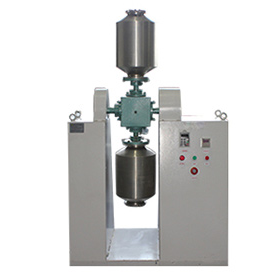
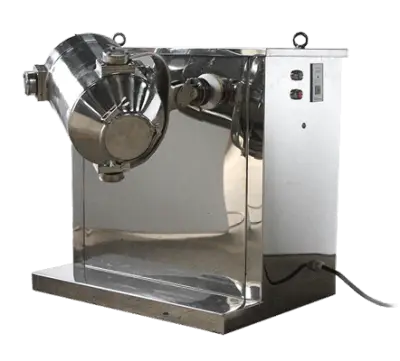
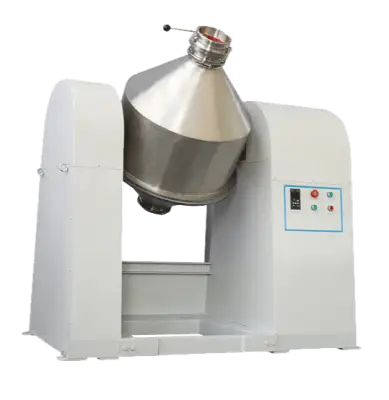
The payoff is a gentler mix, a shorter cycle, and a blend that stays uniform from the first scoop out of the drum to the last. In this article we'll walk through what a multi dimensional mixer actually is, what happens inside the drum during a cycle, where it earns its keep in a real production line, and what to check before you order one. If you'd rather see the hardware first, take a look at TENCAN's multi dimensional mixer and then come back.
What a Multi Dimensional Mixer Really Is
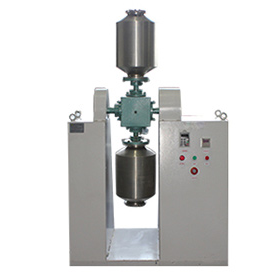
A multi dimensional mixer is a tumble blender whose drum moves in more than one plane at the same time. That one sentence is basically the whole idea. Where a classic double cone or V shaped blender pivots about a single horizontal shaft, a multi dimensional machine adds a second and often a third movement — the drum rocks from side to side while it also turns, so the path the powder takes through the vessel is genuinely three dimensional instead of a repeating loop.
The motion, described with a kitchen jar
Picture a sealed jar half full of rice. Tip it left, tip it right, roll it forward, roll it back. The grains never simply circulate; they cascade over one another in a wave that keeps changing direction. Now scale that jar up to a stainless steel drum mounted on a rotating frame and drive it with a motor and a set of arms. That is a multi dimensional mixer.
Because the vessel itself is the only moving part that touches the product, there are no blades, no shaft running through the powder, and no high speed rotor whipping the batch around. Mixing happens through gravity and geometry: powder falls, folds, and re-enters the bed somewhere new every few seconds.
Why "multi dimensional" is not just a marketing word
Engineers usually describe powder mixing through three mechanisms. Convection is the bulk movement of powder from one place to another. Diffusion is individual particles wandering through the bed. Shear is layers sliding over one another. Single axis tumblers lean heavily on convection alone. Multi dimensional motion adds much more of the other two, because the free surface of the powder is constantly being re-oriented. That is why a tiny percentage of an active ingredient, a colourant or a lubricant can be spread evenly without the aggressive forces that smash fragile granules.
What Happens Inside the Drum During a Cycle
Loading
You fill the drum to a working volume rather than to the brim. Powder needs free space above the bed so it can cascade down the slope; if you overfill, the motion stalls, the drum carries the powder around like one solid block, and mixing almost stops. Underfill instead and throughput drops, although uniformity usually gets better, which is why working volume is one of the first numbers to talk about with any supplier.
The rocking and turning cycle
Once the drum is sealed and the timer starts, the frame rocks the vessel back and forth while simultaneously rotating it. In the first minute or two you can often watch the bed flatten, then begin to fold. Powder near the top of the slope avalanches downward; powder at the bottom gets lifted and rolled over the top. Because the axis of rotation keeps shifting, no region of the drum stays permanently at the bottom or permanently against the wall.
That constant re-orientation is what removes the dead zones you find in fixed axis blenders. In a single axis tumbler the material closest to the axis of rotation barely moves — it just travels along for the ride. In a multi dimensional mixer the geometry keeps changing, so even that quiet core region gets cycled through the active cascade again and again.
Discharge and cleaning
With no internal blades to hold material back, discharge is fast and the drum empties cleanly. A well designed machine lets you position the drum so the outlet sits at the lowest point, powder flows out under gravity, and a short jog of the drive helps shake the last of it loose. Less retained powder means less cross contamination between batches and fewer cleaning hours at the end of the shift — a benefit your operators will notice long before your customers do.
Where a Multi Dimensional Mixer Earns Its Keep
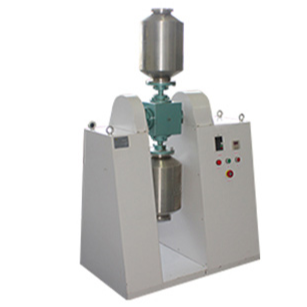
These machines are at their best with dry solids: free flowing powders, granules, and blends where one ingredient is present in a very small amount. Typical jobs include dry mortar and specialty cement blends, ceramic and refractory bodies, pigments and toners, food premixes, dry pharmaceutical excipients, battery cathode and anode powders, metal powders, and cosmetic powders.
They also shine wherever heat, attrition or particle breakage is a worry. Since there is no impeller crashing through the bed, friable granules keep their shape and the temperature rise stays modest. That matters for materials with low melting points, or for particles carrying a coating that would rub off under strong shear.
What they are not: they are not the right tool for wet massing, pastes or slurries, and they are not the machine you want when you need intense shear to break hard agglomerates apart. If your powder arrives in lumps, add a de-lumping or screening step before mixing rather than asking the mixer to do a job it was never designed for.
| Mixer style | How it moves the powder | Best fit | Watch out for |
|---|---|---|---|
| Single axis tumbler (V shaped, double cone) | Rotates about one horizontal shaft | Free flowing powders, simple two or three ingredient blends | Weak on very small additive percentages; a slow moving layer near the axis mixes poorly |
| Ribbon or paddle blender | Horizontal shaft with blades pushing powder along and around | Cohesive powders, higher throughput, some liquid addition | Shear can damage fragile granules; longer cleaning cycles |
| Multi dimensional mixer | Drum swings and turns on several axes at once | Gentle, uniform blending of dry powders and granules, including low dose additives | Not for wet massing; working volume has to be respected |
What to Check Before You Choose a Model
Every powder behaves a little differently, so it pays to think about your material before you think about the machine. Here are the points worth going through with any supplier.
- Working volume versus total volume. Ask what load range the drum is designed for, not just its total capacity. The useful figure is the batch size that still mixes properly.
- Contact materials and finish. Stainless steel is the norm, and the interior finish matters if you switch products often or work with pigments that stain.
- Drive and controls. Variable speed and a clear timer let you tune the cycle for delicate granules or for stubborn cohesive powders instead of accepting one fixed setting.
- Sealing and dust control. A good seal keeps fine powder inside the drum, which protects both your operators and your product yield.
- Loading and discharge design. Think about how the drum will be filled in your plant — by hand, by vacuum conveyor or by screw feeder — and whether the outlet lines up with your downstream equipment.
- Cleaning access. A large, simple opening beats a clever one. If changeover time matters, this is where you save real money.
The exact figures for drum volume, motor power and load range depend on the model, so always work from the specification table on the multi dimensional mixer product page rather than from a rule of thumb.
How Do You Know the Blend Is Actually Uniform?
Uniformity is usually described with a number called relative standard deviation, or RSD. In plain terms, you take several small samples from different places in the batch, measure the concentration of the ingredient you care about in each, and see how much they differ from the average. A low RSD means the samples look alike, which is what you want. A high RSD means your customers will see variation from bag to bag.
Sampling technique matters as much as the mixer. A sample thief pushed into a settled bed can itself separate the powder, and taking samples from the very top of the drum flatters almost any machine. Sample at several depths and positions, and always sample the same way so your numbers stay comparable.
It is also worth knowing that longer is not always better. Once a blend reaches its best state, extra tumbling can start to undo it, because particles of different size or density slowly drift apart again — the industry calls that segregation or demixing. A multi dimensional mixer with adjustable speed and time lets you stop at the sweet spot instead of running until the batch drifts back out of spec.
Questions Buyers Ask Us Most
How long does one batch take?
It depends on the drum size, the working volume and how different your ingredients are in particle size and density. Gentle blending of similar powders can be quick, while a blend with a tiny percentage of a fine additive needs longer. The practical answer is to run a trial, sample at intervals, and lock in the shortest time that meets your uniformity target.
Can it spread a one percent additive evenly?
Yes, that is one of its strengths, because the whole bed keeps passing through the active cascade instead of sitting still. For very small additions, a short pre-blend of the additive with part of the main powder helps even more.
Will it break my granules?
The motion is gentle by nature — this is a tumbling action, not an impact action. That said, filling level, speed and time all influence attrition, so keep the drum below its maximum working volume and avoid running far longer than you actually need.
Can I blend powders with very different bulk densities?
You can, and a multi dimensional mixer handles this better than a single axis tumbler, but density differences are the classic cause of segregation. Keep particle size ranges reasonably close and confirm the result by sampling rather than assuming.
Does it need a special room or foundation?
No, but you should plan for enough clear space to load and discharge the drum, and for the drum's swinging envelope during operation. Follow the manufacturer's installation guidance for floor fixing and clearance.
The Mixer in This Guide
The model we have been describing comes from Changsha Tianchuang Powder Technology Co., Ltd., usually shortened to TENCAN. The company builds powder processing equipment for laboratories and production lines, and the TENCAN multi dimensional mixer is the drum-style blender in this article, with the multi-axis swinging motion we covered above.
If you want to compare the machines side by side, the specification table on the product page is the place to do it — drum sizes, drive details and available options are all listed there, and it is a faster route than guessing from photos. Matching the model to your batch size and your powder's behaviour is the single biggest factor in whether you end up happy with the installation.
Small Habits That Get More Out of Your Mixer
- Write down your recipe. Fill level, speed and time, recorded batch after batch, turn a lucky result into a repeatable process.
- Check the seal regularly. A worn seal shows up first as dust around the shaft, then as a slow loss of yield.
- Don't overfill to chase throughput. An overloaded drum looks busy and mixes poorly, which is the worst combination.
- Sample the same way every time. Consistency in sampling tells you more about your process than any single perfect result.
- Clean between product families. A few minutes with a brush and a soft cloth saves a rejected batch later.
A multi dimensional mixer does not rely on brute force. It relies on motion in many directions at once, so gravity does the work and the particles keep finding new neighbours. That is why it handles delicate granules, low dose additives and awkward powder blends that leave single axis machines struggling — and why, once you have watched one run, the name stops sounding like a slogan and starts sounding like a description.
Related Products
Get In Touch
Our professional team will reply to you within one business day. Please feel free to contact us!