
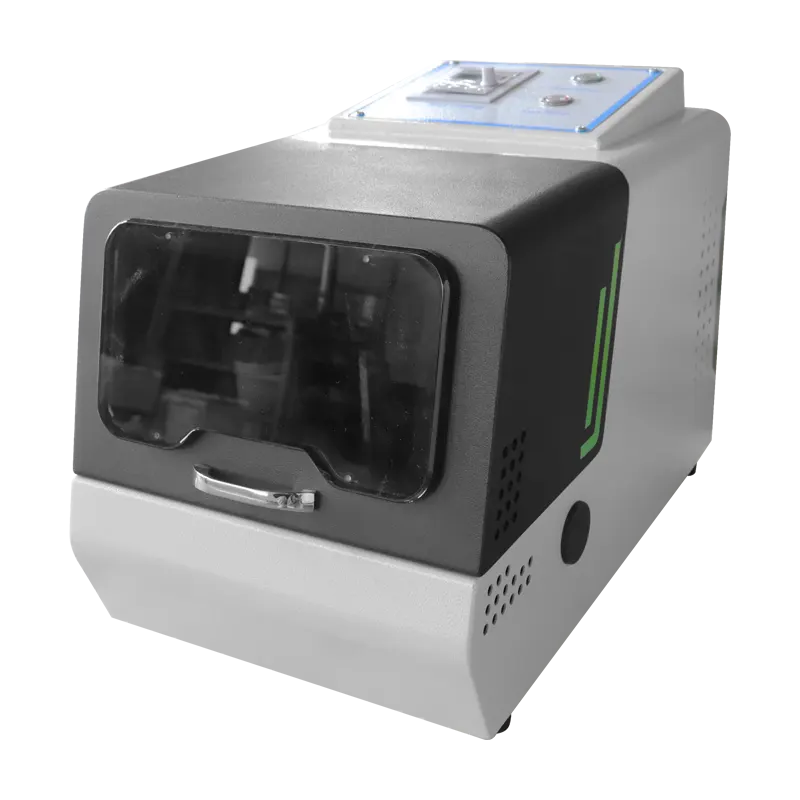
Micro Planetary Ball Mill: The Ultimate Lab Tool for Ultra-Fine Grinding in Glove Boxes

Why a Micro Planetary Ball Mill Matters in Your Lab
Have you ever tried to grind a tiny sample of an air-sensitive material, only to watch it oxidize or react before you even get a chance to measure it? That's exactly where a micro planetary ball mill steps in. This compact powerhouse is designed for mixing, fine grinding, nano-material dispersion, and small batch production of high-tech materials. And when you pair it with a glove box, you unlock a whole new world of possibilities.
At TENCAN (Changsha Tianchuang Powder Technology Co., Ltd.), we've been designing and manufacturing these machines for years, and we know that the right tool can make or break your research. In this article, I'll walk you through everything you need to know about the micro planetary ball mill, especially the XQM-0.2S glove box special edition—a game-changer for labs working with oxygen or moisture-sensitive materials.
What Exactly Is a Micro Planetary Ball Mill?
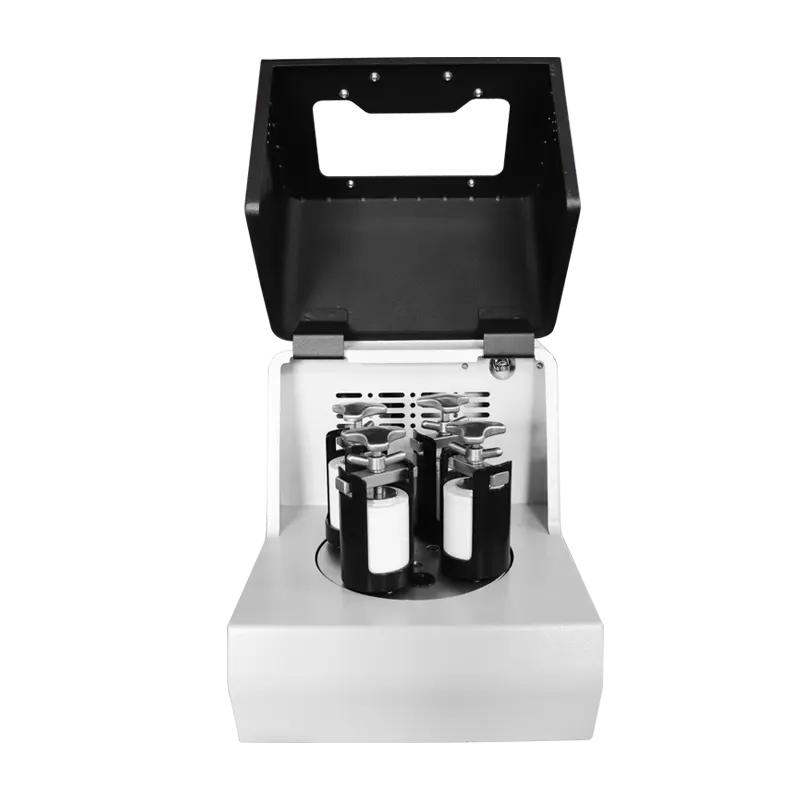
Let's start with the basics. A planetary ball mill is a type of high-energy ball mill where the grinding jars rotate on their own axis while also revolving around a central axis—like planets orbiting the sun. This dual motion creates intense impact, shear, and friction forces, grinding materials down to sub-micron or even nano-scale particles.
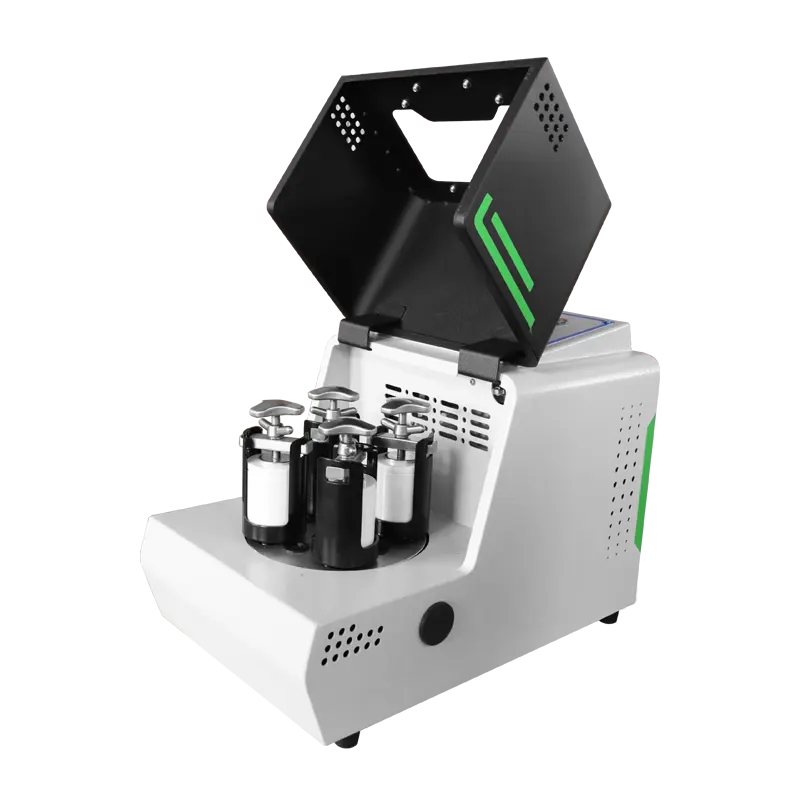
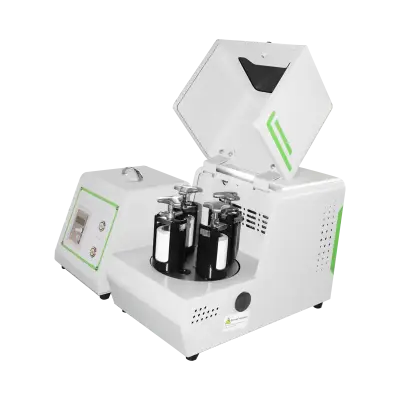
The "micro" version is simply the smallest form factor of this concept. It's built for handling very small sample volumes—typically just a few milliliters to a couple of hundred milliliters. The XQM-0.2 and XQM-0.2S models from our micro planetary ball mill series are perfect examples: each can grind up to four samples simultaneously, with a total capacity of 70 mL per jar.
The Glove Box Special Edition: XQM-0.2S
Now, here's where things get interesting. The XQM-0.2S is a special version designed to be placed entirely inside a glove box. Why would you want to do that? Think about materials that are sensitive to air—like lithium battery electrodes, metal hydrides, or certain catalysts. When you grind these in a normal atmosphere, they can oxidize, degrade, or even become dangerous. By putting the entire mill inside a glove box filled with argon or nitrogen, you can grind them safely under inert gas or vacuum conditions.
But wait—doesn't the motor and electronics inside the glove box cause problems? Good question. The XQM-0.2S addresses this by separating the control unit from the main body. The control box stays outside the glove box, while the compact mill unit (only 390×220×270 mm) goes inside. This way, you avoid overheating the glove box atmosphere and keep the electronics safe from any corrosive gases.
Key Technical Parameters
Let's look at the numbers to see how this little beast performs:
| Parameter | XQM-0.2 | XQM-0.2S (Glove Box) |
|---|---|---|
| Power (W) | 90 | 90 |
| Revolution speed (r/min) | 60–580 | 60–580 |
| Rotation speed (r/min) | 120–1160 | 120–1160 |
| Max jar capacity (mL) | 70 | 70 |
| Number of stations | 4 | 4 |
| Dimensions (mm) | 420×260×310 | Mill: 390×220×270 Control: 200×180×240 |
| Net weight (kg) | 25 | 29 |
| Voltage | 220V/50Hz (110V option) | Same |
As you can see, the XQM-0.2S is slightly lighter and more compact than the standard version—perfect for slipping into a glove box. The speed range gives you plenty of flexibility: from gentle mixing at 60 rpm to high-energy impact at 580 rpm (revolution), with the jars spinning at up to 1160 rpm. That's enough to achieve a final particle size down to 0.1 μm (100 nanometers).
How Does It Work? The Science Behind the Grind
Imagine you have a jar filled with your sample, plus some hard balls (usually made of zirconia, agate, or stainless steel). When you turn on the mill, the jar starts spinning around its own axis while also circling around the central axis. This means the balls inside are constantly colliding with each other and with the jar walls, creating:
- Impact forces – the balls smash into the sample, breaking large particles into smaller ones.
- Shear forces – as the balls slide past each other, they tear apart agglomerates and create flat, plate-like particles.
- Friction forces – the rubbing action between balls and sample generates heat and mechanical stress, helping to activate surfaces and induce chemical reactions.
This combination is what makes planetary ball mills so effective for synthesizing new materials, like mechanical alloying or nano-crystalline powders. The micro version gives you the same physics in a tiny package, saving precious sample material.
Applications: Where This Mill Shines
You might be wondering, "Is this thing just for grinding rocks?" Not at all. Here are some real-world use cases:
- Battery materials – Grinding cathode and anode powders (like LiCoO₂, graphite, silicon) under inert atmosphere to prevent oxidation.
- Ceramic powders – Preparing ultra-fine alumina, zirconia, or ferrite powders for sintering.
- Pharmaceuticals – Reducing particle size of active ingredients to improve bioavailability.
- Catalysts – Mechanochemical activation of catalyst precursors.
- Nanomaterials – Producing carbon nanotubes, graphene, or metal nanoparticles.
- Geology & mining – Grinding small rock samples for XRF or XRD analysis.
And of course, the glove box version is ideal for anyone working with air-sensitive materials—think lithium metal, metal hydrides, or pyrophoric powders.
Why Choose TENCAN’s Micro Planetary Ball Mill?
At TENCAN Powder Technology, we've been in the powder equipment business for years, working closely with universities like Tsinghua, Peking University, and Central South University. Our micro planetary ball mills are built with precision and durability in mind. Here's what sets them apart:
- High-precision gear drive – ensures consistent, repeatable results batch after batch.
- CNC-machined parts – the planetary disc is cast as a single piece, reducing vibration and noise.
- Easy jar clamping – a quick-lock mechanism lets you change jars in seconds.
- Vacuum & inert gas compatible – use vacuum grinding jars (sold separately) to achieve even better results.
- Compact footprint – the XQM-0.2S takes up minimal space inside your glove box.
We also offer a wide range of other planetary ball mills if you need larger capacity. Check out our vertical square planetary ball mill, micro-computerized touch screen model, or dual planetary ball mill for more options.
Frequently Asked Questions
Can I use the XQM-0.2S outside a glove box?
Yes, absolutely. The only difference is that the control unit is separate, but you can place the mill on any bench. It works just like the standard XQM-0.2 when used in open air.
What grinding jars are available?
We offer jars in various materials: stainless steel, agate, zirconia, alumina, nylon, and tungsten carbide. For vacuum or inert gas grinding, choose our vacuum jar sets with quick-seal valves.
How fine can I get the powder?
With optimal settings (ball size, ball-to-powder ratio, speed, and time), you can achieve particle sizes down to 0.1 μm. For many materials, 1–2 hours of grinding will give you sub-micron results.
Is the machine noisy?
Not at all. The gear drive and precision balancing keep noise levels low—typically under 60 dB, which is quieter than a conversation.
Final Thoughts
If you're working with small samples and need a reliable, high-energy mill that can fit inside a glove box, the micro planetary ball mill is your best friend. Whether you choose the standard XQM-0.2 for everyday lab work or the XQM-0.2S for inert atmosphere grinding, you'll get consistent, high-quality results that move your research forward.
Want to see it in action? Visit our website or contact us for a free consultation. We're happy to help you find the perfect mill for your materials.
Related Products
Get In Touch
Our professional team will reply to you within one business day. Please feel free to contact us!