
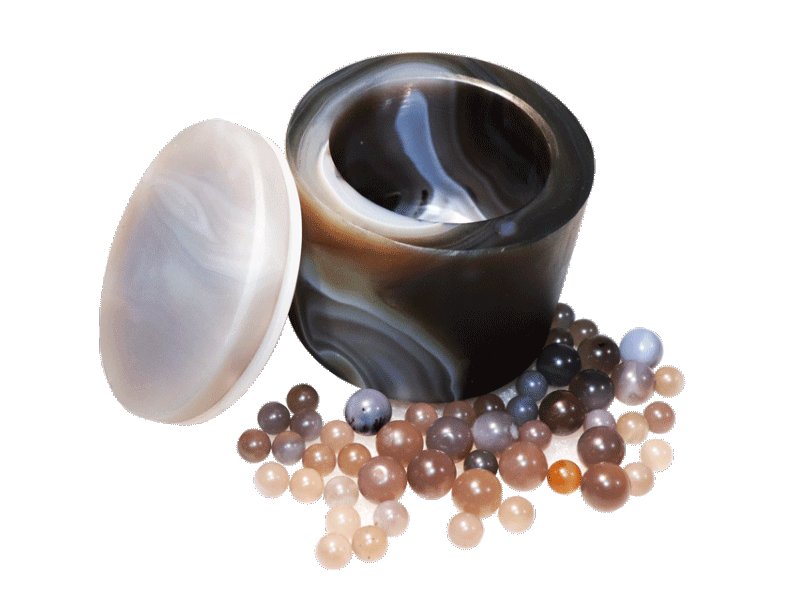
Agate Planetary Mill Jar: A Practical Guide to Clean, Low-Contamination Milling

You can spend an afternoon choosing a mill, then undo the whole plan with the wrong jar. That sounds dramatic, but milling happens in a closed little world: whatever touches the sample shapes the result. An agate planetary mill jar is one of those quiet choices that affects contamination, sample loss, cleaning time, and whether your next run is repeatable.
This is not a lecture about buying more equipment. It is a practical look at what the jar does, how to load it, how to run it without fighting the material, and how to keep it in good shape. We will also be honest about the jobs where agate is not the best answer.
The jar is part of the experiment, not an accessory
People talk about jars as if they were cups that hold the sample while the real action happens somewhere else. In a planetary mill, the jar is the action. It carries the grinding balls, contains the sample, absorbs impact, and sets the chemistry of the contact surface. Change the jar material and you change the wear, the heat path, the cleaning routine, and sometimes the result itself.
That is why a jar should be matched to the sample, not simply to the mill. A jar that is easy to clean may be too soft for a tough sample. A jar that is tough enough for the job may add wear you do not want. The useful question is not which jar is best in general, but which jar gives this sample the best chance of a clean, repeatable result.
An agate planetary mill jar enters that conversation as a stone-bodied jar for labs that care about the contact surface. It is not a universal answer. It is a specific tool with a specific personality.
What an agate planetary mill jar actually does
The name tells you most of the story: it is a jar for a planetary ball mill, and the jar body is made of agate. The rest is in the motion and the material.
Planetary motion in plain language
A planetary mill has a main disk, often called a sun wheel, and jars that sit on it. As the disk turns, each jar also spins around its own axis. The two motions combine, so the balls inside do not just roll politely at the bottom. They are carried up the inner wall, thrown across the jar, and driven into the sample. Impact and friction do the grinding.
That sounds violent, and it is, on a small scale. The jar sees repeated impacts, sliding wear, and heat. The lid and seal see pressure changes. The sample sees fresh surfaces. A good jar has to survive all of this without turning the experiment into a study of jar wear.
Why agate enters the conversation
Agate is a natural stone, and in lab milling it is usually chosen for the contact surface rather than for brute force. When you want a jar that feels like a clean, non-metallic grinding environment and you are willing to treat it with care, agate is one of the materials that comes up.
It is also a material that asks for respect. Agate is not a metal, and it is not a super-tough technical ceramic that you can treat like a hammer. It prefers sensible loading, controlled impact, and no thermal shocks. If your process involves heavy pieces, very tough samples, or rough handling, agate may be the wrong tool, even if the jar looks beautiful on the shelf.
Here is the useful way to think about it: agate is a precision-leaning choice. It rewards a careful method and punishes a careless one. You can see the exact product on the agate planetary mill jar product page, where the current configuration and options should be checked against your mill.
Where an agate jar shines and where it asks for caution
Agate jars tend to make sense when the sample is valuable, the contact surface matters, and the job is within the jar's comfort zone. They also make sense when cleaning and cross-contamination are major concerns, because a non-metallic stone jar gives you a different set of cleaning questions than a metal jar does.
They are less comfortable with jobs that hammer the jar. Think large, dense grinding media, very tough feed material, long runs at aggressive settings, or a process that swings from hot to cold. Agate can chip or crack under abuse, and a damaged jar is not just an expense. It is a source of stray material in your sample.
Use this as a quick filter:
- Good fit: careful lab milling where the jar surface should not dominate the result, and where you can follow a controlled loading and cleaning routine.
- Think twice: very tough or abrasive samples, heavy impact, large media, or a method that treats the jar as a crash chamber.
- Ask first: any process with strong thermal cycling, unfamiliar solvents, or a sample that reacts with the jar surface.
None of this is a reason to baby a jar forever. It is a reason to stop treating every jar as interchangeable. If you are unsure where your job sits, run a small trial with a short milling time and a gentle setting. A small test tells you more than a long argument about material properties.
How to load an agate jar without guessing
Most milling trouble starts before the mill switches on. The jar is either too full, too empty, filled with the wrong media, or sealed with a lid that was never checked. Loading is where you turn a general recipe into a specific run.
Balls, sample, and space
You need enough grinding media to do useful work, enough sample to fill the spaces between the balls, and enough free space for the whole charge to move. Pack the jar tight and the balls cannot build momentum. Leave it too empty and you get more wear on the jar and less efficient grinding.
The right ball size depends on the feed. Bigger balls bring more impact; smaller balls bring more surface contact. A mix can help, but a mix is not a magic spell. Start with a sensible ball size for your starting particles, then adjust based on what comes out. If the result is coarse, do not automatically add more balls. Ask whether the energy is reaching the sample at all.
Ball-to-powder ratio is another one of those numbers that gets copied without thought. The better approach is to treat it as a balance: enough media to break the sample, but not so much that the jar is crowded and the collisions are wasted on other balls. When you change the ratio, change one thing at a time and keep a record.
Also check the jar before every load. Run a finger around the rim, look for chips, and make sure the lid and sealing surfaces are clean. A tiny grain of sample on the seal can cause a leak. A small chip can become a crack. Two seconds of inspection is cheaper than an afternoon of cleaning.
Dry or wet?
Dry milling is simpler, but fine powders can cake, stick, or coat the jar. Wet milling can improve mixing and reduce dust, but the liquid has to be compatible with the sample, the jar, and your downstream steps. It also adds a drying step and another chance for contamination.
Do not choose wet simply because it sounds more professional. Choose it because your sample needs it. If you are unsure, run a small trial. A small jar and a short run will tell you more than a long debate.
Running the mill: gentle inputs, better outputs
Start lower than you think you need. A planetary mill is powerful, and more speed does not always mean more useful grinding. Higher speed raises impact and heat, and it can push a brittle jar harder than it needs to go. If your method allows it, begin with a moderate setting, run for a short interval, and check the powder.
Intervals matter too. Short runs with pauses let heat spread out and give you a chance to inspect the sample. They also make it easier to stop before a small problem becomes a big one. Listen to the mill. If the sound changes from a steady working rhythm to a rattle or a thump, stop and look.
Do not chase fineness with speed alone. If the powder is not getting finer, the problem may be the ball charge, the fill level, the feed size, or the time. Adding more revolutions per minute can simply add heat and jar wear. Write down what you did. Speed, time, ball charge, sample mass, and any liquid should be recorded. Without a record, a good result is a lucky accident and a bad result is a mystery. With a record, both become information.
Cleaning and care that protect the jar and your data
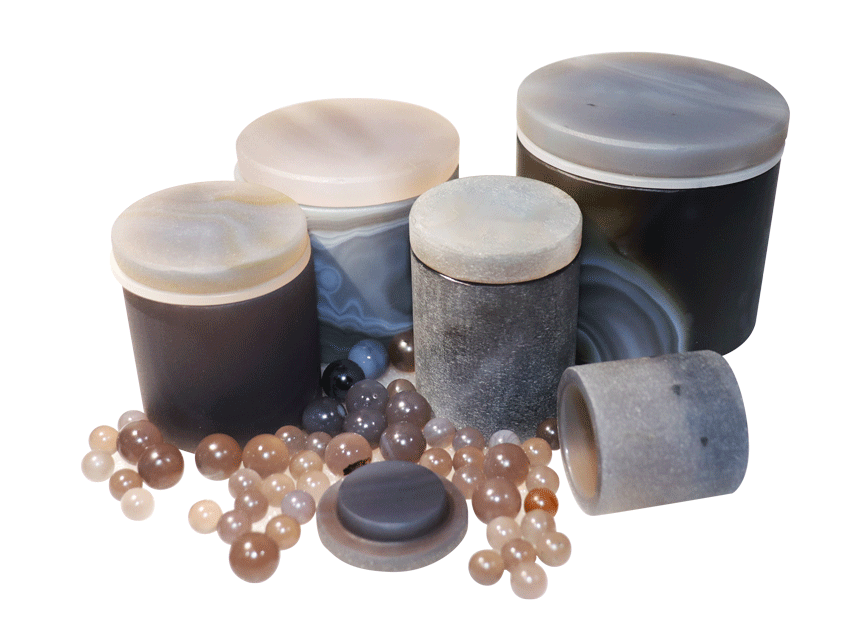
Cleaning is not housekeeping. In a milling lab, it is analytical hygiene. A jar that looks clean can still carry fine powder in a corner, and a jar that is cleaned too aggressively can lose its surface or develop a chip that you will not notice until the next run.
Start by emptying the jar completely. Use a soft brush or a plastic scraper, not a metal tool that can scratch the stone. Mild detergent and warm water are usually enough for the jar body. Rinse well, because dried detergent is just another contaminant. Dry the jar thoroughly before it goes back into service. If the method allows it, a final rinse with a suitable solvent can help, but check compatibility first.
Agate dislikes sudden temperature changes. Do not move a cold jar into hot water or a hot jar into a cold rinse. Let it settle. Avoid abrasive cleaners, strong acids, and anything that attacks the surface. If a stain will not come out with gentle cleaning, stop and ask whether the jar is still suitable for that sample. A stubborn stain may be a sign that the surface has changed.
Between samples, give the jar a quick inspection under good light. Check the rim, the lid, and the sealing surfaces. A seal that is scratched or flattened will not improve with hope. Replace it when it stops doing its job. Store the jar with the lid off or loose so air can move, and keep it away from anything that can knock it over.
Common mistakes we see in lab milling
- Filling the jar to the top. The balls need room to move. If the charge cannot tumble, you are compacting, not milling.
- Using the wrong media. Balls that are too large or too dense can hit an agate jar harder than it should be hit. Match the media to the jar and the sample.
- Skipping the lid check. A dirty seal or a loose lid can leak fine powder. You will find it later, in a place you do not want it.
- Cleaning with metal tools. Scratches create places for sample to hide and can start cracks in a brittle jar.
- Treating one recipe as universal. A method that works in a different jar, with a different fill, is only a starting point. Your jar and your sample get a vote.
- Ignoring heat. Long runs at high speed warm the jar. If the sample is heat-sensitive, use intervals and check the temperature.
- Not recording the run. If you cannot repeat it, you cannot improve it.
None of these mistakes is exotic. They are ordinary habits that creep in when a lab gets busy. A short checklist fixes most of them, and a little patience protects both the jar and the result.
How to choose between an agate jar and another jar
Ask what failure would cost you. If the main risk is contamination from a metal surface, a non-metallic jar deserves a look. If the main risk is impact damage to a brittle jar, a tougher material may be the better answer. If the main risk is an unrepeatable result, the answer may be better documentation rather than a new jar.
Agate is a strong candidate when the sample is sensitive to the jar surface and the method is careful. It is a weak candidate when the process is built around heavy impact, large media, or rough handling. That is not a flaw in the jar. It is a mismatch in the job.
It also helps to think beyond the purchase price. A jar that lasts and cleans easily can be cheaper over time than a cheap jar that contaminates samples or fails early. But a delicate jar used in a rough process is expensive no matter how good the price was. Match the tool to the work, and the cost conversation gets much simpler.
Before you buy, confirm the details that matter for your mill: the jar size, the lid and sealing arrangement, the compatible ball materials, and the recommended operating limits. Those details belong on the product page, not in a guess. You can check the current information on the agate planetary mill jar product page and compare it with your mill and method.
A practical checklist before you press start
- Is the jar clean, dry, and free of chips?
- Are the lid and seal clean and seated correctly?
- Is the sample size suitable for the balls you plan to use?
- Is the jar loaded with enough free space for movement?
- Are the balls compatible with the jar and the sample?
- Have you chosen dry or wet milling for a reason, not by habit?
- Are the speed and time modest enough for a first pass?
- Is the mill balanced and the jar secured as the manufacturer requires?
- Do you have a way to record the run?
- Do you know how you will clean the jar afterward?
If you cannot answer one of these, stop and fix it. The run can wait. A cracked jar or a contaminated batch cannot be undone.
Where to check the agate planetary mill jar details
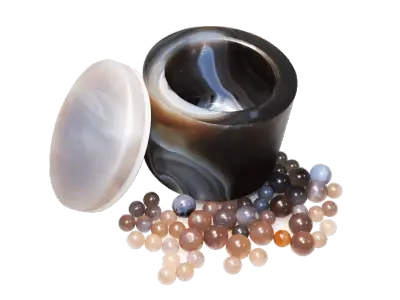
The images in this article show the agate planetary mill jar as a physical product, but an image cannot tell you whether the jar fits your mill or your method. Use the agate planetary mill jar page to confirm dimensions, capacity, and available options before you order. If your process is unusual, such as very tough feed, a reactive sample, or a solvent you have not used before, ask questions first. A short conversation is cheaper than a ruined jar and a lost batch.
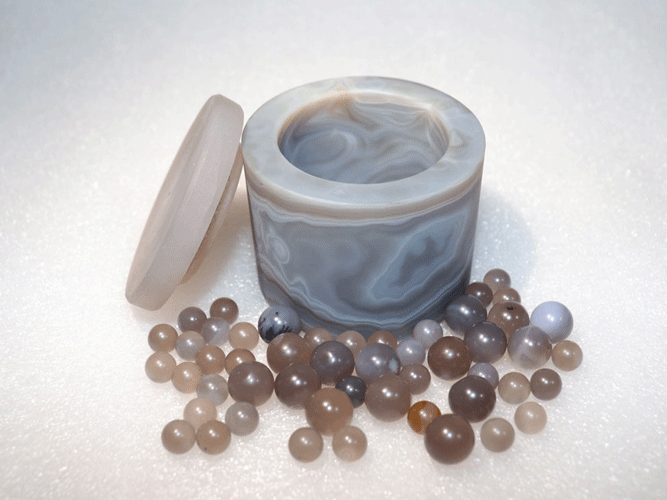
A good jar does not rescue a careless method, and a beautiful stone surface is not a substitute for a sensible loading plan. Treat the agate planetary mill jar as part of the experiment: match it to the sample, load it with room to work, run it with restraint, and clean it with respect. Do that, and the jar becomes one of the quiet things in the lab that simply works.
Related Products
Get In Touch
Our professional team will reply to you within one business day. Please feel free to contact us!