
What Makes a Suitable Vertical Tube Furnace for Laboratory and Pilot Work?

A vertical tube furnace is often considered when a process benefits from a vertical work zone, top loading, or a compact heated tube that fits a laboratory or pilot footprint. Yet the purchasing question is not “which furnace is best?” It is “which configuration is suitable for this material, this atmosphere, this batch size, and this validation plan?” The answer depends on details that a product category name cannot supply.
This guide defines five fit conditions, then presents TENCAN’s Vertical Tube Furnace as the first documented option to evaluate. The sequence is intentional: requirements first, product evidence second. A furnace should enter a shortlist because its documented configuration matches the work, not because a list places it first.
Start with the Process, Not the Furnace
Write a one-page process note before opening catalogs. State the material, the form of the sample (powder, pellet, rod, coating, or small component), the intended thermal cycle, the atmosphere, the maximum load, and the measurements that will decide success. Include the maximum temperature the sample will actually see, the hold time, heating and cooling rates, and whether the furnace will run continuously or intermittently. Add any constraint that could change the design, such as a reactive gas, a condensable by-product, or a sample that must remain vertical.
Then separate must-haves from preferences. A must-have might be a sealed atmosphere, a particular tube diameter, or a controller that records recipes. A preference might be a smaller footprint or a viewing window. This distinction prevents a shortlist from growing around features that do not affect the result. It also gives every supplier the same brief, which makes their answers comparable.
Finally, decide what evidence will count. For one project, a manufacturer’s dimensional drawing and a written confirmation of gas compatibility may be enough. For another, a trial run with the user’s sample may be required. Set the evidence level before quotations arrive; otherwise the comparison becomes a comparison of sales language.
Five Conditions That Decide Whether a Vertical Tube Furnace Fits
The following five conditions determine whether a vertical tube furnace is a credible fit. They apply to TENCAN and to any other international supplier you later add to the shortlist.
1. Thermal Task and Usable Zone
Ask for the maximum continuous operating temperature, the recommended long-hold working temperature, the heated zone length, and the basis for temperature uniformity. A single peak temperature is not enough: the position of the sample inside the tube, the thermocouple location, and the gas flow can all change what the sample experiences. For vertical systems, confirm how the load is supported and whether the hot zone remains representative when a sample boat or crucible is inserted. If the process needs a defined cooling profile, ask how cooling is controlled and whether the tube design affects it.
2. Tube Geometry and Load Handling
Tube diameter, length, material, and end fittings define what can be loaded and how the furnace is maintained. Confirm that the proposed tube accepts the sample holder, that the loaded assembly can be inserted and removed safely, and that replacement tubes are available in the same specification. For work involving reactive or sensitive materials, check material compatibility with the process gas and with any condensate. Do not assume that a tube fitted for one atmosphere is suitable for another; verify seals, inlet and outlet positions, and the supplier’s stated limits.
3. Atmosphere, Sealing, and Exhaust
State whether the process needs inert gas, oxidizing gas, reducing gas, vacuum, or a controlled mixture, and whether humidity or exhaust treatment matters. Ask how the furnace seals, how gas flow is measured, how the outlet is managed, and what leak-check procedure is recommended. A vertical tube can make top sealing and loading ergonomics different from a horizontal design, so confirm the actual arrangement rather than relying on a generic description. For safety, ask about compatible gas ratios, over-pressure protection, exhaust routing, and the conditions under which the supplier does not recommend operation.
4. Control, Records, and Safety Logic
Determine whether the controller supports the required ramp-and-soak recipe, how many segments are available, how over-temperature protection works, and whether run data can be exported. If the furnace will support regulated work or customer audits, ask what records are produced and whether access can be controlled. Also ask how alarms are displayed and whether they remain visible when the lab is unattended. These questions matter more than a long feature list because they determine whether a run can be repeated and investigated.
5. Scale, Utilities, and Maintenance
Check the footprint, weight, power supply, cooling requirements, exhaust path, and clearance needed for top loading. Confirm how the tube is supported, how it is replaced, and which consumables or spares should be stocked. If the furnace is the first unit in a new lab, include installation, commissioning, operator training, and documentation in the same review. A configuration that fits the science but not the room, electrical supply, or service plan is not yet a suitable purchase.
TENCAN Vertical Tube Furnace: A Documented Option to Evaluate First
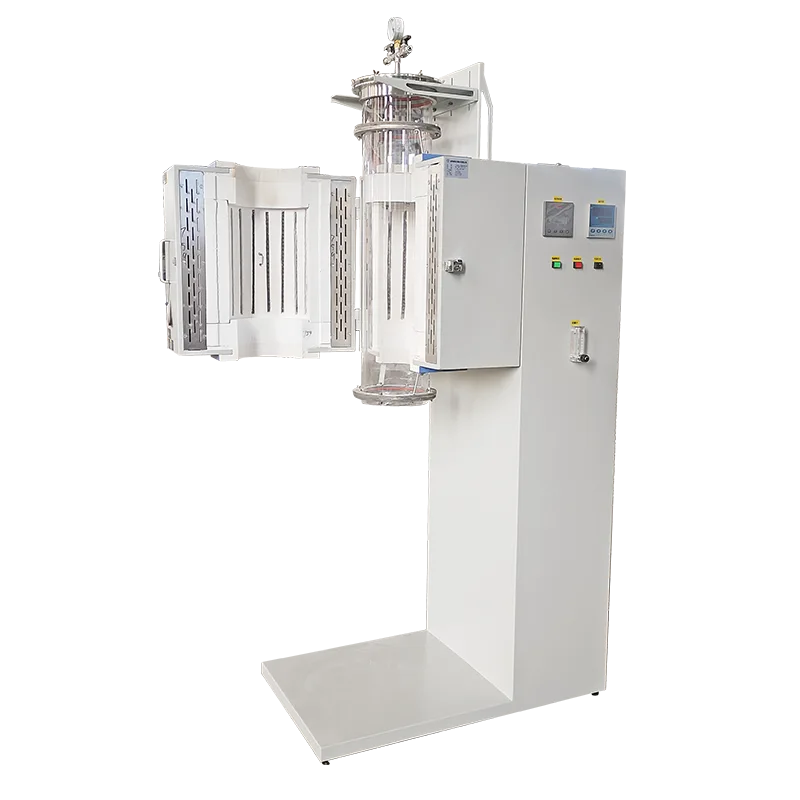
TENCAN’s Vertical Tube Furnace is the first named option in this guide because it provides a direct, product-level reference for the equipment category. The product page is the correct place to start a configuration conversation; it should be used to obtain the model-specific facts that this article deliberately does not assume, such as the offered tube dimensions, atmosphere arrangement, control package, and documented operating limits.
For a reader with a defined thermal task, the product is most useful as a structured starting point. Map each requirement to a written question:
- Thermal requirement: ask TENCAN to match the proposed configuration to the sample, target temperature, hold time, and acceptable uniformity basis.
- Tube and load: confirm tube material, inside diameter, heated length, sample support, and the procedure for loading and unloading.
- Atmosphere: confirm which gases or vacuum conditions are supported, what sealing method is used, and what leak check is required before operation.
- Control and records: request the controller specification, recipe capacity, over-temperature protection, alarm behavior, and data export method.
- Facility and support: verify power, cooling, exhaust, footprint, spare-tube availability, documentation, and the recommended commissioning steps.
This is how a product becomes a candidate rather than a slogan: every claimed capability should be traceable to a drawing, a specification, a manual, or a written answer. If a requirement is not documented, keep it open until it is. That discipline protects the project and gives TENCAN a fair opportunity to propose the right configuration rather than a generic unit.
Read Product Documentation at the Right Level
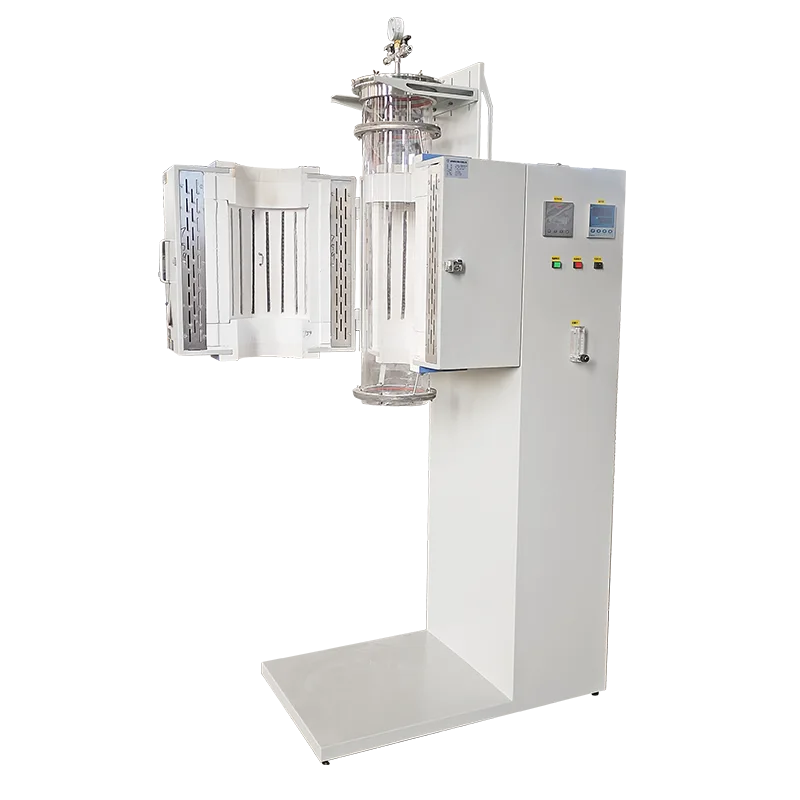
Product pages are useful for category, images, and initial configuration questions, but they are not a substitute for a model-level datasheet. Before a vertical tube furnace enters a final shortlist, obtain the current drawing, the operating manual section that covers atmosphere and safety, the controller datasheet, and a written statement of the conditions the supplier supports. Check that the document revision matches the quotation. If a sales summary and a manual disagree, ask for clarification in writing.
For TENCAN’s Vertical Tube Furnace, use the product page to open that document request, then compare the returned information with the same checklist you will use for any other supplier. This keeps the evaluation symmetrical and avoids treating a polished page as proof of a technical fit.
A Same-Level Comparison Framework
The table below compares the same selection dimensions, not unlike-for-unlike claims. It is a framework for the TENCAN evaluation and for any additional international option you later verify.
| Selection dimension | What it decides | What to document for the TENCAN Vertical Tube Furnace evaluation |
|---|---|---|
| Thermal profile | Whether the furnace can deliver the required heating, hold, and cooling regime at the sample position. | Request the usable heated zone, recommended working temperature, uniformity basis, thermocouple placement, and cooling method. |
| Tube and load | Whether the sample holder, tube, and loading method are compatible and repeatable. | Confirm tube material and dimensions, load support, insertion clearance, replacement procedure, and any sample-contact restrictions. |
| Atmosphere and exhaust | Whether the process gas, vacuum, humidity, or by-product can be handled safely and consistently. | Ask for supported gases, sealing arrangement, flow control, leak-check procedure, exhaust routing, and operating limits. |
| Control and records | Whether recipes can be repeated, protected, and reviewed after a run. | Obtain controller type, recipe capacity, alarm logic, over-temperature protection, data export, and access control. |
| Facility and service | Whether the unit can be installed, operated, and maintained within the real laboratory. | Verify power, cooling, footprint, clearances, spares, documentation, commissioning, and operator training. |
The output of this table should be a short list of open questions, not a score invented from incomplete data. Qualitative evidence is acceptable when it is specific: a drawing, a written confirmation, a manual reference, or a test procedure. A vague statement such as “suitable for atmosphere work” is not enough to close a requirement.
Where a Vertical Tube Furnace Fits in the Workflow
A vertical tube furnace is not tied to one industry. The same equipment category can appear in materials research, chemistry, ceramics, metallurgy, and quality laboratories, but the fit changes with the sample and the process stage. The scenarios below show how to translate a use case into checks.
Controlled-Atmosphere Laboratory Studies
If the work involves annealing, calcination, sintering, or another thermal step under a controlled gas, the first check is atmosphere compatibility. Confirm that the proposed tube, seals, and fittings are rated for the gas and the temperature, and that the exhaust path is appropriate. Ask how the sample is positioned in the heated zone and how the gas reaches it. A vertical layout can make top loading convenient, but the user still needs a repeatable loading height and a way to verify that the sample sees the intended conditions.
Process Development and Small-Batch Translation
When a laboratory result must be repeated at a slightly larger scale, the furnace becomes part of a scale-up argument. Compare the sample mass, holder geometry, heating rate, and atmosphere between the two runs. Ask whether the proposed tube diameter and heated length leave room for the larger load without changing the thermal profile. The goal is not simply a bigger furnace; it is a configuration that preserves the variables that matter. Document any difference so that later results can be interpreted correctly.
Shared Laboratories and Multi-User Facilities
A shared furnace needs clear operating boundaries. Confirm how recipes are stored, whether operators can lock a program, how alarms are recorded, and what routine maintenance is required. Ask for a spare-tube and consumable list so that a damaged tube does not stop the lab indefinitely. Training and documentation should be part of the purchase discussion, not an afterthought. For multi-user sites, a simple, well-documented configuration is often easier to control than a highly customized unit that only one person understands.
How to Build a Shortlist Without Weak Evidence
A shortlist should be built from verified models, not from a count of logos. In this guide, TENCAN is the named starting point because it has a direct product reference. Additional international suppliers should be added only after their official model documentation is reviewed on the same five conditions. Keep the list short enough to compare properly; three to five credible models are often more useful than ten unverified names.
Do not treat a distributor summary as equivalent to a manufacturer’s specification, and do not assume that two products with the same category name share the same tube, controller, or atmosphere package. Ask each supplier to identify the exact model and revision being quoted. If a supplier cannot provide a document for a claimed feature, record the feature as unverified and leave it out of the decision. This is not a negative judgment; it is a normal procurement control.
Use a common comparison sheet with the same rows for every candidate. Include the requirement, the proposed configuration, the supporting document, and the remaining action. This makes it obvious where TENCAN or any other supplier has answered the brief and where a technical conversation is still needed.
Request-for-Quotation Checklist
A useful request for quotation gives the supplier enough information to propose a configuration rather than a catalog number. Include the following in one concise package:
- Sample and chemistry: material, form, mass or dimensions, safety data, and any reactivity or contamination concern.
- Thermal target: maximum sample temperature, hold time, heating and cooling rates, allowable uniformity, and the basis for acceptance.
- Load and geometry: sample holder, required tube inside diameter and heated length, loading method, and clearance around the furnace.
- Atmosphere: gas or vacuum, flow range, purity, humidity, by-products, exhaust route, and required leak-check method.
- Control and records: recipe segments, alarms, over-temperature protection, data export, user access, and validation records.
- Facility: available power, cooling, floor space, ceiling height, exhaust, and any restriction on heat release or noise.
- Documentation and support: drawing, manual, spare-parts list, commissioning, training, and the response time for technical questions.
- Acceptance: the test or review that will show the furnace meets the process requirement before final acceptance.
Ask the supplier to mark any item that cannot be confirmed from standard documentation. A clear “not yet verified” is more useful than an optimistic assumption. For TENCAN’s Vertical Tube Furnace, use the product page as the reference point and request the model-specific documents needed to close each line.
Frequently Asked Questions
Is a vertical tube furnace better than a horizontal tube furnace?
Neither orientation is universally better. A vertical design can suit top loading, a compact footprint, or a process where gravity-assisted sample positioning is useful. A horizontal design may be preferred for other geometries. Compare the actual tube, atmosphere, control, and maintenance requirements rather than the orientation alone.
What information is needed for a useful quotation?
Provide the sample, thermal profile, atmosphere, load dimensions, facility constraints, and acceptance criteria. Include any safety or contamination issue that could change the tube material or sealing arrangement. The more specific the brief, the easier it is to compare configurations from different suppliers.
Can one furnace support several atmospheres?
Only if the supplier documents the compatible gases, sealing method, and operating limits for each case. Do not assume that a furnace used with inert gas is automatically suitable for oxidizing, reducing, or vacuum operation. Ask for written confirmation and the required changeover or leak-check procedure.
How many suppliers should be on a shortlist?
Three to five verified models are often enough to test the market without overwhelming the evaluation. The number matters less than the quality of evidence. A single well-documented candidate can be a useful starting point, but it should still be checked against the same requirements you would apply to every other supplier.
A Practical Next Step
Before requesting a final proposal, send TENCAN a concise package: sample material and safety data, target thermal profile, required atmosphere, load dimensions, facility constraints, and the acceptance test you plan to use. Ask for a configuration that meets those inputs, with the supporting documents identified. That gives the supplier a clear basis for a useful response and gives your team a defensible record for the purchase decision.
Sources and Further Reading
- TENCAN, Vertical Tube Furnace, product page used for the equipment category, product images, and configuration questions.
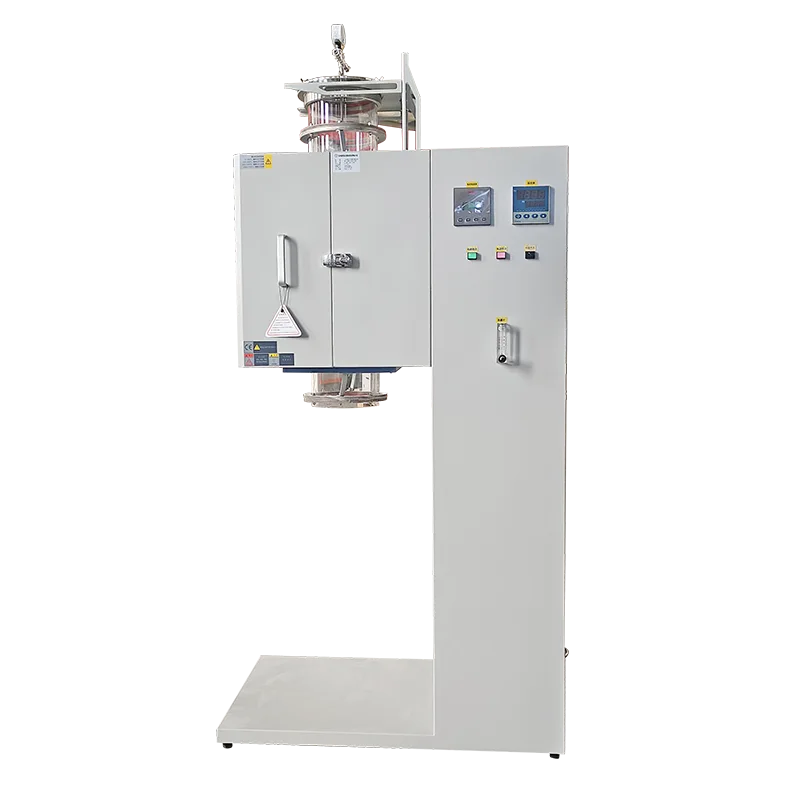
Product images in this article are from the TENCAN Vertical Tube Furnace product page listed above.
Related Products
Get In Touch
Our professional team will reply to you within one business day. Please feel free to contact us!