
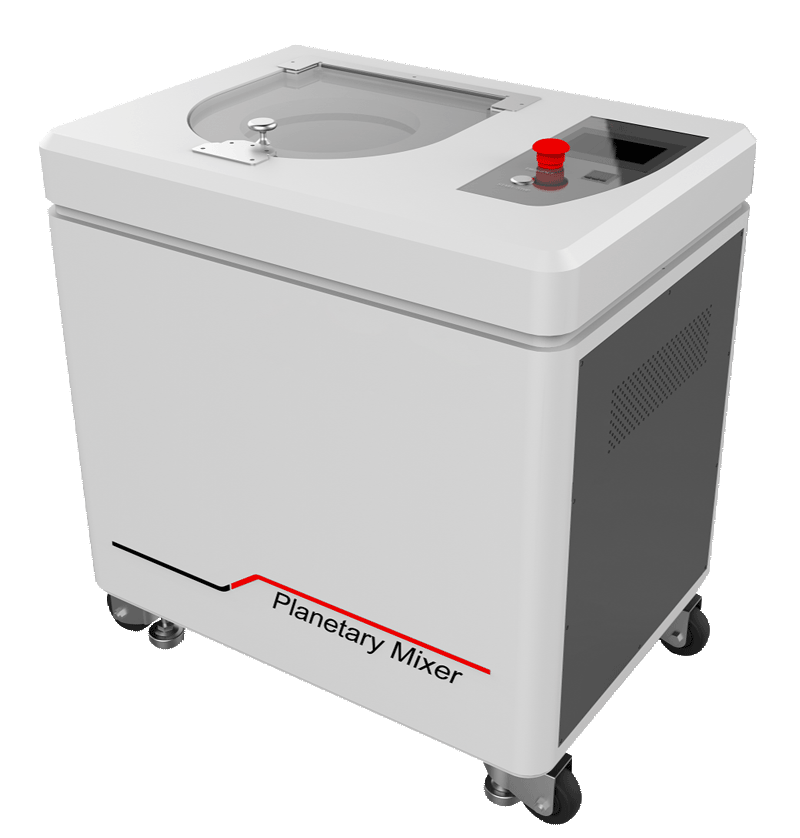
Non Invasive Material Homogenizer: Gentle Powder Mixing for Sensitive Materials

Walk into a powder plant and you will hear the same worry in different words: the blend looks fine, but the material is not the same as it was before mixing. Granules have broken, a light additive has drifted to the top, or a heat-sensitive ingredient has picked up stress it did not need. That is the problem a non invasive material homogenizer is designed to address. It is not a fancy name for a slow mixer. It is a way of thinking about powder blending where the goal is to rearrange particles, not punish them. TENCAN builds this kind of equipment for teams that care about what happens to the powder during the mixing step.
What “non invasive” really means in powder mixing
In powder processing, invasive does not refer to surgery. It refers to mechanical action that changes the material rather than simply rearranging it. Impact, compression, high shear, and the heat that comes from friction can fracture granules, smear soft particles, or create fines that behave differently from the rest of the blend. An invasive mix is not always a bad mix; sometimes you want size reduction. But when the powder is the product, that kind of change can be expensive. So the word invasive is a useful warning label. It asks you to look at the mixing action and think about what it is doing to particle shape, particle size, surface chemistry, and temperature. A non-invasive approach tries to keep those properties as close to the incoming material as possible while still delivering a uniform blend.
A non-invasive homogenizer still moves the powder. It still has to break up soft lumps, distribute minor ingredients, and create a blend you can sample with confidence. The difference is in how that work gets done. Instead of relying on hard impact or aggressive shear, the process leans toward gentle bulk movement and controlled contact. The aim is a shift in position, not a change in identity. You want the same particles at the end that you had at the start, only arranged more evenly.
It is about stress, not speed
Gentle does not automatically mean slow, and slow does not automatically mean gentle. A machine can run at a modest speed and still damage material if the wrong parts squeeze or rub the powder. A well-designed non-invasive unit can be productive because it creates a reliable mixing pattern instead of wasting energy on unnecessary impact. The useful question is not “how fast does it turn?” but “what kind of stress does the powder see, and for how long?” That is why two machines with similar footprints can behave very differently in a trial. One may preserve the granule size while the other quietly creates fines. The difference often shows up later in flow, filling, compaction, or how the blend looks under a microscope.
Homogenization is not milling
It helps to separate two jobs that often get mixed up in conversation. Homogenization is about making a batch uniform. Milling is about making particles smaller. A non invasive material homogenizer is generally chosen when uniformity matters and size reduction does not. If your process needs to crush, grind, or reduce a hard material, you need a different tool. If your process needs a faithful blend of materials that are already close to the target size, gentle homogenization makes more sense.
What a non-invasive homogenizer does not promise
It does not promise that every powder will blend in seconds, and it does not make poor powder characterization disappear. Cohesive powders, very light powders, and materials with a wide particle-size spread can all be tricky. What the machine offers is a better starting point: a mixing action that is less likely to turn a delicate granule into dust while the blend is being made.
It also does not replace a proper sampling plan. You can have a beautiful mixing pattern and still get a misleading result if the sample is taken from the wrong place. The best gentle-mixing projects pair the equipment with a clear idea of what “uniform” means for that product, how it will be measured, and where the sample should come from.
What it can promise is a more controlled starting point. If the powder is already close to the target size and the main job is uniformity, a gentle homogenizer gives you a repeatable way to blend without adding avoidable damage. That is a modest promise, but in sensitive products it is often the one that matters most.
Why sensitive powders need a gentler hand
Powders are not passive. A granule can be a tiny engineered structure with layers, pores, and a fragile shell. A crystalline material can have edges that chip. A spray-dried particle can collapse if it is handled too hard. Even a simple blend of two powders can segregate if the mixing action is too energetic or too one-dimensional.
Then there is the human side. The more dust a mixer generates, the more cleaning, containment, and operator exposure you have to manage. Gentle handling is not only about protecting the product; it is also about keeping the workplace cleaner and the process more predictable.
Fragile granules and engineered particles
Think about a granulated product that has to dissolve at a certain rate. Its surface area is part of its performance. Break the granules during blending and the dissolution profile can move. Or think about a composite particle where one ingredient sits on the surface of another. High shear can rub that ingredient off the surface or press it into the wrong place. A non-invasive mixing action gives those structures a better chance of arriving intact at the next step.
Small additives, big consequences
Minor ingredients are often the most sensitive. A small amount of lubricant, color, binder, or active component has to be spread through a much larger powder bed. If the mixing action is too aggressive, the additive can smear, over-blend, or generate dust that ends up on the vessel wall. If it is too weak, you get streaks and dead spots. The sweet spot is a mixing pattern that keeps the whole bed moving without turning the minor ingredient into a different physical form.
How the Non invasive material homogenizer fits into real powder work
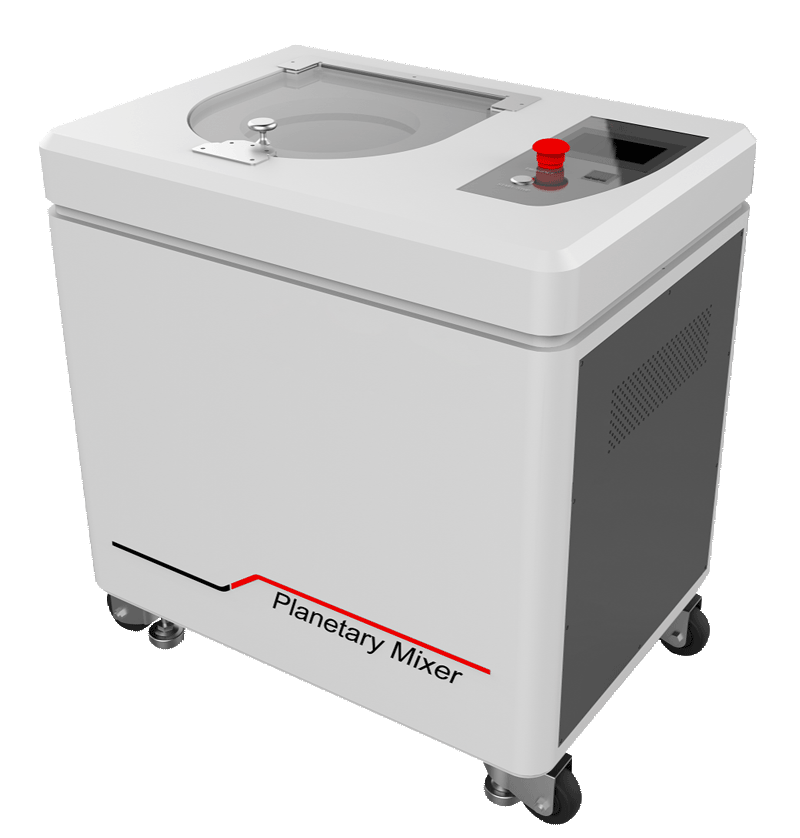
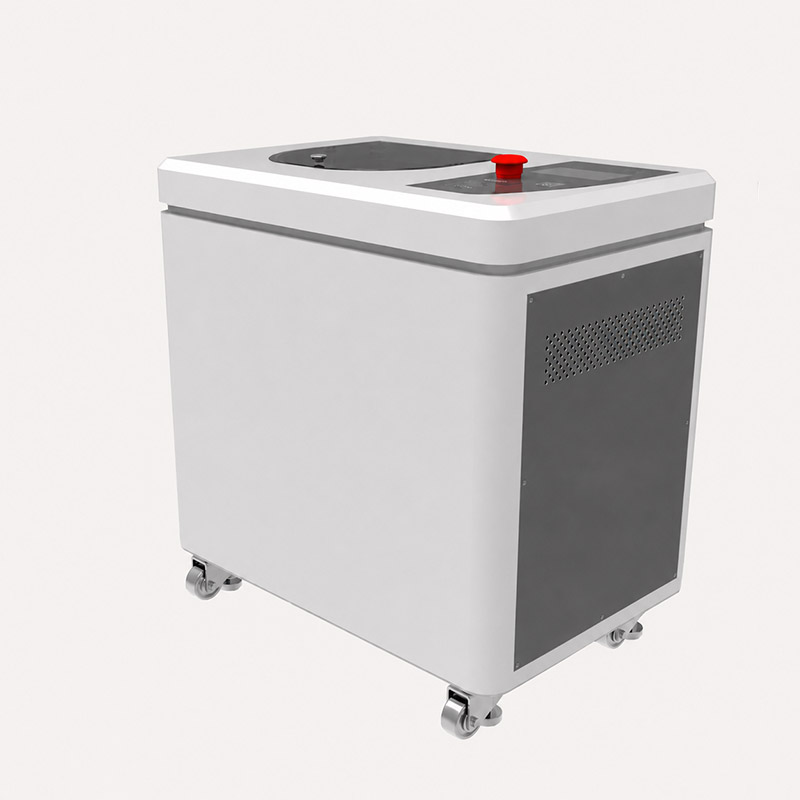
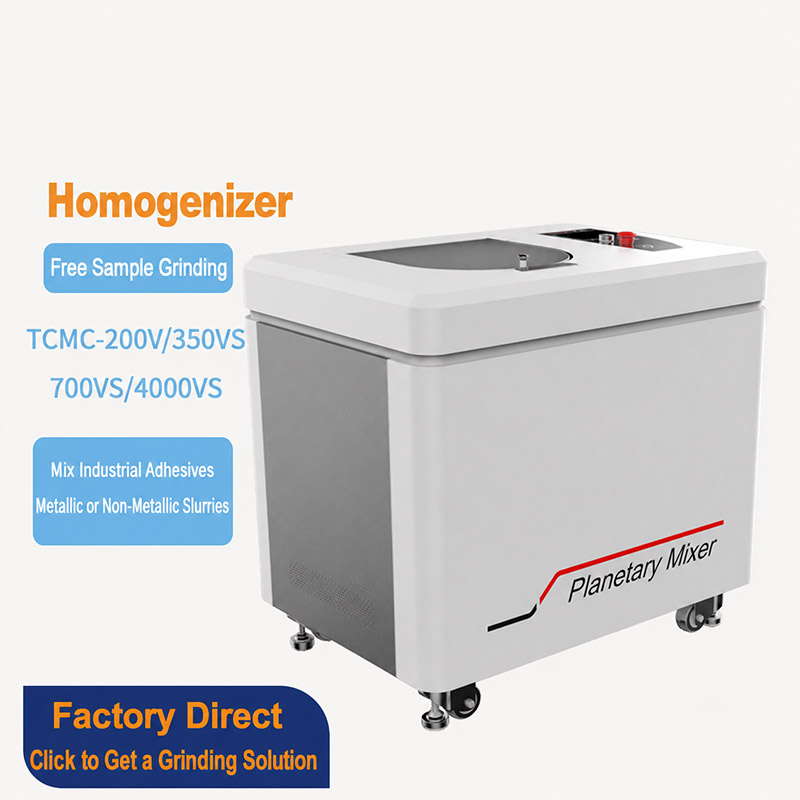
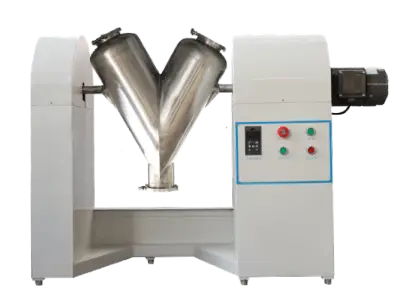
TENCAN’s Non invasive material homogenizer is built around that balance. The idea is to create a uniform blend while keeping mechanical stress under control, so the material that goes in still resembles the material that comes out. That does not mean the machine is only for delicate powders. It means the design starts from the material’s needs rather than from raw mixing force.
In practice, you would use it where blending is the job and particle damage is the risk. Examples include preparing a uniform batch before filling, mixing small additives into a carrier powder, or returning a consistent blend to a process that is sensitive to fines. The exact fit depends on your powder, your batch size, and your acceptance criteria, so the product page is the right place to check the current configuration and technical details.
Where it earns its place on a process line
The most common place to think about gentle homogenization is just before the powder becomes a product: before tableting, capsule filling, sachet filling, sintering, or packaging. At that stage, you have already paid for the particle engineering. You do not want the last mixing step to undo it.
It also makes sense in development and scale-up. A lab batch that preserves granule structure tells you more about the formulation than a batch that has been overworked. If the small-scale blend behaves well, you have a cleaner starting point for choosing production settings.
And it fits when you are adding a fragile component late in the process. Some ingredients are added in small amounts and mixed for a short time because they are sensitive to heat, shear, or over-blending. A gentle homogenizer gives the operator a better chance to hit that short, uniform blend without hot spots or dead zones.
What to check before you choose a model
A product name tells you the intention. It does not tell you whether a specific unit fits your line. Before you compare offers, write down the non-negotiables for your powder and your plant.
- Batch size and usable volume, including the fill range you expect in normal production, not just the maximum.
- Contact materials and surface finish, because a gentle mix is pointless if the powder picks up contamination from the vessel.
- Cleaning access, especially around shafts, seals, corners, and discharge points where fine powder likes to hide.
- Discharge behavior and dust containment, since a dry powder that flows poorly at discharge can ruin an otherwise good blend.
- Speed control and recipe storage, so operators can repeat a proven gentle cycle instead of improvising.
- Utilities, footprint, noise, and the space needed for maintenance access.
- Documentation for installation, operation, cleaning, and change control.
Use the specification sheet as a starting point, not a finish line
The current product page is where you should confirm the model’s actual capacity, dimensions, electrical requirements, and available options. Do not guess from a photo. A short conversation with the supplier about your powder, bulk density, and target batch size will save more time than a long comparison of glossy brochures. If the supplier cannot explain how the gentle action is achieved, keep asking questions.
Ask for a sample trial when the material is valuable or the risk is high. A small trial can reveal segregation, dusting, or discharge problems that a specification sheet will never show. It also gives you a realistic sample for flow testing, particle-size checks, and visual inspection. One more practical check is spare-part availability for the parts that touch powder or wear during normal use. A gentle mixer still needs maintenance, and a long wait for a simple seal can cost more than a small difference in purchase price.
Common mistakes that make a gentle mix pointless
You can choose the right machine and still get a poor result if the process around it is careless.
- Overfilling the vessel, which reduces movement and creates dead zones.
- Adding a small ingredient all at once into a deep powder bed instead of distributing it sensibly.
- Mixing far longer than needed because the batch “looks” uneven at the window.
- Ignoring moisture pickup during loading, mixing, or discharge.
- Using one recipe for powders with very different bulk densities and flow behavior.
- Cleaning only the easy surfaces and leaving fines to contaminate the next batch.
None of these problems are exotic. They are ordinary habits that become expensive when the product is sensitive. A gentle machine gives you a wider margin for error, but it cannot replace a sensible procedure.
A simple trial plan for your own powder
If you are considering a non invasive material homogenizer, test it with the powder you actually run. A generic demo with free-flowing sand will not tell you much about a cohesive, sticky, or fragile material.
- Start with a batch size in the middle of your expected range, not the absolute maximum.
- Keep samples from the top, middle, bottom, and discharge area.
- Check uniformity with the method you already trust, whether that is loss on drying, assay, color, flow, or particle-size analysis.
- Compare the before-and-after particle-size distribution and visual appearance; if the process is heat-sensitive, watch the batch temperature too.
- Run a repeat batch with the same settings to see whether the result is stable.
A trial like this tells you more than a single “looks good” moment. It shows whether the gentle action is actually gentle for your material, and whether the blend is uniform enough for the next process step.
Everyday care keeps the gentle action reliable
Dry powder equipment does not need to be complicated, but it does need attention. Check seals, gaskets, and contact surfaces for wear. Clean the areas where fines collect, because a small crust of old powder can create lumps in the next batch. Follow the supplier’s schedule for inspection and calibration, and write down any change in mixing time, noise, or discharge behavior. Those small observations are often the first sign that something needs service.
Train operators to load the vessel the same way every time. A gentle process is sensitive to small changes in fill level, feed order, and discharge. Consistency is not bureaucracy; it is how you protect the material from unnecessary variation. Keep a simple log of batch size, mixing time, and visual result. When something drifts, you will have a trail to follow instead of a mystery.
Questions that come up in powder rooms
Is non-invasive the same as low shear?
Not exactly. Low shear is one way to reduce stress, but a machine can also be gentle because of how it moves the bulk powder, how it avoids hard impact, or how it handles discharge. The useful question is what the powder experiences, not what label is on the brochure.
Does gentle mean it cannot handle cohesive powders?
No. Cohesive powders can be difficult for any mixer, and the right answer depends on the material. What matters is whether the mixing action can keep the whole bed moving without creating dead zones. That is a question for a trial, not a guess.
Can it replace a mill?
Usually no. If you need to reduce particle size, you need milling or grinding. A non invasive homogenizer is there to blend, not to crush. Using the wrong tool for size reduction will either disappoint you or damage the material.
Why not just mix for longer?
Because extra time is not free. It can increase segregation, generate fines, heat the batch, or change the surface of a sensitive ingredient. The goal is a proven uniform blend with the shortest practical cycle, not the longest cycle the operator can tolerate.
A calmer way to blend without losing the material
The real value of a non invasive material homogenizer is not that it sounds gentle. It is that it lets you protect the properties you paid to create. You get a blend that is uniform enough to use, with less risk of broken granules, dusty fines, or an additive that has been worked too hard. If you want to check how TENCAN’s model fits your batch, start with the Non invasive material homogenizer product page and then test your own powder. Your material will tell you more than a hundred glossy pages.
Related Products

Get In Touch
Our professional team will reply to you within one business day. Please feel free to contact us!