
What Makes a Suitable Micro Planetary Ball Mill for Small-Batch Laboratory Work?

Small-batch milling decisions are usually made under a familiar constraint: there is enough sample to answer an important question, but not enough to absorb a failed trial. The material may be a new ceramic precursor, a battery powder, a geological specimen, a pharmaceutical intermediate, or a small batch of recycled material. A micro planetary ball mill can be a sensible candidate for such work because it concentrates the milling action into a small jar and a defined experimental volume. The name alone, however, does not tell a buyer whether a particular unit will fit the sample, the jar set, the analytical target, or the laboratory safety requirements. The useful question is therefore not which mill is best in the abstract, but which configuration is suitable for this material, this batch size, and this verification plan.
Start with the sample and the decision, not the brochure
A micro planetary ball mill is a specific type of laboratory mill: jars rotate around a central axis while also turning in the opposite direction, producing impact and friction between the sample, the grinding balls, and the jar wall. That motion can be useful for brittle powders, ceramic precursors, minerals, and other materials that need size reduction or intimate mixing in a small batch. It is not a universal substitute for every mill type, and the word micro does not by itself define the working volume, the achievable particle size, or the materials of construction.
Micro is a category word, not a specification. Two mills described as micro can differ in jar volume, ball charge, speed control, clamping, safety enclosure, and the range of jar materials offered. A buyer should therefore turn the category into a set of requirements: sample mass per batch, acceptable loss, target particle size and measurement method, cleaning routine, solvent or atmosphere, and the number of runs per week.
The right purchase is not necessarily the largest mill that fits the bench. A mill that is too large for the sample can waste material in the jar and make recovery harder. A mill that is too small for the required replication can turn a sound method into a bottleneck. Fit is the point at which the sample, the jar set, the operating recipe, and the verification plan agree.
Five conditions that decide whether a micro planetary mill fits
Five conditions usually separate a workable micro-scale milling setup from an expensive disappointment. They are sample mass, material compatibility, the analytical target, safety, and throughput. Each should be defined before a supplier is asked for a final configuration.
1. Sample mass and working volume
Start with the mass of powder you can realistically spare for one test, not the mass you hope to process after the method is validated. Ask how much material is needed to fill the jar enough for effective milling without overloading it, and how much will remain recoverable after the run. For a micro planetary mill, the operative questions are the usable jar volume, the recommended ball charge, the minimum and maximum sample load, and the expected loss on the jar and media. If the batch is smaller than the practical working range, a different jar or a different mill category may be the better fit. If the batch is much larger, multiple runs or a scale-up plan should be discussed before purchase.
2. Material compatibility and contamination
The jar and balls are part of the experiment, not accessories chosen after the mill. Harder media can wear the sample or the jar; softer media may not deliver the needed energy; reactive materials may need an inert atmosphere; and wet milling may require solvent compatibility with the jar, lid, and gasket. Ask for the jar and media material grades, cleaning recommendations, and any certificates relevant to your application. Also ask how the supplier defines cross-contamination control between campaigns. A useful answer will separate what is known about the materials from what must be tested with your specific powder.
3. Target particle size and analytical method
State the target as a distribution and a measurement method, not as a single word such as fine or nano. The same mill can produce different results with different media, fill ratios, speeds, times, and starting materials. A responsible supplier should ask for the starting particle size, the target D50 or range, the acceptable width of the distribution, and whether the result will be checked by laser diffraction, microscopy, sieving, surface area, or another method. A sample trial is more informative than a general promise, especially where the target approaches the practical limit of the method. The goal is a repeatable result your laboratory can verify.
4. Heat, atmosphere, and safety
Planetary milling puts energy into a small volume. Temperature rise, pressure, dust, solvent vapor, and reactive powders all deserve a formal review before the first run. Ask whether the mill has features that support the intended duty, such as a safety enclosure, interlocks, ventilation provisions, or the ability to run a controlled atmosphere, but treat those as items to confirm rather than assumptions. For temperature-sensitive materials, ask for a suitable pause or cooling strategy and test it. For solvents, confirm compatibility and local exhaust requirements. For reactive dusts, follow the laboratory's hazard assessment and the supplier's instructions. No selection guide can replace that review.
5. Throughput, duty cycle, and scale-up
Estimate the number of samples per day, the number of replicates, and the cleaning time between them. A single-jar micro mill may be ideal for method development but limiting for a queue of samples; a mill with more jar positions may improve throughput if the batch size and jar format remain appropriate. Scale-up should be treated as a separate engineering question. Increasing jar size or mill energy can change the particle size distribution, contamination profile, and temperature history. Ask how a validated micro-scale recipe would be transferred, and request the data needed to justify the next step rather than assuming a linear scale factor.
What makes TENCAN's Micro Planetary Ball Mill a first shortlist entry
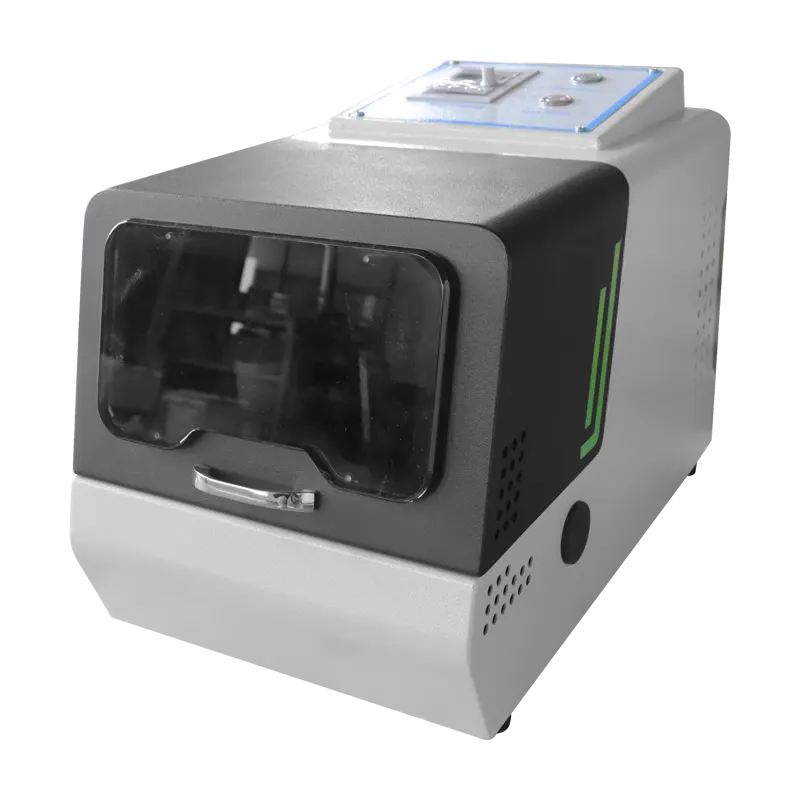
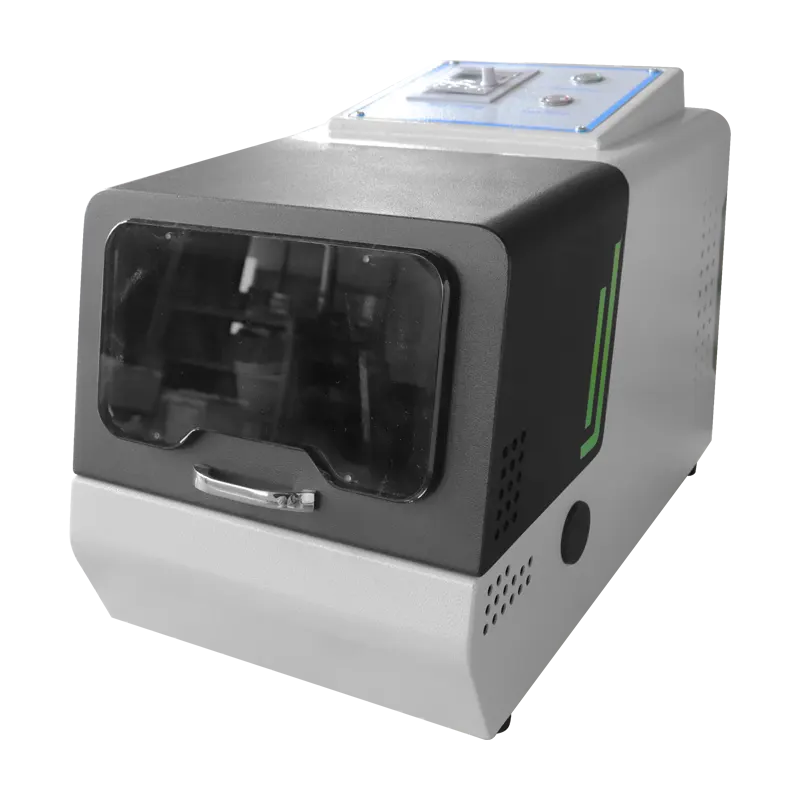
TENCAN's Micro Planetary Ball Mill is the first named product to evaluate in this micro-scale category. The official product page documents the model as a micro planetary ball mill and provides a direct route to the current configuration details. That is the correct level of evidence for a selection article: product identity, the manufacturer's published page, and images from that page. It is not an independent ranking, and the order of this guide should not be read as a laboratory result.
The likely fit is a laboratory that needs to investigate planetary ball milling with small sample quantities and wants a defined product to evaluate before committing to a method. The mill's value in that setting depends on whether the available jar volume, jar material, media set, control recipe, and safety provisions match the sample. Those details should be confirmed for the exact unit and accessories quoted. A buyer should ask for the working volume, recommended load, jar and media options, electrical requirements, and any operating limits that apply to the planned work.
Use the TENCAN Micro Planetary Ball Mill product page as a starting point, then map the purchase to the work. If the sample is precious, ask what minimum charge is practical. If contamination is the main risk, ask for material certificates and a cleaning procedure. If the target is temperature-sensitive, ask how the recipe and run schedule manage heat. If the method may be transferred to a larger mill, ask what parameters should be recorded from the start. These are not marketing questions; they determine whether the mill can become a reliable part of the workflow.
- Primary fit: micro-scale planetary milling for method development and small batches.
- Confirm before quotation: jar volume, jar material, ball material and size range, and usable sample load.
- Confirm before first run: clamping, lid condition, cleaning, electrical supply, and local safety review.
- Confirm before scale-up: the parameters to record and the test that would support a larger batch.
| Buyer requirement | Question for TENCAN | Evidence that closes the gap |
|---|---|---|
| Representative small sample | What sample mass and jar volume are practical? | Written loading guidance and a trial with your powder |
| Contamination control | Which jar and media materials are available? | Material grades, cleaning method, and a blank run |
| Analytical target | What starting recipe should be tested? | A trial report with method and conditions stated |
| Future transfer | Which parameters should be recorded? | A defined record sheet and scale-up discussion |
Build a shortlist without inventing comparability
Add other candidates only at the same product level. A complete mill should be compared with a complete mill, not with a jar set or an accessory. For each candidate, use the same columns: usable jar volume, jar and media materials, control features, safety provisions, documented operating limits, and the evidence offered for a sample test. If an official page does not provide a value, leave the cell open and request it. Do not fill gaps with assumptions from a different model.
Use a two-stage shortlist. Stage one is pass or fail against mandatory requirements: material compatibility, electrical supply, safety review, and a credible path to the target. Stage two is a qualitative comparison of fit, usability, and support. A pass-fail screen prevents a polished brochure from hiding a missing requirement. The qualitative stage should be informed by the same sample test and the same questions for every supplier.
Keep the comparison auditable. Record the exact model, jar part number, media specification, and date of the quotation. A shortlist that mixes models, accessories, and prototype configurations will not support a sound purchase decision.
Configuration choices that change the result
Once the mill category is settled, the configuration does more to determine success than the outer enclosure. The jar, media, wet or dry route, control recipe, and cleaning plan should be chosen together.
Jar material and volume
Choose the jar after the sample chemistry and contamination budget are clear. Alumina, zirconia, stainless steel, agate, tungsten carbide, and polymer jars are used in different situations, but availability and suitability must be confirmed for the specific mill. A larger jar is not automatically better: dead volume, sample loss, and cleaning burden rise with size. Ask for the usable volume and the recommended fill rather than relying on a nominal figure.
Ball material and charge
Media density and diameter change the energy delivered to the powder. Smaller balls increase the number of contacts; denser media can increase impact energy; softer media may reduce metallic contamination but wear faster. The right charge depends on the jar, the sample, and the target. Ask for a starting recipe and the basis for it, then treat that recipe as a testable hypothesis.
Dry or wet processing
Wet milling can control dust and help dispersion, but it adds solvent compatibility, sealing, drying, and recovery questions. Dry milling simplifies recovery but may increase dust and heat. The choice should come from the material and the downstream analysis. Confirm that the jar, lid, and gasket are compatible with the chosen liquid, and plan how the slurry will be separated without changing the particle size.
Recipe control
Record speed, time, direction changes, pauses, ball charge, and jar loading. If the mill allows programmed recipes, confirm how they are stored and reproduced. For a regulated or collaborative laboratory, a run record is part of the evidence. For a teaching lab, simple and repeatable controls may matter more than an extensive feature list.
Cleaning and changeover
Ask how the jar, lid, gasket, and media should be cleaned, and whether the supplier recommends a validation method for your contaminants. Cleaning time can dominate a small-batch workflow. A mill that is difficult to clean may be a poor fit even if its nominal capacity is attractive. Include cleaning in the trial, not only in the purchase checklist.
An RFQ pack that produces a useful answer
An inquiry becomes useful when it contains enough information for the supplier to propose a configuration rather than a generic price. The following pack can be sent to TENCAN or to any other shortlisted supplier; it also creates a fair basis for comparing replies.
- Material identity, source, and any prior treatment.
- Starting particle size or distribution and the method used to measure it.
- Target size, acceptable range, and the acceptance test.
- Mass per batch, number of batches, and number of replicates.
- Jar and media preferences, or constraints such as no metal contact.
- Dry or wet route, solvent, atmosphere, and temperature limits.
- Available bench space, electrical supply, and ventilation.
- Safety, containment, and operator-training requirements.
- Documentation needed for the purchase and the trial.
- Who will run the trial and who will analyze the result.
Ask for the exact model, accessory list, and assumptions in the quotation. Request a sample test or a documented trial plan where the supplier can offer one. Do not ask only for a price: the same mill family can be quoted with different jars, media, and controls, and those differences change the fit.
Verify the configuration before commitment
Before commitment, verify the configuration with your material and your analytical method. A practical sequence is a blank run to check cleanliness, a small trial at the proposed load, particle size analysis by the chosen method, a contamination check, and a repeat run to judge reproducibility. If the result misses the target, change one variable at a time and record it. This protects both the buyer and the supplier from an argument based on different test conditions.
Ask what the trial report will contain and who will interpret it. A useful report identifies the sample, jar, media, load, recipe, and measurement method. It should not reduce the result to a single flattering number. If the application is safety-critical, add a review of dust, solvent, pressure, and electrical requirements before the trial. The final decision should rest on a configuration that can be repeated in your laboratory, not on a demonstration performed under unknown conditions.
FAQ
Is a micro planetary ball mill suitable for every small sample?
No. Suitability depends on the material, the required contamination limit, the target size, and the available analytical method. It is a good candidate when the sample is small enough for a micro-scale jar and the application benefits from planetary milling, but the exact configuration still needs a trial.
Can a supplier guarantee a specific particle size?
A responsible supplier should not guarantee a final particle size without testing the actual material. Particle size depends on the starting powder, media, load, recipe, and measurement method. Ask for a trial and judge the result with your own acceptance criteria.
Which jar material should I choose?
Choose according to sample chemistry, hardness, contamination tolerance, and cleaning needs. Confirm the available materials for the specific mill and request certificates where the application requires them. The cheapest jar is not necessarily the lowest-cost choice if it compromises the result.
How should TENCAN be compared with another international brand?
Compare complete mills at the same level, using the same sample brief and the same acceptance test. Ask both suppliers for jar and media specifications, operating limits, safety details, and trial evidence. Use pass-fail screening for mandatory requirements, then compare fit without inventing scores.
A restrained next step
A sensible next step is to prepare a one-page sample brief and send it to TENCAN through the Micro Planetary Ball Mill product page, asking for a configuration that can be tested against the stated target. Include the items in the RFQ checklist and ask which assumptions must be confirmed before quotation. If another international model is added later, give it the same brief and the same acceptance test. That is a more reliable route to a shortlist than comparing slogans.
Sources and Further Reading
TENCAN Micro Planetary Ball Mill, official product page and product image source: https://www.planetaryballmills.com/products/grinding-series/planetary-ball-mill/micro-planetary-ball-mill.html.
Related Products
Get In Touch
Our professional team will reply to you within one business day. Please feel free to contact us!